



الصفحة 17
الصفحة 17

Information assurance : Security in the information environment
This updated edition of Information Assurance: Security in the Information Environment was written to help IT managers and assets protection professionals to assure the protection and availability of vital digital information and related information systems assets. This Second Edition of Information Assurance includes major updates, including three new chapters • The Role of Policy in Information Assurance • Incident Management and Response • Security Standards Bridging the gap between information security, information systems security and information warfare, this edition re-examines and explains why organisations need to take information assurance seriously, and discusses the business, legal, and technical knowledge needed to secure these vital government and business assets.

Information and knowledge systems : Digital technologies, artificial intelligence and decision making ; 5th International Conference, ICIKS 2021, Virtual Event, June 22–23, 2021, Proceedings
This book constitutes the thoroughly refereed proceedings of the 5th International Conference on Information and Knowledge Systems, ICIKS 2021, which was held online during June 22-23, 2021. The International Conference on Information and Knowledge Systems (ICIKS 2021) gathered both researchers and practitioners in the fields of Information Systems, Artificial Intelligence, Knowledge Management and Decision Support. ICIKS seeks to promote discussions on various organizational, technological, and socio-cultural aspects of research in the design and use of information and knowledge systems in organizations.

Information and knowledge : A constructive type-theoretical approach
This book develops a philosophical and logical interpretation of the concept of information within the formal structure of Constructive Type Theory (CTT), in a manner concurrent with a diverse range of contemporary perspectives on the philosophy of information. On the basis of this conceptual framework, the problem of analyticity for logical derivations is faced and a solution is proposed.The text begins with a presentation of the formal structure of CTT, paying particular attention to some topics that have been neglected by current researchers in Type Theory. Information and Knowledge presents a new interesting perspective on the constructive interpretation of knowledge processes, suggesting the reliability of such an approach for the logical modeling of epistemic problems and proposing a unifying frame from one of the more important contemporary philosophical perspectives.

Information and communication technologies in tourism 2006 ; Proceedings of the International Conference in Lausanne, Switzerland, 2006
This collection of papers presented at the 13th ENTER Conference represents a unique opportunity of sharing knowledge with researchers bridging the fields of travel and tourism, and information and communication technologies. This year’s 40 full research papers and 23 work in progress presentations cover the following topics: meta research and education; guides and information systems; website design; behaviour analysis; website evaluation; usability and accessibility; technology adoption by enterprises; pricing; information requirements; knowledge management; decision support and recommender systems; website evaluation; customer support and service; technology adoption by customers; business models, and marketing.

Information and communication technologies and real-life learning : New education for the knowledge society
The IFIP series publishes state-of-the-art results in the sciences and technologies of information and communication. The scope of the series includes: foundations of computer science; software theory and practice; education; computer applications in technology; communication systems; systems modeling and optimization; information systems; computers and society; computer systems technology; security and protection in information processing systems; artificial intelligence; and human-computer interaction. Proceedings and post-proceedings of referred international conferences in computer science and interdisciplinary fields are featured. These results often precede journal publication and represent the most current research. The principal aim of the IFIP series is to encourage education and the dissemination and exchange of information about all aspects of computing.

Information — Consciousness — Reality : How a New Understanding of the Universe Can Help Answer Age-Old Questions of Existence
This book chronicles the rise of a new scientific paradigm offering novel insights into the age-old enigmas of existence. It is explores a radical paradigm shift uncovering the ontology of reality. It is found to be information-theoretic and participatory, yielding a computational and programmable universe.

Informatics for the Clinical Laboratory : A Practical Guide
This series is directed to healthcare professionals who are leading the tra- formation of health care by using information and knowledge. Launched in 1988 as Computers in Health Care, the series offers a broad range of titles: some addressed to specific professions such as nursing, medicine, and health administration; others to special areas of practice such as trauma and radi- ogy. Still other books in the series focus on interdisciplinary issues, such as the computer-based patient record, electronic health records, and networked healthcare systems. Renamed Health Informatics in 1998 to reflect the rapid evolution in the discipline now known as health informatics, the series will continue to add titles that contribute to the evolution of the field. In the series, eminent - perts, serving as editors or authors, offer their accounts of innovations in health informatics. Increasingly, these accounts go beyond hardware and so- ware to address the role of information in influencing the transformation of healthcare delivery systems around the world. The series also increasingly focuses on “peopleware” and the organizational, behavioral, and societal changes that accompany the diffusion of information technology in health services environments.

Influences of the IEA Civic and Citizenship Education Studies : Practice, Policy, and Research Across Countries and Regions
This book identifies the multiple ways that IEA’s studies of civic and citizenship education have contributed to national and international educational discourse, research, policymaking, and practice. The IEA International Civic and Citizenship Education Study (ICCS), first conducted in 2009, was followed by a second cycle in 2016. The project was linked to the earlier IEA Civic Education Study (CIVED 1999, 2000). IEA’s ICCS remains the only large-scale international study dedicated to formal and informal civic and citizenship education in school. It continues to make substantial contributions to understanding the nature of the acquired civic knowledge, attitudes, and participatory skills. It also discusses in-depth how a wide range of countries prepare their young people for citizenship in changing political, social, and economic circumstances. The next cycle of ICCS is planned for 2022.

Influence and Power : Variations on a Messy Theme
This volume contains an extensive overview and critical assessment,explores the conceptual relationship between freedom and power, assesses the distinctions made in existing scholarship between power and influence, presents the author’s own proposal for a definition of influence as opposed to power, combines insights from political theory, legal philosophy and the general theory of norms , is densely argued, yet accessible to all interested readers without any prerequisite of special prior knowledge.

Inference for change point and post change means after a CUSUM test
This monograph is the first to systematically study the bias of estimators and construction of corrected confidence intervals for change-point and post-change parameters after a change is detected by using a CUSUM procedure. Researchers in change-point problems and sequential analysis, time series and dynamic systems, and statistical quality control will find that the methods and techniques are mostly new and can be extended to more general dynamic models where the structural and distributional parameters are monitored. Practitioners, who are interested in applications to quality control, dynamic systems, financial markets, clinical trials and other areas, will benefit from case studies based on data sets from river flow, accident interval, stock prices, and global warming. Readers with an elementary probability and statistics background and some knowledge of CUSUM procedures will be able to understand most results as the material is relatively self-contained.The exponential family distribution is used as the basic model that includes changes in mean, variance, and hazard rate as special cases. There are fundamental differences between the sequential sampling plan and fixed sample size. Although the results are given under the CUSUM procedure, the methods and techniques discussed provide new approaches to deal with inference problems after sequential change-point detection, and they also contribute to the theoretical aspects of sequential analysis. Many results are of independent interests and can be used to study random walk related stochastic models.

Inference Control in Statistical Databases : From Theory to Practice
Inference control in statistical databases, also known as statistical disclosure limitation or statistical confidentiality, is about finding tradeoffs to the tension between the increasing societal need for accurate statistical data and the legal and ethical obligation to protect privacy of individuals and enterprises which are the source of data for producing statistics. Techniques used by intruders to make inferences compromising privacy increasingly draw on data mining, record linkage, knowledge discovery, and data analysis and thus statistical inference control becomes an integral part of computer science. This coherent state-of-the-art survey presents some of the most recent work in the field. The papers presented together with an introduction are organized in topical sections on tabular data protection, microdata protection, and software and user case studies.

Infections à papillomavirus : État des connaissances, pratiques et prévention vaccinale = Human papillomavirus infections : Current knowledge, practices and vaccination prevention
The impact of papillomavirus (HPV) infection is considerable. More than one in two women has been exposed to HPV in her lifetime and around 10% will develop a chronic infection. Of these, 20% will develop cervical cancer in the absence or failure of screening. In France, high-risk HPV infection causes 80,000 precancerous lesions, 3,400 cervical cancers and the death of 1,000 women every year. Smear screening performed at a regular rate and according to quality standards has resulted in a significant decrease in incidence and mortality over the past 20 years. However, despite this considerable success, the so-called preventable disease has not been eradicated; testing is a complex process that only benefits part of the population while those who benefit endure its weaknesses. Optimization of screening and treatment is now made possible by the use of innovative techniques including the smear in liquid suspension, the HPV test, and soon viral genotyping and molecular markers guaranteeing maximum protection. Because cervical cancer is the result of chronic HPV infection, we already have the extraordinary chance to prevent it with a prophylactic vaccine. This progress will have a major impact on our practices as it happens in a poorly prepared medico-sociological environment. This resolutely practical and educational book provides an overview of knowledge and perspectives on HPV infection and its associated pathologies while deciphering the new challenges and practices in the vaccine era.

Infection Control in the Intensive Care Unit
Infection Control in the Intensive Care Unit has been entirely rewritten in this second edition. All statements are justified by the best available evidence, avoiding unsubstantiated expert opinion. The book contains a new section dedicated to the microbiology of the critically ill, specifically, how to process and interpret surveillance cultures to distinguish the ‘normal’ from the ‘abnormal’ carrier state. There are five totally new chapters dealing with evidence-based infection control molecular techniques for outbreak analysis; clinical virology in neonatal, paediatric and adult intensive care; the six basic principles of the therapy of an infection; and the role of the pharmacist in infection control. Attention is given to special topics such as nutrition, gut mucosal protection and the control of antimicrobial resistance. The addition of enteral to parenteral antimicrobials contributes to the control of multi-resistant micro-organisms. This completely revised second edition is a ‘must have’ for anyone requiring in depth knowledge in the ever expanding field of infection control.

Industrial competitiveness : Cost reduction
The objectives of industrial management are: - Implementation of the policy adopted by the owners or the board of directors - Optimum return on investment - Efficient utilization of Men, Machine and Money. In other words, industry must make profit. Manufacturing represents only one aspect of the activities of industrial management. Present-day manufacturing methodology does not consider making profit as their primary objective. The manufacturing process requires the knowledge of many disciplines, such as design, process planning, costing, marketing, sales, customer relations, costing, purchasing, bookkeeping, inventory control, material handling, shipping, and so on.

Industrial applications of semantic web ; Proceedings of the 1st International IFIP/WG12.5 Working Conference on Industrial Applications of Semantic Web, August 25-27, 2005 Jyvaskyla, Finland
The IFIP series publishes state-of-the-art results in the sciences and technologies of information and communication. The scope of the series includes: foundations of computer science; software theory and practice; education; computer applications in technology; communication systems; systems modeling and optimization; information systems; computers and society; computer systems technology; security and protection in information processing systems; artificial intelligence; and human-computer interaction. Proceedings and post-proceedings of referred international conferences in computer science and interdisciplinary fields are featured. These results often precede journal publication and represent the most current research. The principal aim of the IFIP series is to encourage education and the dissemination and exchange of information about all aspects of computing.

Inductive logic programming ; 17th International Conference, ILP 2007, Corvallis, OR, USA, June 19-21, 2007, Revised Selected Papers
The 18th International Conference on Inductive Logic Programming was held in Prague, September 10–12, 2008. ILP returned to Prague after 11 years, and it is tempting to look at how the topics of interest have evolved during that time. The ILP community clearly continues to cherish its beloved ?rst-order logic representation framework. This is legitimate, as the work presented at ILP 2008 demonstrated that there is still room for both extending established ILP approaches (such as inverse entailment) and exploring novel logic induction frameworks (such as brave induction). Besides the topics lending ILP research its unique focus.
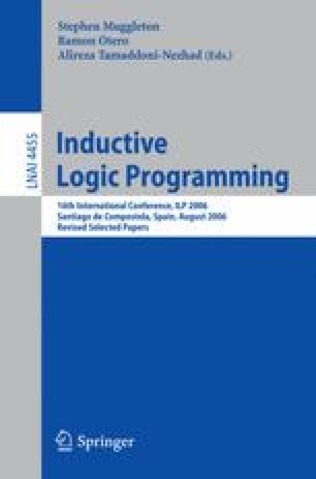
Inductive logic programming ; 16th International Conference, ILP 2006, Santiago de Compostela, Spain, August 24-27, 2006, Revised Selected Papers
This book constitutes the thoroughly refereed post-proceedings of the 16th International Conference on Inductive Logic Programming, ILP 2006, held in Santiago de Compostela, Spain, in August 2006. The papers address all current topics in inductive logic programming, ranging from theoretical and methodological issues to advanced applications.

Indigenous Knowledge and Education in Africa
This book presents a strong philosophical, theoretical and practical argument for the mainstreaming of indigenous knowledge in curricula development, and in teaching and learning across the African continent. Since the dawn of political independence in Africa, there has been an ongoing search for the kind of education that will create a class of principled and innovative citizens who are sensitive to and committed to the needs of the continent. When indigenous or environment-generated knowledge forms the basis of learning in classrooms, learners are able to immediately connect their education with their lived reality. The result is much introspection, creativity and innovation across fields, sectors and disciplines, leading to societal transformation. Drawing on several theoretical assertions, examples from a wide range of disciplines, and experiences gathered from different continents at different points in history, the book establishes that for education to trigger the necessary transformation in Africa, it should be constructed on a strong foundation of learners’ indigenous knowledge. The book presents a distinct and uncharted pathway for Africa to advance sustainably through home-grown and grassroots based ideas, leading to advances in science and technology, growth of indigenous African business and the transformation of Africans into conscious and active participants in the continent’s progress.

Increasing the security and reliability of e-health system using blockchain technology
The Blockchain technology is the buzzword of the year, and as this new technology slowly matured, it seems clear that from banking to supply chain logistics, it is ready for disruption. And in healthcare in particular, there is a massive opportunity for blockchain revolution to disrupt and lead the digital transformation. From medical records to pharmaceutical supply chains, to smart contracts for payment distribution, there are a plenty of methods to leverage this technology. Thus it has reached a great boom in the health sector, due to its importance to overcome interoperability and security challenges of health records systems in e-health.

Inconsistency tolerance
Inconsistency arises in many areas in advanced computing. Often inconsistency is unwanted, for example in the specification for a plan or in sensor fusion in robotics; however, sometimes inconsistency is useful. Whether inconsistency is unwanted or useful, there is a need to develop tolerance to inconsistency in application technologies such as databases, knowledge bases, and software systems. To address this situation, inconsistency tolerance is being built on foundational technologies for identifying and analyzing inconsistency in information, for representing and reasoning with inconsistent information, for resolving inconsistent information, and for merging inconsistent information. The idea for this book arose out of a Dagstuhl Seminar on the topic held in summer 2003. The nine chapters in this first book devoted to the subject of inconsistency tolerance were carefully invited and anonymously reviewed. The book provides an exciting introduction to this new field.
