



الصفحة 17
الصفحة 17
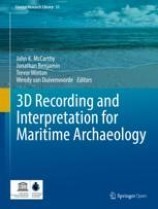
3D Recording and Interpretation for Maritime Archaeology
Includes recording and analysis of maritime archaeology through emerging technologies, including both practical and theoretical contributions. Topics include photogrammetric recording, laser scanning, marine geophysical 3D survey techniques, virtual reality, 3D modelling and reconstruction, data integration and Geographic Information Systems. This convergence of digital technologies such as underwater photography and photogrammetry, 3D sonar, 3D virtual reality, and 3D printing has highlighted a pressing need for these new methodologies to be considered together, both in terms of defining the state-of-the-art and for consideration of future directions.
3D imaging in endodontics : A new era in diagnosis and treatment
Full understanding of the role of cone beam computed tomography (CBCT) in helping to solve many of the most challenging problems in endodontics. It will shorten the learning curve in application of this exciting imaging technology in a variety of contexts: difficult diagnostic cases, treatment planning, evaluation of internal tooth anatomy prior to root canal therapy, nonsurgical and surgical treatments, early detection and treatment of resorptive defects, and outcomes assessment. The ability to obtain an accurate 3D representation of a tooth and the surrounding structures by means of noninvasive CBCT imaging is changing the approach to clinical decision making in endodontics. Clinicians long accustomed to working in very small, three-dimensional spaces are no longer constrained by the limitations of two-dimensional imaging. The challenges of mastering the new technology can, however, be daunting. The detailed guidance contained in this book will help endodontists to take full advantage of the important benefits offered by CBCT.
3D imaging in endodontics : A new era in diagnosis and treatment
Provides readers with a full understanding of the role of cone beam computed tomography (CBCT) in helping to solve many of the most challenging problems in endodontics. It will shorten the learning curve in application of this exciting imaging technique in a variety of contexts: difficult diagnostic cases, treatment planning, evaluation of internal tooth anatomy prior to root canal therapy, nonsurgical and surgical treatments, early detection and treatment of resorptive defects, and outcomes assessment.
3-D Computer vision : Principles, algorithms and applications
Offers advanced content on computer vision (basic content can be found in its prerequisite textbook, “2D Computer Vision: Principles, Algorithms and Applications”), including the basic principles, typical methods and practical techniques. It is intended for graduate courses on related topics, e.g. Computer Vision, 3-D Computer Vision, Graphics, Artificial Intelligence, etc. The book is mainly based on my lecture notes for several undergraduate and graduate classes I have offered over the past several years, while a number of topics stem from my research publications co-authored with my students. This book takes into account the needs of learners with various professional backgrounds, as well as those of self-learners. Furthermore, it can be used as a reference guide for practitioners and professionals in related fields.
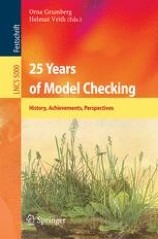
25 Years of Model Checking : History, Achievements, Perspectives
Model checking technology is among the foremost applications of logic to computer science and computer engineering. The model checking community has achieved many breakthroughs, bridging the gap between theoretical computer science and hardware and software engineering, and it is reaching out to new challenging areas such as system biology and hybrid systems. Model checking is extensively used in the hardware industry and has also been applied to the verification of many types of software. Model checking has been introduced into computer science and electrical engineering curricula at universities worldwide and has become a universal tool for the analysis of systems.

100 cases in clinical pathology and laboratory medicine
Presents 100 clinical scenarios commonly seen by medical students and junior doctors in the emergency department, outpatient clinic, operating theatre or in general practice. A succinct summary of the patient's history, examination and initial investigations is followed by questions on each case, with particular emphasis on the interpretation of the results and in which an understanding of the underlying clinical pathology is central to arriving at the correct diagnosis. The answer includes a detailed discussion on each topic, providing an essential revision aid as well as a practical guide for students and junior doctors, especially those preparing for undergraduate and postgraduate examinations.
