



الصفحة 17
الصفحة 17

Manual of multi-storey timber construction
Wood is suitable for use in multi-storey building construction with barely any restrictions. This is new and requires creative rethinking of tried and tested practices in wood construction: classical categories can be replaced by mixed construction methods as necessary within a project, which yields completely new possibilities in designing wood structures. The Manual provides architects, engineers and wood specialists with the essential expertise on the new systematic and construction methodology, from the design to prefabrication to the implementation on site. It lays the grounds for mutual understanding among everyone involved in the project, to facilitate the necessary cooperation in the integral planning and construction process
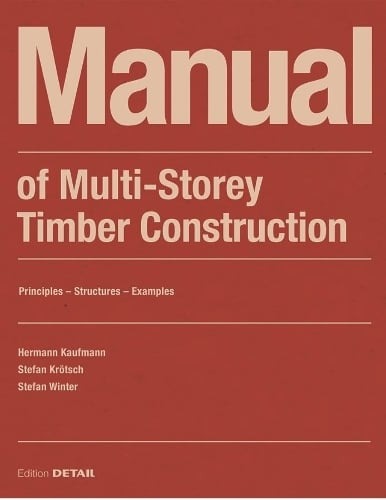
Manual of Multistorey Timber Construction
Wood is suitable for use in multi-storey building construction with barely any restrictions. This is new and requires creative rethinking of tried and tested practices in wood construction: classical categories can be replaced by mixed construction methods as necessary within a project, which yields completely new possibilities in designing wood structures. The Manual provides architects, engineers and wood specialists with the essential expertise on the new systematic and construction methodology, from the design to prefabrication to the implementation on site.

Managing innovative projects and programs : Using the ISO 56000 standards for guidance and implementation
Provides a step-by-step procedure on how to process a medium- or large-size project, program, or product using an already-established IMS that considers the guidance given in ISO 56002:2019 – Innovation Management Systems Standard. Often the most complicated, complex, difficult, and challenging system used in an organization is the IMS. At the same time, it usually is the most important system because it is the one that generates most of the value-adding products for the organization, and it involves most of the key functions within the organization.

Managing change for sustainable development at higher education in Syria : The case of Arab International University
The aim of this research is to examine sustainability development initiatives in the field of higher education in Syria. The research examines the extent to which the Arab International university is engaged in sustainability practices within the three concepts of sustainability: environmental, economic and social, and examines the implementation of change management approaches on three main dimensions: university strategy, campus green management and integrating sustainability in faculty curriculum.
Managing Agile Business Technology : The Business and Technology Relationship Model in Practice
Describes in detail how the BTRM, combined with a focus on value creation and value delivery, will enable continuous change, in the context of current, emerging and future technologies. It illustrates the potential for real-time insight and control not previously considered and provides a wide range of information to plan an implementation, understand where AI can be applied, and its importance in the world of self-managing systems.

Making Fisheries Management Work : Implementation of Policies for Sustainable Fishing
This book seeks to widen the perspective taken on implementation in fisheries management. The cases presented in this volume addresses legal, administrative, and political challenges regarding implementation of resource conservation policies. The book addresses problems relating to goal achievement, but also causes of deliberate change of political goals during implementation. Fisheries management systems are embedded in inert social structures and natural conditions that vary among different states. Consequently, the book takes a historical and comparative approach, describing the historical developments of national implementation systems and the conditions that shaped their development. It thus seeks to explain why national fisheries management systems have evolved differently, focusing on Norwegian, Faeroese, and EU/Danish management systems. The descriptive and explanatory outlines are accompanied by qualitative assessments of the systems effectiveness as tools for collective action.

Making Ammonia : Fritz Haber, Walther Nernst, and the Nature of Scientific Discovery
This book discusses the progress of science and the transfer of scientific knowledge to technological application. It also identifies the factors necessary to achieve this progress. Based on a case study of the physical chemist Fritz Haber's discovery of ammonia synthesis between 1903 and 1909, the book places Haber's work in historical and scientific (physicochemical) context. The scientific developments of the preceding century are framed in a way that emphasizes the confluence of knowledge needed for Haber's success. Against this background, Haber's work is presented in detail along with the indispensable contributions of his colleague, the physical chemist, Walter Nernst, and their assistants. The detailed accounts of scientific advancement remind us of the physical basis on which our scientific theories and ideas are built. Without this reminder we often forget how complex, and how beautiful achievements in science can be.
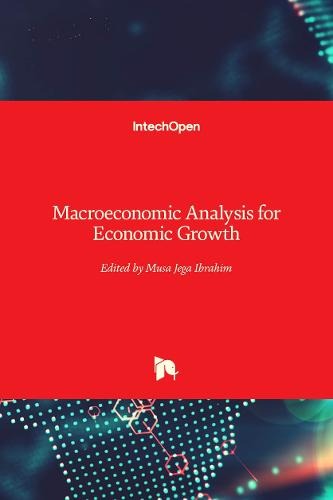
Macroeconomic analysis for economic growth
Discusses the essential principles that guide macroeconomic policy formulation and implementation to stimulate strong economic growth for sustainable development, especially for emerging economies. it includes twelve chapters over three sections: "macroeconomics of economic growth", "labour market and employment", and "the financial system and macroeconomic performance". key conclusions illustrate that the efficacy of regulatory frameworks to create enabling conditions for nurturing and bolstering robust value-adding production structures anchored on appropriate macroeconomic management are the fundamental building blocks of strong economic growth.
Machine Learning for Computer Scientists and Data Analysts: From an Applied Perspective
Describes traditional as well as advanced machine learning algorithms / Enables students to learn which algorithm is most appropriate for the data being handled / Includes numerous, practical case-studies; implementation codes in Python available for readers
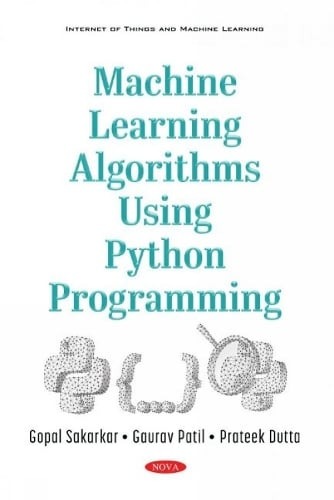
Machine Learning Algorithms Using Python Programming
Presents the key concepts of Machine Learning which includes Python concepts and Interpreter, Foundation of Machine Learning, Data Pre-processing, Supervised Machine Learning, Unsupervised Machine Learning, Reinforcement Learning, Kernel Machine, Design and analysis of Machine Learning experiment and Data visualization. The theoretical concepts along with coding implementation are covered. This book aims to pursue a middle ground between a theoretical textbook and one that focuses on applications. The book concentrates on the important ideas in machine learning.
Machine Learning : The Basics
Approaches ML as the computational implementation of the scientific principle. This principle consists of continuously adapting a model of a given data-generating phenomenon by minimizing some form of loss incurred by its predictions. Trains readers to break down various ML applications and methods in terms of data, model, and loss, thus helping them to choose from the vast range of ready-made ML methods.

Low-Power High-Speed ADCs for Nanometer CMOS Integration
Low-Power High-Speed ADCs for Nanometer CMOS Integration is about the design and implementation of ADC in nanometer CMOS processes that achieve lower power consumption for a given speed and resolution than previous designs, through architectural and circuit innovations that take advantage of unique features of nanometer CMOS processes. A phase lock loop (PLL) clock multiplier has also been designed using new circuit techniques and successfully tested.

Low Power Methodology Manual : For System-on-Chip Design
"Tools alone aren't enough to reduce dynamic and leakage power in complex chip designs - a well-planned methodology is needed. Following in the footsteps of the successful Reuse Methodology Manual (RMM), authors from ARM and Synopsys have written this Low Power Methodology Manual (LPMM) to describe [such] [a] low-power methodology with a practical, step-by-step approach." "Excellent compendium of low-power techniques and guidelines with balanced content spanning theory and practical implementation. The LPMM is a very welcome addition to the field of low power SoC implementation that has for many years operated in a largely ad-hoc fashion."

Logical aspects of computational linguistics ; 4th International Conference, LACL 2001, Le Croisic, France, June 27-29, 2001, Proceedings
Structural Equations in Language Learning.- On the Distinction between Model-Theoretic and Generative-Enumerative Syntactic Frameworks.- Contributed Papers.- A Formal Definition of Bottom-Up Embedded Push-Down Automata and Their Tabulation Technique.- An Algebraic Approach to French Sentence Structure.- Deductive Parsing of Visual Languages.- Lambek Grammars Based on Pregroups.- An Algebraic Analysis of Clitic Pronouns in Italian.- Consistent Identification in the Limit of Any of the Classes k-Valued Is NP-hard.- Polarized Non-projective Dependency Grammars.- On Mixing Deduction and Substitution in Lambek Categorial Grammars.- A Framework for the Hyperintensional Semantics of Natural Language with Two Implementations.- A Characterization of Minimalist Languages.- of Speech Tagging from a Logical Point of View.- Transforming Linear Context-Free Rewriting Systems into Minimalist Grammars.- Recognizing Head Movement.- Combinators for Paraconsistent Attitudes.- Combining Syntax and Pragmatic Knowledge for the Understanding of Spontaneous Spoken Sentences.- Atomicity of Some Categorially Polyvalent Modifiers.

Logic Programming and Nonmonotonic Reasoning ; 8th International Conference, LPNMR 2005, Diamante, Italy, September 5-8, 2005, Proceedings
Thesearetheproceedingsofthe8thInternational Conference on Logic Progr- mingandNonmonotonicReasoning (LPNMR2005).Followingthepreviousones held in Washington, DC, USA (1991), Lisbon, Portugal (1993), Lexington, KY, USA(1995), Dagstuhl, Germany(1997), ElPaso, TX, USA(1999), Vienna, A- tria (2001) and Ft. Lauderdale, FL, USA (2004), the eighth conference was held in Diamante, Italy, from 5th to 8th of September 2005. TheaimoftheLPNMRconferencesistobringtogetherandfacilitateinter- tions between active researchers interested in all aspects concerning declarative logic programming, nonmonotonic reasoning, knowledge representation, and the design of logic-based systems and database systems. LPNMR strives to enc- pass theoretical and experimental studies that lead to the implementation of practi...

Logic Programming ; Vol. 3668 : 21st International Conference, ICLP 2005, Sitges, Spain, October 2-5, 2005, Proceedings
This volume contains the proceedings of the 21st International Conference on Logic Programming which was held in Sitges (Barcelona), Spain, from October 2nd to 5th, 2005. The conference was colocated with the International Conf- ence on ConstraintProgramming(CP 2005)and the following 6 post-conference workshops: – CICLOPS 2005: Colloquium on Implementation of Constraint and Logic Programming Systems – CSLP 2005: Constraint Solving and Language Processing – WCB 2005: Constraint Based Methods for Bioinformatics – WLPE 2005: Logic-Based Methods in Programming Environments – MoVeLog 2005: Mobile Code Safety and Program Veri?cation Using C- putational Logic Tools – CHR 2005: Constraint Handling Rules The conferencecoincided with a solareclipse

Logic Programming : 24th International Conference, ICLP 2008 Udine, Italy, December 9-13 2008 Proceedings
The 35 revised full papers together with 2 invited talks, 2 invited tutorials, 11 papers of the co-located first Workshop on Answer Set Programming and Other Computing Paradigms (ASPOCP 2008), as well as 26 poster presentations and the abstracts of 11 doctoral consortium articles were carefully reviewed and selected from 177 initial submissions. The papers cover all issues of current research in logic programming - they are organized in topical sections on applications, algorithms, systems, and implementations, semantics and foundations, analysis and transformations, CHRs and extensions, implementations and systems, answer set programming and extensions, as well as constraints and optimizations.

Logic for Programming, Artificial Intelligence, and Reasoning ; Vol. 3452 : 11th International Workshop, LPAR 2004, Montevideo, Uruguay, March 14-18, 2005, Proceedings
Contains the papers presented at the 11th International Conference on Logic for Programming, Arti'cial Intelligence, and Reasoning (LPAR), held from March 14 to 18, 2005, in Montevideo, Uruguay, together with the 5th - ternational Workshop on the Implementation of Logics (organized by Stephan Schulz and Boris Konev) and the Workshop on Analytic Proof Systems (or- nized by Matthias Baaz). The call for papers attracted 77 paper submissions, each of which was - viewed by at least three expert reviewers. The ?nal decisions on the papers were taken during an electronic Program Committee meeting held on the Internet. The Internet-based submission, reviewing, and discussion software EasyChair, provided by the second PC co-chair, supported each stage of the reviewing p- cess.

Location- and Context-Awareness ; Vol. 3479 ; First International Workshop, LoCA 2005, Oberpfaffenhofen, Germany, May 12-13, 2005, Proceedings
The workshop was organized by the Institute of Communications and Navigation of the German Aerospace Center (DLR) in Oberpfa?enhofen, and the Mobile and Distributed Systems Group of the University of Munich. During the workshop, novel positioning algorithms and location sensing techniques were discussed, comprising not only enhancements of singular systems, like positioning in GSM or WLAN, but also hybrid technologies, such as the integration of global satellite systems with inertial positioning. Furthermore, improvements in sensor technology, as well as the integration and fusion of sensors, were addressed both on a theoretical and on an implementation level. Personal and confidential data, such as location data of users, have p- found implications for personal information privacy. Thus privacy protection, privacy-oriented location-aware systems, and how privacy aspects the feasibility and usefulness of systems were also addressed in the workshop.

Life Cycle Management
This book provides insight into the Life Cycle Management (LCM) concept and the progress in its implementation. LCM is a management concept applied in industrial and service sectors to improve products and services, while enhancing the overall sustainability performance of business and its value chains. In this regard, LCM is an opportunity to differentiate through sustainability performance on the market place, working with all departments of a company such as research and development, procurement and marketing, and to enhance the collaboration with stakeholders along a company’s value chain. LCM is used beyond short-term business success and aims at long-term achievements by minimizing environmental and socio-economic burden, while maximizing economic and social value.
