



الصفحة 17
الصفحة 17

Formal techniques for distributed objects, components, and systems ; 40th IFIP WG 6.1 International conference, FORTE 2020, Held as Part of the 15th International Federated Conference on distributed computing techniques, DisCoTec 2020, Valletta, Malta, June 15–19, 2020, Proceedings
This book constitutes the proceedings of the 40th IFIP WG 6.1 International Conference on Formal Techniques for Distributed Objects, Components, and Systems, FORTE 2020, held in Valletta, Malta, in June 2020, as part of the 15th International Federated Conference on Distributed Computing Techniques, DisCoTec 2020.*

Formal techniques for computer systems and business processes ; European performance engineering workshop, EPEW 2005 and International workshop on web services and formal methods, WS-FM 2005, Versailles, France, September 1-3, 2005, Proceedings
This book constitutes the refereed proceedings of two colocated international workshops EPEW 2005 (European Performance Engineering Workshop) and WS-FM 2005 (Web Services and Formal Methods) held in Versailles, France in September 2005. The 20 revised full papers presented were carefully reviewed and selected from 59 submissions. For EPEW 2005 only 10 papers - of the 32 submitted - were accepted for presentation; they deal with queueing theory, bounding techniques, stochastic model checking, communication schemes analysis for high-speed LAN, QOS analysis in wireless ad-hoc networks and optical networks analysis. The main topics of the 10 papers accepted for WS-FM 2005 - from 27 submissions - include: protocols and standards for WS (SOAP, WSDL, UDDI, etc.); languages and description methodologies for Choreography/Orchestration/Workflow (BPML, XLANG and BizTalk, WSFL, WS-BPEL, etc.); coordination techniques for WS (transactions, agreement, coordination services, etc.); semantics-based dynamic WS discovery services (based on Semantic Web/Ontology Techniques or other semantic theories); security, performance evaluation and quality of service of WS; semi-structured data and XML related technologies; comparisons with different related technologies/approaches.

Formal Methods for Open Object-Based Distributed Systems ; Vol. 4037 ; 8th IFIP WG 6.1 International Conference, FMOODS 2006, Bologna, Italy, June 14-16, 2006, Proceedings
This book constitutes the refereed proceedings of the 8th IFIP WG 6.1 International Conference on Formal Methods for Open Object-Based Distributed Systems, FMOODS 2006, held in Bologna, Italy, June 2006. The book presents 16 revised full papers together with an invited paper and abstracts of 2 invited talks. Coverage includes component- and model-based design, service-oriented computing, software quality, modeling languages implementation, formal specification, verification, validation, testing, and service-oriented systems.
Formal Methods for Components and Objects ; Vol. 3657 ; 3rd International Symposium, FMCO 2004, Leiden, The Netherlands, November 2-5, 2004, Revised Lectures
This book presents revised tutorial lectures given by invited speakers at the Third International Symposium on Formal Methods for Components and Objects, FMCO 2004, held in Leiden, The Netherlands, in November 2004. The 14 revised lectures by leading researchers present a comprehensive account of the potential of formal methods applied to large and complex software systems such as component-based systems and object systems. The book provides an unique combination of ideas on software engineering and formal methods that reflect the expanding body of knowledge on modern software systems.
Formal methods applications and technology ; 11th International workshop on formal methods for industrial critical systems, FMICS 2006, and 5th International Workshop on parallel and distributed methods in verification, PDMC 2006, Bonn, Germany, August 26-27, and August 31, 2006, Revised Selected
The workshop program included two invited talks, by Anna Slobodova from Intel on “Challenges for Formal Veri?cation in an Industrial Setting” and by Edward A. Lee from the University of California at Berkeley on “Making C- currency Mainstream.” The former full paper can be found in this volume.

Formal Approaches to Agent-Based Systems ; 3rd International Workshop, FAABS 2004, Greenbelt, MD, April 26-27, 2004, Revised Selected Papers
The 3rd Workshop on Formal Approaches to Agent-Based Systems (FAABS-III) was held at the Greenbelt Marriott Hotel (near NASA Goddard Space Flight Center) in April 2004 in conjunction with the IEEE Computer Society. The first FAABS workshop was help in April 2000 and the second in October 2002. Interest in agent-based systems continues to grow and this is seen in the wide range of conferences and journals that are addressing the research in this area as well as the prototype and developmental systems that are coming into use. Our third workshop, FAABS-III, was held in April, 2004. This volume contains the revised papers and posters presented at that workshop. The Organizing Committee was fortunate in having significant support in the planning and organization of these events, and were privileged to have wor- renowned keynote speakers Prof. J Moore (FAABS-I), Prof. Sir Roger Penrose (FAABS-II), and Prof. John McCarthy (FAABS-III), who spoke on the topic of se- aware computing systems, auguring perhaps a greater interest in autonomic computing as part of future FAABS events. We are grateful to all who attended the workshop, presented papers or posters, and participated in panel sessions and both formal and informal discussions to make the workshop a great success. Our thanks go to the NASA Goddard Space Flight Center, Codes 588 and 581 (Software Engineering Laboratory) for their financial support and to the IEEE Computer Society (Technical Committee on Complexity in Computing) for their sponsorship and organizational assistance.

Form and structure in Interior Architecture : Basics interior architecture
This volume examines the basic ideas that underpin the design and remodelling of interior space, from the establishment of a relationship between the existing building and the new components that inhabit it, to the careful positioning and design of significant elements within the space

Forging New Frontiers : Fuzzy Pioneers II
The chapters of the book are evolved from presentations made by selected participants at the meeting and organized in two books. The papers include reports from the different front of soft computing in various industries and address the problems of different fields of research in fuzzy logic, fuzzy set and soft computing.

Foresight and Design: Composing Future Places
Every plan, pro-forma, design, building contract, and construction schedule is a proposal about future places. To help improve such proposals, Foresight and Design: Composing Future Places presents conceptual tools to inform design and outline the need for designers to rigorously think about potential futures. Our built compositions are constantly transforming due to continuing urbanization, demographic shifts, climate change, the evolution of virtual worlds, economic and health disparities, and other unforeseen trends. Five brief case studies interspersed between the chapters serve as examples of practitioners exercising foresight through these practices. Contributions include a description of a regional design process in Afghanistan by Anthony Fettes of Sasaki Architects, and an exploration into the Indigenous Futurism model-making competition by Anjelica Gallegos.
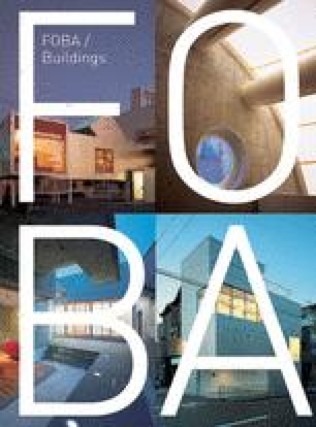
FOBA : Buildings
The book also chronicles the FOB Homes systema FOBA subsidiary company established in 1999a uniquely creative response to the generic mass-produced pre-fabricated housing available in Japan. With five basic prototypes that can be easily adapted to any site or client, FOB Homes redefines the concept of standardized housing. Their simple, neutral white boxes counter the visual chaos of contemporary Japan and offer the elegance and experience of "architecture" to the general publica union of modernist aesthetics with the modernist ideology of democratic, affordable design.

FM 2005: Formal Methods ; International Symposium of Formal Methods Europe, Newcastle, UK, July 18-22, 2005, Proceedings
This volume contains the proceedings of Formal Methods 2005, the 13th InternationalSymposiumonFormalMethodsheldinNewcastleuponTyne,UK, during July 18–22, 2005. Formal Methods Europe (FME, www.fmeurope.org) is an independent association which aims to stimulate the use of, and research on, formal methods for system development. FME conferences began with a VDM Europe symposium in 1987. Since then, the meetings have grown and have been held about once every 18 months. Throughout the years the symposia have been notablysuccessfulinbringingtogetherresearchers,tooldevelopers,vendors,and users, both from academia and from industry. Formal Methods 2005 con?rms this success. We received 130 submissions to the main conference, from all over the world. Each submission was carefully refereed by at least three reviewers. Then, after an intensive, in-depth discussion, the Program Committee selected 31 papers for presentation at the conference. They form the bulk of this volume.

Flexible and Efficient Information Handling ; 23rd British National Conference on Databases, BNCOD 23, Belfast, Northern Ireland, UK, July 18-20, 2006, Proceedings
This book constitutes the refereed proceedings of the 23rd British National Conference on Databases, BNCOD 23, held in Belfast, Northern Ireland, July 2006. The volume presents 12 revised full papers and 6 revised short papers, together with 2 invited lectures and 13 poster papers. Topical sections include data modelling and architectures and transaction management, data integration and interoperability and information retrieval, query processing and optimisation, data mining, data warehousing and more.

Flat Roof Construction Manual : Materials, Design, Applications
The flat roof is extremely popular with architects. Its essential task is to shelter the space beneath it from the elements. Beyond this, the use of flat roofs may be optimized by integrating them as green roofs, roof terraces, circulation areas, and even productive solar roofs. In practice, however, their correct and professional realization is a highly exacting task: in addition to providing the planner with basic rules of construction and design, the Flat Roof Manual also supplies an overview of the use and construction types as well as the standard assemblies for flat roofs. Together with the most important standards and bodies of regulations, construction drawings of the principal connection points round out the volume. A planning primer on the construction, materials, and building physics of flat roofs. In-depth presentation of individual roofing layers and design types. Flat roofs as usable surfaces Renovating flat roofs

Finite element design of concrete structures : Practical problems and their solutions
In Finite Element Design of Concrete Structures: practical problems and their solutions the author addresses this 'blind belief' in computer results by offering a useful critique that 'important details are overlooked due to the flood of information' from the output of computer calculations. Indeed, errors in the numerical model may lead in extreme cases to structural failures as the collapse of the so-called Sleipner platform has demonstrated.

Finite element analysis for building assessment : Advanced use and practical recommendations
Existing structures represent a heterogeneous category in the global built environment as often characterized by the presence of archaic materials, damage and disconnections, uncommon construction techniques and subsequent interventions throughout the building history. In this scenario, the common linear elastic analysis approach adopted for new buildings is incapable of an accurate estimation of structural capacity, leading to overconservative results, invasive structural strengthening, added intervention costs, excessive interference to building users and possible losses in terms of aesthetics or heritage values. For a rational and sustainable use of the resources, this book deals with advanced numerical simulations, adopting a practical approach to introduce the fundamentals of Finite Element Method, nonlinear solution procedures and constitutive material models.

Fine- and Coarse-Grain Reconfigurable Computing
The FPGA technology is defined, which includes architecture, logic block structure, interconnect, and configuration methods and existing fine-grain reconfigurable architectures emerged from both academia and industry. Additionally, the implementation techniques and CAD tools developed to facilitate the implementation of a system in reconfigurable hardware by the industry and academia are provided.

Finding Lost Space : Theories of Urban Design
Offers a comprehensive and systematic examination of the crisis of the contemporary city and the means by which this crisis can be addressed. Finding Lost Space traces leading urban spatial design theories that have emerged over the past eighty years: the principles of Sitte and Howard; the impact of and reactions to the Functionalist movement; and designs developed by Team 10, Robert Venturi, the Krier brothers, and Fumihiko Maki, to name a few. In addition to discussions of historic precedents, contemporary approaches to urban spatial design are explored.

Feasibility studies : An architect's guide
Details the benefits of a feasibility study. Once you’ve secured the commission, how do you ensure you’re following current best practice? Aimed at architects, it identifies the pitfalls involved in undertaking a feasibility study and explains how to set boundaries, organise the process and manage clients’ aspirations. By featuring recent live projects, alongside advice from successful architectural practices, it illustrates how a feasibility study can help achieve positive outcomes and avoid the dangers of a poorly defined brief and service proposal. Presenting the client’s, as well as the architect’s, perspective, this publication highlights why a feasibility study is a sensible way of establishing viability prior to committing to a full-service commission. It underlines the significance of ‘adding value’ as an architect.

Fault-Tolerance Techniques for SRAM-Based FPGAs
This book discusses fault-tolerance techniques for SRAM-based Field Programmable Gate Arrays (FPGAs). It starts by showing the model of the problem and the upset effects in the programmable architecture. In the sequence, it shows the main fault tolerance techniques used nowadays to protect integrated circuits against errors. A large set of methods for designing fault tolerance systems in SRAM-based FPGAs is described. Some presented techniques are based on developing a new fault-tolerant architecture with new robustness FPGA elements. Other techniques are based on protecting the high-level hardware description before the synthesis in the FPGA.

Fault Diagnosis and Tolerance in Cryptography ; 3rd International Workshop, FDTC 2006, Yokohama, Japan, October 10, 2006, Proceedings
The sophistication of the underlying cryptographic algorithms, the high complexity of the implementations, and the easy access and low cost of cryptographic devices resulted in increased concerns regarding the reliability and security of crypto-devices. The effectiveness of side channel attacks on cryptographic devices, like timing and power-based attacks, has been known for some time. Several recent investigations have demonstrated the need to develop methodologies and techniques for designing robust cryptographic systems (both hardware and software) to protect them against both accidental faults and maliciously injected faults with the purpose of extracting the secret key. This trend has been particularly motivated by the fact that the equipment needed to carry out a successful side channel attack based on fault injection is easily accessible at a relatively low cost (for example, laser beam technology), and that the skills needed to use it are quite common.
