



الصفحة 17
الصفحة 17

Multinational Enterprises, Foreign Direct Investment and Growth in Africa : South African Perspectives
How can Africa, the world’s most lagging region, benefit from globalisation and achieve sustained economic growth? Africa needs greater investment by Multinational Enterprises (MNEs) to improve competitiveness and generate more growth through positive spill-over effects. Despite the fact that Africa’s returns on investment averaged 29% since 1990, Africa has gained merely 1% of global Foreign Direct Investment (FDI) flows. The challenge for African countries is how to be a more desirable destination for FDI. The study integrates three currents of economic research, namely from the literature on (endogenous) economic growth, convergence and regional integration, the explanations for Africa’s poor growth and the growing understanding of the role of MNEs in a global economy. The empirical side of the book is based on an econometric study of the determinants of FDI in Africa as well as a detailed firm-level survey conducted in 2000.

Multimodal Video Characterization and Summarization
Multimodal Video Characterization and Summarization is a valuable research tool for both professionals and academicians working in the video field. This book describes the methodology for using multimodal audio, image, and text technology to characterize video content. This new and groundbreaking science has led to many advances in video understanding, such as the development of a video summary. Applications and methodology for creating video summaries are described, as well as user-studies for evaluation and testing.
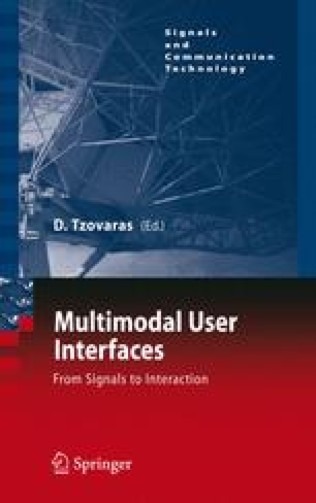
Multimodal User Interfaces : From Signals to Interaction
The book presents a common theoretical framework for fusion and fission of multimodal information using the most advanced signal processing algorithms constrained by HCI rules, described in detail and integrated in the context of a common distributed software platform for easy and efficient development and usability assessment of multimodal tools. The book also demonstrates the use of the multimodal framework for the development of a set of applications in the areas of edutainment, interfaces for disabled people and interfaces for medical applications.

Multimodal Texts in Disciplinary Education : A Comprehensive Framework
This book provides an introduction to multimodality and the role of multimodal texts in today’s education. Presenting a comprehensive framework for analysing and working with multimodal texts in disciplinary education, it serves as a tool for researchers and teachers alike. The second part of the book focuses on sample analyses of a variety of educational texts for different age groups and from different disciplines, including games and online resources. The authors also comment on the specific challenges of each text, and how teachers can discuss such texts with their students to enhance both their understanding of the content and their multimodal literacy.

Multimedia security : Algorithm development, analysis and applications (algorithms for intelligent systems)
Provides an insight about various techniques used in multimedia security and identifies its progress in both technological and algorithmic perspectives. In the contemporary world, digitization offers an effective mechanism to process, preserve and transfer all types of information. The incredible progresses in computing and communication technologies augmented by economic feasibility have revolutionized the world. The availability of efficient algorithms together with inexpensive digital recording and storage peripherals have created a multimedia era bringing conveniences to people in sharing the digital data that includes images, audio and video. The ever-increasing pace, at which the multimedia and communication technology is growing, has also made it possible to combine, replicate and distribute the content faster and easier, thereby empowering mankind by having a wealth of information at their disposal.
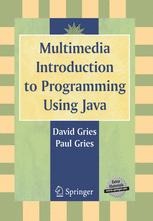
Multimedia Introduction to Programming Using Java
Although vital to modern software development, Java and object-oriented programming can pose significant challenges to newcomers. This text, unique in both scope and approach and accompanied by interactive content that you may find on extras.springer.com, addresses that learning curve by providing a careful, classroom-tested presentation of Java -- from the fundamentals of variables, types, and expressions to procedural concepts like loops and sophisticated object-oriented ideas. Additional key features of this work Introduces objects and classes early in the exposition, rendering object-oriented programming intuitive and natural. Develops programs, rather than simply showcasing them. Supports all concepts through complementary lectures on the zip-file featured on extras.springer.com. Contains numerous self-help exercises that encourage readers to practice programming. With its comprehensive appendices and bibliography, systematic approach, and helpful interactive programs on extras.springer.com, this exciting work provides the key tools they needed for successful object-oriented programming. It is ideal for use at the undergraduate and graduate beginning level, whether in the classroom or for distance learning; furthermore, the text will also be a valuable self-study resource or reference volume in any programmer’s library.

Multimedia Forensics
Media forensics has never been more relevant to societal life. Not only media content represents an ever-increasing share of the data traveling on the net and the preferred communications means for most users, it has also become integral part of most innovative applications in the digital information ecosystem that serves various sectors of society, from the entertainment, to journalism, to politics. Undoubtedly, the advances in deep learning and computational imaging contributed significantly to this outcome. The underlying technologies that drive this trend, however, also pose a profound challenge in establishing trust in what we see, hear, and read, and make media content the preferred target of malicious attacks.

Multimedia Encryption and Watermarking
Multimedia Encryption and Watermarking presents a comprehensive survey of contemporary multimedia encryption and watermarking techniques, which enable a secure exchange of multimedia intellectual property. Part I, Digital Rights Management (DRM) for Multimedia, introduces DRM concepts and models for multimedia content protection, and presents the key players. Part II, Multimedia Cryptography, provides an overview of modern cryptography, with the focus on modern image, video, speech, and audio encryption techniques. This book also provides an advanced concept of visual and audio sharing techniques. Part III, Digital Watermarking, introduces the concept of watermarking for multimedia, classifies watermarking applications, and evaluates various multimedia watermarking concepts and techniques, including digital watermarking techniques for binary images. Multimedia Encryption and Watermarking is designed for researchers and practitioners, as well as scientists and engineers who design and develop systems for the protection of digital multimedia content. This volume is also suitable as a textbook for graduate courses on multimedia security.

Multimedia Database Retrieval : A Human-Centered Approach
Multimedia Database Retrieval: A Human-Centered Approach presents the latest development in user-centered methods and the state-of-the-art in visual media retrieval. It includes discussion on perceptually inspired non-linear paradigm in user-controlled interactive retrieval (UCIR) systems. It also features a coherent approach which focuses on specific topics within content/concept-based retrievals via audio-visual information modeling of multimedia. Highlights include: * Exploring an adaptive machine that can learn from its environment * Optimizing the learning system by incorporating self-organizing adaptation into the retrieval process * Demonstrating state-of-the-art applications within small, medium, and large databases
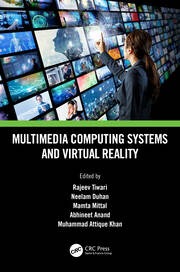
Multimedia computing systems and virtual reality
Presents recent advancements in multimedia systems as they relate to various application areas such as healthcare services and agriculture-related industries. The authors also discuss human-machine interface design, graphics modelling, rendering/animation, image/graphics techniques/systems and visualization. They then go on to explore multimedia content adaptation for interoperable delivery. Finally, the book covers cultural heritage, philosophical/ethical/societal/international issues, standards-related virtual technology and multimedia uses. This book is intended for computer engineers and computer scientists developing applications for multimedia and virtual reality and professionals working in object design and visualization, transformation, modelling and animation of the real world.

Multimedia big data computing for IoT applications : Concepts, paradigms and solutions
This book considers all aspects of managing the complexity of Multimedia Big Data Computing (MMBD) for IoT applications and develops a comprehensive taxonomy. It also discusses a process model that addresses a number of research challenges associated with MMBD, such as scalability, accessibility, reliability, heterogeneity, and Quality of Service (QoS) requirements, presenting case studies to demonstrate its application. Further, the book examines the layered architecture of MMBD computing and compares the life cycle of both big data and MMBD. Written by leading experts, it also includes numerous solved examples, technical descriptions, scenarios, procedures, and algorithms.

Multilingualism, Cultural Identity, and Education in Morocco
This book is an original contribution to the field of multilingualism and cultural identity. It investigates the ramifications of multilingualism for language choice patterns and attitudes among Moroccans. It focuses on the impact of multilingualism on cultural identity and education. It includes a debate on education and language planning policies in Morocco since independence. It reveals the complexity of post-colonial Morocco characterized by contradictory attitudes toward the languages in contact and toward language policy and education. It is of interest to students and researchers of sociolinguistics, cultural studies, anthropology and gender studies as well as for specialists of education and language policy/planning.
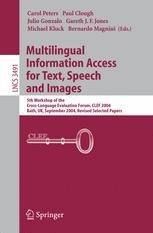
Multilingual Information Access for Text, Speech and Images ; 5th Workshop of the Cross-Language Evaluation Forum, CLEF 2004, Bath, UK, September 15-17, 2004, Revised Selected Papers
The ?fth campaign of the Cross-Language Evaluation Forum (CLEF) for Eu- pean languages was held from January to September 2004. Participation in the CLEF campaigns has increased each year and CLEF 2004 was no exception: 55 groups submitted results for one or more of the di?erent tracks compared with 42 groups in the previous year. CLEF 2004 also marked a breaking point with respect to previous campaigns. The focus was no longer mainly concentrated on multilingual document retrieval as in previous years but was diversi?ed to include di?erent kinds of text retrieval across languages (e. g. , exact answers in the question-answering track) and retrieval on di?erent kinds of media (i. e. , not just plain text but collections containing image and speech as well). In ad- tion, increasing attention was given to issues that regard system usability and user satisfaction with tasks to measure the e?ectiveness of interactive systems or system components being included in both the cross-language question - swering and image retrieval tasks with the collaboration of the coordinators of the interactive track. The campaign culminated in a two-and-a-half-day workshop held in Bath, UK, 15–17 September, immediately following the 8th European Conference on Digital Libraries. The workshop was attended by nearly 100 researchers and s- tem developers.

Multilayered Low Temperature Cofired Ceramics (LTCC) Technology
LTCCs are made by combining ceramic insulating materials, conductor materials, and other materials through numerous processes culminating in co-firing. The materials and the processes used are therefore interdependent. By ensuring the consistency between materials and processes, it is possible to achieve circuit boards and various types of high frequency passive components and so on with the desired characteristics. This book describes the general technical information of each material (ceramic, conductor, and resistor materials) and each process, and it offers commentaries on unique examples resulting from these interrelations.

Multilateralism, regionalism and bilateralism in trade and investment : 2006 World report on regional integration
The present first volume of the World Report on Regional Integration is a timely product of the research undertaken at UNU-CRIS. This new series of World Reports will certainly contribute to the discussion on the interaction between regional and global governance. And by bringing together insights from different parts of the UN system, in particular the five UN regional economic commissions and UNCTAD, this report will also contribute to a better understanding of the role of regions in the UN.

Multifunctional systems for combined delivery, biosensing and diagnostics
Multifunctional Systems for Combined Delivery, Biosensing, and Diagnostics explores how multifunctional nanocarriers are being used in combined delivery and diagnostics in contemporary medicine. Particular attention is given to efforts to i) reduce the side effects of therapeutic agents, ii) increase the pharmacological effect, and iii) improve aqueous solubility and chemical stability of different therapeutic agents. The chapters focus on applications of nanostructured materials and nanocarriers, highlighting how these can be used effectively in both diagnosis and delivery.

Multifunctional Pharmaceutical Nanocarriers
Various pharmaceutical nanocarriers, such as nanospheres,nanocapsules, liposomes, micelles, cell ghosts, lipoproteins and some others are widely used for experimental (and already clinical) delivery of therapeutic and diagnostic agents. The use of nanoparticulate pharmaceutical carriers to enhance the in vivo efficiency of many drugs well established itself over the past decade both in pharmaceutical research and clinical setting.

Multifunctional Barriers for Flexible Structure : Textile, Leather and Paper
The intent of this book is to give a complete overview of the present state of the art of flexible barrier materials such as textile, paper and leather, including methods for barrier evaluation. It will be of interest to readers in industries, consumers, and members of the scientific community. The scope of the field is clearly delineated here for the first time, and it deals with a number of specific topics such as barrier to fire, antibacterial properties, resistance to waves (electrostatic, electromagnetic, acoustics), anti-odor, etc. combined with characterization techniques as well as material nanotechnology.

Multidisciplinary Scheduling : Theory and Applications ; 1st International Conference, MISTA '03 Nottingham, UK, 13-15 August 2003. Selected Papers
MULTIDISCIPLINARY SCHEDULING: Theory and Applications is a volume of nineteen reviewed papers that were selected from the sixty-seven papers presented during the First Multidisciplinary International Conference of Scheduling: Theory and Applications (MISTA). This is the initial volume of MISTA—the primary forum on interdisciplinary research on scheduling. Each paper in the volume has been rigorously reviewed and carefully copyedited to ensure the volume's readability. The book contains leading edge papers on the fundamentals of scheduling, multi-criteria objective scheduling, personnel scheduling, scheduling in space, scheduling the Internet, machine scheduling, bin packing, educational timetabling, sports scheduling, transport scheduling, aircraft scheduling, and heuristic and meta-heuristic scheduling

Multidimensional Poverty Measurement : Concepts and Applications
Conceptualization and measurement of poverty have traditionally relied on purely economic approaches, with income or consumption as the only indicator. Multidimensional approaches have increasingly been used to understand poverty, but have yet to be fully operationalized. This book uses factor analysis and structural equations modeling to develop a multidimensional framework that integrates capability and social inclusion as additional poverty indicators. The empirical relevance of this methodological contribution is demonstrated through its application in the United States and Nepal. The proposed approach not only helps to identify different categories of the poor, but also to more accurately target resources and policies of poverty alleviation. The book will therefore be an important reference for professionals in development agencies as well as for poverty and policy researchers.
