



الصفحة 168
الصفحة 168

Introduction to Engineering Statistics and Six Sigma : Statistical Quality Control and Design of Experiments and Systems
Introduction to Engineering Statistics and Six Sigma contains precise descriptions of all of the many related methods and details case studies showing how they have been applied in engineering and business to achieve millions of dollars of savings. Specifically, the methods introduced include many kinds of design of experiments (DOE) and statistical process control (SPC) charting approaches, failure mode and effects analysis (FMEA), formal optimization, genetic algorithms, gauge reproducibility and repeatability (R&R), linear regression, neural nets, simulation, quality function deployment (QFD) and Taguchi methods. A major goal of the book is to help the reader to determine exactly which methods to apply in which situation and to predict how and when the methods might not be effective.

Introduction to Empirical Processes and Semiparametric Inference
This book provides a self-contained, linear, and unified introduction to empirical processes and semiparametric inference. These powerful research techniques are surprisingly useful for developing methods of statistical inference for complex models and in understanding the properties of such methods. The targeted audience includes statisticians, biostatisticians, and other researchers with a background in mathematical statistics who have an interest in learning about and doing research in empirical processes and semiparametric inference but who would like to have a friendly and gradual introduction to the area. The book can be used either as a research reference or as a textbook. The level of the book is suitable for a second year graduate course in statistics or biostatistics, provided the students have had a year of graduate level mathematical statistics and a semester of probability.
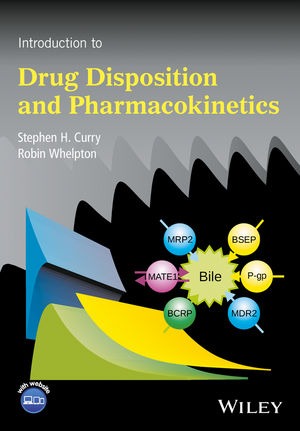
Introduction to Drug Disposition and Pharmacokinetics
The application of knowledge of drug disposition, and skills in pharmacokinetics, are crucial to the development of new drugs and to a better understanding of how to achieve maximum benefit from existing ones. The book takes the reader from basic concepts to a point where those who wish to will be able to perform pharmacokinetic calculations and be ready to read more advanced texts and research papers.

Introduction to development engineering
Introduces the emerging field of development engineering and its constituent theories, methods, and applications. It is both an instructional text for students and a resource for researchers and practitioners involved in the design and scaling of technologies for low-resource communities. The scope is broad, ranging from the development of mobile applications for low-literacy users to hardware and software solutions for providing electricity and water in remote environments. It is also highly interdisciplinary, drawing on methods and theories from the social sciences as well as engineering and the natural sciences.
Introduction to Data Mining and its Applications
This book explores the concepts of data mining and data warehousing, a promising and flourishing frontier in data base systems and new data base applications and is also designed to give a broad, yet in-depth overview of the field of data mining. Data mining is a multidisciplinary field, drawing work from areas including database technology, AI, machine learning, NN, statistics, pattern recognition, knowledge based systems, knowledge acquisition, information retrieval, high performance computing and data visualization.

Introduction to Data Envelopment Analysis and Its Uses : With DEA-Solver Software and References
Recent years have seen a great variety of applications of DEA (Data Envelopment Analysis) for use in evaluating the performances of many different kinds of entities engaged in many different activities in many different contexts in many different countries. One reason is that DEA has opened up possibilities for use in cases which have been resistant to other approaches because of the complex (often unknown) nature of the relations between multiple inputs and multiple outputs involved in many of these activities (which are often reported in non-commeasurable units). It provide a systematic introduction to DEA and its uses as a multifaceted tool for evaluating problems in a variety of contexts.

Introduction to Cryptography : Principles and Applications
In the first part, this book covers the key concepts of cryptography on an undergraduate level, from encryption and digital signatures to cryptographic protocols. In the second part, more advanced topics are addressed, such as the bit security of one-way functions and computationally perfect pseudorandom bit generators.
Introduction to Contact Mechanics
Introduction to Contact Mechanics, Second Edition is a gentle introduction to the mechanics of solid bodies in contact for graduate students, post doctoral individuals, and the beginning researcher. This second edition maintains the introductory character of the first with a focus on materials science as distinct from straight solid mechanics theory. Every chapter has been updated to make the book easier to read and more informative. A new chapter on depth sensing indentation has been added, and the contents of the other chapters have been completely overhauled with added figures, formulae and explanations.

Introduction to Computational Biology : An Evolutionary Approach
Molecular biology has changed dramatically over the past two decades. Until the early 1990s genes were studied one at a time by small teams of researchers; today entire genomes are sequenced by internationally collaborating laboratories. In the bygone gene-centered era the accumulation of data was the rate-limiting step in research. Now that step is often data interpretation. This is increasingly dependent on computational methods and as a consequence, computational biology has emerged in the past decade as a new subdiscipline of biology. This introduction to computational biology is centered on the analysis of molecular sequence data. There are two closely connected aspects to biological sequences: (i) their relative position in the space of all other sequences, and (ii) their movement through this sequence space in evolutionary time. Accordingly, the first part of the book deals with classical methods of sequence analysis: pairwise alignment, exact string matching, multiple alignment, and hidden Markov models. In the second part evolutionary time takes center stage and phylogenetic reconstruction, the analysis of sequence variation, and the dynamics of genes in populations are explained in detail. In addition, the book contains a computer program with a graphical user interface that allows the reader to experiment with a number of key concepts developed by the authors.

Introduction to Classical Geometries
This book follows Felix Klein’s proposal of studying geometry by looking at the symmetries (or rigid motions) of the space in question. In this way the classical geometries are studied: Euclidean, affine, elliptic, projective and hyperbolic. For simplicity the focus is on the two-dimensional case, which is already rich enough, though some aspects of the 3- or n-dimensional geometries are included. Once plane geometry is well understood, it is much easier to go into higher dimensions.

Introduction to C++ : 500+ Difficulty-Scaled Solved Programming Exercises
Includes more than 500 exercises and examples of progressive difficulty to aid the reader in understanding the C++ principles and to see how concepts can materialize in code. The examples are designed to be short, concrete, and substantial, quickly giving the reader the ability to understand how to apply correctly and efficiently the features of the C++ language and to get a solid programming know-how. Rest assured that if you are able to understand this book's examples and solve the exercises, you can safely go on to edit larger programs, you will be able to develop your own applications, and you will have certainly established a solid fundamental conceptual and practical background to expand your knowledge and skills
Introduction to basics of pharmacology and toxicology ; Vol.3 : Experimental pharmacology : Research methodology and biostatistics
Elaborates on the general principles of experimental pharmacology. Describes about the screening methods for the evaluation of different categories of drugs. Summarizes the various aspects of research methodology and biostatistics.

Introduction to basics of pharmacology and toxicology ; Vol.2 : Essentials of systemic pharmacology : From principles to practice
Describes the pharmacology of drugs acting on different systems in the human body Analyses various human diseases and the pharmacological agents governing them Provides a valuable reference resource for academicians, researchers, and clinical practitioners Offers a comprehensive overview of the pharmacology concerning the autonomic, central, and peripheral nervous systems. Presenting up-to-date information on chemical mediators and their significance, it highlights the therapeutic aspects of several diseases affecting the cardiovascular, renal, respiratory, gastrointestinal, endocrinal, and hematopoietic systems. The book also includes drug therapy for microbial and neoplastic diseases. It also comprises sections on immunopharmacology, dermatological, and ocular pharmacology providing valuable insights into these emerging and recent topics.

Introduction to basics of pharmacology and toxicology ; Vol.1 : General and molecular pharmacology : Principles of drug action
Illustrates the most crucial principles involved in pharmacology and allied sciences. The title begins by discussing the historical aspects of drug discovery, with up to date knowledge on Nobel Laureates in pharmacology and their significant discoveries. It then examines the general pharmacological principles - pharmacokinetics and pharmacodynamics, with in-depth information on drug transporters and interactions. In the remaining chapters, the book covers a definitive collection of topics containing essential information on the basic principles of pharmacology and how they are employed for the treatment of diseases.

Introduction to Assembly Language Programming : For Pentium and RISC Processors
Assembly language continues to hold a core position in the programming world because of its similar structure to machine language and its very close links to underlying computer-processor architecture and design. These features allow for high processing speed, low memory demands, and the capacity to act directly on the system’s hardware. This completely revised second edition of the highly successful Introduction to Assembly Language Programming introduces readers to assembly language programming and its role in computer programming and design. It focuses on providing a firm grasp of the main features of assembly programming, and how it can be used to improve a computer's performance. The revised edition covers a broad scope of subjects and adds valuable material on protected-mode Pentium programming, MIPS assembly language programming, and use of the NASM and SPIM assemblers for a Linux orientation. All of the language's main features are covered in depth. The book requires only some basic experience with a structured, high-level language.

Introduction to Applied Optimization
This text presents a multi-disciplined view of optimization, providing students and researchers with a thorough examination of algorithms, methods, and tools from diverse areas of optimization without introducing excessive theoretical detail. This second edition includes additional topics, including global optimization and a real-world case study using important concepts from each chapter.

Introduction to Agricultural Engineering Technology : A Problem Solving Approach
Agricultural Engineering Technology: A problem Solving Approach is an invaluable text for agriculture students at the introductory level. The third edition has been thoroughly updated and reorganized to meet the current units and standards of the American Society of Agricultural and Biological Engineers (ASABE).The book aims to: Familiarize students with a wide range of applications of engineering principles to agriculture, Discuss a selection of independent but related topics, Advance students’ problem solving abilitiesEach chapter lists education objects, introductory material, and example problems where appropriate. In addition problems using ISO (metric) units, are now included.

Introduction to Advanced System-on-Chip Test Design and Optimization
SOC test design and its optimization is the topic of Introduction to Advanced System-on-Chip Test Design and Optimization. It gives an introduction to testing, describes the problems related to SOC testing, discusses the modeling granularity and the implementation into EDA (electronic design automation) tools. The book is divided into three sections: i) test concepts, ii) SOC design for test, and iii) SOC test applications.

Introduction pratique aux bases de données relationnelles = A practical introduction to relational databases
Cet ouvrage introduit le lecteur dans le domaine des bases de données relationnelles en présentant une vaste sélection de sujets portant sur la modélisation des données, les langages de base de données, l'architecture des systèmes et l'évolution post-relationnelle. - Notions fondamentales: le modèle relationnel, les composants d’un système de gestion de bases de données, l’organisation de la mise en œuvre d’une base de données, les tâches de gestion des données. - De l'analyse à la base de données : le modèle entité association, la généralisation et l’agrégation, les dépendances et les formes normales,les contraintes d’intégrité. - Aperçu des langages de requête et de manipulation des données: l’algèbre relationnelle, le calcul des prédicats, SQL, QUEL, QBE, le traitement des valeurs nulles, la protection des données. - Les composants de l'architecture d'un système de bases de données : la compilation, l’interprétation et l’optimisation des requêtes, l’environnement multiutilisateur, le concept de transaction et la sérialisation, les méthodes optimiste et pessimiste, les structures de stockage et les méthodes d’accès. L’intégration et la migration des bases de données: l’exploitation des bases de données hétérogènes, les bases de données sur le Web, les règles de conversion pour effectuer l’intégration et la migration, les variantes de migration des bases de données hétérogènes, la planification de l’intégration et de la migration.

Introduction à SCILAB
Ce livre est organisé en deux parties. La première partie est consacrée au langage Scilab et à son environnement. Dans la seconde partie, les fonctionnalités des grands domaines d'utilisation du calcul numérique sont décrites et illustrées par des exemples: calcul matriciel, simulation, optimisation, résolution d'équations, statistiques.
