



الصفحة 166
الصفحة 166
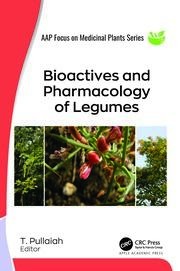
Bioactives and pharmacology of Legumes
A variety of bioactives and therapeutics from the legume family (Fabaceae or Leguminosae) are thoroughly detailed. For each species included in the volume, a brief introduction is given, the plant’s bioactive compounds are listed, and its chemical structures shown, followed by their pharmacological activities. Many of these plants have medicinal activities that include antiviral, antimicrobial, antioxidant, anticancer, anti-inflammatory, and antidiabetic, hepatoprotective, nephroprotective and cardioprotective. The biochemical characteristics of the 37 plants included, such as the type of starch, protein, and fibers, can be exploited as binders, excipients, thickeners, and dispersants in the formulation of various products in the pharmaceutical industry. The published literature on the pharmacological activities on each species is reviewed and presented in a concise and clear manner.
Bioactive Heterocyles I
Bioactive Heterocycles I is a continuation of critical accounts about heterocyclic compounds within the series Topics in Heterocyclic Chemistry. The present volume provides comprehensive reviews of the chemistry and bioactivity of selected groups of heterocycles and natural products. … Overall, this book covers in detail several classes of bioactive heterocyclic compounds including selected natural products. The focus is on the most recent advances, and the clarity of the presentation is very good. It should be of interest to individuals interested in the discovery and synthesis of bioactive small molecules, including research scientists in academia and industry.
Bioactive Heterocycles II
As part of the series Topics in Heterocyclic Chemistry, this volume titled Bio- tive Heterocycles II presents comprehensive and up-to-date reviews on selected topics regarding synthetic as well as naturally occurring bioactive heterocycles. The frst chapter, "High Pressure Synthesis of Heterocycles Related to Bio- tive Molecules" by Kiyoshi Matsumoto, presents a unique high-pressure s- thetic methodology in heterocyclic chemistry. Basic principles and fruitful examples for pericyclic reactions, such as Diels-Alder reactions, 1,3-dipolar reactions, and also for ionic reactions, such as S and addition reactions, are N discussed.
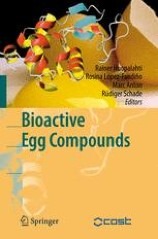
Bioactive egg compounds
Hen eggs have exceptional potential as an inexhaustible source for a variety of products with unique properties. These products are valuable to human health and nutrition and can be used as raw materials for diverse purposes in the cosmetics and pharmaceutical industries. Bioactive Egg Compounds presents the latest results and concepts in the biotechnological use of egg compounds. Following an introduction to the different compounds of egg white, yolk and shell, the nutritive value of egg compounds is discussed. Procedures for processing egg compounds to improve their nutritive value are described, including the concept of so-called enriched eggs. Also described is the isolation and application of egg compounds with special properties, such as antibiotic action.
Bioactive Conformation I
This series presents critical reviews of the present position and future trends in modern chemical research. It contains short and concise reports on chemistry, each written by the world renowned experts – it is still valid and useful after 5 or 10 years. More information as well as the electronic version of the whole content available at: springerlink.com. The book will appeal to scientists and practitioners in the mentioned fields and in industry.

Bioactive composite (cention N) : Sensitivity and microleakage
Recently, a new direct tooth-coloured, bulk-fill, and aesthetic restorative material, Cention N, was developed. This material presents with good mechanical properties and long-term stability due to the crosslinking of methacrylates in the final restoration hence it can be used in load-bearing areas. This graduation project provides an update on the composition and properties of Cention N restorative material, and evaluate the microleakage of Cention-N with Nano-Hybrid composite.
Binary Rare Earth Oxides
The book begins with a brief introduction to binary rare earth oxides, their physical and chemical stabilities, polymorphism, crystal structures and phase transformation and the association with current applications. The book goes on to present the band structure of the oxides using several quantum chemical calculations, which belong to a newly developed area in the binary rare earth oxides. Central to this chapter are the characterizations of electrical, magnetic and optical properties, as well as details of single crystal growth and particle preparation methods that have progressed in recent years. Later chapters concentrate on thermo-chemical properties and trace determination techniques. The final chapter contains a variety of useful applications in various fields such as phosphors, glass abrasives, automotive catalysts, fuel cells, solid electrolytes, sunscreens, iron steels, and biological materials.
Bilinear integrable systems : From classical to quantum, continuous to discrete ; Proceedings of the NATO Advanced Research Workshop on Bilinear Integrable Systems: From Classical to Quantum, Continuous to Discrete St. Petersburg, Russia, 15-19 September 2002
Trained as a physicistin his home university Kyushu University, Professor Hirota earned his PhD in’61 at Northwestern University with Professor Siegert in the field of “QuantumStatistical mechanics”. He wrote a widely appreciated Doctoral dissertation on“Functional Integral representation of the grand partition function”. As a youngresearcher, he entered the RCA Company in Tokyo to do research on semi-conductor plasmas. Professor Hirota was led to model the Toda lattice as a non-linear networkof ladder-type LC circuits. The self-dual case led to equations very reminiscentof the Sine-Gordon equation, with much the same features (existence of onesoliton, soliton-soliton interaction, etc)

Bigel : An innovative drug delivery system
Bigel is a promising drug delivery system that modifies the pharmacotherapeutic characteristics of knowing active pharmaceutical ingredient (API).It is a mix between hydrogel and organogel (oleogel). The objective of the present work demonstrates the ability of bigel to overcome the disadvan- tages of both types of gels, including the limited ability to cross lipophilic barriers of the skin for hydrogels and the low patient compliance for organogels due to their stickiness and oily residues. Materials andmethods : Carbomer934, PolyvinylpyrrolidoneK 90 and Castor oil where mixed in a high shear mixer using diferent weight percentages of each. Hence,13 for mulations (BG1 to BG13) prepared by simplex mixture design modelis used to study the inuenceofafore- mentioned ingredients on appearance, dynamicviscosity, pH, stability, microscopicstructure of bigel and to understand the chemical interactions between bigel components, Fouriertrans- form infrared (FTIR) analysis will bereported.

Big little hotel : Small hotels designed by architects
This book showcases small hotels, all located in the United States, designed by architects who use light and materials in interesting and intentional ways. The designs also deliberately connect to their local history, context, or land – in many cases all three. Both the architecture and the operations harmonize with the place, whether that is a bustling city, small town, or natural area. Many are new buildings but some are adaptive reuse projects or renovations of historic properties, extending the connectivity of the place into the future.
Big Data Science in Finance
Explains the mathematics, theory, and methods of Big Data as applied to finance and investing Examines the mathematics, theory, and practical use of the revolutionary techniques that are transforming the industry. Designed for mathematically-advanced students and discerning financial practitioners alike, this energizing book presents new, cutting-edge content based on world-class research taught in the leading Financial Mathematics and Engineering programs in the world. Marco Avellaneda, a leader in quantitative finance, and quantitative methodology author Irene Aldridge help readers harness the power of Big Data. Provides a complete account of Big Data that includes proofs, step-by-step applications, and code samples Explains the difference between Principal Component Analysis (PCA) and Singular Value Decomposition (SVD) Covers vital topics in the field in a clear, straightforward manner Compares, contrasts, and discusses Big Data and Small Data Includes Cornell University-tested educational materials such as lesson plans, end-of-chapter questions, and downloadable lecture slides
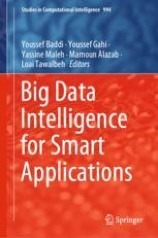
Big Data Intelligence for Smart Applications
Presents the latest discoveries in the field of machine intelligence and big data Proposes many case studies and applications of computational and Big data Combines theory and practice so that readers of the few books (beginners or experts)
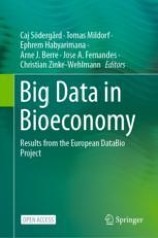
Big Data in Bioeconomy : Results from the European DataBio Project
This book presents the comprehensive outcome of The European DataBio Project, which examined new data-driven methods to shape a bioeconomy. These methods are used to develop new and sustainable ways to use forest, farm and fishery resources.
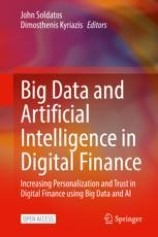
Big data and artificial intelligence in digital finance : Increasing personalization and trust in digital finance using big data and AI
This book presents how cutting-edge digital technologies like Machine Learning, Artificial Intelligence (AI), and Blockchain are set to disrupt the financial sector. The book illustrates how recent advances in these technologies facilitate banks, FinTechs, and financial institutions to collect, process, analyze, and fully leverage the very large amounts of data that are nowadays produced and exchanged in the sector. To this end, the book also introduces some of the most popular Big Data, AI and Blockchain applications in the sector, including novel applications in the areas of Know Your Customer (KYC), Personalized Wealth Management and Asset Management, Portfolio Risk Assessment, as well as variety of novel Usage-based Insurance applications based on Internet-of-Things data.
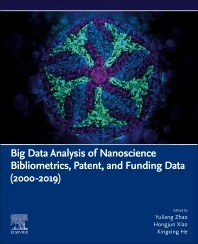
Big data analysis of nanoscience bibliometrics, patent, and funding data (2000-2019)
Presents an evaluation of nanotechnologies outputs (academic outputs and patents) and their impact from 2000-2019. The evaluation uses Elsevier’s Scopus (the largest abstract and citation database of peer-reviewed literature), SciVal (a scientific research analysis platform), Funding Institutional (a funding database), and PatentSight (a patent analysis platform). It covers four key topics regarding nanoscience research, including: 1) An overview of nano-related scholarly output, 2) Nanoscience and its contribution to basic science, 3) Nanoscience and its impact on and collaboration with industry partners, and 4) Key factors that promote the development of nanoscience.
Big Data – BigData 2020; 9th International Conference, Held as Part of the Services Conference Federation, SCF 2020, Honolulu, HI, USA, September 18-20, 2020, Proceedings
Constitutes the proceedings of the 9th International Conference on Big Data, BigData 2020, held as part of SCF 2020, during September 18-20, 2020. The conference was planned to take place in Honolulu, HI, USA and was changed to a virtual format due to the COVID-19 pandemic. The 16 full and 3 short papers presented were carefully reviewed and selected from 52 submissions. The topics covered are Big Data Architecture, Big Data Modeling, Big Data As A Service, Big Data for Vertical Industries (Government, Healthcare, etc.), Big Data Analytics, Big Data Toolkits, Big Data Open Platforms, Economic Analysis, Big Data for Enterprise Transformation, Big Data in Business Performance Management, Big Data for Business Model Innovations and Analytics, Big Data in Enterprise Management Models and Practices, Big Data in Government Management Models and Practices, and Big Data in Smart Planet Solutions.
Bifurcations, Instabilities, Degradation in Geomechanics
Leading international researchers and practitioners of bifurcations and instabilities in geomechanics debate the developments and applications which have occurred over the last few decades. The topics covered include modeling of bifurcation, structural failure of geomaterials and geostructures, advanced analytical, numerical and experimental techniques, and application and development of generalised continuum models etc. In addition analytical solutions, numerical methods, experimental techniques, and case histories are presented. Beside fundamental research findings, applications in geotechnical, petroleum, mining, and bulk materials engineering are emphasised.

Bidding Strategies in Agent-Based Continuous Double Auctions
Presents a new bidding strategy for agents to adopt in CDAs and propose tools to enhance the performance of existing bidding strategies in CDAs. The superior performance of the new bidding strategy as well as the tools presented in this book are illustrated through extensive experiments.
Beyond the limits to growth : New ideas for sustainability from Japan
This book offers an optimistic view of the future and provides a road map for societies to get there. Drawing upon extensive research and many years as a thought leader in environmental and sustainability issues in Japan and internationally, Hiroshi Komiyama analyzes the most pressing challenges to the attainment of sustainability of economically advanced nations and argues forcefully for Japan to lead them out of the present dilemma through active promotion of creative consumer and societal demand. He shows how an active industry–government–academic partnership can provide the environment needed to promote such new creative demand and illustrates its potential through presentation of a Platinum Society Network that was launched on a regional basis in Japan in 2010 to facilitate the solution of common issues through the exchange of information and ideas.
Beyond partial differential equations : On linear and Quasi-Linear abstract hyperbolic evolution equations
The present volume is self-contained and introduces to the treatment of linear and nonlinear (quasi-linear) abstract evolution equations by methods from the theory of strongly continuous semigroups.
