



الصفحة 161
الصفحة 161

A Concise Guide to Endodontic Procedures
A concise up-to-date resource that covers a wide range of endodontic procedures, including non-surgical root canal therapy, surgical root canal therapy, trauma care and the management of fractured teeth, apexification, apexogenesis, revascularization, regeneration, Cvek partial pulpotomy, root canal retreatment, and periapical surgery.

A Concise Course on Stochastic Partial Differential Equations
Concentrate on (nonlinear) stochastic partial differential equations (SPDE) of evolutionary type. All kinds of dynamics with stochastic influence in nature or man-made complex systems can be modelled by such equations.

A Computer Scientists Guide to Cell Biology
Provides a succinct treatment of the general concepts of cell biology, furnishing the computer scientist with the tools necessary to read and understand current literature in the field.After a brief introduction to cell biology, the text focuses on the principles behind the most-widely used experimental procedures and mechanisms, relating them to well-understood concepts in computer science. The presentation of the material has been prepared for the reader’s quick grasp of the topic: comments on nomenclature and background notes can be ascertained at a glance, and essential vocabulary is boldfaced throughout the text for easy identification.

A comparison between ovate pontic and modified ridge-lap pontic
Aims to explore the differences in aesthetic, hygienic, and functional aspects of replacing missing anterior teeth using various pontic designs, with a particular focus on the ovate pontic design with a focus on the different stages needed for a pontic design placement on a ridge missing either a single or multiple teeth and the procedures needed to condition the soft tissues surrounding the prothesis.

A Companion to islamic art and architecture ; 2 Vol. Set : Blackwell companions to art history
Bridges the gap between monograph and survey text by providing a new level of access and interpretation to Islamic art. The more than 50 newly commissioned essays revisit canonical topics, and include original approaches and scholarship on neglected aspects of the field. showcases more than 50 specially commissioned essays and an introduction that survey Islamic art and architecture in all its traditional grandeurEssays are organized according to a new chronological-geographical paradigm that remaps the unprecedented expansion of the field and reflects the nuances of major artistic and political developments during the 1400-year span. Represents recent developments in the field, and encourages future horizons by commissioning innovative essays that provide fresh perspectives on canonical subjects, such as early Islamic art, sacred spaces, palaces, urbanism, ornament, arts of the book, and the portable arts while introducing others that have been previously neglected, including unexplored geographies and periods, transregional connectivities, talismans and magic, consumption and networks of portability, museums and collecting,

A Clinician's guide to systemic effects of periodontal diseases
Serves as an ideal, easy-to-use reference for the practicing health professional. It summarizes the latest research on the systemic effects of periodontal diseases, discusses how the results of this research will impact on clinical practice, and aims to help the clinician to answer questions that may be posed by patients, medical colleagues, and the media.

A Changing World : Challenges for Landscape Research
"Written primarily for researchers and advanced students in environmental and social sciences, this latest book in Springer’s Landscape Series looks at some of the emerging fields and new challenges in landscape research. These include: the role of value systems in perceiving, appreciating, and managing landscapes / the ‘space’ and ‘place’ concept in landscape research GIS and remote sensing techniques for gathering and processing spatially and temporally explicit land cover, vegetation, and land use data / methods of landscape history / landscape genetics and genetic methods to test landscape connectivity and dispersal of plant and animal species"
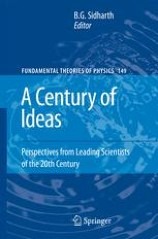
A Century of Ideas : Perspectives from Leading Scientists of the 20th Century
Shortly after its inauguration in 1985 the Birla Science Centre, Hyderabad, India, started a series of lectures by Nobel Laureates and other scientists of international renown, usually in Physics and Astronomy, sometimes in Life Sciences and Chemistry. The present collection mostly consists of lectures on frontier topics. The transcript of each lecture is preceded by a short biography of the Nobel Laureate/Scientist in question.

A Benchmark Approach to Quantitative Finance
The general framework is used to provide an understanding of the nature of stochastic volatility. The book is intended for a wide audience that includes quantitative analysts, postgraduate students and practitioners in finance, economics and insurance. It aims to be a self-contained, accessible but mathematically rigorous introduction to quantitative finance for readers that have a reasonable mathematical or quantitative background. Finally, the book should stimulate interest in the benchmark approach by describing some of its power and wide applicability.

A Basic Course on Probability Theory
Develops the necessary background in probability theory underlying diverse treatments of stochastic processes and their wide-ranging applications. Theorems from analysis and measure theory used in the main text are provided in comprehensive appendices, along with their proofs, for ease of reference.

7th Asian-Pacific Conference on Medical and Biological Engineering : APCMBE 2008 22–25 April 2008 Beijing, China
Presents the proceedings of the 7th Asian-Pacific Conference on Medical and Biological Engineering (APCMBE 2008). Themed "Biomedical Engineering – Promoting Sustainable Development of Modern Medicine" the proceedings address a broad spectrum of topics from Bioengineering and Biomedicine.
4th Kuala Lumpur International Conference on Biomedical Engineering 2008 ; BIOMED 2008 25–28 June 2008 Kuala Lumpur, Malaysia
The topics covered in the conference proceedings include: Artificial organs, bioengineering education, bionanotechnology, biosignal processing, bioinformatics, biomaterials, biomechanics, biomedical imaging, biomedical instrumentation, bioMEMS, clinical engineering, prosthetics.

40 Puzzles and Problems in Probability and Mathematical Statistics
"40 Puzzles and Problems in Probability and Mathematical Statistics" is intended to teach the reader to think probabilistically by solving challenging, non-standard probability problems. The motivation for this clearly written collection lies in the belief that challenging problems help to develop, and to sharpen, our probabilistic intuition much better than plain-style deductions from abstract concepts. The selected problems fall into two broad categories. Problems related to probability theory come first, followed by problems related to the application of probability to the field of mathematical statistics. All problems seek to convey a non-standard aspect or an approach which is not immediately obvious.
3rd Kuala Lumpur International Conference on Biomedical Engineering 2006 ; Biomed 2006, 11-14 December 2006, Kuala Lumpur, Malaysia
The Kuala Lumpur International Conference on Biomedical Engineering (Biomed 2006) was held from 11 to 14 December 2006 at the Palace of the Golden Horses, Kuala Lumpur, Malaysia. This international conference was jointly organised by the Department of Biomedical Engineering, University of Malaya, Malaysia; Department of Biomedical Engineering, Inje University, Korea; and Malaysian Society of Medical and Biological Engineering. The papers presented at Biomed 2006 cover the following areas: artificial intelligence, biological effects of non-ionising electromagnetic fields, biomaterials, biomechanics, biomedical sensors, biomedical signal analysis, biotechnology, clinical engineering, human performance engineering, imaging, medical informatics, medical instruments and devices, physiological modelling, simulation, and control, prostheses and artificial organs, regulations and organisations, rehabilitation engineering, telemedicine, tissue engineering, and virtual reality in medicine.

3D Segmentation for medical images (OsteoVision) = التقطيع ثلاثي الأبعاد للصور الطبية
With the increasing integration of AI across various sectors, artificial intelligence (AI) is already playing a significant role in the healthcare industry, and its use is expected to grow further. AI systems used in image processing and computer vision algorithms have shown a significant ability to perform many operations such as segmentation, classification, and detection. This project presents the application of computer vision algorithms in the field of medical imaging for diagnostic, therapeutic, and interventional purposes. This thesis explores the use of several computer vision algorithms to address different pathologies, specifically brain tumors (glioma) (see Appendix A) and knee osteoarthritis (OA), as well as tracking the progression of knee osteoarthritis using the Kellgren and Lawrence (KL) grading system, a common method for classifying the severity of OA into five grades. To achieve the desired impact, the project employs various techniques, including 3D segmentation for brain tumors, 2D segmentation for knee joints, and multinomial classification for determining the severity of knee OA injuries. The primary aims of the project are to enhance diagnostic accuracy, assist in creating treatment plans, provide an assistive tool for healthcare providers to make more informed decisions, leverage AI's capabilities to detect abnormalities that might escape the human eye, and streamline workflow. To facilitate these goals, the project incorporates a user-friendly UI, a website, and a Flutter-based mobile application, enabling healthcare providers to efficiently integrate these tools into their practice and improve patient care.
3D Printing in Oral Health Science : Applications and Future Directions
Equips readers with a sound understanding of contemporary clinical applications in all fields of dentistry and their future directions. In the last few years, the development of 3D printing for medical and dental applications has increased tremendously. Advancements in 3D printing create the possibility of customized products, savings on small-scale productions, ease of sharing and processing of patient image data, and educational up-gradation. Looking at the dental specialties, it is evident that 3D printing has applications in all aspects of oral health science including prosthodontics, oral surgery, periodontics, endodontics, and orthodontics. This book will cover all major fields in dentistry and will help the practitioner in the process of decision-making and apply concepts in clinical or laboratory practice. It is based on current scientific evidence to provide readers with an up-to-date contemporary underst
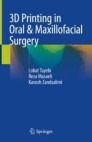
3D printing in oral & maxillofacial surgery
A comprehensive guide to 3D printing and 3D bioprinting methods and their application in oral and maxillofacial surgeries. Among the 3D printing methods considered are fused deposition modeling, selective laser sintering, photopolymer jetting, powder binder printing, and stereolithography, while the coverage of 3D bioprinting encompasses inkjet, microextrusion, and laser techniques. In each case, the relevance of the technique to oral and maxillofacial surgery is explained. In addition, the available inks and bioinks for 3D printing are reviewed. The roles of soft and hard tissue printing in oral and maxillofacial tissue engineering and the use of 3D printing in multi- and interfacial tissue engineering are then examined in depth. The particular value of 3D printing in the treatment of critically sized defects is discussed separately. Finally, up-to-date information is provided on guided tissue/bone regeneration using 3D printing. The book will be of interest to both oral and maxillofacial surgeons and biomedical engineers.
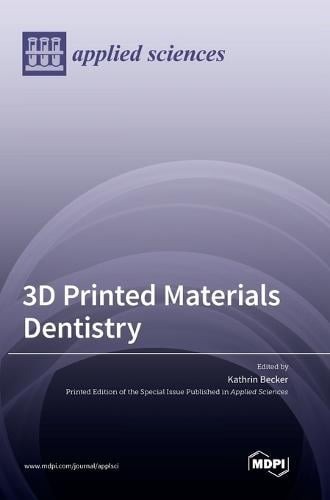
3D printed materials dentistry
Covers a wide range of applications of 3D-printing in dentistry. Five out of eleven research papers deal with applications of 3D printing in orthodontics, one study presents a 3D-printed fitting system for the FFP2 that were applied during the COVID-19 pandemic, and the others address applications in prosthodontics and restorative dentistry.
3D imaging in endodontics : A new era in diagnosis and treatment
Full understanding of the role of cone beam computed tomography (CBCT) in helping to solve many of the most challenging problems in endodontics. It will shorten the learning curve in application of this exciting imaging technology in a variety of contexts: difficult diagnostic cases, treatment planning, evaluation of internal tooth anatomy prior to root canal therapy, nonsurgical and surgical treatments, early detection and treatment of resorptive defects, and outcomes assessment. The ability to obtain an accurate 3D representation of a tooth and the surrounding structures by means of noninvasive CBCT imaging is changing the approach to clinical decision making in endodontics. Clinicians long accustomed to working in very small, three-dimensional spaces are no longer constrained by the limitations of two-dimensional imaging. The challenges of mastering the new technology can, however, be daunting. The detailed guidance contained in this book will help endodontists to take full advantage of the important benefits offered by CBCT.
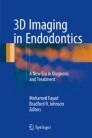
3D imaging in endodontics : A new era in diagnosis and treatment
Provides readers with a full understanding of the role of cone beam computed tomography (CBCT) in helping to solve many of the most challenging problems in endodontics. It will shorten the learning curve in application of this exciting imaging technique in a variety of contexts: difficult diagnostic cases, treatment planning, evaluation of internal tooth anatomy prior to root canal therapy, nonsurgical and surgical treatments, early detection and treatment of resorptive defects, and outcomes assessment.
