



الصفحة 16
الصفحة 16

Membrane Computing; 8th International Workshop, WMC 2007 Thessaloniki, Greece, June 25-28, 2007 Revised Selected and Invited Papers
This volume contains a selection of papers presented at the Eighth Workshop on Membrane Computing, WMC8, which took place in Thessaloniki, Greece, during June 25–28, 2008. Special attention was paid to the interaction of membrane computing with biology and computer science, focusing on the - ological roots of membrane computing, on applications of membrane computing in biology and medicine, and on possible electronically based implementations.

Membrane Computing ; Vol. 4361 ; 7th International Workshop, WMC 2006, Leiden, Netherlands, July 17-21, 2006, Revised, Selected, and Invited Papers
The present volume contains a selection of papers presented at the Seventh Workshop on Membrane Computing, WMC7, which took place in Leiden, The Netherlands, during July 17–21, 2006. The ?rst three workshops on membrane computing were organized in Curtea de Arge¸ s, Romania – they took place in August 2000 (with the proceedings published in Lecture Notes in Computer Science, volume2235),in August 2001(with a selection of papers published asa special issue of Fundamenta Informaticae, volume 49, numbers 1–3, 2002), and in August 2002 (with the proceedings published in Lecture Notes in Computer Science, volume 2597). The next three workshops were organized in Tarragona, Spain, in July 2003, in Milan, Italy, in June 2004, and in Vienna, Austria, in July 2005, with the proceedings published as volumes 2933, 3365, and 3850, respectively, of Lecture Notes in Computer Science. The 2006edition of WMC wasorganized(and supported) byLorentzCenter, Leiden, under the auspices of the European Molecular Computing Consortium (EMCC). Special attention was paid to the interaction of membrane computing with biology, focusing both on the biological roots of membrane computing and on applications of membrane computing in biology and medicine.

Membrane Computing ; Vol. 3850 ; 6th International Workshop, WMC 2005, Vienna, Austria, July 18-21, 2005, Revised Selected and Invited Papers
The papers in this volume cover all the main directions of research in membrane computing, ranging from theoretical topics in mathematics and computer science, to application issues, especially in biology. More specifically, these papers present research on topics such as: computational power and complexity classes, new types of P systems, relationships to Petri nets, quantum computing, and brane calculi, determinism vs. nondeterminism, hierarchies, the size of small families, algebraic approaches, and designing polynomial solutions to NP-complete problems through the use of membrane systems. Like the previous workshops,

Membrane Computing ; Vol. 3365 ; 5th International Workshop, WMC 2004, Milan, Italy, June 14-16, 2004, Revised Selected and Invited Papers
Constitutes the refereed extended postproceedings of the 5th International Workshop on Membrane Computing, held in Italy, in June 2004. This book addresses various topics in the area of membrane computing, ranging from mathematics and theoretical computer science to applications in biology, linguistics, and computer graphics.

Mediterranean Island Landscapes : Natural and Cultural Approaches
Mediterranean islands exhibit many similarities in their biotic ecological, physical and environmental characteristics. There are also many differences in terms of their human colonization and current anthropogenic pressures. This book addresses in three sections these characteristics and examines the major environmental changes that the islands experienced during the Quaternary period. The first section provides details on natural and cultural factors which have shaped island landscapes. It describes the environmental and cultural changes of the Holocene and their effects on biota, as well as on the current human pressures that are now threats to the sustainability of the island communities. The second section focuses on the landscapes of the largest islands namely Sicily, Sardinia, Corsica, Cyprus, Crete, Malta and the Balearics. Each island chapter includes a special topic reflecting a particular characteristic of the island. Part three presents strategies for action towards sustainability in Mediterranean islands and concludes with a comparison between the largest islands.

Medicinal Plants for Holistic Health and Well-Being
Medicinal Plants for Holistic Health and Well-Being discusses, in depth, the use of South African plants to treat a variety of ailments, including tuberculosis, cancer, periodontal diseases, acne, postmacular hypomelanosis, and more. Plants were selected on the basis of their traditional use, and the book details the scientific evidence that supports their pharmacological and therapeutic potential to safely and effectively treat each disease. Thus, this book is a valuable resource for all researchers, students and professors involved in advancing global medicinal plant research

Medicinal foods as potential therapies for type-2 diabetes and associated diseases : The chemical and pharmacological basis of their action
Focuses on active pharmacological principles that modulate diabetes, associated risk factors, complications and the mechanism of action of widely used anti-diabetic herbal plants—rather than just the nutritional composition of certain foods. Provides up-to-date information on acclaimed antidiabetic super fruits, spices and other food ingredients. Sections cover diabetes and obesity at the global level, the physiological control of carbohydrate and lipid metabolism, the pathophysiology of type-2 diabetes, the chemistry and pharmacology of a variety of spices, and much more. This book will be invaluable for research scientists and students in the medical and pharmaceutical sciences, medicinal chemistry, herbal medicine, drug discovery/development, nutrition science, and for herbal practitioners and those from the nutraceutical and pharm industries.
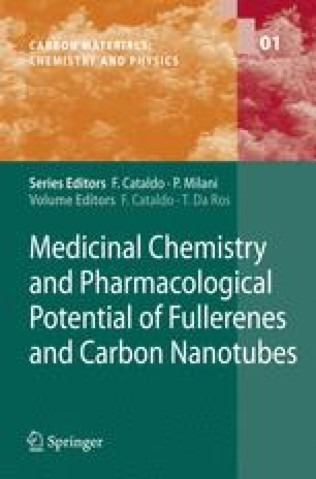
Medicinal Chemistry and Pharmacological Potential of Fullerenes and Carbon Nanotubes
Medicinal Chemistry and Pharmacological Potential of Fullerenes and Carbon Nanotubes features important insights into the applications of fullerenes and carbon nanotubes. It discusses the fullerene and nanotubes derivatives which are effective against viruses, cells, and bacteria and those which are able to interact and inhibit certain enzymes. Also covered in this book are the formation of complex structures between biologically active molecules and carbon materials. Furthermore, the application of fullerenes in certain medical therapies is explored, including the very recent discovery of new bio-compatible media which could be used as carriers in the delivery of fullerenes in vivo. An additional topic of this text is the formation of hybrids between nanotubes and biological molecules and their use as chemical sensors.

Medical Technologies in Neurosurgery
The tremendous progress evolving in medical technologies in recent years increasingly influences our daily neurological practice. Ethical aspects in the application of technologies from differing viewpoints are discussed in detail. Additionally, typical examples for the application of medical technologies in the operating room include image processing, robotic devices, and intraoperative imaging are clearly presented.

Medical Pharmacology and Therapeutics
Provides all the information medical and healthcare students need throughout their degree programme and beyond, including for professional qualifications such as the PSA. This all-round textbook covers basic pharmacology through to drug prescribing in clinical contexts, covering the pathogenic mechanisms of disease; drug actions, side effects, and the therapeutic principles of drug use. It takes a helpful systems-based approach that orders information according to body systems and disease areas, rather than by drug class. Now in its sixth edition, the book has been fully updated to include latest scientific understanding of drug action and administration and current best practice in prescribing medications, informed by the latest national guidelines.
Medical Image Computing and Computer-Assisted Intervention – MICCAI 2005 ; 8th International Conference, Palm Springs, CA, USA, October 26-29, 2005, Proceedings, Part I
This paper presents a method for classification of medical images, using machine learning and deformation-based morphometry. A morphological representation of the anatomy of interest is first obtained using highdimensional template warping, from which regions that display strong correlations between morphological measurements and the classification (clinical) variable are extracted using a watershed segmentation, taking into account the regional smoothness of the correlation map which is estimated by a crossvalidation strategy in order to achieve robustness to outliers. A Support Vector Machine-Recursive Feature Elimination (SVM-RFE) technique is then used to rank computed features from the extracted regions, according to their effect on the leave-one-out error bound. Finally, SVM classification is applied using the best set of features, and it is tested using leave-one-out. The results from a group of 61 brain images of female normal controls and schizophrenia patients demonstrate not only high classification accuracy (91.8%) and steep ROC curves, but also exceptional stability with respect to the number of selected features and the SVM kernel size
Medical genetics and law : An international perspective
Essential resource to understanding the intersection of medical genetics and law. In a unique approach, it provides an overview on the biological principles of DNA basics and genetic inheritance linking the knowledge with the ethical and legal challenges presented by modern developments in genetics.

Medical Emergency Teams : Implementation and Outcome Measurement
Why Critical Care Evolved METs? In early 2004, when Dr. Michael DeVita informed me that he was cons- ering a textbook on the new concept of Medical Emergency Teams (METs), I was surprised. At Presbyterian-University Hospital in Pittsburgh we int- duced this idea some 15 years ago, but did not think it was revolutionary enough to publish. This, even though, our fellows in critical care medicine training were all involved and informed about the importance of “C- dition C (Crisis),” as it was called to distinguish it from “Condition A (Arrest). ”We thought it absurd to intervene only after cardiac arrest had occurred,because most cases showed prior deterioration and cardiac arrest could be prevented with rapid team work to correct precluding problems. The above thoughts were logical in Pittsburgh, where the legendary Dr. Peter Safar had been working since the late 1950s on improving current resuscitation techniques, ?rst ventilation victims of apneic from drowning, treatment of smoke inhalation, and so on. This was followed by external cardiac compression upon demonstration of its ef?ciency in cases of unexpected sudden cardiac arrest. Dr. Safar devoted his entire professional life to improvement of cardiopulmonary resuscitation. He and many others emphasized the importance of getting the CPR team to o- of-hospital victims of cardiac arrest as quickly as possible.

Medical Biometrics ; 1st International Conference, ICMB 2008, Hong Kong, China, January 4-5, 2008, Proceedings
Medical biometrics primarily refers to the usage of beh- ioral and physiological characteristics of humans for medical diagnosis and body care. Thus the goal of medical biometrics is to explore solutions to the open problems in medicine using biometric measurements, technologies and systems.

Medial Representations : Mathematics, Algorithms and Applications
The last half century has seen the development of many biological or physical theories that have explicitly or implicitly involved medial descriptions of objects and other spatial entities in our world. Simultaneously mathematicians have studied the properties of these skeletal descriptions of shape, and, stimulated by the many areas where medial models are useful, computer scientists and engineers have developed numerous algorithms for computing and using these models. We bring this knowledge and experience together into this book in order to make medial technology more widely understood and used.

Media Theory : Interdisciplinary Applied Mathematics
The focus of this book is a mathematical structure modeling a physical or biological system that can be in any of a number of `states.' Each state is characterized by a set of binary features, and differs from some other neighbor state or states by just one of those feature. A simple example of a `state’ is a partial solution of a jigsaw puzzle, which can be transformed into another partial solution or into the final solution just by adding or removing a single adjoining piece. The evolution of such a system over time is considered. Such a structure is analyzed from algebraic and probabilistic (stochastic) standpoints.

Mechanosensing and Mechanochemical Transduction in Extracellular Matrix : Biological, Chemical, Engineering, and Physiological Aspects
Mechanosensing and Mechanochemical Transduction in Extracellular Matrix offers the reader recent information in addition to models of how mechanical information is transduced into genetic and biochemical changes at the cellular and tissue levels. Mechanosensing and Mechanochemical Transduction in Extracellular Matrix is intended to serve as a textbook at the graduate and advanced undergraduate level in a biomedical engineering curriculum.

Mechanizing Mathematical Reasoning : Essays in Honor of Jörg H. Siekmann on the Occasion of His 60th Birthday
By presenting state-of-the-art results in logical reasoning and formal methods in the context of artificial intelligence and AI applications, this book commemorates the 60th birthday of Jörg H. Siekmann. The 30 revised reviewed papers are written by former and current students and colleagues of Jörg Siekmann; also included is an appraisal of the scientific career of Jörg Siekmann entitled "A Portrait of a Scientist: Logics, AI, and Politics." The papers are organized in four parts on logic and deduction, applications of logic, formal methods and security, and agents and planning.

Mechanisms of Angiogenesis
Is it advisable to go back from bedside to the bench? During the last decade, few topics encountered such a broad interest in bio- gy and medicine as angiogenesis. The amazing ability of the body to restore blood flow by induction of blood vessel growth as part of an adaptive process has alarmed physicians dealing with diseases in which angiogenesis is either exaggerated (as in tumors) or too slow (as in ischemic diseases of heart and brain). Not surprisingly, pro- and antiangiogenic strategies have found their way into clinical trials. For instance, for the USA, the NIH website in early 2004 displayed 38 clinical studies involving either pro- or antiangiogenic th- apies. Given the expected overwhelming wealth of clinical data, the question may be asked whether further exploration of biological mechanisms is required or whether results from the bedside are instructive enough to proceed. This question depends also on the progress of pro- and antiangiogenic clinical trials. In the following, I give a short overview about some of the progress that has been made in this field. Since Judah Folkman proposed antiangiogenic tumor therapy thirty years ago, it has become increasingly evident that agents which interfere with blood vessel formation also block tumor progression. Accordingly, antiangiogenic therapy has gained much attention as a potential adjunct to conventional c- cer therapy.

Mechanics of Biological Tissue
The mechanics of biological tissues is a multidisciplinary and rapidly expanding area of research. This book highlights some important research directions that combine mechanical sciences with exciting new developments in biology. This collection of papers should be of interest to theoretical, computational and experimental researchers and doctoral students in the area of biomechanics and in related areas of engineering, biology and medicine.
