



الصفحة 16
الصفحة 16

Cancer drug resistance
In Cancer Drug Resistance, leading scientists from the best academic institutions and industrial laboratories summarize and synthesize the latest discoveries concerning the changes that occur in tumor cells as they develop resistance to a wide variety of anticancer therapeutics, as well as suggest new approaches to the biology of drug resistance that may afford new therapeutic opportunities.

Cancer : Cell Structures, Carcinogens and Genomic Instability
Tumors can be induced by a variety of physical and chemical carcinogens. The resulting tumor cells are usually abnormal in their morphology and behavior and transmit their abnormalities to their daughter tumor cells. Most theories of the pathogenesis of tumors suggest that carcinogens in some way cause alterations either of the genomes or of inheritable patterns of gene expression in normal cells, which then cause morphological and behavioral changes. This volume presents a collection of articles aimed at the question by what genetic or epigenetic mechanisms carcinogens can cause morphological abnormalities of tumor cells. It includes reviews of cellular targets of known carcinogens, and presents varying viewpoints of how morphological abnormalities and the actions of carcinogens might be related.

Cancer
The last decade has seen a dramatic shift in anticancer drug research towards agents that aim to target selectively key regulatory and signaling processes known to drive tumorigenesis. A number of these newer agents have now been introduced into clinical practice. This volume reviews advances in cancer chemotherapy research over the last 10 years and will be of interest to scientists engaged in drug research in the pharmaceutical industry, biotechnology and startup companies, academia and government institutions. Chapters written by leading experts in their field reflect a range of current medicinal chemistry approaches to small molecule drugs, including anti-hormonal therapy, growth factor inhibition, survival signaling, cell cycle inhibition, anti-angiogenics and anti-nvasives. Each chapter aims to cover the drug target and biological rationale, chemotypes, clinical status and future prospects in this rapidly developing area of drug research.

Calcium and Phosphate Metabolism Management in Chronic Renal Disease
Calcium and Phosphate Metabolism Management in Chronic Renal Diseases provides an overview of the state-of-the-art clinical and basic science aspects of abnormal calcium and phosphate metabolism and its management.

Cachexia and Wasting : A Modern Approach
Aim of the volume is to provide the best available evidence on the pathogenesis, clinical features and therapeutic approach of cachexia, and to facilitate the understanding of the complex yet unequivocal clinical role of this syndrome, that truly represents a disease, or, better still, a disease within other different diseases.
Breast Cancer Management and Molecular Medicine : Towards Tailored Approaches
This book provides an overview of the most recent techniques, agents and approaches for breast cancer that contribute to the individualization of treatment. Current biomedical research focuses on facilitating the transfer of molecular biology knowledge into the clinical management of patients, leading to increased survival as well as improved quality of life. Particular attention is given in this book to organ-specific tailored approaches, specific populations, patients’ preferences and rehabilitation.
Breast cancer chemosensitivity
In Breast Cancer Chemosensitivity, a group of world leading experts review critical aspects of resistance to systemic therapy in breast cancer patients. Beginning with a clinical overview of the problem Breast Cancer Chemosensitivity moves on to focus on the latest findings of molecular mechanisms of drug resistance. These include in-depth discussions on multidrug resistance by P-glycoprotein and the multidrug resistance protein family, resistance to therapeutic agent-induced apoptosis, cell cycle deregulation, deregulation of DNA repair, loss of tumor suppressor genes, integrin-mediated adhesion, insulin-like growth factors, epidermal growth factor, and ErbB2 in modulating breast cancer response to systemic therapy, especially, certain chemotherapeutic agents. Breast Cancer Chemosensitivity provides an example of using novel approaches for chemosensitization of breast cancer cells that gives readers an idea about the future direction in breast cancer treatment.

Branching Morphogenesis
Branching morphogenesis, the creation of branched structures in the body, is a key feature of animal and plant development. This book brings together, for the first time, expert researchers working on a variety of branching systems to present a state-of-the-art view of the mechanisms that control branching morphogenesis. Systems considered range from single cells, to blood vessel and drainage duct systems to entire body plans, and approaches range from observation through experiment to detailed biophysical modelling. The result is an integrated overview of branching.

Brain tumor pathology : Current diagnostic hotspots and pitfalls
Since Bailey and Cushing (1926), all brain tumor classifications have been called histogenetic. The nosographic position that the tumor types progressively acquired in the classification systems derived from the resemblance of tumor cells to those of the cytogenesis, modified whenever new information became available from different biological research fields and especially from molecular genetics. Classically, on the basis of the rough correspondence between the mature/immature aspect of tumor cells and the benign/malignant biological behavior of the tumors, the histological labels contained a prognostic significance. The supposed origin of the tumors was thus a factor for prognosis. Later on, with the concept of anaplasia (Cox, 1933; Kernohan et al., 1949) new criteria were introduced for establishing the malignancy grades of tumors. Immunohistochemistry and later molecular genetics further refined the prognostic diagnoses, substantially increasing the opportunities to recognize the cell origin of tumors, beside revealing the pathogenetic mechanisms. Prognoses became more accurate, as required by the greater and more targeted possibilities of therapy.
Brain development in Drosophila melanogaster
The central nervous system (CNS) represents the organ with the highest structural and functional complexity. Accordingly, uncovering the mechanisms leading to cell diversity, patterning and connectivity in the CNS is one of the major challenges in developmental biology. The developing CNS of the fruitfly Drosophila melanogaster is an ideal model system to study these processes. Several principle questions regarding neurogenesis (like stem cell formation, cell fate specification, axonal pathfinding) have been addressed in Drosophila by focusing on the relatively simply structured truncal parts of the nervous system. This book provides an overview of some major facets of recent research on Drosophila brain development.
Biotechnologies for plant mutation breeding : Protocols
This book offers 19 detailed protocols on the use of induced mutations in crop breeding and functional genomics studies, which cover topics including chemical and physical mutagenesis, phenotypic screening methods, traditional TILLING and TILLING by sequencing, doubled haploidy, targeted genome editing, and low-cost methods for the molecular characterization of mutant plants that are suitable for laboratories in developing countries. The collection of protocols equips users with the techniques they need in order to start a program on mutation breeding or functional genomics using both forward and reverse-genetic approaches. Methods are provided for seed and vegetatively propagated crops (e.g. banana, barley, cassava, jatropha, rice) and can be adapted for use in other species.

Biosphere Origin and Evolution
The book covers notions by scientists of various branches on the evolutionary relationship between the biosphere and geosphere, evolution features at various levels of living matter organization, and problems of prebiotic evolution and life origin. The data were collected in the course of the RAS program "Biosphere origin and evolution" (subprogram II) in 2003–2006. The objectives of this subprogram were (1) generalization of data related to problems of biosphere origin and evolution accumulated by geneticists, molecular biologists, zoologists, botanists, paleontologists, microbiologists, geologists, chemists, and archaeologists; (2) search for new interdisciplinary approaches to biosphere origin and evolution; (3) development of a "lingua franca" understandable by experts in various fields, which would allow apprehension of results concerning the topic obtained in allied sciences

Biopharmaceutical drug design and development
Biopharmaceutical Drug Design and Development, Second Edition, updates the widely successful first edition, published in 1999. This new, expanded edition investigates the dozens of new biopharmaceutical drugs that have become available since the publication of the first edition. Among the drugs discussed are ones in the categories of monoclonal antibodies for in-vivo use, cytokines, growth factors, enzymes, immunomodulators, thrombolytics, and immonotherapies including vaccines. Additionally, the volume examines new and emerging technologies, such as bioinformatics, DNA microarrays, transgenics, therapeutic gene delivery, stem cells, nucleic acid-based therapeutics, and macromolecular drug delivery. Authors also study pharmacogenetics in the clinic and changes in biologic drug approval at the FDA. Biopharmaceutical Drug Design and Development, Second Edition, is a worthy sequel in the discussion on the dynamic, exciting field of biotechnology.
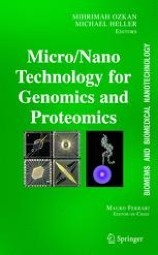
BioMEMS and biomedical nanotechnology ; Vol. II : Micro/Nano Technologies for Genomics and Proteomics
Numerous miniaturized DNA microarray, DNA chip, Lab on a Chip and biosensor devices have been developed and commercialized. Such devices are improving the way many impor-tant genomic and proteomic analyses are performed in both research and clinical diagnostic laboratories. The development of these technologies was enabled by a synergistic combina-tion of disciplines that include microfabrication, microfluidics, MEMS, organic chemistry and molecular biology. Some of these new devices and technologies utilize sophisticated mi-crofabrication processes developed by the semiconductor industry.

Biomarkers in periodontal health and disease : Rationale, benefits, and Future directions
This book examines all aspects of the progress being made towards the development of highly specific and sensitive biomarkers that will overcome the shortcomings of clinical assessments in periodontics. Readers will find the book to be an ideal summary of the state of the art in the field as biomarkers emerge that promise to facilitate periodontal diagnostics and permit timely, personally tailored interventions.

Biology of the Fungal Cell
"The volume is well illustrated and certainly realizes the primary aim of "The Mycota", namely to highlight developments in both basic and applied research into fungal systems." (Microbiology Today) "The Editors´ aim 'to provide a selected sampling of contemporary topics at the forefront of fungal cell biology' has certainly been achieved. Indeed, it is hard to imagine any mycologist not finding something fascinating in each of the chapters. ... Further, the volume is packed with material that will be extremely useful for those presenting basic courses in mycology - especially because of the many fine explanatory line drawings." (Mycological Research)

Biological Basis of Geriatric Oncology
Biological Basis of Geriatric Oncology highlights research issues that are specific to geriatric oncology in the field of carcinogenesis and cancer prevention and treatment, based on the biologic interactions of cancer and age. It illustrates the benefit of the principles of geriatrics in the management of cancer in the older individual.
Bioinformatics and the cell : Modern computational approaches in genomics, proteomics and transcriptomics
"Xuhua Xia’s Bioinformatics and the Cell is a welcome addition to the bourgeoning field of bioinformatics text books. Xia stakes out a too-often neglected middle ground in bioinformatics by presenting a work that emphasizes methods’ biological utility without eschewing algorithmic formalism. Readers will find a well-rounded presentation of bioinformatics techniques employed in genomics, transcriptomics and proteomics – unified throughout by the common theme of molecular evolution."
Bioinformatics and Computational Biology Solutions Using R and Bioconductor
Bioconductor is a widely used open source and open development software project for the analysis and comprehension of data arising from high-throughput experimentation in genomics and molecular biology. Bioconductor is rooted in the open source statistical computing environment R. This volume's coverage is broad and ranges across most of the key capabilities of the Bioconductor project, including: Importation and preprocessing of high-throughput data from microarray, proteomic, and flow cytometry platforms / Curation and delivery of biological metadata for use in statistical modeling and interpretation. / Statistical analysis of high-throughput data, including machine learning and visualization,modeling and visualization of graphs and networks. This book is a dynamic document. Code underlying all of the computations that are shown is made available on a companion website, and readers can reproduce every number, figure, and table on their own computers.
Bioarrays : From Basics to Diagnostics
Bioarrays: From Basics to Diagnostics provides an integrated and comprehensive collection of timely articles on the use of bioarray techniques in the fields of biotechnology and molecular medicine. The entire volume is broken into four sections – Bioarray Technology Platforms, Biomarkers and Clinical Genomics, Biomarker Identification Using Clinical Proteomics and Glycomics, and Emerging Technologies in Diagnostics – that create one well-integrated work. Particular emphasis is placed on DNA, protein, and carbohydrate biochips. The volume also looks extensively at oligonucleotides, cDNA, proteins, antibodies, and carbohydrate arrays.
