



الصفحة 16
الصفحة 16

Handbook of soil analysis : Mineralogical, organic and inorganic methods
This new book by Marc Pansu and Jacques Gautheyrou provides a synopsis of the analytical procedures for the physicochemical analysis of soils. It is written to conform to analytical standards and quality control. It focuses on mineralogical, organic and inorganic analyses, but also describes physical methods when these are a precondition for analysis. It will help a range of different users to choose the most appropriate method for the type of material and the particular problems they have to face. The compiled work is the product of the experience gained by the authors in the laboratories of the Institute of Research for Development (IRD) in France and in tropical countries, and includes an extensive review of the literature. The reference section at the end of each chapter lists source data from pioneer studies right up to current works, such as, proposals for structural models of humic molecules, and itself represents a valuable source of information.

Handbook of nutrition and pregnancy
This book discusses relevant topics in the scientific community such as determining to what extent prenatal and perinatal environmental factors are linked to childhood and adult obesity and chronic diseases. This book also examines issues that are common to both the developed and the developing worlds and includes chapters that are specific to nutritional and reproductive factors seen mainly in developing countries. These chapters discuss contemporary issues that impact both the woman and the developing infant. Also covered in several chapters is a review of nutritional as well as physiological factors that either increase or decrease the potential for high risk pregnancies such as gestational diabetes mellitus, Type I and Type II diabetes mellitus, preeclampsia, anemia, and so forth.

Handbook of nutrition and ophthalmology
The Handbook of Nutrition in Ophthalmology is the first general text on nutrition and eye health created for physicians, nutritionists, and researchers. Dr. Richard D. Semba provides important links between the epidemic of obesity and implications it has for eye disease and blindness. The volume addresses three broad themes throughout. The first is that a healthy diet as a major lifelong habit will likely have an impact on reducing a substantial portion of visual impairment and blindness. The second is that a historical perspective is essential to understanding current challenges in ophthalmology, medicine, and public health. The third theme is that many nutrients play a role in oxidative stress and inflammation, and this theory has emerged as a major underlying hypothesis in the pathogenesis of eye diseases.

Handbook of multicultural perspectives on stress and coping
Has the developing world developed modern concepts of stress? Are coping methods the same around the globe? Such questions are not simple to answer, and until recently, few knew to ask them. In recent years, Western psychologists have recognized that their prevailing views of psychology do not always translate worldwide—and that no culture has a monopoly on either stress or coping. The Handbook of Multicultural Perspectives on Stress and Coping was created to address this realization. This unique volume moves beyond simple comparisons of behaviors in other countries by clarifying critical concepts in stress and coping, analyzing and synthesizing vast amounts of global data, and identifying constructs and methodologies necessary for meaningful cross-cultural research.

Handbook of molecular force spectroscopy
Modern materials science and biophysics are increasingly focused on studying and controlling intermolecular interactions on the single-molecule level. Molecular force spectroscopy was developed in the past decade as the result of several unprecedented advances in the capabilities of modern scientific instrumentation, and defines a number of techniques that use mechanical force measurements to study interactions between single molecules and molecular assemblies in chemical and biological systems. Examples of these techniques, which typically target a specific range of experimental systems and geometries, include atomic force microscopy, optical tweezers, surface forces apparatus, and magnetic tweezers.

Handbook of Marketing Decision Models
The HANDBOOK OF MARKETING DECISION MODELS presents the state of the art in marketing decision models, dealing with new modeling areas such as customer relationship management, customer value and online marketing, but also describes recent developments in other areas. In the category of marketing mix models, the latest models for advertising, sales promotions, sales management, and competition are dealt with. New developments are presented in consumer decision models, models for return on marketing, marketing management support systems, and in special techniques such as time series and neural nets. Not only are the most recent models discussed, but the book also pays attention to the implementation of marketing models in companies and to applications in specific industries.

Handbook of Entrepreneurship Research : An Interdisciplinary Survey and Introduction
The Handbook will provide a roadmap to an emerging complex but intriguing field of entrepreneurship. The focus on advanced economies or the advanced sectors of developing countries reflects the emphasis in the extant research and theory. This new Handbook sets the framework for an expansion of attention to the vast majority of entrepreneurs–who are operating in the third world.The Handbook also includes reviews of the vast array of work closely related to entrepreneurship that has appeared primarily in economics, psychology and sociology journals

Handbook of education policy studies : School/University, curriculum, and assessment ; Vol.2
This handbook brings together the latest research from a wide range of internationally influential scholars to analyze educational policy research from international, historical and interdisciplinary perspectives. By effectively breaking through the boundaries between countries and disciplines, it presents new theories, techniques and methods for contemporary education policy, and illustrates the educational policies and educational reform practices that various countries have introduced to meet the challenges of continuous change.

Handbook of Digital and Mutlimedia Evidence
Handbook of Digital and Multimedia Forensic Evidence presents an overview of computer forensics perfect for beginners. This volume will serve as a foundation and guide for: (a) students considering a career in this field; (b) the law enforcement investigator assigned to work cybercrimes; (c) establishing training programs for forensic examiners; (d) the IT professional; (e) the veteran forensic examiner; (f) the prosecutor faced with litigating cybercrime cases brought before a trier of fact. A distinguished group of specialist authors have crafted chapters rich with detail yet accessible for readers who are not experts in the field. Tying together topics as diverse as applicable laws on search and seizure, investigating cybercrime, and preparation for courtroom tesitmony, Handbook of Digital and Multimedia Forensic Evidence is the ideal overall reference for this multi-faceted discipline.

Handbook of database security : Applications and trends
The Handbook of Database Security: Applications & Trends, an edited volume by renowned researchers within data security, provides an up-to-date overview of data security models, techniques, and architectures in a variety of data management applications and settings. This edited volume represents the most comprehensive work on numerous data security aspects published in the last ten years.

Handbook of Bioentrepreneurship
Providing an important and timely overview of research in the field of entrepreneurship in biotechnology, The Handbook of Bioentrepreneurship examines one of the most promising industries of the 21st century. While genetically engineered foods and biopharmaceuticals have made biotechnology part of our everyday lives, launching a bioventure is among the most complex and risky entrepreneurial undertakings, given long development cycles, high levels of technological and market uncertainty, and extraordinary capital requirements. Featuring unparalleled, in-depth analysis from experts around the world, the Handbook sheds light on emerging business models and strategies, geographical and regional networks, cooperation between firms and universities, legal frameworks, and policy issues that influence the context in which biotech ventures are established and the conditions under which they may flourish. biotechnology.

Habitats and Biota of the Gulf of Mexico : Before the deepwater horizon oil spill ; Vol.2 : Fish resources, fisheries, sea turtles, avian resources, marine mammals, diseases and mortalities
The Gulf of Mexico is an open and dynamic marine ecosystem rich in natural resources but heavily impacted by human activities, including agricultural, industrial, commercial and coastal development. Nutrients and pollutants from coastal communities and dozens of rivers flow into the Gulf, including material from the Mississippi River watershed, which drains over one third of continental United States. The Gulf of Mexico has been continuously exposed to petroleum hydrocarbons for millions of years from natural oil and gas seeps on the sea floor, and more recently from oil drilling and production activities located in the water near and far from shore. Major accidental oil spills in the Gulf are infrequent; two of the most significant include the Ixtoc I blowout in the Bay of Campeche in 1979 and the Deepwater Horizon Oil Spill in 2010.

Habitats and Biota of the Gulf of Mexico : Before the deepwater horizon oil spill ; Vol.1 : Water quality, sediments, sediment contaminants, oil and gas Seeps, coastal habitats, offshore plankton and benthos, and shellfish
The Gulf of Mexico is an open and dynamic marine ecosystem rich in natural resources but heavily impacted by human activities, including agricultural, industrial, commercial and coastal development. Nutrients and pollutants from coastal communities and dozens of rivers flow into the Gulf, including material from the Mississippi River watershed, which drains over one third of continental United States. The Gulf of Mexico has been continuously exposed to petroleum hydrocarbons for millions of years from natural oil and gas seeps on the sea floor, and more recently from oil drilling and production activities located in the water near and far from shore. Major accidental oil spills in the Gulf are infrequent; two of the most significant include the Ixtoc I blowout in the Bay of Campeche in 1979 and the Deepwater Horizon Oil Spill in 2010.

Gut-Associated Lymphoid Tissues
The intestine is colonized by an impressive community of commensals, that has profound effects on the immune funtions. The relationship between gut microbiota and the immune system is one of reciprocity: commensals have important contribution in nutrient processing and education of the immune system and conversely, the immune system, particularly gut-associated lymphoid tissues plays a key role in shaping the repertoire of gut microbiota.

Guidebook to carbon neutrality in China : Macro and industry trends under new constraints
The book offers a comprehensive analysis of how the pursuit of carbon neutrality may influence the development of China's economy, and the country's biggest industries, while foreseeing the likely changes in people's lifestyles.

Growth, Trade and Economic Institutions
Endogenous growth is examined from the viewpoint of economic history, institutions and international trade. The main results are the following. The variance in institutional quality can be explained by historical differences in biogeographical potential for early agriculture. The expansion of output can lead to dis-agglomeration. The patterns of growth are sensitive to the technology parameters of the capital-good industry. With capital intensive industries, the balanced growth path can exhibit local indeterminacy. Economies integrate, if the productivity of R&D does not vary too much for them. Other aspects examined are the equilibrium of a dynamic multi-sector economy, the political economy of employment protection and the relationship between technological change and the demand for skill-intensive activities.
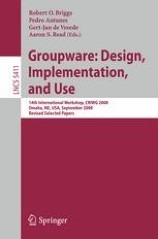
Groupware : Design, Implementation, and Use ; 14th International Workshop, CRIWG 2008, Omaha, NE, USA, September 14-18, 2008, Revised Selected Papers
This book constitutes the refereed post-conference proceedings of the 14th International Workshop on Groupware: Design, Implementation, and Use, held in Omaha, Nebraska, USA, during September 14-18, 2008.The 30 papers presented were carefully reviewed and selected from numerous submission. The topics covered are groupware solutions, co-located groups, groupware for health care, collaborative systems development, collaborative emergency response, groupware approaches, patterns of collaboration.

Groundwater Management in Asian Cities : Technology and Policy for Sustainability
The number of city dwellers who do not have access to piped water and rely on groundwater is also increasing. In many Asian cities, groundwater is not only the source of domestic water but also an important resource for industrial development, making better management of groundwater resources essential for sustainable development. Because groundwater is easier to access and costs less than water from piped systems, groundwater abstraction cannot be easily regulated. Policies for groundwater management adopted in Japan and other Asian countries are compared, and technologies for efficient use of groundwater are elucidated. Groundwater contamination is also a serious problem that exacerbates water scarcity in Asian cities. Case studies illustrate the cause and consequences of naturally occurring contaminants such as arsenic and fluoride, and groundwater contamination due to anthropogenic contaminants is described. Also discussed are technologies for treating contaminated groundwater to reduce the health risks of drinking contaminated groundwater.

Groundwater and Ecosystems
Groundwater Dependent Ecosystems (GDEs) frequently exhibit rich biological diversity and can provide enormous economic wealth. In recent years, GDEs in many industrialized countries have shown signs of serious degradation, primarily the result of groundwater abstraction and pollution. Many such systems, including a number of well documented cases in Eastern Europe, are no longer sustainable. As a consequence, the conservation and sustainable management of GDEs has emerged as one of the most urgent environmental research priorities of our time. A large percentage of the world’s population lives in cities and either depends on, or is affected in some way, by groundwater. Moreover, groundwater has become a very important and complex issue that attracts the interest of many diverse stakeholders. Many problems related to groundwater and ecosystems are shared by countries throughout the world and there is growing recognition that much can be gained by co-operation on an international scale.

Groundwater : Resource evaluation, augmentation, contamination, restoration, modeling and management
The demand for water resources is increasing day by day due to ever increasing population, mostly from developing countries. This has resulted in abstracting more water from the subsurface stratum and forcing the water managers to manage the limited groundwater resources in a more scientific way, which in turn needs a more sophisticated way of assessing the underground resource and manage it optimally.
