



الصفحة 16
الصفحة 16

Theory of experience in architecture and urban design
Starts from the conception of architectural space as a continuum that goes from the subjective depth of the mind to the objective reality, taking into consideration the perspective of building experiences for users. It is based on the idea that at the heart of that continuum is the experience of architecture and the city as the element that unites them and gives them meaning.The book is divided into two parts. The first part defines what the architectural experience is from the processes of perception, cognition, and evaluation that users and architects make about workplaces and programs. It deals with the phenomenology of the architectural experience from what creates the sense of place and then looks at the taxonomy of the areas of experience and the implications for the architect’s work processes.The second part of the book deals with the knowledge and use of tools for the diagnosis of users and places.

Theory of Cryptography ; Vol. 3876 ; 3rd Theory of Cryptography Conference, TCC 2006, New York, NY, USA, March 4-7, 2006, Proceedings
This book constitutes the refereed proceedings of the PrefaceTCC 2006 was the third Theory of Cryptography Conference, which washeld at Columbia University in Manhattan, New York, March 4-7, 2006. TCC2006 was sponsored by the International Association for Cryptologic Research(IACR) and organized in cooperation with the Computer Science Departmentof Columbia University. Theproceedings consist of the revised versions of 31 papers. The papers are organized in topical sections on zero-knowledge, primitives, assumptions and models, the bounded-retrieval model, privacy, secret sharing and multi-party computation, universally-composible security, one-way functions and friends, and pseudo-random functions and encryption.

Theory of Cryptography ; Vol. 3378 ; 2nd Theory of Cryptography Conference, TCC 2005, Cambridge, MA, USA, February 10-12. 2005, Proceedings
This book constitutes the thoroughly refereed proceedings of the 10th Theory of Cryptography Conference, TCC 2013, held in Tokyo, Japan, in March 2013. The papers cover topics such as study of known paradigms, approaches, and techniques, directed towards their better understanding and utilization

Theory of Cryptography ; 5th Theory of Cryptography Conference, TCC 2008, New York, USA, March 19-21, 2008. Proceedings
The papers are organized in 16 sessions dealing with the paradigms, approaches and techniques used to conceptualize, define and provide solutions to natural cryptographic problems.

Theory of Cryptography ; 4th Theory of Cryptography Conference, TCC 2007, Amsterdam, The Netherlands, February 21-24, 2007, Proceedings
TCC 2007, the Fourth Theory of Cryptography Conference, was held in Amsterdam, The Netherlands, from February 21 to 24, 2007, at Trippenhuis, the headquarters of the Royal Dutch Academy of Arts and Sciences (KNAW). TCC 2007 was sponsored by the International Association for Cryptologic Research (IACR) and was organized in cooperation with the Cryptology and Information Security Group at CWI, Amsterdam; the Mathematical Institute, Leiden University; and DIAMANT, the Dutch national mathematics cluster for discrete interactive and algorithmic algebra and number theory. The General Chair of the conference was Ronald Cramer.

Theory of Cryptography ; 18th International Conference, TCC 2020, Durham, NC, USA, November 16–19, 2020, Proceedings, Part III
This three-volume set, LNCS 12550, 12551, and 12552, constitutes the refereed proceedings of the 18th International Conference on Theory of Cryptography, TCCC 2020, held in Durham, NC, USA, in November 2020. The total of 71 full papers presented in this three-volume set was carefully reviewed and selected from 167 submissions. Amongst others they cover the following topics: study of known paradigms, approaches, and techniques, directed towards their better understanding and utilization; discovery of new paradigms, approaches and techniques that overcome limitations of the existing ones, formulation and treatment of new cryptographic problems; study of notions of security and relations among them; modeling and analysis of cryptographic algorithms; and study of the complexity assumptions used in cryptography.

Theory of Cryptography ; 18th International Conference, TCC 2020, Durham, NC, USA, November 16–19, 2020, Proceedings, Part II
This three-volume set, LNCS 12550, 12551, and 12552, constitutes the refereed proceedings of the 18th International Conference on Theory of Cryptography, TCCC 2020, held in Durham, NC, USA, in November 2020. The total of 71 full papers presented in this three-volume set was carefully reviewed and selected from 167 submissions. Amongst others they cover the following topics: study of known paradigms, approaches, and techniques, directed towards their better understanding and utilization; discovery of new paradigms, approaches and techniques that overcome limitations of the existing ones, formulation and treatment of new cryptographic problems; study of notions of security and relations among them; modeling and analysis of cryptographic algorithms; and study of the complexity assumptions used in cryptography.

Theory of Cryptography ; 18th International Conference, TCC 2020, Durham, NC, USA, November 16–19, 2020, Proceedings, Part I
This three-volume set, LNCS 12550, 12551, and 12552, constitutes the refereed proceedings of the 18th International Conference on Theory of Cryptography, TCCC 2020, held in Durham, NC, USA, in November 2020. The total of 71 full papers presented in this three-volume set was carefully reviewed and selected from 167 submissions. Amongst others they cover the following topics: study of known paradigms, approaches, and techniques, directed towards their better understanding and utilization; discovery of new paradigms, approaches and techniques that overcome limitations of the existing ones, formulation and treatment of new cryptographic problems; study of notions of security and relations among them; modeling and analysis of cryptographic algorithms; and study of the complexity assumptions used in cryptography.

Theory of Chemical Reaction Dynamics
The book represents a snapshot of the current status of research in reaction dynamics, focusing especially on accurate time-dependent and time-independent methods of quantum scattering, treatment of non-adiabatic processes, studies of associative and inelastic collisions, calculation of potential surfaces.the experiments now offer detailed scattering information for theory to explain and rationalize. At the same time, advances in computing and networking technologies for heterogeneous and grid environments afford new possibilities for theoretical studies of chemical reactivity. As a consequence, calculation of atom+diatom reactions has become routine, accurate methods have been developed to describe reactions in tetra-atomic systems, nonadiabatic reactions are being studied in simultaneous experimental and theoretical efforts, and statistical theories of unimolecular reaction dynamics are applied to systems that were a mystery a few years ago.

Theory and Mathematical Methods for Bioformatics
This monograph addresses, in a systematic and pedagogical manner, the mathematical methods and the algorithms required to deal with the molecularly based problems of bioinformatics. The book will be useful to students, research scientists and practitioners of bioinformatics and related fields, especially those who are interested in the underlying mathematical methods and theory. Among the methods presented in the book, prominent attention is given to pair-wise and multiple sequence alignment algorithms, stochastic models of mutations, modulus structure theory and protein configuration analysis. Strong links to the molecular structures of proteins, DNA and other biomolecules and their analyses are developed. In particular, for proteins an in-depth exposition of secondary structure prediction methods should be a valuable tool in both molecular biology and in applications to rational drug design. The book can also be used as a textbook and for this reason most of the chapters include exercises and problems at the level of a graduate program in bioinformatics.

Théories spectrales : Chapitres 1 et 2 = Spectral theories : Chapters 1 and 2
Nicolas BOURBAKI's Elements of Mathematics aim to provide a rigorous, systematic presentation without prerequisites of mathematics from their foundations. The first chapter introduces basic concepts in functional analysis. The second chapter culminates in the Fourier transform on locally compact commutative groups.

Theoretical numerical analysis : A functional analysis framework
This textbook prepares graduate students for research in numerical analysis/computational mathematics by giving to them a mathematical framework embedded in functional analysis and focused on numerical analysis. This helps the student to move rapidly into a research program. The text covers basic results of functional analysis, approximation theory, Fourier analysis and wavelets, iteration methods for nonlinear equations, finite difference methods, Sobolev spaces and weak formulations of boundary value problems, finite element methods, elliptic variational inequalities and their numerical solution, numerical methods for solving integral equations of the second kind, and boundary integral equations for planar regions.

Theoretical Femtosecond Physics : Atoms and Molecules in Strong Laser Fields
Theoretical femtosecond physics is a new field of research. Theoretical investigations of atoms and molecules interacting with pulsed or continuous wave lasers of up to atomic field strengths are leading to an understanding of many challenging experimental discoveries. Laser-matter interaction is treated on a nonperturbative level in the book using approximate and numerical solutions of the time-dependent Schrödinger equation. The light field is treated classically. Physical phenomena, ranging from ionization of atoms to the ionization and dissociation of molecules and the control of chemical reactions are presented and discussed. Theoretical background for experiments with strong and short laser pulses is given. Several exercises are included in the main text. Some detailed calculations are performed in the appendices.

Theoretical Computer Science ; Vol. 3701 ; 9th Italian Conference, ICTCS 2005, Siena, Italy, October 12-14, 2005, Proceedings
This book constitutes the refereed proceedings of the 9th International Conference on Theoretical Computer Science, ICTCS 2005, held at the Certosa di Pontignano, Siena, Italy, in October 2005. The 29 revised full papers presented together with an invited paper and abstracts of 2 invited talks were carefully reviewed and selected from 83 submissions. The papers address all current issues in theoretical computer science and focus especially on analysis and design of algorithms, computability, computational complexity, cryptography, formal languages and automata, foundations of programming languages and program analysis, natural computing paradigms (quantum computing, bioinformatics), program specification and verification, term rewriting, theory of logical design and layout, type theory, security, and symbolic and algebraic computation.

Theoretical Atomic Physics
This established text and reference contains an advanced presentation of quantum mechanics adapted to the requirements of modern atomic physics. It includes topics of great current interest such as semiclassical theory, chaos and Bose-Einstein condensation in atomic gases. The third edition of Theoretical Atomic Physics extends the successful second edition with a detailed treatment of the wave motion of atoms near the anticlassical or extreme quantum regime, and it also contains an introduction to some aspects of atom optics that are relevant for current and future experiments involving ultra-cold atoms. Various problems are included together with complete solutions. Because it has more emphasis on theory, this book enables the reader to appreciate the fundamental assumptions underlying standard theoretical constructs and to embark on independent research projects.

Theoretical Aspects of Computing - ICTAC 2005; Second International Colloquium, Hanoi, Vietnam, October 17-21, 2005, Proceedings
International Colloquium on Theoretical Aspects of Computing. ICTAC was founded by the International Institute for Software Technology of the United Nations University (UNU-IIST) to serve as a forum for practiti- ers, lecturers and researchers from academia, industry and government who are interested in theoretical aspects of computing and rigorous approaches to so- ware engineering. The colloquium is aimed particularly, but not exclusively, at participants from developing countries. We believe that this will help developing countries to strengthen their research, teaching and development in computer science and engineering, improve the links between developing countries and developed countries, and establish collaboration in research and education. By providing a venue for the discussion of common problems and their solutions, and for the exchangeof experiences and ideas, this colloquium supports research and development in computer science and software technology. ICTAC is attracting more and more attention from more and more countries.

Theoretical Aspects of Computing - ICTAC 2004 ; 1st International Colloquium Guiyand, China, September 20-24, 2004, Revised Selected Papers
Constitutes the thoroughly refereed postproceedings of the First International Colloquium on Theoretical Aspects of Computing, ICTAC 2004. The 34 revised full papers presented together with 4 invited contributions were carefully selected from 111 submissions during two rounds of reviewing and improvement. The papers are organized in topical sections on concurrent and distributed systems, model integration and theory unification, program reasoning and testing, verification, theories of programming and programming languages, real-time and co-design, and automata theory and logics.
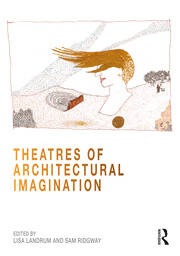
Theatres of Architectural Imagination
Imagination is arguably the architect’s most crucial capacity, underpinning memory, invention, and compassion. No simple power of the mind, architectural imagination is deeply embodied, social, and situational. Its performative potential and holistic scope may be best understood through the model of theatre. Theatres of Architectural Imagination examines the fertile relationship between theatre and architecture with essays, interviews and entr’actes arranged in three sections: Bodies, Settings, and (Inter)Actions.

The World Trade Organization: Legal, Economic and Political Analysis
With more than eighty chapters, this three-volume work – described by the current Director-General of the World Trade Organization as an "outstanding contribution" to understanding the world trading system – is by far the most comprehensive study yet undertaken of the WTO. Contributors to the book include two former Directors-General of the WTO, a former Deputy Director-General, a former and a present member of the WTO Appellate Body, and several present and former officials of the WTO Secretariat. They also include a number of former heads of country delegations to the GATT and the WTO, as well as leading academics and practitioners from many countries. The core of the book is the section on the legal framework of the WTO, which contains detailed legal analyses of ...

The World of Rhabdoviruses
In this volume the unique and common features of rhabdoviruses, particularly their morphological, molecular, and pathogenic characteristics, and their phylogenetic relationships are reviewed. Rhabdoviruses have a very wide host range and have been isolated from plants, insects, and almost from all vertebrates including fish and primates. The Rhabdoviridae family consists of six genera which have all been associated with diseases. While rhabdoviruses that are etiological agents of human diseases can cause serious public health problems, other members of this family that infect domestic livestock and agricultural plants can also cause enormous economic loss.
