



الصفحة 16
الصفحة 16
Automated reasoning with analytic tableaux and related methods ; International Conference, TABLEAUX 2005, Koblenz, Germany, September 14-17, 2005, Proceedings
This volume contains the research papers presented at the International C- ference on Automated Reasoning with Analytic Tableaux and Related Methods (TABLEAUX2005)heldSeptember 2005inKoblenz,Germany. which included conferences covering a broad spectrum of topics and intere- ing ?elds of application for tableau-based methods: arti?cial intelligence (KI), multi-agent systems (MATES), automated reasoning and knowledge represen- tion (FTP), and software engineering and formal methods (SEFM).
Automated Reasoning with Analytic Tableaux and Related Methods ; 16th International Conference, TABLEAUX 2007, Aix en Provence, France, July 3-6, 2007, Proceedings
It covers the wide range of logics, from intuitionistic and substructural logics to modal logics (including temporal and dynamic logics), from many-valued logics to nonmonotonic logics, and from classical first-order logic to description logics.
Automated reasoning ; 4th International Joint Conference, IJCAR 2008 Sydney, Australia, August 12-15, 2008 Proceedings
This book constitutes the refereed proceedings of the 4th International Joint Conference on Automated Reasoning, IJCAR 2008, held in Sydney, Australia, in August 2008.
Automated reasoning ; 3rd International Joint Conference, IJCAR 2006, Seattle, WA, USA, August 17-20, 2006, Proceedings
This book constitutes the refereed proceedings of the Third International Joint Conference on Automated Reasoning,The papers address the entire spectrum of research in automated reasoning including formalization of mathematics, proof theory, proof search, description logics, interactive proof checking, higher-order logic, combination methods, satisfiability procedures, and rewriting. The papers are organized in topical sections on proofs, search, higher-order logic, proof theory, search, proof checking, combination, decision procedures, CASC-J3, rewriting, and description logic.

Automated deduction in Geometry ; 6th International Workshop, ADG 2006, Pontevedra, Spain, August 31-September 2, 2006, Revised Papers
The book show the lively variety of topics and methods and the current applicability of automated deduction in geometry to different branches of mathematics and to other sciences and technologies.

Automated deduction – CADE-21 ; 21st International Conference on automated deduction, Bremen, Germany, July 17-20, 2007, Proceedings
All current aspects of automated deduction are addressed, ranging from theoretical and methodological issues to presentation and evaluation of theorem provers and logical reasoning systems. The papers are organized in topical sections on higher-order logic, description logic, intuitionistic logic, satisfiability modulo theories, induction, rewriting, and polymorphism, first-order logic, model checking and verification, termination, as well as tableaux and first-order systems.

Automated deduction – CADE-20 ; 20th International Conference on automated deduction, Tallinn, Estonia, July 22-27, 2005, Proceedings
This book constitutes the refereed proceedings of the 20th International Conference on Automated Deduction, CADE-20, held in Tallinn, Estonia, in July 2005. The 25 revised full papers and 5 system descriptions presented were carefully reviewed and selected from 78 submissions. All current aspects of automated deduction are addressed, ranging from theoretical and methodological issues to presentation and evaluation of theorem provers and logical reasoning systems.
Atomic Force Microscopy, Scanning Nearfield Optical Microscopy and Nanoscratching : Application to Rough and Natural Surfaces
Making a clear distinction is made between nano- and micro-mechanical testing for physical reasons, this monograph describes the basics and applications of the supermicroscopies AFM and SNOM, and of the nanomechanical testing on rough and technical natural surfaces in the submicron range down to a lateral resolution of a few nm. New or improved instrumentation, new physical laws and unforeseen new applications in all branches of natural sciences (around physics, chemistry, mineralogy, materials science, biology and medicine) and nanotechnology are covered as well as the sources for pitfalls and errors.

Atlas effectors of anti-tumor immunity
The “Atlas Effectors of Anti-Tumor Immunity” is a unique scientific publication, which includes major issues of up-to-date information about immunophenotype, morphology and function of main effectors of anti-tumor immunity presented in a reasonable format. The Atlas comprises a large number of illustrations presented by schemes and original micrographs demonstrating morphological features and ultrastructure of immunocompetent cells at various stages of differentiation. The volume includes data referring to the history of anti-tumor immunity effectors research, state of the art and perspectives for development of anti-cancer adoptive immunotherapy methods.A special section of the Atlas describes cellular tumor microenvironment and micro-anatomy of carcinomas. Several parts include data about killer cells (natural killer T-cells, lymphokine-activated killers) and T-regulatory lymphocytes. A special chapter gives a wide-range description of antigen-presenting dendritic cells, methods of dendritic cell generation and development of DC-based vaccines for anti-tumor immunotherapy.

At the crossroads : The world trading system and the Doha Round
Since its foundation in 1995 the legitimacy of the WTO – and herewith the notion of organising global trade on the basis of herewith the notion of organising global trade on the basis of concepts like trade-liberalisation, treaty-based rule of law and concepts like trade-liberalisation, treaty-based rule of law and enforceability – is challenged for very different reasons this volume not only documents the proceedings of this conference but, against the backdrop of the ongoing efforts to revive the Doha Round wants to be understood as some sort of stocktaking: What did really go wrong in Cancún? Where does the WTO stand today? Has there been any progress made since? And, finally: Is there any chance left to reach the ambitions goals postulated by the Doha Development Agenda? These and other, related questions are being discussed in the volume at hand.
Assessment and future directions of nonlinear model predictive control
Thepastthree decadeshaveseenrapiddevelopmentin the areaofmodelpred- tive control with respect to both theoretical and application aspects. Over these 30 years, model predictive control for linear systems has been widely applied, especially in the area of process control. However, today’s applications often require driving the process over a wide region and close to the boundaries of - erability, while satisfying constraints and achieving near-optimal performance. Consequently, the application of linear control methods does not always lead to satisfactory performance, and here nonlinear methods must be employed. This is one of the reasons why nonlinear model predictive control (NMPC) has - joyed signi?cant attention over the past years,with a number of recent advances on both the theoretical and application frontier. Additionally, the widespread availability and steadily increasing power of today’s computers, as well as the development of specially tailored numerical solution methods for NMPC, bring thepracticalapplicabilityofNMPCwithinreachevenforveryfastsystems.This has led to a series of new, exciting developments, along with new challenges in the area of NMPC.

Artificial tears drops
Vision is by far the most used of the five senses and is one of the primary means that we use to gather information from our surroundings. More than 75% of the information we receive about the world around us consists of visual information. The tear film is structurally complex with three distinct layers: a surface lipid layer, a middle aqueous layer and an inner mucus layer. Dry eyes are caused by a variety of reasons that disrupt the healthy tear film...

Artificial intelligence in medicine ; 10th conference on artificial intelligence in medicine, AIME 2005, Aberdeen, UK, July 23-27, 2005, Proceedings
This book constitutes the refereed proceedings of the 10th Conference on Artificial Intelligence in Medicine in Europe, AIME 2005, held in Aberdeen, UK in July 2005. The 35 revised full papers and 34 revised short papers presented together with 2 invited contributions were carefully reviewed and selected from 148 submissions. The papers are organized in topical sections on temporal representation and reasoning, decision support systems, clinical guidelines and protocols, ontology and terminology, case-based reasoning, signal interpretation, visual mining, computer vision and imaging, knowledge management, machine learning, knowledge discovery, and data mining.

Artificial intelligence applications and innovations II; IFIP TC12 and WG12.5 ; 2nd IFIP conference on artificial intelligence applications and innovations (AIAI-2005), Sept. 7-9, 2005, Beijing, China
Artificial Intelligence is one of the oldest and most exciting subfields of computing, covnering such areas as intelligent robotics, intelligent planning and scheduling, model-based reasoning, fault diagnosis, natural language processing, maching translation, knowledge representation and reasoning, knowledge-based systems, knowledge engineering, intelligent agents, machine learning, neural nets, genetic algorithms and knowledge management. The papers in this volume comprise the refereed proceedings of the Second International Conference on Artificial Intelligence Applications and Innovations,held in Beijing, China in 2005.
Artificial intelligence and legal analytics : new tools for law practice in the digital age
The field of artificial intelligence (AI) and the law is on the cusp of a revolution. This book - designed to explain computational processes to non-programmers - describes how text analytic programs will change the practice of law, specifically by connecting computational models of legal reasoning directly with legal text.
Arnolds Problems
Arnold's Problems contains mathematical problems.The invariable peculiarity of these problems was that Arnold did not consider mathematics a game with deductive reasoning and symbols, but a part of natural science (especially of physics), i.e. an experimental science. Many of these problems are still at the frontier of research today and are still open, and even those that are mainly solved keep stimulating new research, appearing every year in journals all over the world.The second part of the book is a collection of commentaries, mostly by Arnold's former students, on the current progress in the problems' solutions (featuring a bibliography inspired by them).
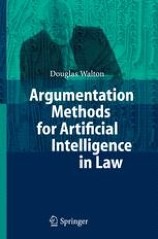
Argumentation Methods for Artificial Intelligence in Law
In this book, Walton presents his perspective on argumentation methods for artificial intelligence and law. … the different tools are combined in a way that makes them potentially useful for understanding legal reasoning. … this book offers a valuable perspective on the current state and future research directions of argumentation methods for artificial intelligence and law." (Jelle van Veenen, Artificial Intelligence and Law,
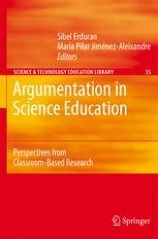
Argumentation in Science Education : Perspectives from Classroom-Based Research
This book brings together the work of leading experts in argumentation in science education. It presents research combining theoretical and empirical perspectives relevant for secondary science classrooms. Since the 1990s, argumentation studies have increased at a rapid pace, from stray papers to a wealth of research exploring ever more sophisticated issues. This volume constitutes a unique collection and covers fundamental issues in argumentation such as cognitive, methodological and epistemological aspects; classroom-based research in teaching and learning of argumentation in science classrooms; and argumentation in context such as in socio-scientific and moral contexts. The book’s underlying premise is that argumentation is a significant aspect of scientific inquiry and plays an important role in teaching and learning of science.
Argumentation in multi-agent systems ; Vol. 4049 ; 2nd International Workshop, ArgMAS 2005, Utrecht, Netherlands, July 26, 2005, revised selected and invited papers
This book constitutes the thoroughly refereed post-proceedings of the Second International Workshop on Argumentation in Multi-Agent Systems held in Utrecht, Netherlands in July 2005 as an associated event of AAMAS 2005, the main international conference on autonomous agents and multi-agent systems. The 10 revised full papers presented together with an invited paper were carefully reviewed and selected from 17 submissions. The papers are organized in topical sections on foundations, negotiation, protocols, deliberation and coalition formation, and consensus formation.
Argumentation in multi-agent systems ; Vol. 3366 ; 1st International Workshop, ArgMAS 2004, New York, NY, USA, July 19, 2004, revised selected and invited papers
The theory of argumentation is a rich, interdisciplinary area of research lying across philosophy, communication studies, linguistics, and psychology (at least). Its techniques and results have found a wide range of applications in both t- oretical and practical branches of arti'cial intelligence and computer science. Several theories of argumentation with various semantics have been proposed in the literature. Multi-agent systems theory has picked up argument-inspired approaches and speci'cally argumentation-theoretic results from many di'erent areas. The community of researchers in argumentation and multi-agent systems is currently presented with a unique opportunity to integrate the various und- standings of argument into a coherent and core part of the functioning of - tonomouscompu...
