



الصفحة 16
الصفحة 16

Micro-Place Homicide Patterns in Chicago : 1965 - 2017
This brief examines 36,263 homicides in Chicago over a 53-year study period, 1965 through 2017, at micro place grid cells of 150 by 150 meters. This study shows not only long-term historical patterns of homicides in Chicago, but also places that historical context of homicide in reference to the dramatic increases in homicides in 2016-2017. It uses several different inequality metrics, as well as kernel density maps to demonstrate that homicides were more clustered in the 1960’s compared to later periods. Using zero inflated group-based trajectory models, it demonstrates the long-term temporal stability of homicides at micro places. This brief will be of interest to researchers in policing, homicide, and research methods in criminology.

Microorganisms in Foods 6 : Microbial Ecology of Food Commodities
The second edition of Microorganisms in Foods 6: Microbial Ecology of Food Commodities is intended for those primarily in applied aspects of food microbiology. For 17 commodity areas it describes the initial microbial flora and the prevalence of pathogens, the microbiological consequences of processing, typical spoilage patterns, episodes implicating those commodities with foodborne illness, and measures to control pathogens and limit spoilage. The control measures are presented in a standardized format in line with international developments in risk management. A comprehensive index has also been added.

Micro-Macro-interaction : In Structured media and Particle Systems
This book presents the development of new methods in this interdisciplinary field of macro- micro-interactions of different engineering branches like mechanical and process engineering, applied mathematics, theoretical, and computational physics. In particular, solids with microstructures and particle systems are considered.

Micro-ISV : From Vision to Reality
Micro-ISV: From Vision to Reality explains what works and why in today's emerging micro-ISV sector. Currently, thousands of programmers build and deliver great solutions ISV-style, earning success and revenues much larger than you might guess. Written by and for micro-ISVs, with help from some of the leaders of the field, this book takes you beyond just daydreaming to running your own business. It thoroughly explores how it is indeed possible to launch and maintain a small and successful ISV business, and is an ideal read if you're interested in getting started.

Microfinance, EU structural funds and capacity building for managing authorities : A comparative analysis of European convergence regions
Presents a study of capacity building and structural funds in public managing authorities for the microcredit sector. It presents two surveys to highlight the strengths and weaknesses of the managing authorities' capacity building. The first survey investigates the authorities' need for and interests in capacity building activities, assessing the areas in which capacity building support is needed, and explores the different types of support offered. The second survey analyses the results of the microcredit and microfinance programming activity, investigating its target groups and other operational features. It examines the key monitoring and reporting issues involved in this activity, before analysing the regulatory framework of the microcredit and microfinance sector.

The 8051 microcontroller and embedded systems
The Classical Period: Nineteenth Century Sociology Auguste Comte (1798-1857) on Women in Positivist Society Harriett Martineau (1802-1876) on American Women Bebel, August (1840-1913) on Women and Socialism Emile Durkheim (1858-1917) on the Division of Labor and Interests in Marriage Herbert Spencer (1820-1903) on the Rights and Status of Women Lester Frank Ward (1841-1913) on the Condition of Women Anna Julia Cooper (1858-1964) on the Voices of Women Thorstein Veblen (1857-1929) on Dress as Pecuniary Culture The Progressive Era: Early Twentieth Cent.

MICAI 2008 : Advances in Artificial Intelligence ;7th Mexican International Conference on Artificial Intelligence, Atizapán de Zaragoza, Mexico, October 27-31, 2008 Proceedings
The 96 revised full papers presented together with 2 invited lectures were carefully reviewed and selected from 363 submissions. The papers are organized in topical sections on logic and reasoning, knowledge-based systems, knowledge representation and acquisition, ontologies, natural language processing, machine learning, pattern recognition, data mining, neural networks, genetic algorithms, hybrid intelligent systems, computer vision and image processing, robotics, planning and scheduling, uncertainty and probabilistic reasoning, fuzzy logic, intelligent tutoring systems, multi-agent systems and distributed ai, intelligent organizations, bioinformatics and medical applications, as well as applications.

MICAI 2005 : Advances in Artificial Intelligence ; 4th Mexican International Conference on Artificial Intelligence, Monterrey, Mexico, November 14-18, 2005, Proceedings
Constitutes the refereed proceedings of the 4th Mexican International Conference on Artificial Intelligence, MICAI 2005, held Mexico, in November 2005. This book is organized in topical sections on knowledge representation and management, logic and constraint programming, uncertainty reasoning, multiagent systems and distributed AI, and others.

Metric Driven Design Verification : An Engineer's and Executive's Guide to First Pass Success
A metric based flow is described that focuses on the four steps of: 1. Planning: Defining what needs to be done and the automatically trackable metrics that will be used to measure progress. 2. Execution: Implementing verification environments and then extensively exercising the device under verification utilizing comprehensive, massively parallel regression strategies. 3. Measurement: Automatically capturing the metrics defined in planning to provide objective data with which to manage the verification project. Custom tailoring those metrics through an automated reporting framework to provide all stakeholders a real-time meaningful view of project status. 4. Response: Utilizing the returned metrics to effectively adapt to changing project conditions. Making use of automated response mechanisms to automate engineering processed and management response to streamline project management processes

Methods of nonlinear analysis : Applications to differential equations
In this book, fundamental methods of nonlinear analysis are introduced, discussed and illustrated in straightforward examples. Every method considered is motivated and explained in its general form, but presented in an abstract framework as comprehensively as possible. Applications and generalizations are shown. In particular, a large number of methods is applied to boundary value problems for partial differential equations.

Methods of Legal Reasoning
The book attempts to describe and criticize four methods used in legal practice, legal dogmatics and legal theory: logic, analysis, argumentation and hermeneutics. Apart from a presentation of basic ideas connected with the above mentioned methods, the essays contained in this book seek to answer questions concerning the assumptions standing behind these methods, the limits of using them and their usefulness in the practice and theory of law. A specific feature of the book is that in one study four different, sometimes competing concepts of legal method are discussed. The panorama, sketched like this, allows one to reflect deeply on the questions concerning the methodological conditioning of legal science and the existence of a unique, specific legal method. The authors argue that there exists no such method.
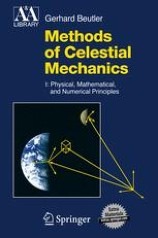
Methods of Celestial Mechanics: Vol. I: Physical, Mathematical, and Numerical Principles
G. Beutler's Methods of Celestial Mechanics is a coherent textbook for students in physics, mathematics and engineering as well as an excellent reference for practitioners. This Volume I gives a thorough treatment of celestial mechanics and presents all the necessary mathematical details that a professional would need. After a brief review of the history of celestial mechanics, the equations of motion (Newtonian and relativistic versions) are developed for planetary systems (N-body-problem), for artificial Earth satellites, and for extended bodies (which includes the problem of Earth and lunar rotation). Perturbation theory is outlined in an elementary way from generally known mathematical principles without making use of the advanced tools of analytical mechanics. The variational equations associated with orbital motion - of fundamental importance for parameter estimation (e.g., orbit determination), numerical error propagation, and stability considerations - are introduced and their properties discussed in considerable detail. Numerical methods, especially for orbit determination and orbit improvement, are discussed in considerable depth. The algorithms may be easily applied to objects of the planetary system and to Earth satellites and space debris.

Methods of Celestial Mechanics ; Vol. II : Application to Planetary System, Geodynamics and Satellite Geodesy
G. Beutler's Methods of Celestial Mechanics is a coherent textbook for students as well as an excellent reference for practitioners. Volume II is devoted to the applications and to the presentation of the program system CelestialMechanics. Three major areas of applications are covered: (1) Orbital and rotational motion of extended celestial bodies. The properties of the Earth-Moon system are developed from the simplest case (rigid bodies) to more general cases, including the rotation of an elastic Earth, the rotation of an Earth partly covered by oceans and surrounded by an atmosphere, and the rotation of an Earth composed of a liquid core and a rigid shell (Poincaré model). (2) Artificial Earth Satellites. The oblateness perturbation acting on a satellite and the exploitation of its properties in practice is discussed using simulation methods (CelestialMechanics) and (simplified) first order perturbation methods. The perturbations due to the higher-order terms of the Earth's gravitational potential and resonant perturbations are considered thereafter. Special attention is paid to satellites of the Global Navigation Satellite Systems and to geostationary satellites. The characteristics of and models for the two most important non-gravitational forces, atmospheric drag and radiation pressure, are presented as well as the most relevant forces acting on high- and low-orbiting satellites. (3) Evolution of the Planetary System. The outer planetary system consisting of the planets Jupiter to Pluto is studied over long time intervals using simulation methods and spectral analysis (CelestialMechanics). The properties of the inner systems, in particular of the Earth's orbit, are made visible by integrating the entire system over long time intervals relevant for climate change. The distribution of minor planets and their orbital properties, regular orbits, and chaotic orbits are easily generated and analyzed using CelestialMechanics. The volume concludes with the discussion of important mathematical tools of the program system and of the principles of spectral analysis.

Methods in Modern Biophysics
Incorporating recent dramatic advances, this textbook presents a fresh and timely introduction to modern biophysical methods. An array of new, faster and higher-power biophysical methods now enables scientists to examine the mysteries of life at a molecular level. This innovative text surveys and explains the ten key biophysical methods, including those related to biophysical nanotechnology, scanning probe microscopy, X-ray crystallography, ion mobility spectrometry, mass spectrometry, proteomics, and protein folding and structure. Incorporating much information previously unavailable in tutorial form, Nölting employs worked examples and 267 illustrations to fully detail the techniques and their underlying mechanisms.

Methods in Gut microbial ecology for ruminants
As a result of various human activities, such as increase in human population,decrease in arable land due to soil degradation, urbanization, industrialization and associated increase in the demand for livestock products, dramatic changes are occurring in the global ruminant livestock sector. These changes includeshift inthesize of regional livestock populations and in the types of management and feeding systems under which ruminant livestock are held, and increased demand of a wider range of quality attributes from animal agriculture, not just of the products themselves but also of the methods used in their production. The livestock sector will need to respond to new challenges of increasing live stock productivity while protecting environment and human health and conservingbiodiversity and natural resources. The micro-organisms in the digestive tracts of ruminant livestock have a profound in?uence on the conversion offeedinto end products, which can impact on the- imal and theenvironment. As the livestock sector grows particularly in developing countries, there will be an increasing need to understand these processes for b- ter management and use ofbothfeed and other natural resources that underpinthe development of sustainable feeding systems.

Methods and Tools for Drought Analysis and Management
Implementation of effective drought management policies requires both advanced technologies and appropriate methods. Monitoring and forecasting systems, practical tools for risk assessment, as well as simple and objective criteria to select and implement appropriate drought mitigation measures are key elements for a successful drought management strategy.These key issues have been tackled by universities and public agencies involved in the EU projects Sedemed and Sedemed II (Programme Interreg IIIB MEDOCC), aimed at the definition of an integrated network for real time monitoring of drought, the development of common methodologies for drought analysis and forecasting, as well as the definition of proper mitigation strategies for the Mediterranean countries.The book presents the main outcomes of such projects with a special focus on: drought monitoring and forecasting echniques at different spatial scales; new or modified agrometeorological indices and remote sensing technique for drought identification and characterization; tools to improve surface water resources management under drought conditions; methods and tools for groundwater resources monitoring and management, based on hydrogeological and hydrodynamics characteristics of aquifers; general criteria to select and implement mitigation strategies to prevent or minimize drought impacts.
Methods and Tools for Collaborative Networked Organizations
Provides a comprehensive set of reference materials derived from the results of the ECOLEAD project in one organized volume. The ECOLEAD project, a large 4-year European initiative, involved 28 organizations (from academia, research and industry), from 14 countries (in Europe and Latin America).Three main types of results from ECOLEAD are presented: (i) Conceptual frameworks and models, (ii) Methods and processes, and (iii) Software tools and systems.

Methodology for the Digital Calibration of Analog Circuits and Systems : with Case Studies
Methodology for the Digital Calibration of Analog Circuits and Systems shows how to relax the extreme design constraints in analog circuits, allowing the realization of high-precision systems even with low-performance components. A complete methodology is proposed, and three applications are detailed.

Methodological approaches to societies in transformation : How to make sense of change
This book provides methodological devices and analytical frameworks for the study of societies in transformation. It explores a central paradox in the study of change: making sense of change requires long-term perspectives on societal transformations and on the different ways people experience social change, whereas the research carried out to study change is necessarily limited to a relatively short space of time. This volume offers a range of methodological responses to this challenge by paying attention to the complex entanglement of qualitative research and the metanarratives generally used to account for change.

Metamorphoses of Hamiltonian Systems with Symmetries
Modern notions and important tools of classical mechanics are used in the study of concrete examples that model physically significant molecular and atomic systems. The parametric nature of these examples leads naturally to the study of the major qualitative changes of such systems (metamorphoses) as the parameters are varied. The symmetries of these systems, discrete or continuous, exact or approximate, are used to simplify the problem through a number of mathematical tools and techniques like normalization and reduction. The book moves gradually from finding relative equilibria using symmetry, to the Hamiltonian Hopf bifurcation and its relation to monodromy and, finally, to generalizations of monodromy.
