



الصفحة 16
الصفحة 16

Collaborative Product Design and Manufacturing Methodologies and Applications
Collaborative Product Design and Manufacturing Methodologies and Applications is an introduction to a wide spectrum of collaborative engineering issues in design and manufacturing. It contains state-of-the-art chapters written by international experts from academia and industry and reflects the most up-to-date R&D work and applications, especially those from the last three to five years. Collaborative Product Design and Manufacturing Methodologies and Applications is an essential reference for academics, upper-level undergraduate and graduate students and practitioners specialising in collaborative design and manufacturing issues, concurrent engineering, Internet-based/intelligent design and manufacturing, CAD/PDM/CAPP/CAM, Internet applications, product lifecycle management, supply chain, etc.

Collaborative Engineering: Theory and Practice
Collaborative Engineering: Theory and Practice offers insights into the methods and techniques involved in implementing a systematic approach to the integrated, concurrent design of products and related processes, including manufacturing, product service and support. The approach discussed here will help developers consider all elements of the product life cycle from conception through disposal, including quality, cost, schedule, and user requirements.

Cold Micro Metal Forming : Research Report of the Collaborative Research Center “Micro Cold Forming” (SFB 747), Bremen, Germany
This book contains the research report of the Collaborative Research Center “Micro Cold Forming” (SFB 747) of the University of Bremen, Germany. The topical research focus lies on new methods and processes for a mastered mass production of micro parts which are smaller than 1mm (by forming in batch size higher than one million). The target audience primarily comprises research experts and practitioners in production engineering, but the book may also be of interest to graduate students alike.

CO-ENZYME Q10
Coenzyme Q10 (CoQ10) is a fat-soluble compound that is synthesized by the body and can be obtained from the diet. Co-Q10 plays a central role in mitochondrial oxidative phosphorylation and the production of adenosine triphosphate (ATP). It also functions as an antioxidant in cell membranes and lipoproteins. Endogenous synthesis and dietary intake provide sufficient C0- Q10 to prevent deficiency in healthy people, although coenzyme Q10 concentrations in tissues decline with age. Oral supplementation of coenzyme Q10 increases coenzyme Q10 concentrations in plasma and lipoproteins. Oral high-dose co- Q10 is usually effective to treat mitochondrial disorders that are caused by mutations in coenzyme Q10 biosynthetic genes.
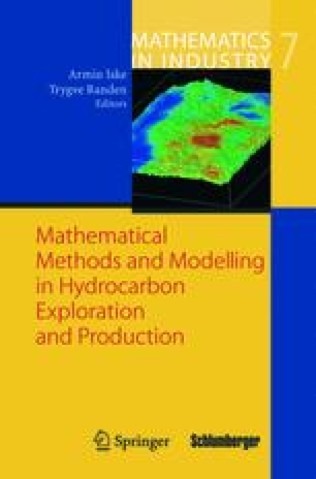
Mathematical methods and modelling in hydrocarbon exploration and production
Hydrocarbon exploration and production incorporate great technology challenges for the oil and gas industry. In order to meet the world's future demand for oil and gas, further technological advance is needed, which in turn requires research across multiple disciplines, including mathematics, geophysics, geology, petroleum engineering, signal processing, and computer science. This book addresses important aspects and fundamental concepts in hydrocarbon exploration and production. Moreover, new developments and recent advances in the relevant research areas are discussed, whereby special emphasis is placed on mathematical methods and modelling. The book reflects the multi-disciplinary character of the hydrocarbon production workflow, ranging from seismic data imaging, seismic analysis and interpretation and geological model building, to numerical reservoir simulation. Various challenges concerning the production workflow are discussed in detail.
Materials Issues for Generation IV Systems ; Status, Open Questions and Challenges
Global warming, shortage of low-cost oil resources and the increasing demand for energy are currently controlling the world's economic expansion while often opposing desires for sustainable and peaceful development. In this context, atomic energy satisfactorily fulfills the criteria of low carbon gas production and high overall yield. However, in the absence of industrial fast-breeders the use of nuclear fuel is not optimal, and the production of high activity waste materials is at a maximum. These are the principal reasons for the development of a new, fourth generation of nuclear reactors, minimizing the undesirable side-effects of current nuclear energy production technology while increasing yields by increasing operation temperatures and opening the way for the industrial production of hydrogen through the decomposition of water.

Materials for Information Technology : Devices, Interconnects and Packaging
The Engineering Materials and Processes series focuses on all forms of materials and the processes used to synthesise and formulate them as they relate to the various engineering disciplines.
Marketing for Sustainable Development : Rethinking Consumption Models
Many people see a weak association between marketing and sustainable development and even consider them as two incompatible fields. However, marketing benefits from an extremely powerful position to encourage transformations at the production level and to guide consumers towards responsible behaviors. From its inception, marketing has been positioned as a support for the relationship between the company and its customers, with the quest for well-being set in the very foundations of the discipline.
Marine Resource Conservation and Poverty Reduction Strategies in Tanzania
Despite the social, nutritional, economical and environmental importance of Tanzanian coastal areas, yet they are vulnerable to both over-exploitation and degradation of their habitats. Using the data from two coastal villages and econometric methods as well as Stochastic Production Frontier techniques, the book demonstrates the extent which various socio-economic dimensions of rural coastal households influence livelihood pathways, production efficiency and attitudes towards conservation initiatives. Thus, attention to differential patterns of rural coastal households presents more viable possibilities for coastal villages to have conservation-development policies/programs that lead to poverty reduction.

Marine Organic Matter : Biomarkers, Isotopes and DNA
The oceans contain a great biodiversity of marine organisms. They include a rich variety of unusual genes and biochemistries and hence a diverse array of organic compounds ranging from colourful carotenoids and chlorophylls to lipids with structures ranging from the simple to the complex. This volume brings together ten chapters on the occurrence and identification of the lipid biomarkers and of pigments in marine waters. It describes how they can be used in conjunction with stable isotopes and molecular biology to ascertain the sources and fate of organic matter (both natural and pollutant) in the sea and underlying sediments. The authors are each experts in their field and the chapters provide both an overview of the state-of-the-art and knowledge gaps together with abundant detail to satisfy the needs of specialists and non-specialists alike.

Marine carbon biogeochemistry : A primer for earth system scientists
This book discusses biogeochemical processes relevant to carbon and aims to provide with insight into the functioning of marine ecosystems. A carbon centric approach has been adopted, but other elements are included where relevant or needed. The book focuses on concepts and quantitative understanding of primary production, organic matter mineralization and sediment biogeochemistry. The impact of biogeochemical processes on inorganic carbon dynamics and organic matter transformation are also discussed.

Marine Biotechnology II
This volume of Advances in Biochemical Engineering/Biotechnology illustrates several topics in line with the following broad objectives: thinking of marine biotechnology as the controlled production and use of marine organisms and molecules for useful purposes, firstly by exploring aspects of marine biodiversity and exploitation of biomass, then considering the identification, production and processing of marine products.
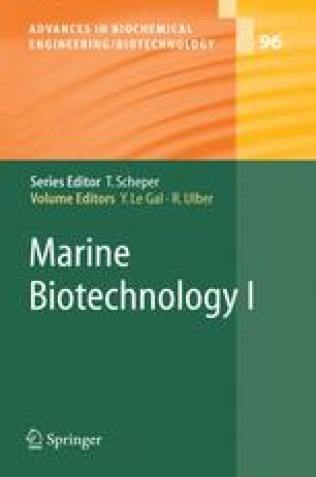
Marine Biotechnology I
Oceans, which occupy up to two thirds of the surface of our planet, were not really approached from scientific point of view until the second half of the 19th century and even the 20th with regard to microbial and unicellular life. Today, the importance of marine biodiversity has been fully recognized. It is, indeed, one of the aspects which, over the two past decades, have made a major contribution to our knowledge and vision of the living planetThis volume of Advances in Biochemical Engineering/Biotechnology illustrates several topics in line with the following broad objectives: thinking ofmarine biotechnology as the controlled production and use of marine organisms and molecules for useful purposes, firstly by exploring aspects of marine biodiversity and exploitation of biomass, then considering the identification, production and processing of marine products.

Manufacturing Systems and Technologies for the New Frontier ; The 41st CIRP Conference on Manufacturing Systems May 26–28, 2008, Tokyo, Japan
Manufacturing systems and technology stand on a new frontier, facing up to the challenges posed by the ever-evolving requirements of global sustainability. Value-creation is taking its place alongside more traditional production-process priorities. Collected here are over a hundred papers concerned with all manner of new directions in manufacturing systems and given at the 41st CIRP Conference on Manufacturing Systems. The high-quality material presented in this volume includes reports of work from both scientific and engineering standpoints and several invited and keynote papers addressing the current cutting edge and likely future trends in manufacturing systems.
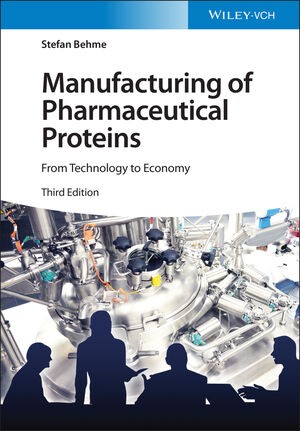
Manufacturing of Pharmaceutical Proteins: From Technology to Economy
Manufacturing of Pharmaceutical Proteins: From Technology to Economy, renowned chemical engineer Dr. Stefan Behme delivers a comprehensive text covering all aspects of biopharmaceutical manufacturing, including legal and regulatory considerations, production facility design, quality assurance, supply chain management, emerging market regulations, and cost control.
Manufacturing Execution Systems - MES
The production plants of today develop into modern service centers. Economic efficiency of modern added value is not a property of products alone but of the process. Decisive potential in business now is a question of process capability, rather than production capability. Process capability in business requires real-time systems for optimization. Business-IT needs to be developed from telecommunications and ERP to real time services, which are not offered by the prevailing ERP systems. Today, only modern Manufacturing Execution Systems (MES) offer real-time applications. They generate current as well as historic mappings of production facilities and thus they can be used as basis for optimizations. It is important to map the supply chain in real time. Increasing complexity in production requires an integrated view of the production and service facilities: detailed scheduling, status collection, quality, performance analysis, tracing of material and so on have to be recorded and displayed in an integrated way.
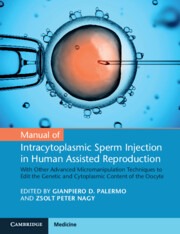
Manual of intracytoplasmic sperm injection in human assisted reproduction
For around half of the couples who have trouble conceiving the cause of infertility is sperm-related. Intracytoplasmic sperm injection (ICSI) is the most common and successful treatment for male infertility. Here, the pioneers for the technique, along with authorities in the field, describe the underlying science of ICSI and other micromanipulation techniques. Practical advice for performing the techniques is covered in depth, including sperm selection, laser-assisted ICSI, and the use of piezo in ICSI. Examining the safety of ICSI in animal models as well as the impact of ICSI on the health and well-being of the children conceived through the procedure is discussed. This manual is an essential resource for clinical embryologists and laboratory personnel wishing to refine or develop techniques and improve outcomes.
Mannitol : Chemistry, Uses and Potential Side Effects
Presents topical research in the study of the chemistry, uses and potential side effects of mannitol. Topics discussed include the utilization and production of D-mannitol by bacteria; concentration of mannitol and other soluble carbohydrates in the crustose lichen rhizocarpon geographicum; disease-related changes and mannitols use for clinical disorders; use of mannitol in thermal energy storage applications; and chiral phosphorous ligands derived from D-mannitol.

Mangroves and Halophytes : Restoration and Utilisation
Focusing on Venezuela and Mexico, this edited volume from the International Society of Halophyte Utilisation (ISHU) explores the environmental issues facing South and Central America's coastal ecosystems, and discusses the uses of mangrove species and other halophytes in addressing issues of both coastal pollution and upland soil salinisation. The book draws on expertise from Europe and South America to present a series of case studies that detail Venezuela’s saline ecosystems and examine the economic potential of mangrove restoration and halophyte production. It includes cutting-edge research into the establishment of new mangrove stands which could serve as prototypes for the sustainable use of halophytes, including Chenopodium quinoa and Tamarix aphylla. Moreover, the detailed examples from Venezuela and other Caribbean countries provide useful models for comparison with halophyte utilisation in other parts of the world – especially the Mediterranean region, where much of the earlier research of the ISHU had been conducted.

Managing Weather and Climate Risks in Agriculture
In many parts of the world, weather and climate are one of the biggest production risks and uncertainty factors impacting on agricultural systems performance and management. Both structural and non-structural measures can be used to reduce the impacts of the variability (including extremes) of climate resources on crop production. While the structural measures include strategies such as irrigation, water harvesting, windbreaks etc., the non-structural measures include use of seasonal to interannual climate forecasts, improved application of medium-range weather forecasts and crop insurance. This book based on an International Workshop held in New Delhi, India should be of interest to all organizations and agencies interested in improved risk management in agriculture.
