



الصفحة 16
الصفحة 16

Application of Apoptosis to Cancer Treatment
This book is intended for workers in the field and clinicians as a useful guide of the state of affairs in this exciting field which may offer more effective possibilities for treatment of cancer patients.
Apoptotic pathways as targets for novel therapies in cancer and other diseases
The book attempts to review, summarize, and speculate on the apoptotic pathways, how are they regulated and how targeted therapies are being used to treat a wide variety of diseases. Special emphasis is placed on cancer since new treatments either being developed or currently in the clinical setting are showing great promise to increase survival rates for cancer patients.

Apitherapy and therapeutic properties
Apitherapy is an alternate therapy that relies on the usage of honeybee products, most importantly bee venom for the treatment of many human diseases. Bee venom contains several active molecules such as peptides and enzymes that have advantageous potential in treating inflammation and central nervous system diseases, such as Parkinson’s disease, and Alzheimer’s disease and autoimmume diseases like reumatic and atherosclerosis .Bee venom (BV) is usually associated with pain since, when humans are stung by bees,local inflammation and even an allergic reaction can be produced. It also consists of a mixture of proteins and peptides, including enzymes such as Melittin and phospholipase A2 (PLA2) are the most abundant and studied compounds of BV Stings of hymenoptera can induce IgE-mediated hypersensitivity reactions in venom-allergic patients, ranging from local up to severe systemic reactions and even fatal anaphylaxis. skin is larger than any other organ in humans.
Anxiety in health behaviors and physical illness
While the links between physical illness and depression have been well-documented and analyzed, little has been made of the data relating physical illness to anxiety—until now. Anxiety in Health Behavior and Physical Illness explores complex relationships between medical and anxiety pathology on the theoretical, research, and practical fronts. Over forty experts examine reciprocal roles of anxiety and medical illness as causal or exacerbating factors in each other’s onset and development, describe forms of anxiety typical to major disease entities, discuss common health behaviors as they impact anxiety, recast anxiety disorders as chronic illness, and identify patients for whom new forms of treatment may be warranted.

Anti-phospholipid Syndrome
APS is an autoimmune disorder characterized by an increased tendency to form abnormal blood clots and Obstetrical morbidity wish cause to multi- miscarriages for women having this syndrome. Patients with Anti-Phospholipid Syndrome usually treated with multidrug regime depending mainly on Anticoagulant drugs, Anti Platelet Drugs and Immunomodulators Drugs. We aim in this project to talk about the Anti-Phospholipid Syndrome, what is patients’ symptoms, how is this disease diagnosed, and what drugs used in treatment and some information about the drug used in the treatment.

Anti-Obesity drugs
As a chronic and relapsing disease, obesity impairs metabolism and causes diabetes, cardiovascular diseases and cancer. Although behavioral modification is important for the treatment of obesity, it is difficult to achieve an ideal weight or sustain the process of long-term weight loss. Therefore, the obesity control guidelines strongly recommend lifestyle interventions along with medical treatment for patients who are overweight. There is sufficient evidence supporting that pharmacotherapy in combination with behavior-based interventions can result in significant weight loss and improvement of the health.
Antidiabetic medicinal plants and herbal treatments
Diabetes is a chronic condition associated with metabolic disorder. Persons suffering from diabetes have shown accelerated levels of blood sugar which often harms the heart, blood vessels, eyes, kidneys, and nerves. Over the past few decades, the prevalence of diabetes has been progressively increasing. Synthetic drugs are used to treat diabetic patients to help control the disorder, but it is shown that numerous medicinal plants and herbal drugs are widely used in several traditional systems of medicine to prevent and treat diabetes. They are reported to produce beneficial effects in combating diabetes and alleviating diabetes-related complications. These plants contain phtyonutrients and phytoconstituents demonstrating protective or disease preventive properties. In many developing countries, herbal drugs are recommended by traditional practitioners for diabetes treatment because the use of synthetic drugs is not affordable.

Antibiotic prescribing pattern for patients with community-acquired pneumonia in Syrian hospitals
Community-acquired pneumonia (CAP) is a leading cause of morbidity and mortality worldwide. The clinical presentation of CAP varies, ranging from mild pneumonia characterized by fever and productive cough to severe pneumonia characterized by respiratory distress and sepsis.Antibiotics are essential for CAP treatment, whereas inappropriate use of antibiotics might lead to increase in resistant bacteria and treatment failure
Antibiotic pharmacokinetic : Pharmacodynamic considerations in the critically Ill
Provides unique insights into the issues that drive modified dosing regimens for antibiotics in the critically ill. Leading international authors provide their commentary alongside a summary of existing evidence on how to effectively dose antibiotics. Severe infection frequently necessitates admission to the intensive care unit (ICU). Equally, nosocomial sepsis often complicates the clinical course in ICU. Early, appropriate application of antibiotic therapy remains a cornerstone of effective management. However, this is challenging in the critical care environment, given the significant changes in patient physiology and organ function frequently encountered. Being cognisant of these factors, prescribers need to consider modified dosing regimens, not only to ensure adequate drug exposure, and therefore the greatest chance of clinical cure, but also to avoid encouraging drug resistance.
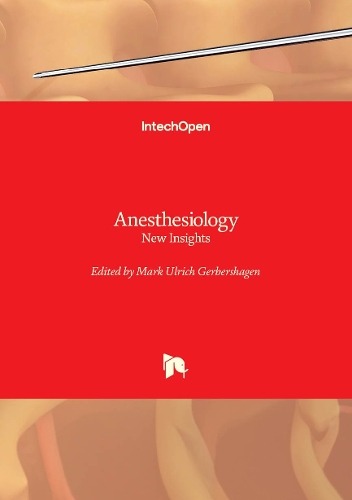
Anesthesiology : New insights
Provides a comprehensive overview of current developments in anaesthesiology. The chapters : Solutions for Insufficient Epidural Analgesia for Planned Vaginal Birth and Interdisciplinary Emergencies in the Delivery Room, Anesthesia for Robotic Surgeries in Children, Anesthetic Management of Bronchoscopic Lung Volume Reduction, General Anaesthesia in the Context of Haemorrhagic Shock and Trauma, Anesthesiologic Management of Patients with Opioids or Psychoactive Substance Use, Fascial Plane Blocks, Considerations and New Perspectives of Locoregional Anesthesia in Dentistry, The Effect of Parental Anxiety on Postoperative Paediatric Cognitive Dysfunction.
Anesthesia for oral and maxillofacial surgery
Reviews and describes anesthetic management of patients during oral and maxillofacial surgery. It covers applied anatomy of oral and maxillofacial surgery, difficult airway management and anesthetic techniques. The anesthetic management for patients with oral and maxillofacial disorders such as head and neck infection, head and neck injuries, and head and neck malignancy is also discussed. It will be a concise, up-to-date reference for specialists in anesthesiology, as well as practitioners in oral and maxillofacial surgery. It aims to share up-to-date knowledge and practical techniques with those who work in the fields related to oral and maxillofacial surgery.
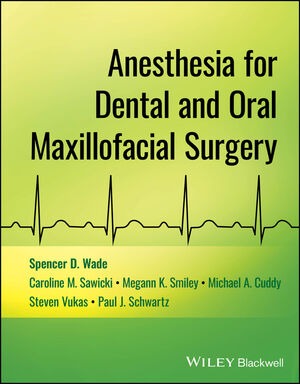
Anesthesia for dental and oral maxillofacial surgery
Offers a comprehensive yet practical approach to anesthesiology for dentist anesthesiologists, oral and maxillofacial surgeons, and anesthesia providers in a dental environment. Taking a concise bulleted approach for fast access to information, the book covers all topics relevant to providing perioperative anesthetic management for the head and neck region. Coverage ranges from equipment, anatomy, physiology, and pharmacology to anesthetizing patients with specific conditions and for specific procedures.
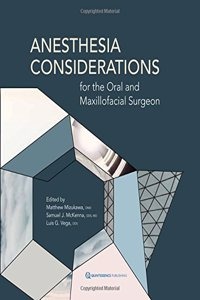
Anesthesia Considerations for the Oral and Maxillofacial Surgeon
Strengthens the margin of safety of office-based anesthesia administration by helping practitioners determine whether the patients they treat are good candidates for office-based anesthesia. This book is organized into three sections. The first section provides a review of the principles of anesthesia, including the pharmacology of anesthetic agents, local anesthesia, patient monitoring, preoperative evaluation, the airway, and management of emergencies and complications. The major organ systems of the body are reviewed in section two, and the most common comorbid conditions that affect these systems are described in terms of their pathophysiology, diagnosis, management, and anesthesia-related considerations. Section three reviews patient groups that warrant special consideration in the administration of office-based anesthesia, such as geriatric, pediatric, pregnant, and obese patients. Spiral-bound and featuring tabs for quick and easy reference, this important book belongs on the shelf of every clinician who provides anesthesia in the office setting.
Anemia in the Elderly
Anemia is found in approximately 80% of elderly patients, most often caused by chronic disease and iron deficiency. Hemopoiesis is a crossroad for many aging-related events.Why do older patients become anemic When should a diagnostic work up of anemia be initiated in the older person? What are the clinical consequences of anemia? Can the treatment of anemia delay aging? Have erythropoietic growth factors played a role in age-related anemia? Who should receive an erythropoietin stimulating agent?When should the suspicion for Myelodysplastic Syndrome be ruled out and what are the clues?This book addresses these and many other important questions with a review of the most recent findings.
Androgen Excess Disorders in Women
The field of androgen excess disorders has advanced substantially since the original publication of this book. The Androgen Excess Society (AES) was founded to bring together investigators in the field. A better understanding of the screening, progression, and molecular genetics of nonclassic adrenal hyperplasia (NCAH) has improved the clinical care and diagnostic accuracy of these patients. New criteria for the diagnosis of the polycystic ovary syndrome (PCOS) were proposed in Rotterdam, criteria that have resulted in controversy and, hopefully, initiation of new studies. The association of insulin resistance with PCOS has been strengthened, and the role of metformin in tre- ing the infertility of the PCOS has been validated. Risks for diabetes and, more cont- versially, cardiovascular disease in women with PCOS have received substantial investigation. Our understanding of the epidemiology and economic impact of these disorders has expanded, emphasizing their critical importance.

Analyzing T cell responses : How to analyze cellular immune responses against tumor associated antigens
Active specific immunotherapy is a promising but investigational modality in the management of cancer patients. Currently, several different cancer vaccine formulations such as peptides, proteins, antigen-pulsed dendritic cells, whole tumor cells, etc. in combination with various adjuvants and carriers are being evaluated in clinical trials (1-3). To determine the optimal cancer
Analysis of Waiting-Time Data in Health Services Research
Analysis of Waiting-Time Data in Health Services Research asks critical questions linking waiting times to health care outcomes. Generously illustrated with charts and tables, the book places this type of data collection, analysis, and reporting firmly in the context of health services research, the study of outcomes of health care delivery to a population.

Anaesthesia, pain, intensive care and emergency medicine A.P.I.C.E. ; Proceedings of the 22nd Postgraduate Course in Critical Care Medicine Venice-Mestre, Italy — November 9–11, 2007
Improving standards of care is a real challenge in Intensive Care Medicine. Bettering clinical performance, patient safety, risk management and audit represents the cornerstone for raising the quality of care in ICU patients.

An overview of systemic lupus erythematosus (SLE) : Pathogenesis, classification, and management
Systemic lupus erythematosus (SLE), commonly referred to as lupus, is a complex and chronic autoimmune disorder that poses significant challenges to patients and healthcare providers alike. Affecting predominantly women of childbearing age, over 90% of those diagnosed are female, resulting in a striking female-to-male ratio of approximately 9:1. This condition exemplifies the intricate interplay between immune dysregulation and tissue damage, influenced by a combination of genetic predispositions, environmental triggers, hormonal factors, and immunological aberrations
Alzheimers Disease
Alzheimer’s disease (AD) is a neurodegenerative disease that robs the minds of our elderly population. Approximately one in every eight adults over the age of 65 and nearly half of those over 85 are afflicted with this disease. The aging population in developed societies will impose an ever increasing socioeconomic threat in the future. Current medicines for AD patients are mainly symptomatic treatments and a huge unmet medical need exists to slow the progression of this disease. A great deal of research has been dedicated to understanding the pathogenesis of AD from which comes many ideas for intervening with its progression. Some of these ideas have been fast-tracked to clinical trials due to the availability of medicines with proven clinical efficacies for other diseases (e.g. atorvastatin, simvastatin, rosiglitazone and clioquinol) while others represent novel chemical entities (e.g. glycogen synthase kinase-3 inhibitors).
