



الصفحة 16
الصفحة 16

Learning Theory ; Vol. 4005 ; 19th Annual Conference on Learning Theory, COLT 2006, Pittsburgh, PA, USA, June 22-25, 2006, Proceedings
Constitutes the refereed proceedings of the 19th Annual Conference on Learning Theory, COLT 2006, held in Pittsburgh, Pennsylvania, USA in June 2006. The 43 revised full papers presented together with 2 articles on open problems and 3 invited lectures were carefully reviewed and selected from a total of 102 submissions. The papers cover a wide range of topics including clustering, un- and semisupervised learning, statistical learning theory, regularized learning and kernel methods, query learning and teaching, inductive inference, learning algorithms and limitations on learning, online aggregation, online prediction and reinforcement learning.

Learning theory ; 20th Annual Conference on Learning theory, COLT 2007, San Diego, CA, USA, June 13-15, 2007, Proceedings
It covers unsupervised, semisupervised and active learning, statistical learning theory, inductive inference, regularized learning, kernel methods, SVM, online and reinforcement learning, learning algorithms and limitations on learning, dimensionality reduction, as well as open problems.

Lasers in the Conservation of Artworks ; LACONA V Proceedings, Osnabrück, Germany, Sept. 15-18, 2003
Since 1995, when Costas Fotakis first brought together restorers and scientists to discuss the potential of lasers in art conservation, the field has grown enormously in importance, and today restorers and laser scientists work together to develop new applications. This book presents the more than six dozen research papers prepared for LACONA V (Lasers in Art Conservation), held in Osnabrueck/Germany in September 2003. The fifth congress once again gathers restorers, art historians, museum staff, laser scientists and laser manufacturers. The topics include, among others: laser cleaning of artworks (case studies and side effects), removal of former conservation layers, fundamentals of laser-artwork interaction, online monitoring and process control, laser diagnostics, spectroscopy for monitoring and identification, networks and co-operation projects.

Large-Scale Nonlinear Optimization
Large-Scale Nonlinear Optimization reviews and discusses recent advances in the development of methods and algorithms for nonlinear optimization and its applications, focusing on the large-dimensional case, the current forefront of much research.The chapters of the book including theoretical analysis, algorithmic development, implementation issues and applications.

Language Technologies for the Challenges of the Digital Age ; 27th International Conference, GSCL 2017, Berlin, Germany, September 13-14, 2017, Proceedings
Constitutes the refereed proceedings of the 27th biennial conference of the German Society for Computational Linguistics and Language Technology, GSCL 2017, held in Berlin, Germany, in September 2017, which focused on language technologies for the digital age. The 16 full papers and 10 short papers included in the proceedings were carefully selected from 36 submissions. Topics covered include text processing of the German language, online media and online content, semantics and reasoning, sentiment analysis, and semantic web description languages.

Lagrangian and Hamiltonian Methods for Nonlinear Control 2006 ; Proceedings from the 3rd IFAC Workshop, Nagoya, Japan, July 2006
A Differential-Geometric Approach for Bernstein’s Degrees-of-Freedom Problem.- Nonsmooth Riemannian Optimization with Applications to Sphere Packing and Grasping.- Synchronization of Networked Lagrangian Systems.- An Algorithm to Discretize One-Dimensional Distributed Port Hamiltonian Systems.- Virtual Lagrangian Construction Method for Infinitedimensional Systems with Homotopy Operators.- Direct Discrete-Time Design for Sampled-Data Hamiltonian Control Systems.- Kinematic Compensation in Port-Hamiltonian Telemanipulation.- Interconnection and Damping Assignment Passivity-Based Control of a Four-Tank System.- Towards Power-based Control Strategies for a Class of Nonlinear Mechanical Systems.- Power Shaping Control of Nonlinear Systems: A Benchmark Example.- Total Energy Shaping Control of Mechanical Systems: Simplifying the Matching Equations via Coordinate Changes.- Simultaneous Interconnection and Damping Assignment Passivity–Based Control: Two Practical Examples.

Kramers-Kronig Relations in Optical Materials Research
This is the first one-volume work to provide a thorough and comprehensive description of the physical background, rigorous theory and applications of Kramers-Kronig relations in the fields of linear and nonlinear optical spectroscopy. Currently, Kramers-Kronig relations have become basic tools in the investigation of the optical properties of materials. A brief presentation of the related data-retrieval technique, the maximum entropy method, is also given. The contents and style potentially make this a standard text for physicists, chemists and engineers interested in optical-materials research and development.
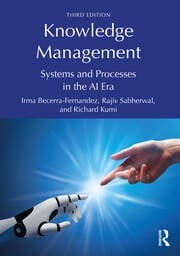
Knowledge management : Systems and processes in the AI era
Aimed at students and managers who seek detailed insights into contemporary knowledge management (KM). It explains the concepts, theories, and technologies that provide the foundation for knowledge management; the systems and structures that constitute KM solutions; and the processes for developing, deploying, and evaluating these KM solutions. It serves as a complete introduction to the subject of knowledge management, incorporating technical and social aspects, as well as concepts, practical examples, traditional KM approaches, and emerging topics. This third edition has been revised and expanded to include more coverage of emergent trends such as cloud computing, online communities, crowdsourcing and artificial intelligence.

Knowledge Discovery in Databases : PKDD 2005 ; 9th European Conference on Principles and Practice of Knowledge Discovery in Databases, Porto, Portugal, October 3-7, 2005, Proceedings
585 different paper submissions were received for both events, which maintains the high s- mission standard of last year. Of these, 335 were submitted to ECML only, 220 to PKDD only and 30 to both. Such a high volume of scientific work required a tremendous effort from Area Chairs, Program Committee members and some additional reviewers. On average, PC members had 10 papers to evaluate, and Area Chairs had 25 papers to decide upon. We managed to have 3 highly qua- ?ed independent reviews per paper (with very few exceptions)and one additional overall input from one of the Area Chairs. After the authors’ responses and the online discussions for many of the papers, we arrived at the final selection of 40 regular papers for ECML and 35 for PKDD. Besides these, 32 others were accepted as short papers for ECML and 35 for PKDD. This represents a joint acceptance rate of around 13% for regular papers and 25% overall. We thank all involved for all the e?ort with reviewing and selection of papers. Besides the core technical program, ECML and PKDD had 6 invited speakers, 10 workshops, 8 tutorials and a Knowledge Discovery Challenge.

JobBook
Jobookplatform aims to provide a space for interaction by facilitating communication between companies and customers in order to achieve their desires and needs. It is a website and an online platform that allows employers to announce job vacancies for their companies, and give users the opportunity to search, apply for a job and obtain it. The main goal of jobook platform is to save a lot of time and effort for both parties, companies and users. In other words, jobook will be bridging the gap between the companies and job seekers in order to meet the needs of the market and to get the best offer as an employer or employees.

IUTAM Symposium on Vibration Control of Nonlinear Mechanisms and Structures ; Proceedings of the IUTAM Symposium held in Munich, Germany, 18-22 July 2005
The objective of the Symposium was to evaluate the limits of performance that can beachievedby controlling the dynamics, and to point out gaps in present research and give links for areas offuture research.Mainly, it brought together leading experts from quite different areas presenting theirpoints of view.

IUTAM Symposium on Hamiltonian Dynamics, Vortex Structures, Turbulence ; Proceedings of the IUTAM Symposium held in Moscow, 25–30 August, 2006
This work brings together previously unpublished notes contributed by participants of the IUTAM Symposium on Hamiltonian Dynamics, Vortex Structures, Turbulence (Moscow, 25-30 August 2006). The study of vortex motion is of great interest to fluid and gas dynamics: since all real flows are vortical in nature, applications of the vortex theory are extremely diverse, many of them (e.g. aircraft dynamics, atmospheric and ocean phenomena) being especially important. The last few decades have shown that serious possibilities for progress in the research of real turbulent vortex motions are essentially related to the combined use of mathematical methods, computer simulation and laboratory experiments. These approaches have led to a series of interesting results which allow us to study these processes from new perspectives.
IUTAM Symposium on Fluid-Structure Interaction in Ocean Engineering ; Proceedings of the IUTAM Symposium held in Hamburg, Germany, July 23-26, 2007
This book collects contributions from leading scientists working on the following topics: Ocean waves, probabilistic models of sea waves, fluid-loading on structures including pipes, cables, drill-strings etc., behavior of floating systems, stability and capsizing of ships, coupled structural behavior, sloshing in tanks, CFD validation and verification.
Iutam Symposium on Dynamics and Control of Nonlinear Systems with Uncertainty ; Proceedings of the IUTAM Symposium held in Nanjing, China, September 18-22, 2006
The last decade has witnessed an increasing interest towards the dynamics and control of nonlinear engineering systems from the scientists engaged in nonlinear dynamics and the control engineers. Both groups of people have recognized the importance of interaction between nonlinear dynamics and robust control during their efforts to improve the dynamic performance of engineering systems with uncertainty, which comes from either the random excitations, such as wind and earthquake, or the modelling errors of real systems including their sensors, controllers and actuators. The dynamics and control of nonlinear systems with uncertainty, therefore, is a vital interdisciplinary topic related to both stochastic systems and deterministic systems. This volume contains the papers presented at the IUTAM Symposium on Dynamics and Control of Nonlinear Systems with Uncertainty, which was sponsored by the International Union of Theoretical and Applied Mechanics (IUTAM)

IUTAM symposium on chaotic dynamics and control of systems and processes in mechanics ; Proceedings of the IUTAM Symposium held in Rome, Italy, 8-13 June 2003
In recent years, careful experimental studies have been made to establish the actual occurrence and observability of the predicted dynamic phenomenaComplex dynamics have been shown to characterize the behaviour of a great number of nonlinear mechanical systemswhen the first IUTAM Symposium devoted to the general topic of nonlinear
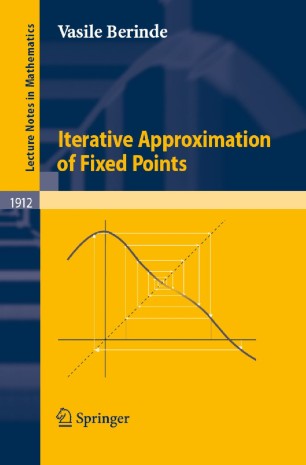
Iterative Approximation of Fixed Points
The aim of this monograph is to give a unified introductory treatment of the most important iterative methods for constructing fixed points of nonlinear contractive type mappings. It summarizes the most significant contributions in the area by presenting, for each iterative method considered (Picard iteration, Krasnoselskij iteration, Mann iteration, Ishikawa iteration etc.), some of the most relevant, interesting, representative and actual convergence theorems. Applications to the solution of nonlinear operator equations as well as the appropriate error analysis of the main iterative methods, are also presented.

Complexity Explained
This book explains why complex systems research is important in understanding the structure, function and dynamics of complex natural and social phenomena. It illuminates how complex collective behavior emerges from the parts of a system, due to the interaction between the system and its environment.

Complex Systems Science in Biomedicine
Complex Systems Science in Biomedicine covers the emerging field of systems science involving the application of physics, mathematics, engineering and computational methods and techniques to the study of biomedicine including nonlinear dynamics at the molecular, cellular, multi-cellular tissue, and organismic level. With all chapters helmed by leading scientists in the field, Complex Systems Science in Biomedicine's goal is to offer its audience a timely compendium of the ongoing research directed to the understanding of biological processes as whole systems instead of as isolated component parts.
Complex systems approach to economic dynamics
This monograph introduces new concepts of unstable periodic orbits and chaotic saddles which are unstable structures embedded in a chaotic attractor, responsible for economic intermittency.
Complex Nonlinearity : Chaos, Phase Transitions, Topology Change and Path Integrals
The book starts with a textbook-like expose on nonlinear dynamics, attractors and chaos, both temporal and spatio-temporal, including modern techniques of chaos–control. Chapter 2 turns to the edge of chaos, in the form of phase transitions (equilibrium and non-equilibrium, oscillatory, fractal and noise-induced), as well as the related field of synergetics. While the natural stage for linear dynamics comprises of flat, Euclidean geometry (with the corresponding calculation tools from linear algebra and analysis), the natural stage for nonlinear dynamics is curved, Riemannian geometry (with the corresponding tools from nonlinear, tensor algebra and analysis). The extreme nonlinearity – chaos – corresponds to the topology change of this curved geometrical stage, usually called configuration manifold. Chapter 3 elaborates on geometry and topology change in relation with complex nonlinearity and chaos. Chapter 4 develops general nonlinear dynamics, continuous and discrete, deterministic and stochastic, in the unique form of path integrals and their action-amplitude formalism.
