



الصفحة 16
الصفحة 16

Computational Many-Particle Physics
Complicated many-particle problems abound in nature and in research alike. Plasma physics, statistical physics and condensed matter physics, as primary examples, are all heavily dependent on efficient methods for solving such problems. Addressing graduate students and young researchers, this book presents an overview and introduction to state-of-the-art numerical methods for studying interacting classical and quantum many-particle systems. A broad range of techniques and algorithms are covered, and emphasis is placed on their implementation on modern high-performance computers.

Computational Intelligence in Reliability Engineering : Evolutionary Techniques in Reliability Analysis and Optimization
This book covers the recent applications of computational intelligence techniques in reliability engineering. This volume contains a survey of the contributions made to the optimal reliability design literature in the resent years and chapters devoted to different applications of a genetic algorithm in reliability engineering and to combinations of this algorithm with other computational intelligence techniques. Genetic algorithms are one of the most widely used metaheuristics, inspired by the optimization procedure that exists in nature, the biological phenomenon of evolution.

Computational intelligence for agent-based systems
In these last years the digital technology explosion has spawned so many new lifestyle models that the boundaries between "real" and "digital" are fiercely debated. This scenario has deeply changed the viewpoint about computer applications: computers become smaller, cheapest and hugely distributed in wired or unwired networks, applications become so flexible and intelligent as to tailor its communication facilities in order to increase the usability of the system. Such data-intensive, unstructured spaces featured by minimal or no centralized control flow, present a challenge for traditional methods of analysis, design and integration of advanced, distributed and intelligent computer systems. Within this challenge, an important role is played by two important research areas : Fuzzy Technology, thanks to its ability to exploit the tolerance for imprecision to achieve tractability and Agent Technology, thanks to its nature to employ agent-wise communities to carry out complex goals by means of smart interaction, cooperation, and pro-activeness.

Computational intelligence and bioinspired systems ; 8th International Work-conference on artificial neural networks, IWANN 2005, Vilanova i la Geltrú, Barcelona, Spain, June 8-10, 2005, Proceedings
We present in this volume the collection of finally accepted papers of the eighth edition of the “IWANN” conference (“International Work-Conference on Artificial Neural Networks”). This biennial meeting focuses on the foundations, theory, models and applications of systems inspired by nature (neural networks, fuzzy logic and evolutionary systems). For scientists, engineers and professionals working in the area, this is a very good way to get solid and competitive applications. We are facing a real revolution with the emergence of embedded intelligence in many artificial systems (systems covering diverse fields: industry, domotics, leisure, healthcare, … ). So we are convinced that an enormous amount of work must be, and should be, still done. Many pieces of the puzzle must be built and placed into their proper positions, offering us new and solid theories and models (necessary tools) for the application and praxis of these current paradigms. The above-mentioned concepts were the main reason for the subtitle of the IWANN 2005 edition: “Computational Intelligence and Bioinspired Systems.” papers was addressing the following topics: 1. Mathematical and theoretical methods in computational intelligence.

Computational Forensic ; 2nd International Workshop, IWCF 2008, Washington, DC, USA, August 7-8, 2008. Proceedings
This book constitutes the refereed proceedings of the Second International Workshop, IWCF 2008, held in Washington, DC, USA, August 2008. The papers are organized in topical sections on trends and challenges; scanner, printer, and prints; human identification; shoeprints; linguistics;decision making and search; speech analysis; signatures and handwriting.

Comets : Nature, Dynamics, Origin, and their Cosmogonical Relevance
The book covers the most recent ideas about the nature and dynamics of comets, including a thorough discussion on Oort cloud dynamics which has not received due attention in other books on the subject. It also discusses the most relevant aspects of the physics and chemistry of comet nuclei, highlighting their importance as relics of the protoplanetary disk and, perhaps, as carriers of water and organics that permitted the development of life on Earth. The book contains several tables with useful data, and an ample bibliography covering the most recent work as well as some historical key contributions to the subject. It may be suitable as a textbook for graduate students with some basic knowledge of celestial mechanics and astrophysics, as well as a consult book for comet researchers, or researchers from other related fields willing to start working on comets, or get an updated view of the subject.

Cognitive Development in Chimpanzees
From an evolutionary perspective, understanding chimpanzees offers a way of understanding the basis of human nature. This book on cognitive development in chimpanzees is the first of its kind to focus on infants reared by their own mothers within a natural setting, illustrating various aspects of chimpanzee cognition and the developmental changes that accompany them. The subjects of this book are chimpanzees of three generations inhabiting an enriched environment as well as a wild community in West Africa; and phenomena such as face recognition, concept formation, object manipulation, tool manufacture and use, decision making, learning, communication, self-awareness, intentionality, understanding others’ minds, cooperation, deception, altruism, and reciprocity observed within these groups are reported herein. Unique approaches both in the field and in the laboratory go hand in hand to illustrate the cognitive world of our closest living evolutionary relatives.

Coercion and the State
A signal feature of legal and political institutions is that they exercise coercive power. The essays in this volume examine institutional coercion with the aim of trying to understand its nature, justification and limits. Included are essays that take a fresh look at perennial questions – what, if anything, can legitimate state exercises of coercive force? What is coercion in politics and law? – and essays that take a first or nearly first look at newer questions – may the state coercively hold certain terrorists indefinitely? Leading scholars from philosophy, political science and law examine these and related questions shedding new light on an apparently inescapable feature of political and legal life: Coercion.

Coding, shaping, making : experiments in form and form-making
Combines inspiration from architecture, mathematics, biology, chemistry, physics and computation to look towards the future of architecture, design and art. It presents ongoing experiments in the search for fundamental principles of form and form-making in nature so that we can better inform our own built environment.

Clinical text mining : Secondary use of electronic patient records
Describes the results of natural language processing and machine learning methods applied to clinical text from electronic patient records. It is divided into twelve chapters. Chapters 1-4 discuss the history and background of the original paper-based patient records, their purpose, and how they are written and structured. These initial chapters do not require any technical or medical background knowledge. The remaining eight chapters are more technical in nature and describe various medical classifications and terminologies such as ICD diagnosis codes, SNOMED CT, MeSH, UMLS, and ATC. Chapters 5-10 cover basic tools for natural language processing and information retrieval, and how to apply them to clinical text. The book’s closing chapters present a number of applications in clinical text mining and summarise the lessons learned from the previous chapters.

Mathematical Modelling of Biosystems
This volume is an interdisciplinary book, which introduces, in a very readable way, state of the art research in the fundamental topics of mathematical modelling of Biosystems. These topics include: the study of Biological Growth and its mechanisms, the coupling of pattern to form via theorems of Differential Geometry, the human immunodeficiency virus dynamics, the inverse folding problem and the possibility of analysing true protein backbone flexibility, the Biclustering techniques for the organization of microarray data, the analytical approach to the modelling of biomolecular structure via Steiner trees, the action of biocides on resistance mechanisms of mutated and phenotypic bacteria strains, a description of the fundamental processes for the distribution and abundances of species towards a unified theory of Ecology, and a special introduction to Protein Physics aiming to explain the all-or-none first order phase transitions from native to denatured states.

Mathematical Analysis I
The purpose of the volume is to provide a support for a first course in Mathematical Analysis, along the lines of the recent Programme Specifications for mathematical teaching in European universities. The contents are organised to appeal especially to Engineering, Physics and Computer Science students, all areas in which mathematical tools play a crucial role. Basic notions and methods of differential and integral calculus for functions of one real variable are presented in a manner that elicits critical reading and prompts a hands-on approach to concrete applications. The layout has a specifically-designed modular nature, allowing the instructor to make flexible didactical choices when planning an introductory lecture course. The book may in fact be employed at three levels of depth. At the elementary level the student is supposed to grasp the very essential ideas and familiarise with the corresponding key techniques.
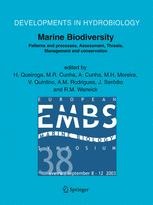
Marine Biodiversity : Patterns and Processes, Assessment, Threats, Management and Conservation
Understanding the functioning of Marine Ecosystems is the first step to measure and predict the influence of Man, and to find solutions for the enormous array of problems we face today. This volume is organised according to the four subthemes of the symposium and to issues commonly perceived as relevant by scientists concerned with the study, protection and management of Marine Biodiversity: patterns and processes, assessment, threats and management and conservation.

Managing Protected Areas in Central and Eastern Europe Under Climate Change
Addresses the need for sharing knowledge and experience in the field of biodiversity conservation and climate change. There is an urgent need to build capacity in protected areas to monitor, assess, manage and report the effects of climate change and their interaction with other pressures. The contributors identify barriers to the adaptation of conservation management, such as the mismatch between planning reality and the decision context at site level. Short and vivid descriptions of case studies, drawn from investigation areas all over Central and Eastern Europe, illustrate both the local impacts of climate change and their consequences for future management.

Management Planning for Nature Conservation : A Theoretical Basis & Practical Guide
The book provides historical and rational background which helps to explain what makes a really effective management plan, and it presents a detailed practical guide to developing such a plan. It concludes with a series of case studies which clearly illustrate the underlying principles drawn out in the text, while highlighting the different approaches demanded by very different sites. Drawing on the expertise of leaders in both conservation research and wildlife management, and with a combined experience from around the world, this book is essential reading for professional conservation managers and any student studying management planning for conservation within a range of degree and postgraduate courses.

Management of Transboundary Rivers and Lakes
As it circulates in the atmosphere, in the rivers, lakes, soil, rock, and in the oceans, it is the major conveyer of va- ous chemical substances and of energy, and it can also be called as the blood of the ecosystems of this planet. But at the same time water is interwoven in the va- ous functions of the nature and the human society in countless ways which makes water one of the most complicated challenges of the mankind today.Human beings are exploiting and enjoying, but at the same time polluting and deteriorating, the waters in various ways and water is equally important to the - man socio-economic system as it is to the nature. It may sound a bit anecdotal to say that water obeys no borders, but that is true; the hydrologic cycle with its r- ers, river basins, lakes, aquifers, rainfalls, oceans, etc., cross administrational b- ders without any passport control. River and lake basins are in most cases very different from the administrational borders that the human beings have set up.

Managed Software Evolution
This book presents the outcomes of the “Design for Future – Managed Software Evolution” .The different lifecycles of software and hardware platforms lead to interoperability problems in such systems. Instead of separating the development, adaptation and evolution of software and its platforms, as well as aspects like operation, monitoring and maintenance, they should all be integrated into one overarching process. Accordingly, the book is split into three major parts, the first of which includes an introduction to the nature of software evolution, followed by an overview of the specific challenges and a general introduction to the case studies used in the project. The second part of the book consists of the main chapters on knowledge carrying software, and cover tacit knowledge in software evolution, continuous design decision support, model-based round-trip engineering for software product lines, performance analysis strategies, maintaining security in software evolution, learning from evolution for evolution, and formal verification of evolutionary changes. In turn, the last part of the book presents key findings and spin-offs. The individual chapters there describe various case studies, along with their benefits, deliverables and the respective lessons learned. An overview of future research topics rounds out the coverage.

Making Ammonia : Fritz Haber, Walther Nernst, and the Nature of Scientific Discovery
This book discusses the progress of science and the transfer of scientific knowledge to technological application. It also identifies the factors necessary to achieve this progress. Based on a case study of the physical chemist Fritz Haber's discovery of ammonia synthesis between 1903 and 1909, the book places Haber's work in historical and scientific (physicochemical) context. The scientific developments of the preceding century are framed in a way that emphasizes the confluence of knowledge needed for Haber's success. Against this background, Haber's work is presented in detail along with the indispensable contributions of his colleague, the physical chemist, Walter Nernst, and their assistants. The detailed accounts of scientific advancement remind us of the physical basis on which our scientific theories and ideas are built. Without this reminder we often forget how complex, and how beautiful achievements in science can be.

Magnetism and Structure in Functional Materials
Magnetism and Structure in Functional Materials addresses three distinct but related topics: (i) magnetoelastic materials such as magnetic martensites and magnetic shape memory alloys, (ii) the magnetocaloric effect related to magnetostructural transitions, and (iii) colossal magnetoresistance (CMR) and related magnanites. The goal is to identify common underlying principles in these classes of materials that are relevant for optimizing various functionalities. The emergence of apparently different magnetic/structural phenomena in disparate classes of materials clearly points to a need for common concepts in order to achieve a broader understanding of the interplay between magnetism and structure in this general class of new functional materials exhibiting ever more complex microstructure and function. The topic is interdisciplinary in nature and the contributors correspondingly include physicists, materials scientists and engineers. Likewise the book will appeal to scientists from all these areas.

Magnetic Heterostructures : Advances and Perspectives in Spinstructures and Spintransport
Magnetic heterostructures constitute an important field in magnetism and nanotechnology, which has developed over the past fifteen years due to important advances in epitaxial- growth techniques and lithographic processes. Magnetic heterostructures combine different physical properties which do not exist in nature. Examples are semiconductors/ferromagnets, superconductors/ferromagnets, and ferromagnets/antiferromagnets. These combinations display rich and novel physical properties different from those that exit in any single one of them. Interlayer exchange coupling, exchange bias, proximity effects, giant magneto-resistance, tunneling magneto-resistance, spininjection and spintransport are examples of new physical phenomena that rely on the combination of different materials layers
