



الصفحة 16
الصفحة 16

Demystifying Internet of Things Security : Successful IoT Device/Edge and Platform Security Deployment
The IoT presents unique challenges in implementing security and Intel has both CPU and Isolated Security Engine capabilities to simplify it. This book explores the challenges to secure these devices to make them immune to different threats originating from within and outside the network. The requirements and robustness rules to protect the assets vary greatly and there is no single blanket solution approach to implement security.

Defense against Bioterror : Detection Technologies, Implementation Strategies and Commercial Opportunities ; Proceedings of the NATO Advanced Research Workshop on Defense against Bioterror: Detection Technologies, Implementation Strategies and Commercial Opportunities, held in Madrid, Spain from 8 to 11 April 2004
A critical assessment of state-of-the-art of emerging ("breakthrough") biosensor technologies that will allow for the rapid identification of biological threat agents in the environment and human population, Identification of directions for future research, and to promote close working relationships between scientists from different countries and with different professional experience. The volume is devoted to a comprehensive overview of the current state of biological weapons threat; challenges confronting biodetection technologies and systems; ongoing research and development; and, future requirements. Biosensor technologies including detection platforms, networked alarm-type biodetector systems, implementation strategies, electro-optical and electrochemical biosensors.

Defending Checks and Balances in EU Member States : Taking Stock of Europe’s Actions
This book deals with Article 7 TEU measures, court proceedings, financial sanctions and the EU Rule of Law Framework to protect EU values with a particular focus on checks and balances in EU Member States.

Deep Learning, Machine Learning and IoT in Biomedical and Health Informatics : Techniques and Applications
Examines and demonstrates state-of-the-art approaches for IoT and Machine Learning based biomedical and health related applications. This book aims to provide computational methods for accumulating, updating and changing knowledge in intelligent systems and particularly learning mechanisms that help us to induce knowledge from the data. It is helpful in cases where direct algorithmic solutions are unavailable, there is lack of formal models, or the knowledge about the application domain is inadequately defined. In the future IoT has the impending capability to change the way we work and live. These computing methods also play a significant role in design and optimization in diverse engineering disciplines. With the influence and the development of the IoT concept, the need for AI (artificial intelligence) techniques has become more significant than ever.

Database performance at scale: a practical guide
Optimizing database performance at the scale required for today’s data-intensive applications often requires more than performance tuning and scaling out. This book shares commonly overlooked considerations, pitfalls, and opportunities that have helped many teams break through database performance plateaus. It’s neither a definitive guide to distributed databases nor a beginner’s resource. Rather, it’s a look at the many different factors that impact performance, and our top field-tested recommendations for navigating them. Chapter 1 provides two (fun and fanciful) tales that surface some of the many roadblocks you might face and highlight the range of strategies for navigating around them.

Data driven : Harnessing data and AI to reinvent customer engagement
Data Driven will show you how to: Target and delight your customers with unprecedented accuracy and success, Bring customers closer to your brand and inspire them to engage, purchase, and remain loyal, Capture, organize, and analyze data from every source and activate it across every channel, Create a data-powered marketing strategy that can be customized for any audience, Serve individual consumers with highly personalized interactions, Deliver better customer service for the best customer experience, Improve your products and optimize your operating systems, Use AI and IoT to predict the future direction of markets. Also you’ll discover the three principles for building a successful data strategy and the five sources of data-driven power.

Dangerous Pollutants (Xenobiotics) in Urban Water Cycle
The book focused on evaluation of impact of xenobiotics in the whole Urban Water Cycle are an interdisciplinary task which has a rising concern these days. Xenobiotics includes both inorganic elements like heavy metals, metalloids and man-made organic compounds such as pesticides, surfactants, solvents, fragrances, flavours, and pharmaceuticals as well as endocrine dis- pters.

Cyber-physical systems : Foundations and techniques
Covers the various aspects associated with Cyber-Physical Systems (CPS) such as algorithms, application areas, and the improvement of existing technology such as machine learning, big data and robotics. The scope of CPS is tremendous. In CPS, one sees the applications of various emerging technologies such as artificial intelligence (AI), Internet of Things (IoT), machine learning (ML), deep learning (DL), big data (BD), robotics, quantum technology, etc. In almost all sectors, whether it is education, health, human resource development, skill improvement, startup strategy, etc., one sees an enhancement in the quality of output because of the emergence of CPS into the field.

Cyber-physical systems : A model-based approach
In this concise yet comprehensive textbook, future inventors are introduced to the key concepts of Cyber-Physical Systems (CPS). Using modeling as a way to develop deeper understanding of the computational and physical components of these systems, one can express new designs in a way that facilitates their simulation, visualization, and analysis. Concepts are introduced in a cross-disciplinary way.
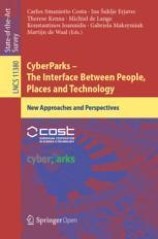
CyberParks – The Interface Between People, Places and Technology: New Approaches and Perspectives
This book is about public open spaces, about people, and about the relationship between them and the role of technology in this relationship. It is about different approaches, methods, empirical studies, and concerns about a phenomenon that is increasingly being in the centre of sciences and strategies – the penetration of digital technologies in the urban space. As the main outcome of the CyberParks Project, this book aims at fostering the understanding about the current and future interactions of the nexus people, public spaces and technology. It addresses a wide range of challenges and multidisciplinary perspectives on emerging phenomena related to the penetration of technology in people’s lifestyles - affecting therefore the whole society, and with this, the production and use of public spaces. Cyberparks coined the term cyberpark to describe the mediated public space, that emerging type of urban spaces where nature and cybertechnologies blend together to generate hybrid experiences and enhance quality of life.

Cyber Security ; 15th International Annual Conference, CNCERT 2018, Beijing, China, August 14–16, 2018, Revised Selected Papers
This book cover the following topics: emergency response, mobile internet security, IoT security, cloud security, threat intelligence analysis, vulnerability, artificial intelligence security, IPv6 risk research, cybersecurity policy and regulation research, big data analysis and industrial security.

Current Themes in Theoretical Biology : A Dutch Perspective
The present volume originated in 2001 when we, together with our publishing editors at (then) Kluwer Academic Publishers, realized that the th following year the 50 volume of our journal Acta Biotheoretica would see the light. We felt that this milestone should not pass unnoticed and that the appropriate way to mark it would be the publication of a special volume of papers on theoretical biology. While editing this book during 2003 and early 2004, we realized that another milestone was not far off: in 2005 it will be 70 years ago that the journal was founded. We hope that the book lying before you will serve well to mark both events. The papers collected here have been written on invitation by representatives of the theoretical biology community in The Netherlands. They are intended to reflect the entire spectrum of topics on which Acta Biotheoretica publishes, ranging from philosophy of biology on one end to mathematical biology on the other. All chapters (except our own introductory one) have been peer reviewed according to the standards that are maintained with respect to regular submissions to Acta Biotheoretica.

Current Developments in Solid-state Fermentation
Over the period of last two decades, there has been significant resurgence in solid-state fermentation due to the numerous benefits it offers, especially in the engineering and environmental aspects. SSF has shown much promise in the development of several bioprocesses and products. This resurgence gained further momentum during the last 5-6 years with the developments in fundamental and applied aspects. A good deal of information has been generated in published literature and patented information. Several commercial ventures have come up based on SSF in different parts of the world. The contents are organized into four parts: Part 1 deals with the General and Fundamentals aspects of SSF; Part 2 deals with the production of bulk chemicals and products such as enzymes, organic acids, spores and mushrooms in SSF; Part 3 is on the use of SSF for specialty chemicals such as gibberellic acid, antibiotics and other pharmaceutically valuable secondary metabolites, pigments, and aroma compounds; Part 4 deals with the use of SSF miscellaneous application such as SSF for food and feed applications, agro-industrial residues as substrates in SSF and the production of silage and vermicompost.

Current Developments in Bioerosion
The book opens with papers on the evolutionary significance of bioerosion, and subsequently ventures out to explore the remarkable diversity of bioerosive biota. From microboring bacteria to grazing echinoids, the studies use a variety of techniques ranging from field observations to sophisticated micro-computed tomography to investigate the ecological and environmental role of these organisms, including symbiotic interactions and alteration of non-carbonate substrates.

Cured II - LENT Cancer Survivorship Research and Education : Late Effects on Normal Tissues
Multimodal treatment lies at the heart of the improvement in cancer cure rates. However, the more aggressive the treatment delivery in terms of dose, time and volume for radiation and chemotherapy, the more adverse effects in normal tissues can be anticipated. Against this background, a major paradigm shift has taken place in that there is a new focus on cancer survivorship. Put another way, there has been a realization that prolongation of life must be accompanied by maintenance of the quality of life: the life worth saving must be worth living.

Crop Biosecurity : Assuring our Global Food Supply
Prevention and preparedness are the two basic approaches to maximize food security against any sort of tampering, whether natural, inadvertent or intentional. The NATO funded project “Tools for crop biosecurity” was designed to strengthen the cooperation among U.S., Europe and Israel in the field of crop biosecurity and to generate awareness on how the psychological, economic and cultural consequences of crop bioterrorism, especially attacks on soft targets such as crop seeds, could have a disproportionate adverse effect on Mediterranean agriculture and, more generally, on society.This book illustrates the achievements of the project originated from the workshops organized during the project itself taking in consideration main microbiological threads posed to crops, the tools to recognize and to control them, the needs for international cooperation and research funds to create networks which can face emerging risks for agriculture.

Critical Issues in Head and Neck Oncology : Key Concepts from the Seventh THNO Meeting
This book discusses the most current issues in head and neck cancer with a focus on current trends such as biomarkers, precision medicine and immunotherapy. New approaches in the diagnosis such as liquid biopsies and imaging biomarkers to predict radiotherapy toxicity as well as approaches in the surgical management of head and neck cancers are discussed. The book discusses medical and surgical approaches in both primary, recurrent and metastatic disease and also covers approaches for rare head neck cancers

Cosmeceuticals as Game Changers in the Cosmetic Industry
Objectives of this work is to compare conventional cosmetics to biotechnology derived cosmeceuticals in terms of skin anti-aging, skin color modulation and hair growth, and to find out which is of greater overall performance. Research revealed superiority of cosmeceuticals to classical cosmetics as it was found that many classical cosmetic agents used for aesthetical purposes posed a certain level of either ineffectiveness, for the reason that the effect did not treat the cause of the problem and was merely temporary and external, or harmfulness because of proposed potential health risks and adverse effects. Whereas cosmeceuticals presented promising novel mechanisms and compounds for a deeper, more thorough remedy.

Cornea and external eye disease
Essentials in Ophthalmology is a new review series covering all of ophthalmology categorized in eight subspecialties. It will be published quarterly, thus each subspecialty will be reviewed biannually.

Control of Spatially Structured Random Processes and Random Fields with Applications
This book is devoted to the study and optimization of spatiotemporal stochastic processes, that is, processes which develop simultaneously in space and time under random influences. These processes are seen to occur almost everywhere when studying the global behavior of complex systems.Classical stochastic dynamic optimization forms the framework of the book. Taken as a whole, the project undertaken in the book is to establish optimality or near-optimality for Markovian policies in the control of spatiotemporal Markovian processes. The authors apply this general principle to different frameworks of Markovian systems and processes. Depending on the structure of the systems and the surroundings of the model classes the authors arrive at different levels of simplicity for the policy classes which encompass optimal or nearly optimal policies. A set of examples accompanies the theoretical findings, and these examples should demonstrate some important application areas for the theorems discussed.
