



الصفحة 16
الصفحة 16

Managing in the Information Economy : Current Research Issues
Managing in the Information Economy: Current Research Issues presents the recent research directions that address the issue of management in this economy. The contributors include leading researchers with interests in a diverse set of topics. While the volume cannot give a complete and comprehensive picture, it can provide introductions to important areas, and point to some important topics for future research. Therefore the book begins with perspectives at the level of the economy as a whole and then progressively addresses industrial structure, sectors, functions (e-commerce) and business practices. Introductions to the main sections and the papers in each section are provided. The volume is organized around six sections: The Information Economy; Structure and the Organization of the Information Economy; Marketing and Ecommerce
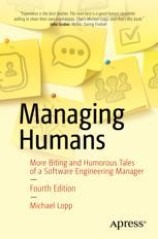
Managing Humans : More Biting and Humorous Tales of a Software Engineering Manage
Expands on the previous editions’ explorations of management essentials including handling stress, building diverse teams, running inclusive meetings, and how to lead in times of crisis. The education of a great leader never stops, and Lopp applies crucial insights to help continue your never-ending leadership education. Whether it is approaching a myriad of engineering personalities or handling unexpected conflict, you will come away with the wisdom to handle any team situation.
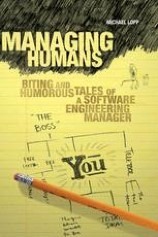
Managing Humans : Biting and Humorous Tales of a Software Engineering Manager
Managing Humans is a selection of the best essays from Michael Lopp's web site, Rands in Repose. Drawing on Lopp's management experiences at Apple, Netscape, Symantec, and Borland, this book is full of stories based on companies in the Silicon Valley where people have been known to yell at each other. It is a place full of dysfunctional bright people who are in an incredible hurry to find the next big thing so they can strike it rich and then do it all over again. Among these people are managers, a strange breed of people who through a mystical organizational ritual have been given power over your future and your bank account.

Managing Global Innovation : Uncovering the Secrets of Future Competitiveness
"Managing Global Innovation is a rich compendium of new concepts of global R&D, enlivened by 18 excellent best-in-class case studies. What is especially impressive, the authors bridge seamlessly theoretical and practical issues about how companies create, transform and implement new technology in an expanding marketplace. This will be intriguing to both the industry and the academic world. The lessons learned are invaluable. The book is a real tour de force, probably destined to become a standard in this field for some time to come." Professor Jeff Huang, Harvard University "This excellent book demonstrates how the dynamics of innovation and creativity can be mastered. Important reading for senior management and a must for R&D leaders."
Managing Distributed Cloud Applications and Infrastructure : A Self-Optimising Approach
The emergence of the Internet of Things (IoT), combined with greater heterogeneity not only online in cloud computing architectures but across the cloud-to-edge continuum, is introducing new challenges for managing applications and infrastructure across this continuum.
Management Quality and Competitiveness : Lessons from the Industrial Excellence Award
This book showcases examples of excellent manufacturing companies who have succeeded in creating value and job growth in Western Europe. The examples show managers of industrial firms how a clearly articulated strategic position can be combined with excellent execution to achieve competitiveness in Europe, in spite of the usually cited disadvantage of high labor costs and rigidity. Not every company is alike — strategic positions differ, and the means of execution differ, but what is common is a clear plan together with mobilization of all employees to apply their abilities in supporting this common plan. The book is indispensable reading for all managers that are interested in improving competitiveness.

Management of Technology and Innovation in Japan
Despite the innumerable number of p- lications and recommendations on innovation, competitive innovativeness is still a rare competency. The latest publication of UNICE – the European Industry - ganization representing 20 million large, midsize and small companies – speaks a clear language: Europe qualifies to roughly 60% (70%) of the innovation strength of the US (Japan).

Management of Innovation in Network Industries : The Mobile Internet in Japan and Europe
This book focuses on the following questions: Which are the implications of different approaches towards management of systemic innovations? Do differences matter and why do they matter? The author shows that Europeans can learn from the Japanese and gives advice for future approaches to developments in the European telecommunications industry.

Management of Convergence in Innovation : Strategies and Capabilities for Value Creation Beyond Blurring Industry Boundaries
Throughout the past decade, the phenomenon of technological convergence has increasingly gained managerial attention. In this special form of technological change, the coming-together of previously distinct knowledge bases gives rise to the creation of new applications and business models. When such innovations emerge at the intersection of industries, the resulting creative destruction may exceed previously established industry boundaries. As a consequence, convergence does not only promise the creation of new value, but may imply significant disruptions to established industries. Based on investigating 26 firms within the ICT industry, this book highlights implications of the convergence phenomenon on firms’ innovation management practices, and derives strategic guidelines for building and sustaining business models beyond blurring industry boundaries.

Management Models for Corporate Social Responsibility
In recent years the field of Corporate Social Responsibility (CSR) has impressively progressed. This has resulted in a number of tried and tested management models - models that have demonstrated added value in everyday organisational practice.

Management and Information Technology after Digital Transformation
With the widespread transformation of information into digital form throughout society – firms and organisations are embracing this development to adopt multiple types of IT to increase internal efficiency and to achieve external visibility and effectiveness – we have now reached a position where there is data in abundance and the challenge is to manage and make use of it fully. This book addresses this new managerial situation, the post-digitalisation era, and offers novel perspectives on managing the digital landscape.

Management : Leading & collaborating in a competitive world
Management: Leading and Collaborating in a Competitive World is the perspective of a current or future manager and emphasizes six essential performance dimensions: cost, quality, speed, innovation, service, and sustainability. This bottom-line, results-oriented approach is a unique hallmark of this text. Leadership is also a vital theme and includes working collaboratively toward outstanding results

Manage IT! : Organizing IT Demand and IT Supply
Discusses the IT management tasks and the objects involved. This book outlines traditional IT management; deals with controlling IT; and, tackles the financial, personnel, purchasing, legal and security aspects in IT. It explains the effects of striving for 'utility computing' and control of IT by means of 'IT portfolio management'.

Making Growth Work : How Companies Can Expand and Become More Efficient
Growth is the key goal of management. It's not just an indicator of a company's performance, but also the basis for its future success. But growth doesn't just mean getting bigger – it also means getting better. In other words, growth must be profitable, otherwise it destroys the company's value long term. And this is not the only challenge. Growth must also be made continuous. The traditional V-curve paradigm (first downsize, then grow) no longer applies. Today, companies must follow a parallel strategy of growth coupled with reorganization, in the sense of permanently increasing efficiency.

Making Ammonia : Fritz Haber, Walther Nernst, and the Nature of Scientific Discovery
This book discusses the progress of science and the transfer of scientific knowledge to technological application. It also identifies the factors necessary to achieve this progress. Based on a case study of the physical chemist Fritz Haber's discovery of ammonia synthesis between 1903 and 1909, the book places Haber's work in historical and scientific (physicochemical) context. The scientific developments of the preceding century are framed in a way that emphasizes the confluence of knowledge needed for Haber's success. Against this background, Haber's work is presented in detail along with the indispensable contributions of his colleague, the physical chemist, Walter Nernst, and their assistants. The detailed accounts of scientific advancement remind us of the physical basis on which our scientific theories and ideas are built. Without this reminder we often forget how complex, and how beautiful achievements in science can be.
Macroeconomic modelling of R&D and innovation policies
This book encompasses a collection of in-depth analyses showcasing the challenges and ways forward for macroeconomic modelling of R&D and innovation policies. Based upon the proceedings of the EC-DG JRC-IEA workshop held in Brussels in 2017, it presents cutting-edge contributions from a number of leading economists in the field. It provides a comprehensive overview of the current academic and policy challenges surrounding R&D as well as of the state-of-the-art modelling techniques.
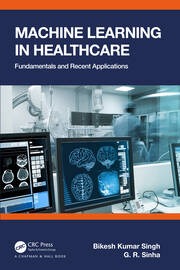
Machine learning in healthcare : Fundamentals and recent applications
Discusses how to build various ML algorithms and how they can be applied to improve healthcare systems. Healthcare applications of AI are innumerable: medical data analysis, early detection and diagnosis of disease, providing objective-based evidence to reduce human errors, curtailing inter- and intra-observer errors, risk identification and interventions for healthcare management, real-time health monitoring, assisting clinicians and patients for selecting appropriate medications, and evaluating drug responses. Extensive demonstrations and discussion on the various principles of machine learning and its application in healthcare is provided, along with solved examples and exercises.
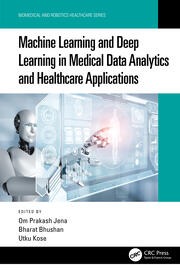
Machine learning and deep learning in medical data analytics and healthcare applications
Introduces and explores a variety of schemes designed to empower, enhance, and represent multi-institutional and multi-disciplinary machine learning (ML) and deep learning (DL) research in healthcare paradigms. Serving as a unique compendium of existing and emerging ML/DL paradigms for the healthcare sector, this book demonstrates the depth, breadth, complexity, and diversity of this multi-disciplinary area. It provides a comprehensive overview of ML/DL algorithms and explores the related use cases in enterprises such as computer-aided medical diagnostics, drug discovery and development, medical imaging, automation, robotic surgery, electronic smart records creation, outbreak prediction, medical image analysis, and radiation treatments.
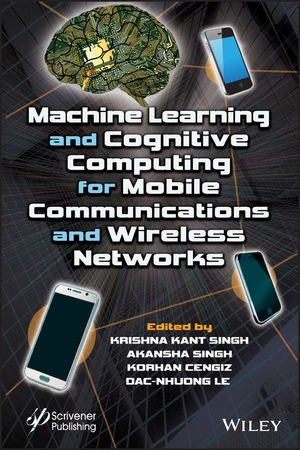
Machine Learning and Cognitive Computing for Mobile Communications and Wireless Networks
Communication and network technology has witnessed recent rapid development and numerous information services and applications have been developed globally. These technologies have high impact on society and the way people are leading their lives. The advancement in technology has undoubtedly improved the quality of service and user experience yet a lot needs to be still done. Some areas that still need improvement include seamless wide-area coverage, high-capacity hot-spots, low-power massive-connections, low-latency and high-reliability and so on. Thus, it is highly desirable to develop smart technologies for communication to improve the overall services and management of wireless communication. Machine learning and cognitive computing have converged to give some groundbreaking solutions for smart machines. With these two technologies coming together, the machines can acquire the ability to reason similar to the human brain. The research area of machine learning and cognitive computing cover many fields like psychology, biology, signal processing, physics, information theory, mathematics, and statistics that can be used effectively for topology management. Therefore, the utilization of machine learning techniques like data analytics and cognitive power will lead to better performance of communication and wireless systems.

Low-Power High-Speed ADCs for Nanometer CMOS Integration
Low-Power High-Speed ADCs for Nanometer CMOS Integration is about the design and implementation of ADC in nanometer CMOS processes that achieve lower power consumption for a given speed and resolution than previous designs, through architectural and circuit innovations that take advantage of unique features of nanometer CMOS processes. A phase lock loop (PLL) clock multiplier has also been designed using new circuit techniques and successfully tested.
