



الصفحة 16
الصفحة 16
Advances in Mathematical and Statistical Modeling
Enrique Castillo is a leading figure in several mathematical, statistical, and engineering fields, having contributed seminal work in such areas as statistical modeling, extreme value analysis, multivariate distribution theory, Bayesian networks, neural networks, functional equations, artificial intelligence, linear algebra, optimization methods, numerical methods, reliability engineering, as well as sensitivity analysis and its applications. Organized to honor Castillo's significant contributions, this volume is an outgrowth of the International Conference on Mathematical and Statistical Modeling and covers recent advances in the field. Also presented are applications to safety, reliability and life-testing, financial modeling, quality control, general inference, as well as neural networks and computational techniques.
Advances in Artificial Economics : The Economy as a Complex Dynamic System
Perceiving the economy as a complex dynamic system, generates a need for new tools for its study. As a constructive simulation method, Agent-Based Computational Economics (ACE) has in recent years proven its strength and extensive applicability. Fields of study are widely spread within economics, with a cluster around financial markets. This book is based on communications given at AE’2006 (Aalborg, Denmark) – the second symposium on Artificial Economics, and covers both wellknown questions of economics, like the existence of market efficiency, as well as new questions raised by the new tools, for example questions related to networks of social interaction.
Advanced REIT Portfolio Optimization : Innovative Tools for Risk Management
This book provides an investor-friendly presentation of the premises and applications of the quantitative finance models governing investment in one asset class of publicly traded stocks, specifically real estate investment trusts (REITs). The models provide highly advanced analytics for REIT investment, including: portfolio optimization using both historic and predictive return estimation; model backtesting; a complete spectrum of risk assessment and management tools with an emphasis on early warning systems, risk budgeting, estimating tail risk, and factor analysis; derivative valuation; and incorporating ESG ratings into REIT investment.

Advanced Financial Accounting
An up-to-date, comprehensive, and highly illustrated presentation of the accounting and reporting principles and procedures used in a variety of business entities.
Adaptive Learning of Polynomial Networks : Genetic Programming, Backpropagation and Bayesian Methods
This book provides theoretical and practical knowledge for develop ment of algorithms that infer linear and nonlinear models. It offers a methodology for inductive learning of polynomial neural network mod els from data. The design of such tools contributes to better statistical data modelling when addressing tasks from various areas like system identification, chaotic time-series prediction, financial forecasting and data mining. The main claim is that the model identification process involves several equally important steps: finding the model structure, estimating the model weight parameters, and tuning these weights with respect to the adopted assumptions about the underlying data distrib ution. When the learning process is organized according to these steps, performed together one after the other or separately, one may expect to discover models that generalize well.
Adaptive Information Systems and Modelling in Economics and Management Science
Learning and adaption are key features of "real economies". Studying interesting real phenomena like innovation, industry evolution or the role of expectation formulation in financial markets thus necessitates novel methods of data analysis and modelling. This title covers statistical models of heterogeneity, artificial consumer markets, models of adaptive expectation formulation in financial markets and agent-based models of industry evolution, product diversification and energy markets. The joint findings are presented in a manner that is interesting both for readers with a background in economics/management and mathematics and statistics and also for non-expert readers because it allows them to grasp the ideas of modern management science. This book thus provides a unique integrated toolbox for building realistic agent-based models of learning and adaption in a variety of settings based on sound data analysis.
Accounting, Cash Flow and Value Relevance
Investigates the value relevance of the operating cash flow as reported under the International Financial Reporting Standards (IAS/IFRS) for the largest European listed companies and US listed companies in the past recent years. Using the model based on the valuation theory developed by Ohlson, which measures the market value of equity as a function of accounting variables, the author concludes that operating cash flow represents a significant variable in determining the value relevance of the largest European and US listed companies. These findings provide siginificant implications for standard setters and support the continued requirements for disclosure of cash flow information under IAS 7.

Accounting Principles
Accounting Principles provides students with a clear overview of fundamental financial and managerial accounting concepts with a focus on learning the accounting cycle from the sole proprietor perspective. Through a primary review of accounting transactions, integrated real-world examples, and a variety of practice opportunities, students develop a thorough understanding of how to apply accounting principles and techniques in practice.
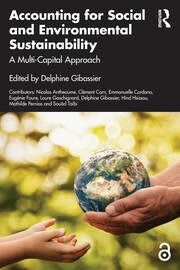
Accounting for social and environmental sustainability : A multi-capital approach
Offers an in‑depth examination of multi‑capital accounting, which has already been integrated within the corporate sustainability reporting directive and will follow on from sustainability reporting. the LIFTS model (limits and foundations towards sustainability accounting model) used in this book combines various scientific and practical contributions to develop budgets for environmental impacts and social obligations on an organisational scale. it proposes an accounting mechanism that enables an organization to manage each of its budgets and measure variances between forecast and actual. it provides an introduction to the principles of this model and its conditions of application and describes its implementation in numerous companies.

Accounting for governmental & nonprofit entities
Gives generations of instructors and students a comprehensive knowledge of the specialized accounting and financial reporting practices of governmental and not-for-profit organizations, as well as an understanding of how those organizations can better meet the information needs of a diverse set of financial statement users and decision makers.
Accounting for deferred income taxes
Incorporates the new tax rates and other impacts of the Tax Cuts and Jobs Act and will assist you in understanding FASB ASC 740, Income Taxes, and how it establishes guidelines for accounting for income taxes, including income tax expense, classification of deferred tax accounts, and related disclosures.
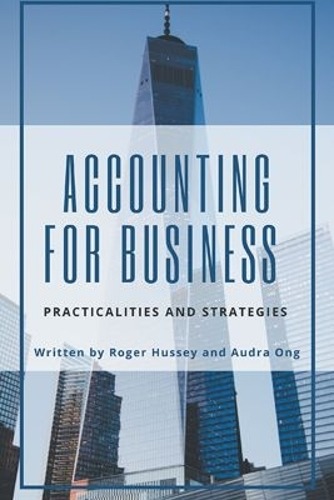
Accounting for business : Practicalities and strategies
Identifies the types of organizations that generate financial information and explains how you can use it for your benefit. The early chapters focus on the information that is publicly available for large companies and demonstrate how to select and analyze the figures for decision making. The later chapters concentrate on the detailed management accounting information that is available internally for managers so that they can make decisions, investigate problems, and set performance targets. The final chapter, explores emerging and very pertinent issues such as "Can the organization obtain the basic resources to stay in business?" and "Are its activities harmful to the environment??
Accounting and Financial System Reform in Eastern Europe and Asia
Accounting and Financial System Reform in Eastern Europe and Asia is the second in a series to examine accounting and financial system reform in transition economies. The first book used Russia as a case study. The present volume in the series examines some additional aspects of the reform in Russia and also looks at the accounting and financial system reform efforts that are being made in Ukraine, Bosnia & Herzegovina, Armenia and five Central Asian republics.
Accounting and Financial System Reform in a Transition Economy: A Case Study of Russia
Much has been written about the economic and political problems of countries that are in the process of changing from centrally planned systems to market systems. Most studies have focused on the economic, legal, political and sociological problems these economies have had to face during the transition period. However, not much has been written about the dramatic changes that have to be made to the accounting and financial system of a transition economy. This book was written to help fill that gap. Using Russia as a case study the authors examined all the major aspects of accounting reform, starting with problems of implementation. They also examined the current state of auditing in Russia. They also devote chapters to corporate governance issues, the Russian tax system and the problems Russian enterprises face when they try to attract foreign direct investment.
Accounting and auditing small and medium-sized practices : Transformative capabilities in a rapidly changing society
Addresses recent trends, developments, and future of accounting and auditing of small and medium-sized practices (AASMPs) in the public and private sectors.the book has three main objectives: firstly, to provide an analysis of how different societal trends, including digitalization, impact AASMPs and what role education and training play in proactive adaptation to those trends; secondly, to outline major scenarios for global AASMP development by 2035; and thirdly, to offer a conceptual framework for better understanding of AASMPs' dynamic and transformative capabilities that are necessary to create sustained competitive advantage in a rapidly changing society. beyond presenting a conceptual framework, this book also offers a discussion of future scenarios for AASMPs' development and their role in the global economic development.
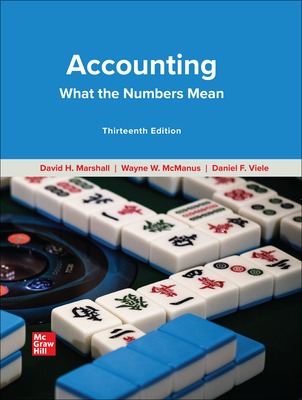
Accounting : What the numbers mean
Designed for non-majors, Accounting: What the Numbers Mean, guides students through the basics: what accounting information is, how it is developed, how it is used, and what it means. Financial statements are examined to learn what they do and do not communicate, enhancing the student’s decision-making and problem-solving abilities from a user perspective.
A Stakeholder Rationale for Risk Management : Implications for Corporate Finance Decisions
Ordinarily, only the interests of shareholders, debtholders, and corporate management are taken into account when analyzing corporate financial decisions while the interests of non-financial stakeholders are often neglected. Gregor Gossy develops a so-called stakeholder rationale for risk management arguing that firms which are more dependent on implicit claims from their non-financial stakeholders, such as customers, suppliers, and employees, prefer conservative financial policies. In order to perform panel data analyses of the determinants of corporate financial decisions, the author uses data from Austrian and German industrial companies. He shows that variables for a firm’s most important non-financial stakeholders explain the firm’s capital structure and cash holding decisions. His findings suggest that a firm’s choice of accounting standards have a moderating effect on the determinants of corporate finance decisions.

A proposed model for predicting financial Loss of private conventional and Islamic banks in Syria
This study aimed to find a model consisting of a set of financial ratios in which each ratio has its own weight that indicate its importance to predict probability of financial loss of conventional and Islamic banks in Syria. The early prediction warns the concerned parties that they can intervene and take corrective actions before the collapses of bank. To achieve this ratios of conventional and Islamic Syrian banks were analyzed using Binary logistic regression from the period of 2011-2020 The statistical results show that the logistic regression model is accurate to predict the probability of a financial loss in conventional banks about 82.2%, 81.3%, 80.1%, 78% before 90 days ,180 days, 270 days, one year respectively. We can generally use five variables (Non-performing debt, return on equity, size, growth rate and financing portfolio ratio) in bank's financial loss prediction, but for Islamic banks, no significant values were shown so we can’t find logistic regression model is accurate for Islamic banks.

A practical guide to corporate finance : Breaking the financial lce
Offers an approachable guide to all key concepts within corporate finance. Emphasizing the use of common sense rather than number-crunching models, A practical guide to corporate finance begins with the basics of how to read financial statements and how to estimate future cash flows. It also includes a guide to subjects such as capital budgeting decisions, the cost of financing for businesses, cash and working capital management, The process of business valuation, and how stock markets work. This textbook breaks the financial ice by offering real, practical advice, helping the reader to avoid common pitfalls, and translate the 'financialese', or business jargon that can cause confusion for those without a financial or banking background.

A Portrait of State-of-the-Art Research at the Technical University of Lisbon
This book contains the edited version of the invited lectures that were delivered by prominent researchers at UTL. This book brings together in a review manner a comprehensive summary of high quality research contri- tions across basic and applied sciences. The contributing papers are organized around the following major areas: – Emergent areas (Nanosciences, Quantic Computations and Infor- tion, Risk and Volatility in Financial Markets); – Basic Sciences (Mathematics, Physics, Chemistry and Materials); – Social Sciences, Economics and Management Sciences; – Life Sciences and Biotechnology; – Engineering and Technologies – Nature, Environment and Sustainability; – Public Health, Food Quality and Safety; – Health and Sport Sciences; – Urbanism, Transports, Architecture, Arts and Design.
