



الصفحة 16
الصفحة 16

Environmental Bioremediation Technologies
Environmental contamination from both natural and anthropogenic sources is, today, a major environmental concern due to pervasiveness and persistence of many toxicants. It is considered as an inevitable evil of our progress and modernization. To decontaminate the soils, sediments and waters, polluted by anthropogenic activities, the scientists and technologists have evolved different technologies over the years. Although we have to pay high cost for physical and chemical environmental technologies, but they are not eco-friendly and safe. Hence, it was deeply realized to develop viable technologies employing microbes and plants to remediate not only metallic residues and radionuclides, but also the xenobiotic compounds like PCBs, PAHs, PCPs, petroleum sludge and the military wastes. No doubt, the scientists have also got some success in this endeavour and as the result, many companies are in place today to promote the sale of plant or microbe-based technologies to deal with specific environmental contamination challenges. Besides, these technologies are se- driven and do not disturb the sites in cleaning process.

Environmental and Health Risk Assessment and Management : Principles and Practices
The book covers the essential aspects of environmental and health law, environmental economics, applied statistical and probabilistic methods, fundamental notions of applied epidemiology and toxicology, as well as decision analysis, to provide an integrated overview of how risk assessment and management combine to produce sound societal outcomes. Risk-based methods play a pivotal role in identifying and ranking alternative, sustainable choices, while accounting for uncertainty and variability. Specifically, most reductions in risks require a balancing of the costs and benefits associated with the action to reduce exposure to a hazard and thus risk. This balancing necessarily involves linking exposure and response through causation. Fundamentally, in risk assessment and management, science and law intersect through legal and scientific causation to the point that the failure to provide a sound causal argument can make an otherwise beneficial law or regulation invalid.

Entropy and Energy : A Universal Competition
Entropy and Energy- a Universal Competition" is a students textbook as well as a scientific monograph. The concepts of entropy and energy embody the effects of random walk in a body and of deterministic strife respectively, and are therefore often in competition. The book gives instructive examples from elementary thermodynamics and physico-chemistry and extrapolates the notion to non-standard thermodynamic subjects like shape memory, dissipation of the earth's atmosphere, and sociology

Enterprising worlds : A geographic perspective on economics, environments & ethics
Enterprising World represents the culmination of several years of work by geographers, planners, and economists. The chapters included in this volume represent the collective efforts of the International Geographical Union’s Commission on the Dynamics of Economic Spaces. This collection is the result of the 2005 annual meeting in Toledo, Ohio (USA). The chapters have been selected based on their contribution to the broader community of economic geographers and policymakers and to demonstrate the inherent interconnectedness of these themes (and at times the conceptual tension that exists between ethics, economics, and the environment) insofar as these important issues shape the contours and cleavages of contemporary regional development.

Enhancing urban environment by environmental upgrading and restoration ; Proceedings of the NATO Advanced Research Workshop on enhancing urban environment : environmental upgrading of municipal pollution control facilities and restoration of urban waters, Rome, Italy from 6 - 9 November 2003.
As urban areas keep growing, water infrastructure ages, and the requirements on environmental protection become more rigorous, there is a continual need for upgrading water pollution control facilities and restoring degraded urban waters. Such issues are addressed in this book by focusing on five major topics: (a) Upgrading stormwater management facilities, (b) Retrofitting / upgrading combined sewer overflow (CSO) facilities, (c) Optimising/upgrading sewage treatment plant performance, (d) Urban stream restoration, and (e) Challenges in restoring urban environment. Each chapter contains some overview papers followed by research or case study papers. Besides presentations of new approaches and accomplishments in the field of upgrading and restoration, several papers provide analysis of vast needs in this field in several countries of Central and Eastern Europe, which either recently joined the European Union (EU) or are preparing for accession, and need to comply with the existing EU directives dealing with environmental protection. As such, this book will be of primary interest to researchers and university lecturers dealing with environmental upgrading and restoration, environmental planners from all levels of government, municipal engineers and politicians, and finally the private industry representatives (consultants, private utilities and environmental technology suppliers) searching for new business opportunities among the new or aspiring members of EU.

Engineering Geology for Underground Rocks
This book clearly and systematically explains underground engineering geology principles, methods, theories and case studies, depicts engineering problems in underground rock engineering and how to study and solve them. It specially emphasizes mechanical and hydraulic couplings in rock engineering for wellbore stability, mining near aquifers and other underground structures where inflow is a problem. Using the methods and models given in this book, the reader is able to analyse underground geological engineering problems and also for the design of underground structures.

Energy transition and energy democracy in East Asia
Provides down-to-earth information on what kind of actions are being taken by the Government, Local community, Businesses, Researchers, NGOs on the energy transition in this region. It gives an updated picture of the energy transition in the East Asian countries, where the economic growth, as well as CO2 emission growth, is significant.

Energy and Environment
Energy and Environment is a volume on energy and environmental modeling that describes a broad variety of modeling methodologies, embodied in models of varying scopes and philosophies, ranging from top-down integrated assessment models to bottom-up partial equilibrium models, to hybrid models.

Energy and American Society – Thirteen Myths
This book takes on a central quandary in the study of energy and environmental policy: What myths continue to exist in American culture concerning energy, the environment, and society? It enrolls twenty-four of the nation’s top experts working on energy policy in industry, government laboratories, utilities, nonprofit organizations, and universities to debunk and contextualize thirteen energy myths relating to electric power, renewable energy, energy efficiency, transportation, and climate change. While the book focuses on the American experience, it will be of interest to those working in the fields of energy policy, energy and the environment, and technology assessment worldwide.

Endurance time excitation functions : Intensifying dynamic loads for seismic analysis and design
Seismic assessment and earthquake-resistant design are essential applications of earthquake engineering for achieving seismic safety for buildings, bridges, infrastructure, and many other components of the built environment. The Endurance Time Method (ETM) is used for seismic analysis of simple and complex structural systems and civil engineering infrastructure as well as producing optimal and cost-effective structural and detail designs. ETM is a relatively new approach to seismic assessment and design of structures. It has developed into a versatile tool in the field, and its practical applications are expected to increase greatly in the near future.

Encyclopedia of World Climatology
A successor to the 1986 Encyclopedia of Climatology, this compendium provides a clear explanation of current knowledge and research directions in modern climatology.

Encyclopedia of Soil Science
The Encyclopedia of Soil Science provides a comprehensive, alphabetical treatment of basic soil science in a single volume. It constitutes a wide ranging and authorative collection of about 160 academic articles covering the salient aspects of soil physics, chemistry, biology, fertility, technology, genesis, morphology, classification and geomorphology.

Encyclopedia of Geomagnetism and Paleomagnetism
Consisting of more than 300 articles written by ca 200 leading experts, this authoritative reference encompasses the entire fields of Geomagnetism and Paleomagnetism in a single volume. It describes in fine detail at an assessable level the state of the current knowledge and provides an up-to-date synthesis of the most basic concepts. As such, it will be an indispensable working tool not only for geophysicists and geophysics students but also for geologists, physicists, atmospheric and environmental scientists, and engineers.
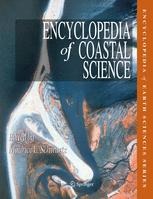
Encyclopedia of Coastal Science
This new Encyclopedia of Coastal Science stands as the latest authoritative source in the field of coastal studies, making it the standard reference work for specialists and the interested lay person

Employment Deconcentration in European Metropolitan Areas : Market Forces versus Planning Regulations
Spatial deconcentration of economic activities, particularly the growth of suburban office, retail and entertainment concentrations, has become a prime concern in European metropolitan areas. This book provides a cross-national comparative perspective on employment deconcentration within selected metropolitan areas in Europe. Whereas most debate over urban sprawl and deconcentration is oriented towards the North American context, this book aims at a better understanding of this phenomenon in the European context, emphasizing the location of economic activities rather than residential patterns. It provides insights on whether different governance attributes produce particular forms of deconcentration versus the influence of market attributes and local specificities, also commenting on quality of life impacts and possible governance and policy implications of the deconcentration process. Introduction of a comparative framework is followed by eight case study chapters, three representing northern Europe, three the southern European-Mediterranean region and two post-communist central Europe. Most chapters examine two metropolitan areas, usually a large one and a smaller one. The comparison reveals considerable variations in the magnitude, form, and process of employment deconcentration, only partly in line with expected influences of governance systems. Evidence does not fully confirm an anticipated distinction between Northern and Mediterranean Europe; the Czech Republic and Israel seem to diverge most from prevailing European trends.

Emerging Organic Pollutants in Waste Waters and Sludge
Over the past fifteen years regulatory agencies have relied on their approaches to characterise and control the release of toxic substances into the aquatic environment: a GC/MS analysis for U.S. EPA designated 126 priority pollutants and 132 dangerous substances according to the European 76/464/CEE Directive and on the bioassays with aquatic bioorganisms. "Emerging Contaminants" correspond in most cases to irregulated contaminants, e.g. surfactants, pharmaceuticals and personal care products (PPCP), or gasoline additives. These two volumes, 5/I and 5/O, of this Handbook deal with the analytical, toxicological and environmental issues of these toxicants. Based on results of up-to-date research they give the reader a balanced view on this rapidly developing and complex subject.

Emerging Environmental Technologies
This book exclusively focuses on the technologies that would be in the forefront in near to far future. Each and every article in the book discusses the current environmental challenges, the novel innovation and future directions. The topics covered in the book include microbial fuel cells, hybrid solar lighting, bacterial swimming for environmental remediation, cleaner engines, nanoparticles for effluent treatment, surface catalysis and proteins as gas hydrates inhibitors.
Emerging Contaminants from Industrial and Municipal Waste : Removal Technologies
This book focuses on innovative treatment technologies for the elimination of emerging contaminants from wastewater and drinking water. The respective treatment processes, such as membrane bioreactors, photocatalysis, ozonation and advanced oxidation are dealt with in detail. The book also discusses sources and occurrence of emerging contaminants in municipal and industrial waste, giving a concise and critical overview of state-of-the-art analytical methods for their identification. Further important aspects covered by the book include the acute and chronic effects and overall impact of emerging contaminants on the environment.

Emerging Contaminants from Industrial and Municipal Waste : Occurrence, Analysis and Effects
This book focuses on innovative treatment technologies for the elimination of emerging contaminants from wastewater and drinking water. The respective treatment processes, such as membrane bioreactors, photocatalysis, ozonation and advanced oxidation are dealt with in detail. The book also discusses sources and occurrence of emerging contaminants in municipal and industrial waste, giving a concise and critical overview of state-of-the-art analytical methods for their identification. Further important aspects covered by the book include the acute and chronic effects and overall impact of emerging contaminants on the environment.
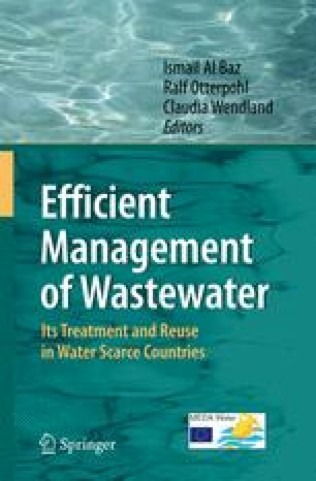
Efficient Management of Wastewater : Its Treatment and Reuse in Water-Scarce Countries
The book highlights non-conventional solutions within the field of wastewater treatment and reuse predominantly for professionals and decision makers. It focuses on technologies like anaerobic and extensive treatment of municipal, domestic wastewater and grey water which are reliable, sustainable, low cost and suitable for rural and sub urban areas. Additionally, particular innovative on site concepts are presented.
