



الصفحة 16
الصفحة 16
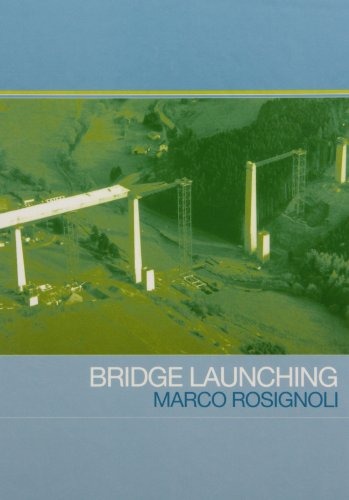
Bridge Launching
It is devoted to bridges that are built by incremental launching methods, using prestressed composite materials. It integrates the static, aesthetic, and economic aspects of construction techniques for building these state-of-the-art structures. Bridge launching is a comprehensive handbook, offering explanations of both the theoretical and technological aspects of the construction process. Both beam bridges and arch bridges are thoroughly analysed,and special theories aimed at optimising static aspects, as well as local phenomena, are developed.
Bridge design for economy and durability : Concepts for new, strengthened and replacement bridges
Describes a number of new or updated bridging concepts which were developed and s"Describes a number of new or updated bridging concepts which were developed and successfully applied during the author's forty years of close involvement with UK and international bridge design, construction, maintenance and research. The concepts mainly apply to the small/medium span range of bridges and viaducts and contribute to one or more of the following features: design and construction economy in both time and money / ease of inspection and minimum maintenance / ride quality and safety / good appearance / strengthening when required with minimum traffic disruption"

Bridge Design : Concepts and Analysis
Provides a unique approach, combining the fundamentals of concept design and structural analysis of bridges in a single volume. The book provides insights into conceptual design with concrete, steel or composite bridge solutions as alternatives.
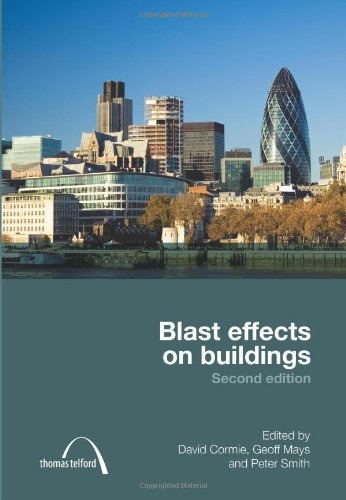
Blast effects on buildings
Provides the latest practical guidance on designing buildings to optimise their resilience to blast loading. Focused specifically on the design of commercial buildings, it is an indispensible guide to help engineers reduce the risks posed to building occupants and businesses from terrorist and other explosions. This book provides the engineer with a single and comprehensive source of reference for all the main elements of blast engineering design in modern practice. Industry-accepted methods for the design of glazing to resist blast loading are published for the first time, as well as a new chapter on hostile vehicle mitigation techniques. Guidance on structural steelwork and reinforced concrete design is extended and enhanced, supplemented with material on design in new materials such as steel-concrete-steel composites, this latter addition being published for the first time.
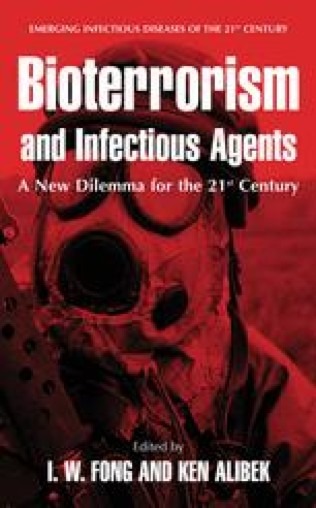
Bioterrorism and Infectious Agents : A New Dilemma for the 21st Century
Since the terrorist attack on the United States on September 11, 2001 and subsequent cases of anthrax in Florida and New York City, attention has been focused on the threat of b- logical warfare and bioterrorism. Biological warfare agents are de?ned as “living org- isms, whatever their nature, or infected material derived from them, which are used for h- tile purposes and intended to cause disease or death in man, animals and plants, and depend for their efforts on the ability to multiply in person, animal or plant attacked.” Biological warfare agents may be well suited for bioterrorism to create havoc and terror in a civilian population, because they are cheap and easy to obtain and dispense. Infectious or contagious diseases have played a major part in the history of warfare – deliberately or inadvertently – in restricting or assisting invading armies over the centuries. In 1346, the Tartars catapulted plaque-infected bodies into Kaffa in the Crimea to end a 3-year siege. Blankets contaminated with smallpox to infect North American Indians were used by British forces in the 18th century. More recently, the Japanese released ?eas infected with plaque in Chinese cities in the 1930s and 1940s. Biological research programs for both offensive and defensive strategies have been developed by the United States, Britain, the former Soviet Union, and Canada; several other nations are thought to have such programs.
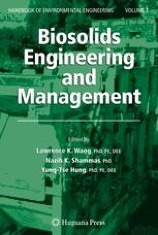
Biosolids engineering and management
Biosolids Engineering and Management, is a collection of methods of practical design, calculation and numerical examples that illustrate how organized, analytical reasoning can lead to the discovery of clear, direct solutions, especially in the areas of biosolids management, treatment, disposal and beneficial use. The book’s including sludge and biosolids transport, pumping and storage, sludge conversion to biosolids, chlorination, stabilization, regulatory requirements, costs, agricultural land application, landfill, ocean disposal, combustion, incineration and sludge treatment process selection.
Bioremediation of Soils Contaminated with Aromatic Compounds
Environmental biotechnology, which was in its infancy in the early 80's, has evolved thanks to the revolution brought about by molecular biology. Multiple successes in the biological cleanup of civil and industrial wastewater and of hydrocarbon soil pollution, demonstrate the vast power of clean technologies. In addition, the buildup of information on the activities of microorganisms as catalysts in all sorts of natural, industrial and animal environments has flourished. There is a continuing realization of the critical role of microbial processes in biological, industrial and geological systems. Since environmental biotechnology has matured, it is ready to tackle bigger challenges: the scaling up of many bioremediation systems still in progress, the search for novel biocatalysts for industrial applications, the continuing effort against common human life-threatening processes such as antibiotic resistance, the accumulation of hormone-mimicking substances (endocrine disrupters), the deposition of air-borne pesticides in the environment and, the degradation of recalcitrant contaminants. These endeavors will help prevent the contamination of food chains, protect human life and allow for human activity and economic development that do not compromise environmental sustainabijity.
Bioactive Molecules and Medicinal Plants
Use of medicinal plants is as old as human civilization and continuous efforts are being made to improve medicinal plants or produce their products in high amounts through various technologies. About 200,000 natural products of plant origin are known and many more are being identifed from higher plants and microorganisms. Some plant-based drugs have been used for centuries and there is no alternative medicine for many drugs, such as cardiac glycosides. However, natural products research was sidelined to pave the way for com- natorial chemistry, which was expected to produce large numbers of synthetic compounds for high-throughput screening (HTS). This line of work has failed to deliver desirable results. Moreover, it is not possible for all pharmaceutical companies and institutions to adopt costly HTS technology. Therefore, medi- nal plants and their bioactive molecules are always in demand and are a central point of research. While planning this book, we endeavored to incorporate - ticles that cover the entire gamut of current medicinal plants research.

BGA International conference on foundations : Innovations, observations, design and practice ; Proceedings of the international conference organised by British Geotechnical Association and held in Dundee, Scotland on 2 – 5th September 2003
Although foundation engineering is recognised as a mature discipline with geotechnics, the diversity of applications and studies evident in this book demonstrates that the field is still developing and will continue to provide challenges for engineers for many years.
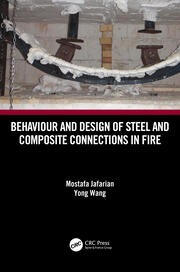
Behaviour and design of steel and composite connections in fire
The only dedicated book on fire performance of connections in steel and composite structures. Recent experimental and numerical studies indicate that connections are among the most vulnerable and critical parts of these structures. This book synthesises these research findings and explains the essential features in one single source.
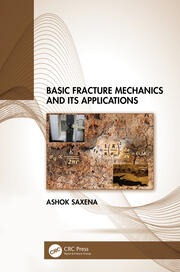
Basic Fracture Mechanics and its Applications
Presents specific aspects of how fracture mechanics is used to address fatigue crack growth, environment assisted cracking, and creep and creep-fatigue crack growth. Other topics include mixed-mode fracture and materials testing and selection for damage tolerant design, alongside in-depth discussions of ensuring structural integrity of components through real-world examples. There is a strong focus throughout the book on the practical applications of fracture mechanics. It provides a clear description of the theoretical aspects of fracture mechanics and also its limitations.
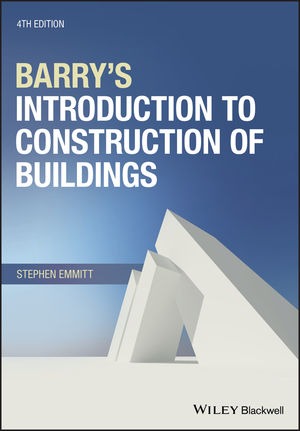
Barry's Introduction to Construction of Buildings ; 4th ed.
Based mainly on domestic and residential buildings—and filled with extensive illustrations throughout—this concise text is the ideal introduction to the subject of building construction. It provides the basic material that readers need in order to understand the construction process for the majority of low rise buildings. The book explains construction technology through the key functional and performance requirements for the main elements common to all buildings. With a strong focus on building efficiency and meeting the challenges posed by limiting the environmental impact of buildings, and new “at a glance” summaries allowing you to grasp the salient points of each chapter, readers will find the text fully up to date with the latest building regulations and construction technology. Deals with design, technology, site assembly, and environmental issues of domestic and residential buildings. Thoroughly updated, with particular attention paid to the concept of building efficiency and improved integration of the topics covered to match current student needs. New “at a glance” summaries at the beginning of each chapter.
Aviation Noise Impact Management : Technologies, Regulations, and Societal Well-being in Europe
This book provides a view into the state-of-the-art research on aviation noise and related annoyance. The book will primarily focus on the achievements of the ANIMA project (Aviation Noise Impact Management through Novel Approaches), but not exclusively.
Automation in construction toward resilience : Robotics, smart materials and intelligent systems
Presents all aspects of automation in construction pertaining to the use of information technologies in design, engineering, construction technologies, and maintenance and management of constructed facilities. The broad scope encompasses all stages of the construction life cycle from initial planning and design, through the construction of the facility, its operation, and maintenance, to the eventual dismantling and recycling of buildings and engineering structures
Assessing and Managing Earthquake Risk : Geo-scientific and Engineering Knowledge for Earthquake Risk Mitigation: developments, tools, techniques
This book points out the need of a multidisciplinary approach in the field of risk assessment and management. It provides an overview of the problems, approaches and common practices directly related to earthquake risk mitigation and, in particular, to the preparation of earthquake emergency plans. Written by a team of specialists from different disciplines, the authors worked together extensively in order to create unity and continuity in the text as a whole. Each topic is illustrated with examples of actual applications taken from the bibliography – including websites with available relevant information. Case studies and information on some relevant international projects are given.
Asian century … on a knife-edge : A 360 degree analysis of Asia's recent economic development
This book delves into the widely held belief that the 21st century will be the "Asian Century" by examining the Asia's rapid economic development in the post-war era and the challenges it faces in forging ahead of world leaders in the West. The impact of the current turbulent global political climate on Asia is critically analyzed, employing a holistic and multidisciplinary approach, combining economic, social, political and geopolitical perspectives. Written in an accessible style, the book offers students, business, government, and civil society players powerful insights on Asia.
Artificial Intelligence, Business and Civilization : Our Fate Made in Machines
Looks at what exactly artificial intelligence is, how it can be classified, how it differentiates from other concepts such as machine learning, big data, blockchain, or the Internet-of-Things, and how it has evolved and might evolve over time.
Artificial intelligence in mechatronics and civil engineering : Bridging the gap
Recent studies highlight the application of artificial intelligence, machine learning, and simulation techniques in engineering. This book covers the successful implementation of different intelligent techniques in various areas of engineering focusing on common areas between mechatronics and civil engineering. The power of artificial intelligence and machine learning techniques in solving some examples of real-life problems in engineering is highlighted in this book. The implementation process to design the optimum intelligent models is discussed in this book.
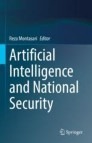
Artificial intelligence and national security
Analyses the implications of the technical, legal, ethical and privacy challenges as well as challenges for human rights and civil liberties regarding Artificial Intelligence (AI) and National Security. It also offers solutions that can be adopted to mitigate or eradicate these challenges wherever possible. As a general-purpose, dual-use technology, AI can be deployed for both good and evil. The use of AI is increasingly becoming of paramount importance to the governments mission to keep their nations safe. However, the design, development and use of AI for national security poses a wide range of legal, ethical, moral and privacy challenges. This book explores national security uses for Artificial Intelligence (AI) in Western Democracies and its malicious use. This book also investigates the legal, political, ethical, moral, privacy and human rights implications of the national security uses of AI in the aforementioned democracies. It illustrates how AI for national security purposes could threaten most individual fundamental rights, and how the use of AI in digital policing could undermine user human rights and privacy.
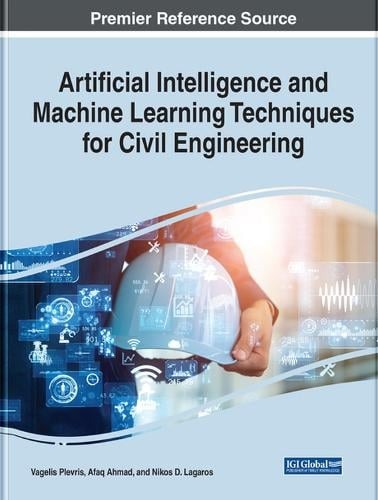
Artificial intelligence and machine learning techniques for civil engineering
Offers state-of-the-art contributions in the area of AI and its applications in the field of civil engineering presenting methods and implementation of AI and machine learning in multiple facets of civil engineering
