



الصفحة 16
الصفحة 16

Landscapes of Lifelong Learning Policies across Europe : Comparative Case Studies
This book explores different landscapes of Lifelong Learning policies (LLP), producing case-based examinations of their institutional, discursive, and relational dimensions. Across Europe, young people develop their life courses amidst diverse living conditions and are confronted with a variety of institutional and structural arrangements that impact on their opportunities in education and labour. Considering the relevance of LLP in shaping those opportunities, the chapters draw from multi-level, mixed-methods research and offer original insights on the interplay of discourses and governance patterns in the processes of policy-making and deliverance. The book yields noteworthy insights into the widely differing realities across the European landscape, and also into the diverging ways young people deal with and actively participate in LLP.
Landscape Ecological Applications in Man-Influenced Areas : Linking Man and Nature Systems
This book also includes several case studies concerning landscape analysis and evaluation using spatial analysis and landscape modelling for establishing sustainable management strategy in urban and agricultural landscapes. The subtitle of the book suggests the integrative and ubiquitous landscape planning considering harmony of man and nature systems in the socio-economic and cultural background.

Kumar and Clarks cases in clinical medicine
Provides a comprehensive collection of over 200 real-life clinical cases designed to support clinical reasoning and enhance diagnostic and management skills through case-based learning. The cases cover a wide range of acute symptoms and conditions encountered in medicine, with clear and concise advice on diagnosis and management. The level of detail is ideal for exam revision as well as to support junior doctors and other healthcare professionals on the wards.

Knowledge management : Value creation through organizational learning, 2nd
Features substantial updates to all chapters, reflecting the implications of the digital transformation on knowledge work and knowledge management. It also addresses three new topics: the impact of knowledge management practices on performance; knowledge management in the public sector; and an introduction to ISO 9001:2015 as an implementation framework.The book is intended not only for academic education but also as an essential guide for managers, consultants, trainers, coaches, and all those engaged in business, public administration or non-profit work who are interested in learning about organizations in a knowledge economy.
Knowledge and Institutions
Bridges the disciplinary boundaries within the social sciences to explore the role of social institutions in shaping geographical contexts, and in creating new knowledge. It includes theorizations as well as original empirical case studies on the emergence, maintenance and change of institutions as well as on their constraining and enabling effects on innovation, entrepreneurship, art and cultural heritage, often at regional scales across Europe and North America. Rooted in the disciplines of management and organization studies, sociology, geography, political science, and economics the contributors all take comprehensive approaches to carve out the specific contextuality of institutions as well as their impact on societal outcomes. Not only does this book offer detailed insights into current debates in institutional theory, it also provides background for scholars, students, and professionals at the intersection between regional development, policy-making, and regulation.
Knowing the Salween River : Resource Politics of a Contested Transboundary River
Focuses on the Salween River, shared by China, Myanmar, and Thailand, that is increasingly at the heart of pressing regional development debates. The basin supports the livelihoods of over 10 million people, and within it there is great socio-economic, cultural and political diversity. The basin is witnessing intensifying dynamics of resource extraction, alongside large dam construction, conservation and development intervention, that is unfolding within a complex terrain of local, national and transnational governance. With a focus on the contested politics of water and associated resources in the Salween basin, this book offers a collection of empirical case studies that highlights local knowledge and perspectives. Given the paucity of grounded social science studies in this contested basin, this book provides conceptual insights at the intersection of resource governance, development, and politics of knowledge relevant to researchers, policy-makers and practitioners at a time when rapid change is underway.
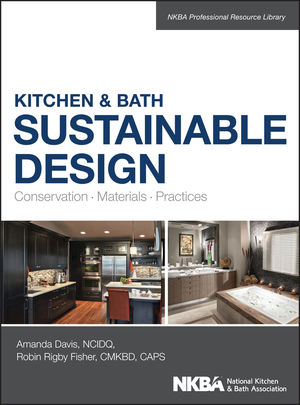
Kitchen and Bath Sustainable Design
Guide to "greening" these important rooms. The first book to focus exclusively on kitchen and bath sustainability, this full color guide covers every consideration for both remodels and new construction, making it a handy reference for any kitchen and bath professional. Case studies of award-winning projects demonstrate how space, budget, and sustainability can come together to create beautiful, functional, efficient rooms, and illustrations throughout provide visual examples of the techniques discussed. The book includes information on greening one's practice for the client's benefit, plus an appendix of additional resources and instructional materials for classroom use.

Kinematics and Dynamics of Multibody Systems with Imperfect Joints : Models and Case Studies
The primary goal of this book is to present suitable methodologies for dynamic analysis of multibody mechanical systems with imperfect or real joints, that is, considering clearances, including their tribological characteristics and surface compliance properties. Two and three-dimensional methodologies for imperfect kinematic joints with and without lubrication are presented.
Katzung's basic and clinical pharmacology
The most comprehensive and authoritative pharmacology text --updated with new content and USMLE-style questions Presented in full-color and packed with hundreds of illustrations, Basic and Clinical Pharmacology is the wide-ranging, engaging guide students have counted on for decades. To be as clinically relevant as possible, the book includes sections that specifically address the clinical choice and use of drugs in patients and the monitoring of their effects, along with case studies that introduce clinical problems. Each chapter opens with a case study, covers drug groups and prototypes, and closes with summary tables and diagrams that encapsulate important information. Updated to reflect the latest research, this sixteenth edition features a new chapter on cannabinoids, USMLE-style questions, new drug tables, and more. Basic and Clinical Pharmacology, Sixteenth Edition features: * 330 full-color illustrations * NEW: 100 drug tables * NEW: 50 USMLE-style questions * NEW: Chapter on cannabinoids * A strong emphasis on drug groups and prototypes * Case studies and chapter-ending summary tables * Organization that reflects the syllabi of pharmacology courses * Descriptions of important new drugs

ITI treatment guide ; Vol.1 : Implant therapy in the esthetic zone : Single-tooth replacements
Focuses on implant therapy for single-tooth replacement in the esthetic zone. It guides readers through the entire treatment process, beginning with assessment of the patient's individual esthetic risk profile and proceeding through ideal three-dimensional implant placement and proven prosthetic management options. Various procedures are illustrated through patient case studies. Detailed illustrations serve to clarify any potential ambiguities, and potential complications are explored to avert the most common problems.

Complexity Management in Fuzzy Systems : A Rule Base Compression Approach
This book presents a systematic study on the inherent complexity in fuzzy systems, resulting from the large number and the poor transparency of the fuzzy rules. The study uses a novel approach for complexity management, aimed at compressing the fuzzy rule base by removing the redundancy while preserving the solution. The compression is based on formal methods for presentation, manipulation, transformation and simplification of fuzzy rule bases, which are illustrated by algorithms as well as results from numerous examples and two case studies. The results are directly applicable or easily extendable to a wide class of fuzzy systems and detailed benchmarks for expanding these systems to new areas such as fuzzy networks and fuzzy multi-agent systems are introduced. The intended readers are people from both academia and industry, who would be interested in building and implementing advanced fuzzy systems.
Compendium of civil Engineering education strategies : Case studies and examples
Compiles proven strategies and information on civil engineering education and the skills necessary for successful practice of civil engineering such as critical thinking, design thinking, leadership, and communication skills. It also addresses other relevant topics including professional ethics, global perspectives, assessment, recruitment, retention, and more.
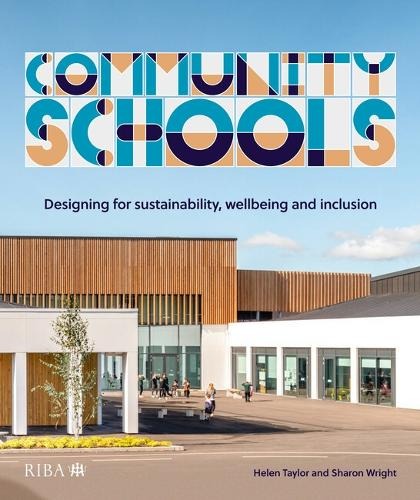
Community schools : Designing for sustainability, wellbeing and inclusion
Reconsiders what is required from physical school environments, building on the learning gathered from the sector over the past two decades. To meet the new social, environmental and economic challenges it advocates designing differently, both in terms of the form that buildings take and the evaluation of their impact and performance. By calling for a reframing of the way that schools are regarded as community-wide amenities, this book explores the potential for architects to deliver design in a manner that supports healthy lifestyles and promotes wellbeing. Through encouraging social connections, new possibilities open up for educational facilities to become open, welcoming and inclusive. Featuring: Over 12 international case studies from practices including: Architype, Argyll + Bute, Bogle Architects, DRMM, Revaerk, Scott Brownrigg and XDGA. Key themes of wellbeing, connectivity, inclusion, indicators and evaluation. Practical guidance and learning points throughout. A new design brief for community schools
Community Quality-of-Life Indicators : Best Cases VIII
Offers critical insights into the thriving international field of community indicators, incorporating the experiences of government leaders, philanthropic professionals, community planners and a wide range of academic disciplines. It illuminates the important role of community indicators in diverse settings and the rationale for the development and implementation of these innovative projects. details many of the practical “how to” aspects of the field as well as lessons learned from implementing indicators in practice. The case studies included here also demonstrate how, using a variety of data applications, leaders of today are monitoring and measuring progress and communities are empowered to make sustainable improvements in their wellbeing.

Commodity marketing : Strategies, concepts, and cases
Commoditization is a major challenge for companies in a wide range of industries, and commodity marketing has become a priority for many top managers. This book tackles the key issues associated with the marketing of commodities and the processes of commoditization and de-commoditization. It summarizes the state of the art on commodity marketing, providing an overview of current debates. It also offers managerial insights, case studies, and guidance to help manage and market commodity goods and services.

Clinical evaluation of medical devices : Principles and case studies
It include the many innovations and clinical research methods that have developed since the first edition, as well as current information on the regulatory, legal, and reimbursement environment for medical devices. The book's deeply experienced authors summarize the key principles and approaches employed in medical device clinical trials and illustrate their uses in a revealing series of detailed, real-world case studies.
Clinical consultation skills in medicine : A primer for MRCP PACES
Follows the revised format of the Practical Assessment Clinical Examination Skills (PACES) exam conducted by the Royal College of Physicians in the UK, where ‘clinical consultation skills’ will be tested twice in two separate stations. Thus, coming closest to what doctors do in real life: obtain a structured history, perform a focussed examination and explain the problem to the patient in lay terms. This book takes readers through a rational approach to 63 common presenting symptoms or laboratory abnormalities in medicine. It is aimed at improving the clinical consultation skills of young doctors and preparing them for the new format of MRCP PACES

Clinical Cases in Periodontics ; 2nd ed.
Clinical Cases in Periodontics offers: A thorough introduction to periodontic examination and diagnosis, including documentation, plaque, and non-plaque induced gingivitis A comprehensive exploration of non-surgical periodontal therapy, including local anatomic factors contributing to periodontal disease and local drug delivery Practical discussions of resective periodontal therapy, including gingivectomy and flap osseous surgery In-depth examinations of regenerative therapy, including the treatment of furcation and guided bone regeneration The latest advances in inter-disciplinary care, encompassing orthodontics, prosthodontics, and implant dentistry

Clinical cases in periodontics ; 1st ed.
Describes the core principles of periodontics and demonstrates their practical, every-day application through a range of representative cases building from the simple to the complex and from the common to the rare. This unique approach supports the new trend in case-based and problem-based learning, thoroughly covering topics ranging from infant oral health to complex pulp therapy.

Clinical cases in pediatric dentistry ; 2nd ed.
Features comprehensive updates to all 66 cases to include the latest diagnostic and treatment techniques. Each chapter also includes brand-new cases, for a total of 13 entirely new cases. The most current references to the literature, best practices, and evidence based clinical guidelines, plus new and updated self‐assessment questions with detailed answers and explanations, have been added to all the cases. Presents updated content, clinical guidelines, and references in existing cases, with thirteen brand new case scenarios Takes an easy-to-follow format, with patient history and diagnostics, questions, and answers, and explanations for each case Part of the "Clinical Cases" series applying both theory and practice to actual clinical cases Includes access to a companion website featuring additional case studies, charts, tables, web links, and the figures from the book in PowerPoint
