



الصفحة 158
الصفحة 158
Bioinorganic electrochemistry
Interfacial electrochemistry of redox metalloproteins and DNA-based molecules is presently moving towards new levels of structural and functional resolution. This is the result of powerful interdisciplinary efforts. Underlying fundamentals of biological electron and proton transfer is increasingly well understood although with outstanding unresolved issues. Comprehensive bioelectrochemical studies have mapped the working environments for bioelectrochemical electron transfer, supported by the availability of mutant proteins and other powerful biotechnology. Introduction of surface spectroscopy, the scanning probe microscopies, and other solid state and surface physics methodology has finally offered exciting new fundamental and technological openings in interfacial bioelectrochemistry of both redox proteins and DNA-based molecules.
Bioinformatics Using Computational Intelligence Paradigms
Bioinformatics as well as Computational Intelligence are undoubtedly remarkably fast growing fields of research and real-world applications with enormous potential for current and future developments. "Bioinformatics using Computational Intelligence Paradigms" contains recent theoretical approaches and guiding applications of biologically inspired information processing systems(Computational Intelligence) against the background of bioinformatics. This carefully edited monograph combines the latest results of Bioinformatics and Computational Intelligence and offers a promising cross-fertilisation and interdisciplinary work between these growing fields.

Bioinformatics research and applications ; 3rd International Symposium,ISBRA 2007, Atlanta, GA, USA, May 7-10, 2007, Proceedings
This book including clustering and classification, gene expression analysis, gene networks, genome analysis, motif finding, pathways, protein structure prediction, protein domain interactions, phylogenetics, and software tools.
Bioinformatics of genome regulation and structure II
The conference was organized by the Laboratory of Theoretical Genetics, Institute of Cytology and Genetics, Siberian Branch of the Russian Academy of Sciences, Novosibirsk, Russia. The material covers the most recent topics in bioinformatics, including (i) regulatory genomic sequences: databases, knowledge bases, computer analysis, modeling, and recognition; (ii) large-scale genome analysis and functional annotation; (iii) gene structure detection and prediction; (iv) comparative and evolutionary genomics; (v) computer analysis of genome polymorphism and evolution; computer analysis and modeling of transcription, splicing, and translation; structural computational biology: structure- function organization of genomic DNA, RNA, and proteins; (vi) gene networks, signal transduction pathways, and genetically controlled metabolic pathways: databases, knowledge bases, computer analysis, and modeling; principles of organization, operation, and evolution; (vii) data warehousing, knowledge discovery and data mining; and (viii) analysis of basic patterns of genome operation, organization, and evolution.
Bioinformatics and the cell : Modern computational approaches in genomics, proteomics and transcriptomics
"Xuhua Xia’s Bioinformatics and the Cell is a welcome addition to the bourgeoning field of bioinformatics text books. Xia stakes out a too-often neglected middle ground in bioinformatics by presenting a work that emphasizes methods’ biological utility without eschewing algorithmic formalism. Readers will find a well-rounded presentation of bioinformatics techniques employed in genomics, transcriptomics and proteomics – unified throughout by the common theme of molecular evolution."
Bioinformatics and Computational Biology Solutions Using R and Bioconductor
Bioconductor is a widely used open source and open development software project for the analysis and comprehension of data arising from high-throughput experimentation in genomics and molecular biology. Bioconductor is rooted in the open source statistical computing environment R. This volume's coverage is broad and ranges across most of the key capabilities of the Bioconductor project, including: Importation and preprocessing of high-throughput data from microarray, proteomic, and flow cytometry platforms / Curation and delivery of biological metadata for use in statistical modeling and interpretation. / Statistical analysis of high-throughput data, including machine learning and visualization,modeling and visualization of graphs and networks. This book is a dynamic document. Code underlying all of the computations that are shown is made available on a companion website, and readers can reproduce every number, figure, and table on their own computers.
Bioimage Data Analysis Workflows
This book provides students and researchers in the life sciences with essential practical information on how to quantitatively analyze data images. It refrains from focusing on theory, and instead uses practical examples and step-by step protocols to familiarize readers with the most commonly used image processing and analysis platforms such as ImageJ, MatLab and Python.
Bioethics in Cultural Contexts : Reflections on Methods and Finitude
This book discusses a range of methodological issues for an interdisciplinary bioethics. How can bioethics be an enterprise that does not only isolate issues and moral reasons but also (re)contextualises them? What are the strengths and weaknesses of different traditional and innovative modes of ethical work in terms of these tasks?

Bioethics and the Holocaust : A Comprehensive Study in How the Holocaust Continues to Shape the Ethics of Health, Medicine and Human Rights
This book offers a framework for understanding how the Holocaust has shaped and continues to shape medical ethics, health policy, and questions related to human rights around the world. The field of bioethics continues to face questions of social and medical controversy that have their roots in the lessons of the Holocaust, such as debates over beginning-of-life and medical genetics, end-of-life matters such as medical aid in dying, the development of ethical codes and regulations to guide human subject research, and human rights abuses in vulnerable populations. As the only example of medically sanctioned genocide in history, and one that used medicine and science to fundamentally undermine human dignity and the moral foundation of society, the Holocaust provides an invaluable framework for exploring current issues in bioethics and society today. This book, therefore, is of great value to all current and future ethicists, medical practitioners and policymakers – as well as laypeople.
Bioelectromagnetics current concepts : The mechanisms of the biological effect of extremely high power pulses
Proceedings of the NATO Advanced Research Workshop on The Mechanisms of the Biological Effect on Extra High Power Pulses (EHPP), Yerevan, Armenia 3 - 5 March 2005
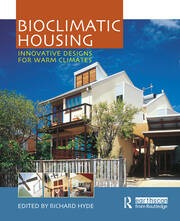
Bioclimatic housing : Innovative designs for warm climates
In the search for sustainable architecture, there is growing interest in the relationship between nature and design. In this context, Bioclimatic Housing covers creative, vernacular architecture to present both the theory and practice of innovative, low-energy architecture.The book interweaves the themes of social progress, technological fixes and industry transformation within a discussion of global and country trends, climate types, solutions and technologies. this is a truly international and authoritative work, providing an essential primer for building designers, builders, developers and advanced students in architecture and engineering.
Bioarrays : From Basics to Diagnostics
Bioarrays: From Basics to Diagnostics provides an integrated and comprehensive collection of timely articles on the use of bioarray techniques in the fields of biotechnology and molecular medicine. The entire volume is broken into four sections – Bioarray Technology Platforms, Biomarkers and Clinical Genomics, Biomarker Identification Using Clinical Proteomics and Glycomics, and Emerging Technologies in Diagnostics – that create one well-integrated work. Particular emphasis is placed on DNA, protein, and carbohydrate biochips. The volume also looks extensively at oligonucleotides, cDNA, proteins, antibodies, and carbohydrate arrays.
Bioactive Molecules and Medicinal Plants
Use of medicinal plants is as old as human civilization and continuous efforts are being made to improve medicinal plants or produce their products in high amounts through various technologies. About 200,000 natural products of plant origin are known and many more are being identifed from higher plants and microorganisms. Some plant-based drugs have been used for centuries and there is no alternative medicine for many drugs, such as cardiac glycosides. However, natural products research was sidelined to pave the way for com- natorial chemistry, which was expected to produce large numbers of synthetic compounds for high-throughput screening (HTS). This line of work has failed to deliver desirable results. Moreover, it is not possible for all pharmaceutical companies and institutions to adopt costly HTS technology. Therefore, medi- nal plants and their bioactive molecules are always in demand and are a central point of research. While planning this book, we endeavored to incorporate - ticles that cover the entire gamut of current medicinal plants research.
Bioactive Marine Natural Products
Bioactive Marine Natural Products is the first book available that covers all aspects of bioactive marine natural products. It fills the void in the literature for bioactive marine natural products. The book covers various aspects of marine natural products and it is hoped that all the major classes of bioactive compounds are included. Different classes of marine organisms and the separation and isolation techniques are discussed. The chemistry and biology of marine toxins, peptides, alkaloids, nucleosides and prostanoids are discussed in detail. Biological, toxicological and clinical evaluations are also dealt with to ensure that the book may be adopted at any stage by any practicing organic chemist or biologist, working in academia or in R&D divisions of pharmaceutical companies. Each chapter in the book includes an abstract to highlight the major points discussed in the text and concluding remarks are given. References to books, monographs, review articles and original papers are provided at the end of each chapter.

BIM in small practices : Illustrated case studies
Full of practical tips and hard-won experience, and includes pithy contributions from industry experts who identify and explore the important issues for small practices including how to get your practice started with BIM, and how it aligns to the new Plan of Work. This landmark publication will motivate small practices who are considering taking those first steps towards implementing BIM.
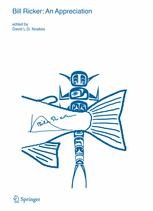
Bill Ricker : An appreciation
This book is the first complete biography of one of the founders of fishery science, William Edwin (Bill) Ricker (1908 - 2001). Bill is immortalized in the Ricker Curve. He developed the Curve in his studies of stock and recruitment in fisheries, but it has been widely applied in many areas of science. Bill is best known for his contributions to fishery science, but he was also internationally recognized as an entomologist and a scientific editor. This book combines Bill’s own recollections with contributions from those who knew him and worked with him as a colleague during his multifaceted career. In an article written shortly before his death, Bill gives his own account of his career and intellectual development.
Bilinear integrable systems : From classical to quantum, continuous to discrete ; Proceedings of the NATO Advanced Research Workshop on Bilinear Integrable Systems: From Classical to Quantum, Continuous to Discrete St. Petersburg, Russia, 15-19 September 2002
Trained as a physicistin his home university Kyushu University, Professor Hirota earned his PhD in’61 at Northwestern University with Professor Siegert in the field of “QuantumStatistical mechanics”. He wrote a widely appreciated Doctoral dissertation on“Functional Integral representation of the grand partition function”. As a youngresearcher, he entered the RCA Company in Tokyo to do research on semi-conductor plasmas. Professor Hirota was led to model the Toda lattice as a non-linear networkof ladder-type LC circuits. The self-dual case led to equations very reminiscentof the Sine-Gordon equation, with much the same features (existence of onesoliton, soliton-soliton interaction, etc)

Bigel : An innovative drug delivery system
Bigel is a promising drug delivery system that modifies the pharmacotherapeutic characteristics of knowing active pharmaceutical ingredient (API).It is a mix between hydrogel and organogel (oleogel). The objective of the present work demonstrates the ability of bigel to overcome the disadvan- tages of both types of gels, including the limited ability to cross lipophilic barriers of the skin for hydrogels and the low patient compliance for organogels due to their stickiness and oily residues. Materials andmethods : Carbomer934, PolyvinylpyrrolidoneK 90 and Castor oil where mixed in a high shear mixer using diferent weight percentages of each. Hence,13 for mulations (BG1 to BG13) prepared by simplex mixture design modelis used to study the inuenceofafore- mentioned ingredients on appearance, dynamicviscosity, pH, stability, microscopicstructure of bigel and to understand the chemical interactions between bigel components, Fouriertrans- form infrared (FTIR) analysis will bereported.
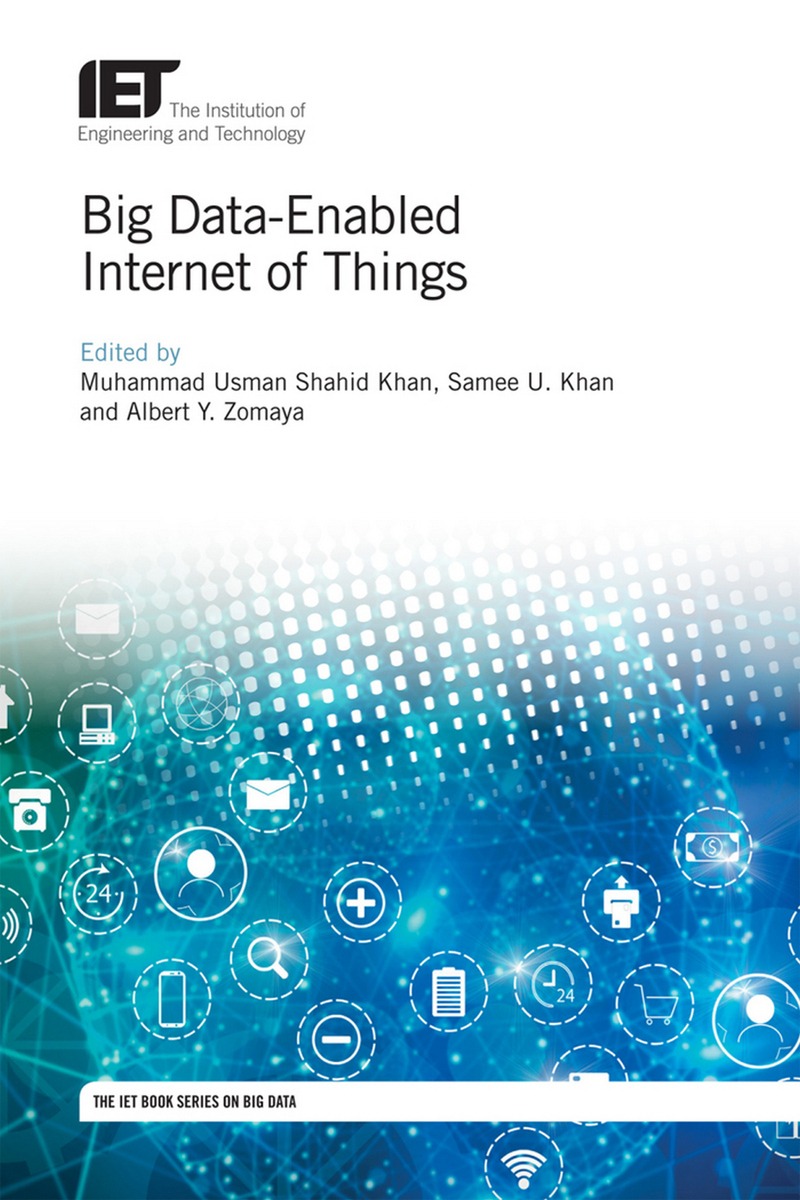
Big data-enabled internet of things
Covers analytical techniques for handling the huge amount of data generated by the Internet of Things, from architectures and platforms to security and privacy issues, applications, and challenges as well as future directions. The fields of Big Data and the Internet of Things (IoT) have seen tremendous advances, developments, and growth in recent years. The IoT is the inter-networking of connected smart devices, buildings, vehicles and other items which are embedded with electronics, software, sensors and actuators, and network connectivity that enable these objects to collect and exchange data. The IoT produces a lot of data. Big data describes very large and complex data sets that traditional data processing application software is inadequate to deal with, and the use of analytical methods to extract value from data. This edited book covers analytical techniques for handling the huge amount of data generated by the Internet of Things, from architectures and platforms to security and privacy issues, applications, and challenges as well as future directions.
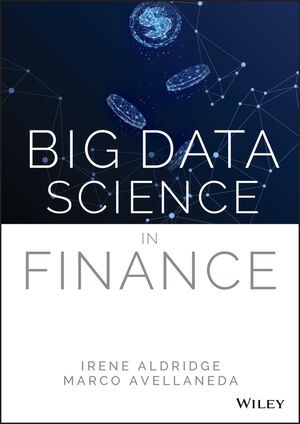
Big Data Science in Finance
Explains the mathematics, theory, and methods of Big Data as applied to finance and investing Examines the mathematics, theory, and practical use of the revolutionary techniques that are transforming the industry. Designed for mathematically-advanced students and discerning financial practitioners alike, this energizing book presents new, cutting-edge content based on world-class research taught in the leading Financial Mathematics and Engineering programs in the world. Marco Avellaneda, a leader in quantitative finance, and quantitative methodology author Irene Aldridge help readers harness the power of Big Data. Provides a complete account of Big Data that includes proofs, step-by-step applications, and code samples Explains the difference between Principal Component Analysis (PCA) and Singular Value Decomposition (SVD) Covers vital topics in the field in a clear, straightforward manner Compares, contrasts, and discusses Big Data and Small Data Includes Cornell University-tested educational materials such as lesson plans, end-of-chapter questions, and downloadable lecture slides
