



الصفحة 15
الصفحة 15
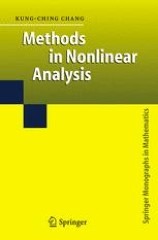
Methods in Nonlinear Analysis
Nonlinear analysis has developed rapidly in the last three decades. Theories, techniques and results in many different branches of mathematics have been combined in solving nonlinear problems. This book collects and reorganizes up-to-date materials scattered throughout the literature from the methodology point of view, and presents them in a systematic way. It contains the basic theories and methods with many interesting problems in partial and ordinary differential equations, differential geometry and mathematical physics as applications.There are five chapters that cover linearization, fixed-point theorems based on compactness and convexity, topological degree theory, minimization and topological variational methods. Each chapter combines abstract, classical and applied analysis. Particular topics included are bifurcation, perturbation, gluing technique, transversality, Nash–Moser technique, Ky Fan's inequality and Nash equilibrium in game theory, setvalued mappings and differential equations with discontinuous nonlinear terms, multiple solutions in partial differential equations, direct method, quasiconvexity and relaxation, Young measure, compensation compactness method and Hardy space, concentration compactness and best constants, Ekeland variational principle, infinite-dimensional Morse theory, minimax method, index theory with group action, and Conley index theory.

Methods in consumer research ; Vol 2 : Alternative approaches and special applications
Brings together world leading experts in global consumer research who provide a fully comprehensive state-of-the-art coverage of emerging methodologies and their innovative application. The book puts consumer research in-context with coverage of immersive techniques and virtual reality, While also looking at health-related Issues in consumer science, Including sections on food intake and satiation. Other sections delve into physiological measurements within the context of consumer research and how to design studies for specific populations.

Methods and Tools for Drought Analysis and Management
Implementation of effective drought management policies requires both advanced technologies and appropriate methods. Monitoring and forecasting systems, practical tools for risk assessment, as well as simple and objective criteria to select and implement appropriate drought mitigation measures are key elements for a successful drought management strategy.These key issues have been tackled by universities and public agencies involved in the EU projects Sedemed and Sedemed II (Programme Interreg IIIB MEDOCC), aimed at the definition of an integrated network for real time monitoring of drought, the development of common methodologies for drought analysis and forecasting, as well as the definition of proper mitigation strategies for the Mediterranean countries.The book presents the main outcomes of such projects with a special focus on: drought monitoring and forecasting echniques at different spatial scales; new or modified agrometeorological indices and remote sensing technique for drought identification and characterization; tools to improve surface water resources management under drought conditions; methods and tools for groundwater resources monitoring and management, based on hydrogeological and hydrodynamics characteristics of aquifers; general criteria to select and implement mitigation strategies to prevent or minimize drought impacts.

Methods and Models in Transport and Telecommunications : Cross Atlantic Perspectives
One aspect of the new economy is a transition to a networked society, and the emergence of a highly interconnected, interdependent and complex system of networks to move people, goods and information. An example of this is the in creasing reliance of networked systems (e. g. , air transportation networks, electric power grid, maritime transport, etc. ) on telecommunications and information in frastructure. Many of the networks that evolved today have an added complexity in that they have both a spatial structure , they are located in physical space but also an a spatial dimension brought on largely by their dependence on infor mation technology. They are also often just one component of a larger system of geographically integrated and overlapping networks operating at different spatial levels. An understanding of these complexities is imperative for the design of plans and policies that can be used to optimize the efficiency, performance and safety of transportation, telecommunications and other networked systems. In one sense, technological advances along with economic forces that encourage the clustering of activities in space to reduce transaction costs have led to more efficient network structures.

Methodological Investigations in Agent-Based Modelling : With Applications for the Social Sciences
Examines the methodological complications of using complexity science concepts within the social science domain. The opening chapters take the reader on a tour through the development of simulation methodologies in the fields of artificial life and population biology, then demonstrates the growing popularity and relevance of these methods in the social sciences. Following an in-depth analysis of the potential impact of these methods on social science and social theory, the text provides substantive examples of the application of agent-based models in the field of demography. This work offers a unique combination of applied simulation work and substantive, in-depth philosophical analysis, and as such has potential appeal for specialist social scientists, complex systems scientists, and philosophers of science interested in the methodology of simulation and the practice of interdisciplinary computing research.

Methodological approaches to societies in transformation : How to make sense of change
This book provides methodological devices and analytical frameworks for the study of societies in transformation. It explores a central paradox in the study of change: making sense of change requires long-term perspectives on societal transformations and on the different ways people experience social change, whereas the research carried out to study change is necessarily limited to a relatively short space of time. This volume offers a range of methodological responses to this challenge by paying attention to the complex entanglement of qualitative research and the metanarratives generally used to account for change.

Méthodes Numériques : Algorithmes, analyse et applications = Numerical Methods : Algorithms, Analysis and Applications
This book aims to present the theoretical and methodological foundations of numerical analysis. Particular attention is paid to the concepts of stability, precision and complexity of algorithms. Modern methods relating to the following topics are presented and analyzed in detail: solving linear and nonlinear systems, polynomial approximation, optimization, numerical integration, orthogonal polynomials, rapid transformations, ordinary differential equations. The techniques presented are illustrated by numerous tables and figures. Many examples and counter-examples are offered to allow the reader to develop his critical sense.

Metals in Society and in the Environment : A Critical Review of Current Knowledge on Fluxes, Speciation, Bioavailability and Risk for Adverse Effects of Copper, Chromium, Nickel and Zinc
In 2002, the Swedish Metal Information Task Force (MITF) engaged the Environmental Research Group (MFG) to update previous monographs on copper, zinc and major alloying metals (such as chromium, nickel and molybdenum) in society and in the environment. This book presents new results on metal fluxes from society to the environment, on metal speciation in water, soil and sediment, and its interpretation in terms of mobility, biological uptake and toxicity. The scientific fundamentals of new approaches, like the Acid Volatile Sulphide (AVS) concept to predict metal bioavailability in sediments, and the Biotic Ligand Model (BLM) to calculate the toxicity of metals to aquatic organisms, are critically evaluated, with a focus on copper, nickel, zinc, and, in part, chromium.

Metallopolymer Nanocomposites
Highly dispersed nanoscale particles in polymer matrices are currently attracting great interest in many fields of chemistry, physics and materials science. This book presents and analyzes the essential data on nanoscale metal clusters dispersed in, or chemically bonded with polymers. Special attention is paid to the in situ synthesis of the nanocomposites, their chemical interactions, and the size and distribution of the particles in the polymer matrix. Numerous novel nanocomposites are described with regard to their mechanical, electrophysical, optical, magnetic, catalytic and biological properties. Their applications, present and future, are outlined. The book is addressed both to researchers who actively use these materials and to students entering this multidisciplinary field.

Metal-containing molecules and nanomaterials : from diagnosis to therapy
Since the discovery and successful deployment of salvarsan to treat syphilis, as well as cisplatin as a cancer drug, the field of metallodrugs has been flourishing. In addition to therapeutic applications, metals and metal-containing molecules have properties, such as an electrochemical or an optical signal, used to diagnose biologically relevant molecules or unravel cellular metabolism. Metals are part of the essential elements for life, and of increased attention in nutraceuticals. Most of the current diagnosis processes, therapeutics and nutraceuticals are based on organic molecules. MILS-26 reviews the most recent metal-containing molecules and nanomaterials for diagnosis and therapy

Metal Oxide Nanoparticles : Formation, Functional Properties, and Interfaces ; 2 Volume Set
Metal oxide nanoparticles are integral to a wide range of natural and technological processes—from mineral transformation to electronics. Additionally, the fields of engineering, electronics, energy technology, and electronics all utilize metal oxide nanoparticle powders. Metal Oxide Nanoparticles: Formation, Functional Properties, and Interfaces presents readers with the most relevant synthesis and formulation approaches for using metal oxide nanoparticles as functional materials. It covers common processing routes and the assessment of physical and chemical particle properties through comprehensive and complementary characterization methods.

Metal Catalyzed Cascade Reactions
Transition metal-catalyzed cascade reactions are an elegant approach to complex molecular scaffolds. Besides their esthetics and increase in structural complexity, they have also become mechanistic challenges for the combination of organometallic elementary steps. As a consequence, cascade reactions have revolutionized synthetic strategies and conceptual thinking. The authors highlight cyclization via carbopalladation and acylpalladation and Heck-pericyclic sequences. They discuss p-allyl palladium-based cascade reactions, Michael-type additions as an entry to transition-metal-promoted cyclizative transformations, and sequential or consecutive palladium-catalyzed processes, and show Pauson-Khand cascades, metal-catalyzed cyclizations of acyclic precursors, as well as cascade and sequential ruthenium-catalyzed transformations. Therefore, the reader finds overview of an exciting and highly dynamic field of a new and innovative methodological concept

Metabolomics : The frontier of systems biology
Metabolism is the sum of the chemical reactions in cells that produce life-sustaining chemical energy and metabolites. In the post-genome era, metabolism has taken on new significance for biological scientists: metabolites are the chemical basis of phenotypes that are final expressions of genomic information. This book covers research on metabolomics, ranging from the development of specialized chemical analytical techniques to the construction of databases and methods for metabolic simulation. The authors have been directly involved in the development of all the subject areas, including capillary electrophoresis, liquid chromatography, mass spectrometry, metabolic databases, and metabolic simulation. Breakthrough achievements and the future of metabolome studies are described, making this book a valuable source for researchers in metabolomics in diverse fields, such as plant, animal, cellular, microbial, pharmaceutical, medical, and genetic sciences.

Metabolism and Functions of Bioactive Ether Lipids in the Brain
This book will be particularly useful to neuroscience graduate students, academics, and researchers. Clinicians will find this book useful for understanding molecular aspects of neurodegeneration in acute neural trauma and neurodegenerative diseases that are mediated by plamalogen-selective phospholipases A2 and PAF acetyl hydrolases. This monograph is the first to provide a comprehensive description of not only metabolism and role of plasmalogen and platelet activating factor in brain tissue but also the involvement of these lipids with abnormal signal transduction processes in neurological disorders.

Messenger RNA therapeutics
Focuses on the fundamentals and applications of messenger RNA (mRNA)-based therapeutics and discusses the strengths and key challenges of this emerging class of drugs. In the past 30 years, extensive research and technological development in many areas have contributed to the emergence of in vitro transcribed mRNA as a therapeutic that has now reached clinical testing. Formulations that protect the mRNA from nucleases and accelerate its cellular uptake, combined with improvements to the mRNA molecules themselves, have been critical advancements for mRNAs to become viable therapeutics. Though once regarded as a serious impediment, the transient nature of mRNA technology is now considered a major advantage in making mRNA therapies safe and, ultimately, a potential game changer in the field of medicine. This new book in the RNA Technologies series provides a state-of-the-art overview on the emerging field of mRNA therapeutics covering essential strategies for formulation, delivery, and application. It also reviews the promising role in cancer immunotherapy, respiratory diseases, and chronic HBV infection and discusses RNA vaccines in light of the current COVID-19 pandemic. mRNA-based approaches have great potential to revolutionize molecular biology, cell biology, biomedical research, and medicine.

Messages security application
The rapid development of communication technology, is bringing many technological conveniences with it and simplifying our lives. On the other hand, it has disadvantages such as hiding the information that is continuously roaming through various communication media resources between senders and receivers and avoid sharing them with third parties. Eliminating these disadvantages via specific security methods and algorithms is related to the discipline called cryptography, which includes information security. Encryption is the process of turning a plaintext to jargon or the method of changing a confidential file to jargon in order to prevent unauthorized persons from gaining access to confidential message. A Message is the transfer of information from the sender to the receiver through a particular medium. Encryption is the most effective process for achieving data security.

Mercury Pollution in Minamata
It overviews the poisoning which occurred in the 1950s and 1960s among the residents in Minamata who ate seafood contaminated with methylmercury discharged from the chemical factory, Chisso Corporation. It describes the history, symptoms pathogenesis and research on the causal agent, and discusses the responses of Chisso and the national and local governments to the outbreak, the victims, the compensation and environmental restructuring as well as the court ruling on claims. Based on lecture notes from a university course, it includes students’ suggestions for avoiding a repeat of the tragedy. The issue has not been settled yet, and this analysis of the incident provides useful insights into solutions to the current global mercury pollution problem.

Mente e Cuore : Clinica psicologica della malattia cardiaca = Mind and heart : Psychological Clinic of Heart Disease
Recent data has shown that there is a relationship between psychological conditions and heart disease. Furthermore, psychological interventions on patients with coronary heart disease (CHD) can reduce heart risk and improve their quality of life. This volume, which is the result of collaboration with the most committed international researchers in the field of clinical psychology and health applied to heart disease, presents an updated and complete overview of scientific research in this area. The first part of the volume presents the psychological pictures and relational aspects associated with heart disease with a particular focus on personality traits. The second part illustrates the psychological interventions in cardiac rehabilitation that research has shown to be effective in reducing cardiac risk. This text can be a useful reference to the practice of doctors, psychologists and health professionals who want to understand and deepen the link between heart disease and psychological aspects.

Mental Health, Social Mirror
The essays in this volume reassert the centrality of research in mental health to sociology. First, they articulate the contributions that mental health research has made and can make to resolving key theoretical and empirical debates in important areas of sociological study. Second, they draw from mainstream theories and concepts to reconsider the potential of sociology to provide answers to critical questions regarding the social origins of and social responses to mental illness. As reflected in the title, the sociological study of mental health provides a reflection of the central processes that characterize our society.

Memory B-cells : Methods and protocols
Details in methods to assess memory B cell formation and function in mice and humans. Chapters guide readers through tetramer-based methods to assess antigen-specific memory B cell dynamics in humans and mice in different vaccine, next-generation deep-sequencing, single-cell techniques to assess epigenomic, VDJ landscapes, lymph node aspirates from humans, advanced imaging, murine models to determine memory B cells formation, and bioinformatic techniques and in silico modelling of memory b cell formation. Written in the highly successful Methods in Molecular Biology series format, chapters include introductions to their respective topics, lists of the necessary materials and reagents, step-by-step, readily reproducible laboratory protocols, and key tips on troubleshooting and avoiding known pitfalls.
