



الصفحة 15
الصفحة 15

Méthodes mathématiques en chimie quantique : Une introduction = Mathematical methods in quantum chemistry : An introduction
This book presents the mathematical foundations of several models of quantum chemistry. It is intended for graduate students in mathematics (and possibly also for scientists from physics or chemistry interested in understanding the formal underpinnings of their models), and introduces techniques and methods from several mathematical fields, in particular variational techniques, nonlinear analysis, spectral theory and partial differential equations theory.

Metathesis Polymerization
Clearly illustrated and demonstrated by the entire series of Advances in Polymer Science., the area of polymer science is a rapidly developing and growing field, strongly influencing other areas of chemistry. Among other polymerization techniques, those based on metathesis polymerization have experienced significant progress. With a rapidly developing armory of initiators on hand, one is now capable of polymerizing various types of functional monomers by metathesis-based techniques.The latest developments in all these areas of metathesis-based polymerizations are summarized in this book. It is designed to attract equally students and advanced scientists working in the areas of polymer science, physical, and organometallic chemistry by providing both extensive background information and up-to-date interdisciplinary knowledge. Special consideration has been given to the literature sections in order to facilitate further reading.

Metamorphoses of Hamiltonian Systems with Symmetries
Modern notions and important tools of classical mechanics are used in the study of concrete examples that model physically significant molecular and atomic systems. The parametric nature of these examples leads naturally to the study of the major qualitative changes of such systems (metamorphoses) as the parameters are varied. The symmetries of these systems, discrete or continuous, exact or approximate, are used to simplify the problem through a number of mathematical tools and techniques like normalization and reduction. The book moves gradually from finding relative equilibria using symmetry, to the Hamiltonian Hopf bifurcation and its relation to monodromy and, finally, to generalizations of monodromy.
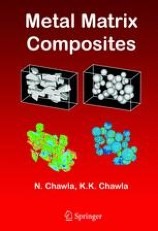
Metal Matrix Composites
Metal matrix composites (MMCs) have become real engineering materials. MMCs have gone from "niche" materials to several high performance applications in aerospace, electronic packaging, automotive, and recreational products. This text focuses on the synergistic relationships among processing, microstructure, and properties of metal matrix composites. An introductory chapter is followed by a chapter each on reinforcements and common matrix materials. A chapter on the very important topic of processing of MMC is then presented. This is followed by a chapter on interfaces in MMCs, their characterization and techniques to obtain interfacial properties. Next there are chapters on monotonic mechanical and physical properties; followed by cyclic fatigue, creep, and wear resistance. We conclude with a chapter on applications of MMCs. The book is well-suited for upper level undergraduate students, graduate students, and as general source of reference on the subject for the professionals in the field.

Metaheuristics for Scheduling in Distributed Computing Environments
This volume presents meta-heuristics approaches for Grid scheduling problems. Due to the complex nature of the problem, meta-heuristics are primary techniques for the design and implementation of efficient Grid schedulers. The volume brings new ideas, analysis, implementations and evaluation of meta-heuristic techniques for Grid scheduling, which make this volume novel in several aspects. The 13 chapters of this volume have identified several important formulations of the problem, which we believe will serve as a reference for the researchers in the Grid computing community.

Metabolomics : The frontier of systems biology
Metabolism is the sum of the chemical reactions in cells that produce life-sustaining chemical energy and metabolites. In the post-genome era, metabolism has taken on new significance for biological scientists: metabolites are the chemical basis of phenotypes that are final expressions of genomic information. This book covers research on metabolomics, ranging from the development of specialized chemical analytical techniques to the construction of databases and methods for metabolic simulation. The authors have been directly involved in the development of all the subject areas, including capillary electrophoresis, liquid chromatography, mass spectrometry, metabolic databases, and metabolic simulation. Breakthrough achievements and the future of metabolome studies are described, making this book a valuable source for researchers in metabolomics in diverse fields, such as plant, animal, cellular, microbial, pharmaceutical, medical, and genetic sciences.

Metabolomics : A powerful tool in systems biology
This book brings together the latest results in the field of metabolomics. It comprehensively presents the current state of the metabolomics field by underscoring experimental methods, analysis techniques, standardization practices, and advances in specific model systems. As a result, it significantly broadens our perspective on the principles and strategies underpinning this emerging field.

Meshfree Methods for Partial Differential Equations IV
The numerical treatment of partial differential equations with particle methods and meshfree discretization techniques is a very active research field both in the mathematics and engineering community. Due to their independence of a mesh, particle schemes and meshfree methods can deal with large geometric changes of the domain more easily than classical discretization techniques. Furthermore, meshfree methods offer a promising approach for the coupling of particle models to continuous models. This volume of LNCSE is a collection of the proceedings papers of the Fourth International Workshop on Meshfree Methods held in September 2007 in Bonn. The articles address the different meshfree methods (SPH, PUM, GFEM, EFGM, RKPM, etc.) and their application in applied mathematics, physics and engineering. The volume is intended to foster this very active and exciting area of interdisciplinary research and to present recent advances and results in this field.

Meshfree Methods for Partial Differential Equations III
Meshfree methods for the numerical solution of partial differential equations are becoming more and more mainstream in many areas of applications. Their flexiblity and wide applicability are attracting engineers, scientists, and mathematicians to this very dynamic research area. This volume represents the state of the art in meshfree methods. It consists of articles which address the different meshfree techniques, their mathematical properties and their application in applied mathematics, physics and engineering.

MEMS/NEMS : (1) Handbook Techniques and Applications Design Methods, (2) Fabrication Techniques, (3) Manufacturing Methods, (4) Sensors and Actuators, (5) Medical Applications and MOEMS
Micro-Electro Mechanical Systems (MEMS) is the integration of mechanical elements, sensors, actuators, and electronics on a common silicon substrate. While the electronics are fabricated using integrated circuit (IC) process sequences (e.g., CMOS, Bipolar, or BICMOS processes),the micromechanical components are fabricated using compatible micromachining processes that selectively etch away parts of the silicon wafer or add new structural layers to form the mechanical and electromechanical devices. MEMS promises to revolutionize nearly every product category by bringing together silicon-based microelectronics with micromachining technology, thereby, making possible the realization of complete systems-on-a-chip.

Memory B-cells : Methods and protocols
Details in methods to assess memory B cell formation and function in mice and humans. Chapters guide readers through tetramer-based methods to assess antigen-specific memory B cell dynamics in humans and mice in different vaccine, next-generation deep-sequencing, single-cell techniques to assess epigenomic, VDJ landscapes, lymph node aspirates from humans, advanced imaging, murine models to determine memory B cells formation, and bioinformatic techniques and in silico modelling of memory b cell formation. Written in the highly successful Methods in Molecular Biology series format, chapters include introductions to their respective topics, lists of the necessary materials and reagents, step-by-step, readily reproducible laboratory protocols, and key tips on troubleshooting and avoiding known pitfalls.

Medicina fisica e riabilitativa nei disturbi di equilibrio = Physical and rehabilitative medicine in balance disorders
Balance disorders are very common in the population: particularly frequent over the age of 40, are the first motivation for a medical examination after the age of 65 and frequently tend to become chronic. Balance disorders are symptoms of system dysfunction vestibular, complex sensory-psycho-motor system, whose task is that to control the activity of the antigravity muscles to maintain the erect station, of the oculomotor ones to allow the stabilization of the visual field during movement, and the neurovegetative functions they have relationship with standing and movement. Whether the vestibular system provides the information necessary for the check-up of the erect position, the rachis realizes it through a "stability dynamic ", allowed by its structural characteristics proprioception the spine is also a fundamental sensor for controlling balance ; therefore the techniques of physical and rehabilitative medicine and of manual medicine represent a powerful tool for curing ailments equilibrium. This volume comes from the comparison between a physiatrist and an audiologist, who for 15 years have integrated their clinical experience and therefore proposes a new one inter-specialist approach to the diagnostic and therapeutic problems of patients with balance disorders.

Medical Reprints: 3D ed.
3D printing or additive manufacturing is a novel method of manufacturing parts directly from a digital model by using layer by layer material build-up approaches. This discovery is predicted to have the greatest impact on the future industries. Additive manufacturing has numerous applications in different areas including healthcare. Applications encompass many medical fields such as dentistry, surgery, and medical devices as well as the pharmaceutical field. Due to transplant donor deficiencies, ‘bioprinting’ has been invented to print biocompatible organs. Adding ‘time’ as a 4th dimension, 4D printing uses ‘smart materials’ to initiate the ‘smart drugs’ era.

Medical Informatics : Knowledge Management and Data Mining in Biomedicine
Knowledge Management and Data Mining in Biomedicine covers the basic foundations of the area while extending the foundational material to include the recent leading-edge research in the field. The newer concepts, techniques, and practices of biomedical knowledge management and data mining are introduced and examined in detail. It is the research and applications in these areas that are raising the technical horizons and expanding the utility of informatics to an increasing number of biomedical professionals and researchers. These concepts and techniques are illustrated with detailed case studies.
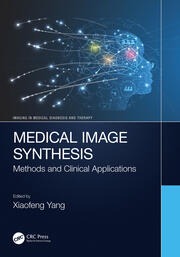
Medical image synthesis : Methods and clinical applications
Image synthesis across and within medical imaging modalities is an active area of research with broad applications in radiology and radiation oncology. This book covers the principles and methods of medical image synthesis, along with state-of-the-art research. First, various traditional non-learning-based, traditional machine-learning-based, and recent deep-learning-based medical image synthesis methods are reviewed. Second, specific applications of different inter- and intra-modality image synthesis tasks and of synthetic image-aided segmentation and registration are introduced and summarized, listing and highlighting the proposed methods, study designs, and reported performances with the related clinical applications of representative studies. Third, the clinical usages of medical image synthesis, such as treatment planning and image-guided adaptive radiotherapy, are discussed. Last, the limitations and current challenges of various medical synthesis applications are explored, along with future trends and potential solutions to solve these difficulties.
Medical Image Computing and Computer-Assisted Intervention – MICCAI 2005 ; 8th International Conference, Palm Springs, CA, USA, October 26-29, 2005, Proceedings, Part I
This paper presents a method for classification of medical images, using machine learning and deformation-based morphometry. A morphological representation of the anatomy of interest is first obtained using highdimensional template warping, from which regions that display strong correlations between morphological measurements and the classification (clinical) variable are extracted using a watershed segmentation, taking into account the regional smoothness of the correlation map which is estimated by a crossvalidation strategy in order to achieve robustness to outliers. A Support Vector Machine-Recursive Feature Elimination (SVM-RFE) technique is then used to rank computed features from the extracted regions, according to their effect on the leave-one-out error bound. Finally, SVM classification is applied using the best set of features, and it is tested using leave-one-out. The results from a group of 61 brain images of female normal controls and schizophrenia patients demonstrate not only high classification accuracy (91.8%) and steep ROC curves, but also exceptional stability with respect to the number of selected features and the SVM kernel size

Medical Emergency Teams : Implementation and Outcome Measurement
Why Critical Care Evolved METs? In early 2004, when Dr. Michael DeVita informed me that he was cons- ering a textbook on the new concept of Medical Emergency Teams (METs), I was surprised. At Presbyterian-University Hospital in Pittsburgh we int- duced this idea some 15 years ago, but did not think it was revolutionary enough to publish. This, even though, our fellows in critical care medicine training were all involved and informed about the importance of “C- dition C (Crisis),” as it was called to distinguish it from “Condition A (Arrest). ”We thought it absurd to intervene only after cardiac arrest had occurred,because most cases showed prior deterioration and cardiac arrest could be prevented with rapid team work to correct precluding problems. The above thoughts were logical in Pittsburgh, where the legendary Dr. Peter Safar had been working since the late 1950s on improving current resuscitation techniques, ?rst ventilation victims of apneic from drowning, treatment of smoke inhalation, and so on. This was followed by external cardiac compression upon demonstration of its ef?ciency in cases of unexpected sudden cardiac arrest. Dr. Safar devoted his entire professional life to improvement of cardiopulmonary resuscitation. He and many others emphasized the importance of getting the CPR team to o- of-hospital victims of cardiac arrest as quickly as possible.

Medical data processing and analysis
Medical data can be defined as obtaining information from patients (such as signals, images, sounds, chemical components and their concentration, body temperature, respiratory rate, blood pressure, and different treatment measurements) to quantify the patient’s status and disease stage. Computer-aided diagnostic (CAD) systems use classical image processing, computer vision, machine learning, and deep learning methods for image analysis. Using image classification or segmentation algorithms, they find a region of interest (ROI) pointing to a specific location within the given image or an outcome of interest in the form of a label pointing to a diagnosis or prognosis. Computer science, with the evolution of artificial intelligence and machine learning techniques, facilitates the modeling and interpretation of results—from carrying out measurements to experiments and observations.
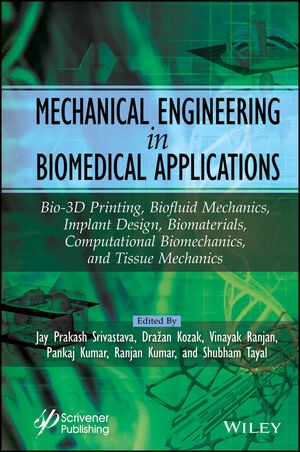
Mechanical engineering in biomedical application: bio-3D printing, biofluid mechanics, implant design, biomaterials, computational biomechanics, tissue mechanics
Explores the latest research and developments related to the interdisciplinary field of biomedical and mechanical engineering offering insights and perspectives on the research, key technologies, and mechanical engineering techniques used in biomedical applications.

Measuring the Value of Culture : Methods and Examples in Cultural Economics
Acknowledgement of the value of culture and cultural goods is increasing world-wide. So too is interest in finding methods to quantify this value so that governments and private sponsors can make efficient funding decisions. "Measuring the Value of Culture" documents methods that can be used to put a price on the arts and cultural goods, including theatre, heritage, cultural events (like arts festivals), museums, archaeological sites and libraries. The methods discussed include economic impact studies, which use market data, as well as non-market valuation techniques, like willingness to pay studies, and the newer choice experiments. In addition, advances in more qualitative valuation methods are considered.
