



الصفحة 15
الصفحة 15

Future-Oriented Technology Analysis : Strategic Intelligence for an Innovative Economy
The application of foresight to address the challenges of uncertainty and rapid change has grown dramatically in the past decade. In that period, the techniques have been greatly refined and the scope has been broadened to encompass future-oriented technology analysis (FTA) and more recently, the concept and practice of strategic intelligence. FTA addresses directly the longer-term future through the active and continuous development of visions, and pathways to realise these visions. It is increasingly seen as a valuable management and policy tool complementing, and extending further into the future, classical strategy, planning, and decision-making approaches.

Future Vision : Damascus International Fairgrounds
عبارة عن مكان نجد فيه المعروضات او السلع بل هو مكان تنصهر فيه العقول البشرية لكي تقدم كل ماهو جديد وحديث ومفيد في افق حياتها المستقبلية. ويسعى الى تقديم سوريا كنموذج لأسلوب حياة جديدة وطموحة بعد معناتها من الأزمة لفترة طويلة ، من خلال زيادة الوعي الفكري والابداعي والثقافي والتجاري ونمط حديث في محال التنمية مما يحقق نتائج جيدة تعود بالكثير على سوريا لتقديم نموذج على مستوى عالي ورفيع في مجال اقامة وتنظيم المعارض وهي تجربة ستفيد دخول سوريا الى العالم المتقدم .
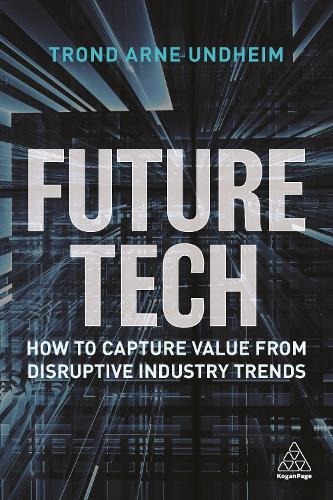
Future tech : How to capture value from disruptive industry trends
In Future Tech, the author reveals that true change only results from combining the forces of science and technology, policy and regulation, new business models (i.e. sharing economy) and social dynamics (whether or not people adopt it). Whether these four forces align explains why some technologies, such as AI, blockchain, robotics, synthetic biology and 3D printing, stick and why others fail.

Future space-transport-system components under high thermal and mechanical loads : results from the DFG Collaborative Research Center TRR40
This book presents the findings of Collaborative Research Center Transregio 40 (TRR40), initiated in July 2008 and funded by the German Research Foundation (DFG). Gathering innovative design concepts for thrust chambers and nozzles, as well as cutting-edge methods of aft-body flow control and propulsion-component cooling, it brings together fundamental research undertaken at universities, testing carried out at the German Aerospace Center (DLR) and industrial developments from the ArianeGroup

Future Spacecraft Propulsion Systems : Enabling Technologies for Space Exploration
In Future Spacecraft Propulsion Systems the authors demonstrate the need to break free from the old established concepts of expendable rockets, using chemical propulsion, and to develop new breeds of launch vehicle capable of both launching payloads into orbit at dramatically reduced cost, and for sustained operations in low-Earth orbit. The next steps, they explain, to establishing a permanent "presence" in the solar system beyond Earth are the commercialisation of sustained operations on the Moon, and the development of advanced nuclear or high-energy space propulsion systems for solar system exploration out to the boundary of interstellar space. In the future, high-energy particle research facilities may one day yield a very high-energy propulsion system that will take us to the nearby stars, or even beyond. This is a timely and comprehensive book, putting spacecraft propulsion systems in perspective.

Future Shaper : How Leaders Can Take Charge in an Uncertain World
What should leaders do? The answer is not to shy away from inevitable changes and more uncertainty, but to have the courage to face it. Leaders need to take charge by embracing new technologies, new ideas and converting these into opportunities for leadership innovation. The best ways for leaders to predict the future is to help create the future. Future Shaper is about giving back a sense of control. It's about empowering leaders to take charge and shape the future. Niamh O'Keeffe asks leaders to re-calibrate their leadership skills to include imagination and courage, to embrace innovation and drive growth and create a better future. Future Shaper helps readers to: · Embrace new digital technologies, understand AI and equip themselves for those not-yet-invented challenges ·

Future Satellite Gravimetry and Earth Dynamics
Currently, a first generation of dedicated satellite missions for the precise mapping of the Earth’s gravity field is in orbit (CHAMP, GRACE, and soon GOCE). The gravity data from these satellite missions provide us with very new information on the dynamics of planet Earth. In particular, on the mass distribution in the Earth’s interior, the entire water cycle (ocean circulation, ice mass balance, continental water masses, and atmosphere), and on changes in the mass distribution. The results are fascinating, but still rough with respect to spatial and temporal resolution. Technical progress in satellite-to-satellite tracking and in gravity gradiometry will allow more detailed results in the future. In this special issue, Earth scientists develop visions of future applications based on follow-on high-precision satellite gravimetry missions.

Future Interaction Design
In 1969 Herbert Simon wrote a book, The Science of the Artificial, in which he argued that cognitive science should have its area of application in the design of devices. He proposed the foundation of a science of the artificial related with cognitive science in the sense in which we have traditionally understood the relationship between the engineering disciplines and the basic sciences. Such a science has been called cognitive ergonomics or cognitive engineering (Norman 1986). Simon’s cognitive ergonomics (1969), would be independent of cognitive science, its basic science, although both would be closely related. Cognitive science would contribute knowledge on human cognitive processes, and cognitive ergonomics would contribute concrete problems of design that should be solved in the context of the creation of devices. Norman (1986), the author that coined the term cognitive engineering, conceived it as an applied cognitive science where the knowledge of cognitive science is combined with that of engineering to solve design problems. According to Norman, its objectives would be: (1) to understand the fundamental principles of human actions important for the development of the engineering of design principles, and (2) to build systems that are pleasant in their use.

Future healthcare design
Describes how architects can design better healthcare buildings for a rapidly changing context and climate. Innovation in the design of healthcare estates is essential to the sustainability of our health services. Design thinking in this field is being influenced by a range of factors, such as economic constraints, an ageing demographic, complex health conditions (co-morbidities), and climate change.

Future Generation Grids
Future Generation Grids is the second in the CoreGRID series. This edited volume brings together contributed articles by scientists and researchers in the Grid community in an attempt to draw a clearer picture of the future generation Grids. This book also identifies some of the most challenging problems on the way to achieving the invisible Grid ideas.

Future data and security engineering ; 7th International conference, FDSE 2020, Quy Nhon, Vietnam, November 25–27, 2020, Proceedings
This book constitutes the proceedings of the 7th International Conference on Future Data and Security Engineering, FDSE 2020, which was supposed to be held in Quy Nhon, Vietnam, in November 2020, but the conference was held virtually due to the COVID-19 pandemic. The 24 full papers (of 53 accepted full papers) presented together with 2 invited keynotes were carefully reviewed and selected from 161 submissions. The other 29 accepted full and 8 short papers are included in CCIS 1306. The selected papers are organized into the following topical headings: security issues in big data; big data analytics and distributed systems; advances in big data query processing and optimization; blockchain and applications; industry 4.0 and smart city: data analytics and security; advanced studies in machine learning for security; and emerging data management systems and applications.

Future data and security engineering : Big data, security and privacy, smart city and industry 4.0 applications ; 7th International Conference, FDSE 2020, Quy Nhon, Vietnam, November 25–27, 2020, Proceedings
This book constitutes the proceedings of the 7th International Conference on Future Data and Security Engineering, FDSE 2020, held in Quy Nhon, Vietnam, in November 2020.* The 29 full papers and 8 short were carefully reviewed and selected from 161 submissions. The selected papers are organized into the following topical headings: big data analytics and distributed systems; security and privacy engineering; industry 4.0 and smart city: data analytics and security; data analytics and healthcare systems; machine learning-based big data processing; emerging data management systems and applications; and short papers: security and data engineering.

Future Center : Youth Skils Development Center = مركز المستقبل لتنيمة مهارات الشباب
الشباب بكافة الفئات العمرية، يجمع بين التعليم والترفيه وتأمين فرص العمل وفرص لإتمام الدراسة. تتمثل الفكرة المعمارية بتشكيل ساحة مركزية تفاعلية رئيسية تتقاطع معها الكتل الثلاث الأساسية والتي تمثل الفعاليات الثقافية الترفيهية والرياضية، حيث ينطلق من هذه الساحة المجمعة محورين أحدهما شمالي باتجاه صالات العرض الخارجية والآخر شمالي غربي باتجاه ساحة المطاعم والسينما الخارجية، مع مراعاة وصول السيارات إلى الموقع من كافة الاتجاهات حيث تم الدخول إلى الموقع من ثلاثة مداخل رئيسية للمشاة تجتمع في الساحة الرئيسية.

Future campus : Design quality in university buildings
Argues that investment in the higher education sector is a driver for intellectual, social and economic development, offering opportunities for positive impacts for the physical environment on the character and performance of higher education. The editor believes that good outcomes result from good design, which should address elements such as learning from best current practice, the importance of clear briefing, good environmental performance, the positive social impacts and, also, the importance of ensuring a beautiful outcome. It has chapters contributed from leading-edge practices, including case studies with highly illustrated project examples.

Future approaches for safe and effective pain management
Pain is defined as an unpleasant sensory and emotional experience that is associated with actual or potential tissue damage or described in terms of such damage. It is subjective and considered an important physiological mechanism by which humans prevent themselves from developing tissue injury. However, pain patients do not respond to treatment in the same way, which makes it challenging to issue a consistent treatment for all pain conditions. Excessive pain can markedly increase psychological health problems and decrease health‐related quality of life; therefore, pain should be managed appropriately by analgesics. Analgesics act in various ways on the peripheral and central pain pathways and are regarded as one of the most valuable but equally dangerous groups of medications. Individual variability in pain perception and differences in the efficacy of analgesic drugs are complex phenomena and are partly genetically predetermined. Pain severities as well as responses to analgesics, can also be very variable among sufferer.

Fundamentals of Space Medicine
Topics discussed in this book include: adaptation of sensory-motor, cardio-vascular, bone, and muscle systems to the microgravity of spaceflight; psychological and sociological issues of living in a confined, isolated, and stressful environment; operational space medicine, such as crew selection, training and in-flight health monitoring, countermeasures and support; results of space biology experiments on individual cells, plants, and animal models; and the impact of long-duration missions such as the human mission to Mars. The author also provides a detailed description of how to fly a space experiment, based on his own experience with research projects conducted onboard Salyut-7, Mir, Spacelab, and the Space Shuttle. Now is the time to look at the future of human spaceflight and what comes next. The future human exploration of Mars captures the imagination of both the public and the scientific community. Many physiological, psychological, operational, and scientific issues need to be solved before the first crew can explore the enigmatic Red Planet. This book also identifies the showstoppers that can be foreseen and what we need to learn to fully understand the implications and risks of such a mission.

Fundamentals of Space Biology : Research on Cells, Animals, and Plants in Space
This book is intended as an overview at the undergraduate or early university level and describes the effects of spaceflight at cellular and organism levels. Past, current, and future research on the effects of gravity--or its absence--and ionizing radiation on the evolution, development, and function of living organisms is presented in layman's terms by researchers who have been active in this field. The purpose is to enlighten science and non-science readers to the benefits of space biology research for conducting basic and applied research to support human exploration of space. Also covered are the advantages of approaching the space environment as a laboratory for scientific, technological, and commercial research.

Fundamentals of drug development
Discusses how to conduct pharmaceutical research and the context for how the industry fits into global healthcare. Holistically, the well-qualified author helps readers and students of drug development appreciate the time and expense of the process. Specifically, the work identifies the emerging trends shaping the future of drug development, along with important related topics like generic drugs, data sharing, and collaboration.

Fundamentals of drug delivery
A comprehensive guide to the current research, major challenges, and future prospects of controlled drug delivery systems. Provides comprehensive and up-to-date coverage of the essential principles and processes of modern controlled drug delivery systems. Featuring contributions by respected researchers, clinicians, and pharmaceutical industry professionals, this edited volume reviews the latest research in the field and addresses the many issues central to the development of effective, controlled drug delivery.

Fundamentals and Methods of Machine and Deep Learning : Algorithms, Tools, and Applications
provides a practical approach by explaining the concepts of machine learning and deep learning algorithms, evaluation of methodology advances, and algorithm demonstrations with applications. In recent research studies, they are regarded as one of the disruptive technologies that will transform our future life, business, and the global economy. The recent explosion of digital data in a wide variety of domains, including science, engineering, Internet of Things, biomedical, healthcare, and many business sectors, has declared the era of big data, which cannot be analysed by classical statistics but by the more modern, robust machine learning and deep learning techniques. Since machine learning learns from data rather than by programming hard-coded decision rules, an attempt is being made to use machine learning to make computers that are able to solve problems like human experts in the field.
