



الصفحة 15
الصفحة 15
Asset Sales : Their Role in Restructuring and Financing Firms
Examines the corporate asset market and the mechanisms of asset sale transactions. The book then focuses on the theory of finance in asset sales (the efficiency and financing theory) and the extensive empirical literature now available. In light of recent and rapid technological and digital advances, the last section presents new perspectives on analyzing asset sales transactions. Chiefly intended as a primer for PhD students and academics, the book offers a road map of the empirical research landscape and suggests future research directions.
Asset prices, booms and recessions : Financial economics from a dynamic perspective
Studies the interaction of the financial market, economic activity and the macroeconomy from a dynamic perspective. The financial market to be studied here encompasses the money and bond market, credit market, stock market and foreign exchange market. Economic activity is described by the activity of firms, banks, households, governments and countries. The book shows how economic activity affects asset prices and the financial market and how asset prices and financial market volatility feed back to economic activity. The focus in this book is on theories, dynamic models and empirical evidence.
Aspects of Mathematical Finance
Considering the stupendous gain in importance, in the banking and insurance industries since the early 1990’s, of mathematical methodology, especially probabilistic methodology, it was a very natural idea for the French "Académie des Sciences" to propose a series of public lectures, accessible to an educated audience, to promote a wider understanding for some of the fundamental ideas, techniques and new tools of the financial industries. These lectures were given at the "Académie des Sciences" in Paris by internationally renowned experts in mathematical finance, and later written up for this volume which develops, in simple yet rigorous terms, some challenging topics such as risk measures, the notion of arbitrage, dynamic models involving fundamental stochastic processes like Brownian motion and Lévy processes.
Asias New Institutional Architecture : Evolving Structures for Managing Trade, Financial, and Security Relations
This book investigates the origins and evolution of Asia’s new institutional architecture in trade, finance, and security from both a theoretical and empirical perspective. The traditional institutional equilibrium in Asia has come under heavy strain in the "post triple shocks period" - the post-Cold War, the post-financial crisis of 1997-98, and the post-9-11 attacks. The new dynamics of rivalry and cooperation among states at both the intraregional and transregional levels is now shaping a new institutional architecture. Political and business leaders from Northeast and Southeast Asia interact with each other more frequently. South Asia’s participation in the rest of Asia in recent years is truly impressive. As we show, the future institutional trajectory of Asia is still open, but we believe that the book provides a timely examination of key shifts in the region. In doing so, our hope is to provide policymakers and analysts with an institutional road map for the future.
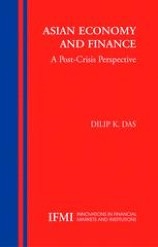
Asian economy and finance : A post-crisis perspective
Topicality of Asian economy has refused to fade for almost four decades; if anything it has been levitating. The Asian economy has changed markedly since the economic and financial crisis of 1997-1998 and is continuing to evolve. As a scholarly subject matter, Asian economy has not stopped attracting academicians, policy mandarins, decision makers in the arena of business and students of Asian economy. The Asian crisis was a cataclysmic event for the region and brought to the surface several systemic limitations, like those in the financial sector, corporate governance, regulatory oversight, legal framework, and exchange rate management. Managers of Asian economy need to get to the bottom of these acutely problematical systemic issues. Additionally, Asian economies need to change with the demands of time and devise their post-crisis development strategy. Asia’s growth model, that served it so well for four decades, is overdue for renewal so that it can re-strengthen its bonds with the ever-evolving regional and global economic reality. The old growth model is likely to be less relevant and effective in the post-crisis future of the Asian economies. It is sure to run into the wall of diminishing returns.
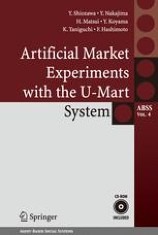
Artificial Market Experiments with the U-Mart System
Economics went through great development in the 20th century. This development, which was based mainly on mathematical methods, is not an appropriate method of analyzing markets that change every hour and every day. In a stock market, prices constantly change depending on speculation. U-Mart, a manmade market, has been proposed in order to study such instantly moving markets. Although the U-Mart system is internationally acclaimed for being at the forefront of market research, its use is by no means limited to a small number of researchers on the fringe. The whole system, including its source code, is open and is distributed without charge, testifying to a philosophy of creating and providing a common testbed for research into financial markets.
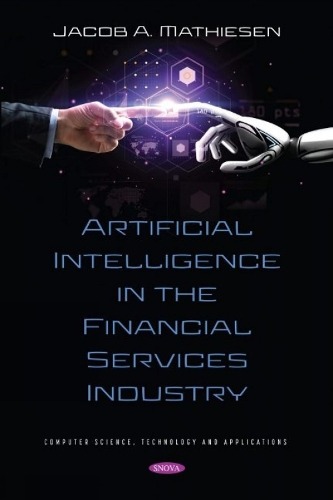
Artificial intelligence in the financial services industry
Today, the financial services sector is facing a period of rapid disruption and innovation, and artificial intelligence (AI) is at the heart of these changes. Artificial intelligence can be used to gather enormous amounts of data, detect abnormalities, and solve complex problems. Financial institutions are already experimenting extensively with AI strategies to enhance and streamline financial institutions, BSA and AML compliance, CRA requirements, fraud detection, and real estate valuations, all while reducing cost levels. This book looks at how artificial intelligence is affecting the financial services industry.
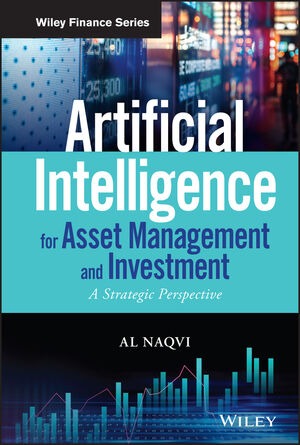
Artificial intelligence for asset management and investment : A strategic perspective
The rise of artificial intelligence is nothing short of a technological revolution. AI is poised to completely transform asset management and investment banking, yet its current application within the financial sector is limited and fragmented. Existing AI implementations tend to solve very narrow business issues, rather than serving as a powerful tech framework for next-generation finance. Artificial Intelligence for Asset Management and Investment provides a strategic viewpoint on how AI can be comprehensively integrated within investment finance, leading to evolved performance in compliance, management, customer service, and beyond.
Artificial Intelligence and COVID Effect on Accounting
This book considers the effects of COVID-19 on accounting, particularly with regard to the role of artificial intelligence in accounting in the post-pandemic business environment. The contributions in the book consider a variety of sectors that have been affected by the pandemic, such as the stock market, forensic accounting, Bitcoin, as well as the economic and educational responses to the pandemic and the aftermath felt by both developing and developed countries.

Applied Semi-Markov Processes
The book presents homogeneous and non-homogeneous semi-Markov processes, as well as Markov and semi-Markov rewards processes. These concepts are fundamental for many applications, but they are not as thoroughly presented in other books on the subject as they are here.This book is intended for graduate students and researchers in mathematics, operations research and engineering; it might also appeal to actuaries and financial managers, and anyone interested in its applications for banks, mechanical industries for reliability aspects, and insurance companies.
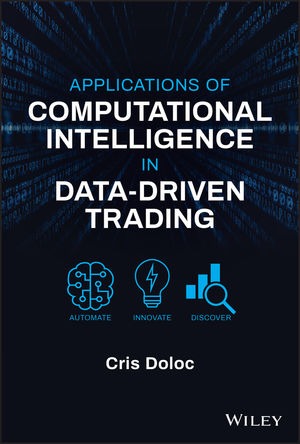
Applications of computational intelligence in data-driven trading
The main purpose of this book is pedagogical in nature, and it is specifically aimed at defining an adequate level of engineering and scientific clarity when it comes to the usage of the term “Artificial Intelligence,” especially as it relates to the financial industry.

Anti-Money Laundering : A Practical Guide to Reducing Organizational Risk
Addresses the needs of the non-specialist compliance professional from a range of industries, backgrounds and experience Outlines the different elements of anti-money laundering (AML) practice to support compliance professionals at any stage of their career to put effective controls in place in their own organisations Presents readers with the global oversight needed to align activity to a cohesive plan, sharing case studies and examples of good and bad practice from around the world

Analyzing the availability of fin tech and its role in enhancing the strategic : Performance of Syrian banks using the balanced scorecard
Aims to examine the role of financial technology (FinTech) in enhancing the strategic performance of Syrian banks by analyzing its impact on the four dimensions of the balanced scorecard : financial performance, customer satisfaction, internal process quality, and learning and growth. Amid economic and technological challenges, integrating fintech emerges as a strategic tool to boost operational efficiency, reduce costs, and promote financial inclusion. The study explores the experiences of several Syrian banks in implementing modern financial technologies, such as digital banking and smart payment systems, while evaluating key financial indicators like return on assets (ROA) and return on equity (ROE).
An Introduction to the Mathematics of Money : Saving and Investing
This is an undergraduate textbook on the basic aspects of personal savings and investing with a balanced mix of mathematical rigor and economic intuition. It uses routine financial calculations as the motivation and basis for tools of elementary real analysis rather than taking the latter as given. Proofs using induction, recurrence relations and proofs by contradiction are covered. Inequalities such as the Arithmetic-Geometric Mean Inequality and the Cauchy-Schwarz Inequality are used. Basic topics in probability and statistics are presented.
An Introduction to continuous-time stochastic processes : Theory, models, and applications to finance, biology, and medicine
This book is introduction to the theory of continuous-time stochastic processes. A balance of theory and applications, the work features concrete examples of modeling real-world problems from biology, medicine, industrial applications, finance, and insurance using stochastic methods. No previous knowledge of stochastic processes is required. Key topics covered include: * Interacting particles and agent-based models: from polymers to ants * Population dynamics: from birth and death processes to epidemics * Financial market models: the non-arbitrage principle * Contingent claim valuation models: the risk-neutral valuation theory * Risk analysis in insurance

An economic feasibility study of extracting electrical energy from solar panels
The research is a case that study depends on both secondary and primary data. Secondary data should be collected from the firms producing the photo panels(local and foreign) and those that working in this field in addition to the data of the ministry of electricity in Syria and the national center of power, while primary data should be collected by interviews with the persons working in electricity field .Then the traditional steps of commercial profitability analysis should be followed starting in pre-feasibility study passing the detailed feasibility study steps which, in turn, consists of the following phases : market study , technical study , financial study in order to reach the estimated net cash flows that should be used in analyzing the project feasibility depending on all criteria both traditional " payback-period . Simple rate of return" and economic criteria " net present value and the internal rate of return”.
Agent-based modeling : The Santa Fe Institute artificial stock market model revisited
An excellent reference to both the learning, and empirical literature in finance." (Krzysztof Piasecki, Zentralblatt MATH, Vol. 1141, 2008) "Norman Ehrentreich was one of the daring few to take on the model, and he has summarized his work and findings in this excellent book. … It is useful primer for anyone interested in getting started in the area of agent-based finance. … It is essential reading for anyone interested in the dynamics of the SFI market in particular, but I also recommend it for others as a useful resource on agent-based financial market design as well." (Blake LeBaron, Journal of Artificial Societies and Social Simulation, Vol. 12 (2), March, 2009)
Advances in neural networks - ISNN 2005 ; Vol. 3498 ; 2nd International Symposium on Neural Networks, Chongqing, China, May 30 - June 1, 2005, Proceedings, Part III
The three volume set LNCS 3496/3497/3498 constitutes the refereed proceedings of the Second International Symposium on Neural Networks, ISNN 2005, held in Chongqing, China in May/June 2005. The 483 revised papers presented were carefully reviewed and selected from 1.425 submissions. The papers are organized in topical sections on theoretical analysis, model design, learning methods, optimization methods, kernel methods, component analysis, pattern analysis, systems modeling, signal processing, image processing, financial analysis, control systems, robotic systems, telecommunication networks, incidence detection, fault diagnosis, power systems, biomedical applications, industrial applications, and other applications.
Advances in neural networks - ISNN 2005 ; Vol. 3496 ; 2nd International symposium on neural networks, Chongqing, China, May 30 - June 1, 2005, Proceedings, Part I
The three volume set LNCS 3496/3497/3498 constitutes the refereed proceedings of the Second International Symposium on Neural Networks, ISNN 2005, held in Chongqing, China in May/June 2005. The 483 revised papers presented were carefully reviewed and selected from 1.425 submissions. The papers are organized in topical sections on theoretical analysis, model design, learning methods, optimization methods, kernel methods, component analysis, pattern analysis, systems modeling, signal processing, image processing, financial analysis, control systems, robotic systems, telecommunication networks, incidence detection, fault diagnosis, power systems, biomedical applications, industrial applications, and other applications.
Advances in Mathematical Finance
This volume brings together a collection of chapters by some of the most distinguished researchers and practitioners in the fields of mathematical finance and financial engineering. Presenting state-of-the-art developments in theory and practice.
