



الصفحة 15
الصفحة 15
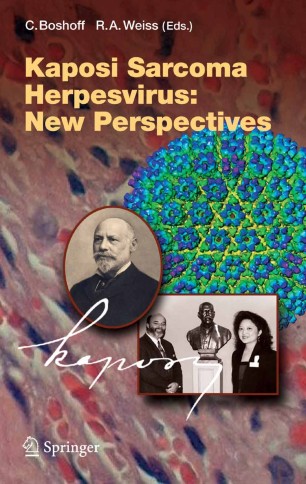
Kaposi Sarcoma Herpesvirus : New Perspectives
Since the identificationof two sequences fromKSHV,wehave learnedmuch about this pathogen as reflected in this book. As it turned out, KSHV itself encodes for a number of cytokines, and induces cellular cytokine secretion, contributing to tumour growth. Moreover, KSHV vFLIP targets the IKKNFκB axis to encourage the inflammatory microenvironment observed by Gallo and his colleagues. KSHV continues to elucidate both mechanisms of viral oncogenesis, and cellular and immune pathways involved in non-viral driven neoplasia.
JDBC Recipes : A Problem-Solution Approach
JDBC Recipes provides easy-to-implement, usable solutions to problems in relational databases that use JDBC. You will be able to integrate these solutions into your web-based applications, such as Java servlets, JavaServer Pages, and Java server-side frameworks. This handy book allows you to cut and paste the solutions without any code changes. This book focuses on topics that have been ignored in most other JDBC books, such as database and result set metadata. It will help you develop database solutions, like adapters, connectors, and frameworks using Java/JDBC. The insightful solutions will enable you to handle all data types, including large binary objects. A unique feature of the book is that it presents JDBC solutions (result sets) in XML.
JDBC Metadata, MySQL, and Oracle Recipes : A Problem-Solution Approach
JDBC Metadata, MySQL, and Oracle Recipes is the only book that focuses on metadata or annotation-based code recipes for JDBC API for use with Oracle and MySQL. It continues where the authors other book, JDBC Recipes: A Problem-Solution Approach, leaves off. This edition is also a Java EE 5-compliant book, perfect for lightweight Java database development. And it provides cut-and-paste code templates that can be immediately customized and applied in each developer's application development.
JavaScript data structures and algorithms : An Introduction to understanding and implementing core data structure and algorithm fundamentals
Combines clear explanations of data structure and algorithm theory with practical code samples, examples and exercises, all specifically relevant to JavaScript Provides background information on object-oriented programming and native JavaScript concepts to help understand how everything fits together Illustrates how these theoretical computer science concepts ties back to practical applications in software engineering
Java 17 Recipes : A Problem-Solution Approach
Quickly find solutions to dozens of common programming problems encountered while building Java applications, with recipes presented in the popular problem-solution format. Look up the programming problem that you want to resolve. Read the solution. Apply the solution directly in your own code. Problem solved! covers of some of the newest features, APIs, and more such as pattern matching for switch, Restore Always-Strict-Floating-Point-Semantics, enhanced pseudo-random number generators, the vector API, sealed classes, and enhancements in the use of String. Source code for all recipes is available in a dedicated GitHub repository. This must-have reference belongs in your library. You will learn : Look up solutions to everyday problems involving Java SE 17 LTS and other recent releases / Develop Java SE applications using the latest in Java SE technology / Incorporate Java major features introduced in versions 17, 16, and 15 into your code

Java 17 Quick Syntax Reference : A Pocket Guide to the Java SE Language, APIs, and Library
Packed with useful information and is a must-have for any Java programmer. You will: Run a Java file with a single command / Learn what a switch expression is and how to use it / Use pattern matching / Code with Java modules / Create text blocks to handle multiline strings / Learn what sealed classes are and how to use these and more

Composite structures of steel and concrete : Beams, slabs, columns and frames for buildings
Provides an introduction to the theory and design of composite structures of steel and concrete. Material applicable to both buildings and bridges is included, with more detailed information relating to structures for buildings. Throughout, the design methods are illustrated by calculations in accordance with the Eurocode for composite structures, EN 1994, Part 1-1, 'General rules and rules for buildings' and Part 1-2, 'Structural fire design', and their cross-references to ENs 1990 to 1993.
Component-Based Software Development for Embedded Systems : An Overview of Current Research Trends
Embedded systems are ubiquitous. They appear in cell phones, microwave ovens, refrigerators, consumer electronics, cars, and jets. Some of these embedded s- tems are safety- or security-critical such as in medical equipment, nuclear plants, and X-by-wire control systems in naval, ground and aerospace transportation - hicles. With the continuing shift from hardware to software, embedded systems are increasingly dominated by embedded software. Embedded software is complex. Its engineering inherently involves a mul- disciplinary interplay with the physics of the embedding system or environment. Embedded software also comes in ever larger quantity and diversity. The next generation of premium automobiles will carry around one gigabyte of binary code. The proposed US DDX submarine is e?ectively a ?oating embedded so- ware system, comprising 30 billion lines of code written in over 100 programming languages. Embedded software is expensive. Cost estimates are quoted at around US$15– 30 per line (from commencement to shipping). In the defense realm, costs can range up to $100, while for highly critical applications, such as the Space Shuttle, the cost per line approximates $1,000. In view of the exponential increase in complexity, the projected costs of future embedded software are staggering.

Compiler construction ; Vol. 3923 : 15th International Conference, CC 2006, Held as Part of the Joint European Conferences on Theory and Practice of Software, ETAPS 2006, Vienna, Austria, March 30-31, 2006, Proceedings
ETAPS 2006 was the ninth instance of the European Joint Conferences on Theory and Practice of Software. ETAPS is an annual federated conference that was established in 1998 by combining a number of existing and new conferences. The events that comprise ETAPS address various aspects of the system devel- ment process, including speci?cation, design, implementation, analysis and impro- ment. The languages, methodologies and tools which support these activities are all well within its scope. Di?erent blends of theory and practice are represented, with an inclination towards theory with a practical motivation on the one hand and soundly based practice on the other.
Compiler construction ; 17th International Conference, CC 2008, Held as Part of the Joint European Conferences on Theory and Practice of Software, ETAPS 2008, Budapest, Hungary, March 29 - April 6, 2008. Proceedings
This book constitutes the proceedings of the 17th International Conference on Compiler Construction, CC 2008. It covers analysis and transformations, compiling for parallel architectures, runtime techniques and tools, analyses, and atomicity and transactions.

Compiler construction ; 16th International Conference, CC 2007, Held as Part of the Joint European Conferences on Theory and Practice of Software, ETAPS 2007, Braga, Portugal, March 26-30, 2007, Proceedings
This book covered Theory and Practice of Software. The sections includes architecture, garbage collection and program analysis, register allocation, and program analysis.
Competitive Programming in Python : 128 Algorithms to Develop your Coding Skills
Learn all the algorithmic techniques and programming skills you need from two experienced coaches, problem setters, and jurors for coding competitions. The authors highlight the versatility of each algorithm by considering a variety of problems and show how to implement algorithms in simple and efficient code. What to expect: * Master 128 algorithms in Python. * Discover the right way to tackle a problem and quickly implement a solution of low complexity.

Clinical oral medicine and pathology
The book has been well received internationally by a wide audience of clinicians, including general dentists, oral surgeons, otolaryngologists, primary care physicians, nurse practitioners, dental hygienists, physician assistants, and dermatologists, and sales have been strong among students and post-graduate residents training in medical, dental, and allied health fields, supporting the versatility of this work and serving as testimony to its value in both the academic and private practice arenas. Several key updates and improvements have been made to the second edition. All informational content has been updated to ensure accuracy and relevance, particularly in the rapidly evolving fields of oncology and pharmacology. A new chapter has been added entitled "Oral Sequelae of Cancer and Cancer Therapy" which better organizes and consolidates previous content while expanding on topics such as targeted therapies and hematopoietic stem cell transplantation. Additional clinical images have been included throughout the book so that the full clinical spectrum of any given condition is well-represented. Furthermore, the print quality, as well as the positioning and layout of the clinical images has been improved for optimal utility. Lastly, the summary boxes that follow each condition have been reconfigured with color-coded icons for improved definition, ease of use and cross-referencing.

Clinical guide to oral diseases
A concise reference on the common diseases encountered in daily practice. Presenting a large selection of clinical cases, this user-friendly resource covers a range of oral and perioral lesions located in hard and soft tissues of the mouth and neck, as well as oral manifestations of various systemic diseases. Nearly 300 high-quality color images complement succinct descriptions of clinical cases seen in both community and hospital care settings. Provides nearly 300 high-quality clinical photos and relevant questions to help lead readers to the proper diagnosis of common oral diseases Contains concise tables relevant to each chapter with a list of common oral lesions and conditions Offers MCQs of varying levels of difficulty to help readers test their knowledge in Oral Medicine Includes clinical flow charts according to the location and duration of oral lesions Incorporates the ICD-10 Codes of oral lesions and diseases
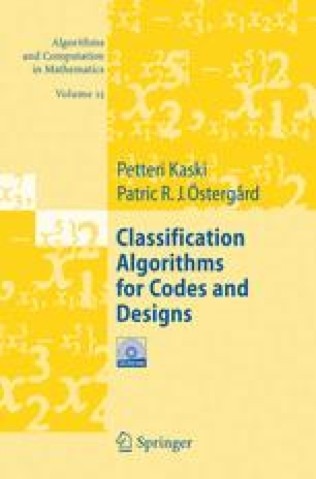
Classification Algorithms for Codes and Designs
Almost a century earlier, in 1782, Euler [180] published some results on classifying small Latin squares, but for the ?rst few steps in this direction one should actually go at least as far back as ancient Greece and the proof that there are exactly ?ve Platonic solids. One of the most remarkable achievements in the early, pre-computer era is the classi?cation of the Steiner triple systems of order 15, quoted above. An onerous task that, today, no sensible person would attempt by hand calcu- tion. Because, with the exception of occasional parameters for which com- natorial arguments are e?ective (often to prove nonexistence or uniqueness), classi?cation in general is about algorithms and computation.
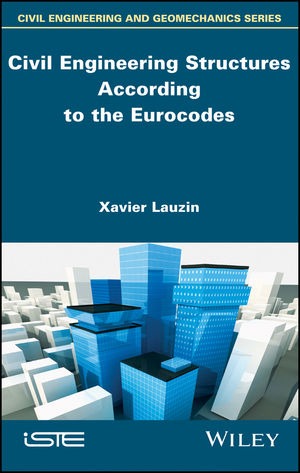
Civil engineering structures according to the Eurocodes : Inspection and maintenance
This standard assumes that the structure, after completion, is used as intended in the project and subject to planned inspection and maintenance to meet the expected project lifetime and to detect any unforeseen weakness or behavior" (EN 13670 4.1)An important decision factor in the design of new structures and repairs to existing structures is the lifetime or expected service life. This concept, which is common for civil engineering works, has been extended to all engineering and building works by applying the European Structural Design Codes.

Certification and security in inter-organizational E-services ; IFIP 18th World Computer Congress, August 22-27, 2004, Toulouse, France
This collection of papers offers real-life application experiences, research results and methodological proposals of direct interest to systems experts and users in governmental, industrial and academic communities. This book also documents several important developments. The uptake of distributed computational infrastructure oriented to service provision, like Web-Services and Grid, is making C&S even more important. E-services based on legacy systems managed by autonomous and independent organizations, a common situation in the public administration sector, increase overall complexity. The increased presence and use of e-service IT-infrastructures depends on the critical ability required for all security issues, from the basic (availability, authentication, integrity, confidentiality) to the more complex (e.g. authorization, non-repudiation).
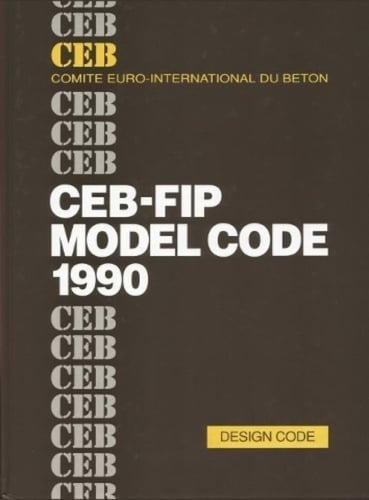
CEB-FIP Model code 1990 : Design code
This document is a comprehensive design code for concrete. It is the result of a comprehensive revision to the original model code of 1978, which was produced jointly by the Comite Euro-International du Beton (CEB) and the Federation Internationale de la Precontrainte (FIP). Model Code 1990 has more detailed guidelines and explanations than national codes and can be used as a basis for them. It has already influenced the codification work that is being carried out both nationally and internationally and will continue to do so. With the publication of Eurocode 2: Part 1 as a draft pre-standard, this document is a useful reference during the consultative period before Eurocode 2 becomes a European standard. It may be of use to anyone involved in codification work on concrete.
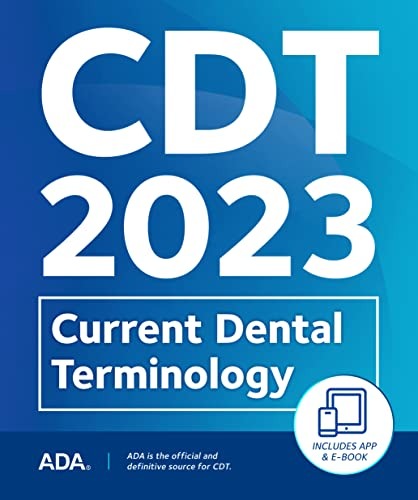
CDT 2023 : Current Dental Terminology
includes 22 new codes, 14 revisions, and 2 deleted codes across 8 categories. This edition also includes seven new codes adopted in March 2022 related to COVID-19 vaccine administration. Other highlights in CDT 2023 include new and revised codes for: Intraoral tomosynthesis and 3D surface scans; HPV vaccine administration; Guided tissue regeneration; Intraoral radiograph images; Gingival flap procedures; Full mouth debridement; Gingival irrigation.
Casting : An Analytical Approach
For a long time, the die cast industry has used trial and error as a leading development method, resulting in tremendous growth in the utilisation of available CFD (computational fluid dynamics) software. This software allows the development of better products that maximise the advantages the die cast process has to offer. Casting: An Analytical Approach will refresh knowledge of the governing laws of the fluid dynamics that have an effect on die cast die and die cast process design. MATLAB® (MathWorks, Inc.) and Visual Basic® (Microsoft) code are listed in Casting: An Analytical Approach for every stage of product, die and die cast process design; providing better understanding of die and process design and simplifying calculations of the die cast die as well as the die cast process. Gas ventilation system calculations and fundamentals of compressible gas flow are also included.
