



الصفحة 15
الصفحة 15
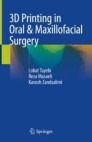
3D printing in oral & maxillofacial surgery
A comprehensive guide to 3D printing and 3D bioprinting methods and their application in oral and maxillofacial surgeries. Among the 3D printing methods considered are fused deposition modeling, selective laser sintering, photopolymer jetting, powder binder printing, and stereolithography, while the coverage of 3D bioprinting encompasses inkjet, microextrusion, and laser techniques. In each case, the relevance of the technique to oral and maxillofacial surgery is explained. In addition, the available inks and bioinks for 3D printing are reviewed. The roles of soft and hard tissue printing in oral and maxillofacial tissue engineering and the use of 3D printing in multi- and interfacial tissue engineering are then examined in depth. The particular value of 3D printing in the treatment of critically sized defects is discussed separately. Finally, up-to-date information is provided on guided tissue/bone regeneration using 3D printing. The book will be of interest to both oral and maxillofacial surgeons and biomedical engineers.
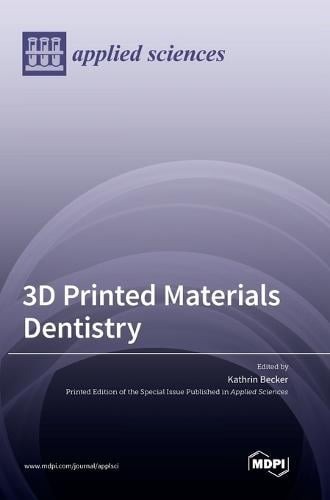
3D printed materials dentistry
Covers a wide range of applications of 3D-printing in dentistry. Five out of eleven research papers deal with applications of 3D printing in orthodontics, one study presents a 3D-printed fitting system for the FFP2 that were applied during the COVID-19 pandemic, and the others address applications in prosthodontics and restorative dentistry.
3D Mesh processing and character animation : with examples using OpenGL, OpenMesh and Assimp
Focusses specifically on topics that are important in three-dimensional modelling, surface design and real-time character animation. It provides an in-depth coverage of data structures and popular methods used in geometry processing, keyframe and inverse kinematics animations and shader based processing of mesh objects. It also introduces two powerful and versatile libraries, OpenMesh and Assimp, and demonstrates their usefulness through implementations of a wide range of algorithms in mesh processing and character animation respectively. This Textbook is written for students at an advanced undergraduate or postgraduate level who are interested in the study and development of graphics algorithms for three-dimensional mesh modeling and analysis, and animations of rigged character models.
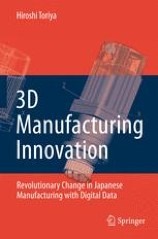
3D Manufacturing Innovation : Revolutionary Change in Japanese Manufacturing with Digital Data
3D Manufacturing Innovation introduces the best practices developed by Toyota, Sony, Nikon, Casio and other pioneers in the global engineering scene, providing the reader with invaluable tips for manufacturing innovation.
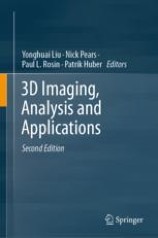
3D Imaging, Analysis and Applications
This textbook is designed for postgraduate studies in the field of 3D Computer Vision. It also provides a useful reference for industrial practitioners; for example, in the areas of 3D data capture, computer-aided geometric modelling and industrial quality assurance. This second edition is a significant upgrade of existing topics with novel findings. Additionally, it has new material covering consumer-grade RGB-D cameras, 3D morphable models, deep learning on 3D datasets, as well as new applications in the 3D digitization of cultural heritage and the 3D phenotyping of crops.

3D imaging in endodontics : A new era in diagnosis and treatment
Full understanding of the role of cone beam computed tomography (CBCT) in helping to solve many of the most challenging problems in endodontics. It will shorten the learning curve in application of this exciting imaging technology in a variety of contexts: difficult diagnostic cases, treatment planning, evaluation of internal tooth anatomy prior to root canal therapy, nonsurgical and surgical treatments, early detection and treatment of resorptive defects, and outcomes assessment. The ability to obtain an accurate 3D representation of a tooth and the surrounding structures by means of noninvasive CBCT imaging is changing the approach to clinical decision making in endodontics. Clinicians long accustomed to working in very small, three-dimensional spaces are no longer constrained by the limitations of two-dimensional imaging. The challenges of mastering the new technology can, however, be daunting. The detailed guidance contained in this book will help endodontists to take full advantage of the important benefits offered by CBCT.

3D imaging in endodontics : A new era in diagnosis and treatment
Provides readers with a full understanding of the role of cone beam computed tomography (CBCT) in helping to solve many of the most challenging problems in endodontics. It will shorten the learning curve in application of this exciting imaging technique in a variety of contexts: difficult diagnostic cases, treatment planning, evaluation of internal tooth anatomy prior to root canal therapy, nonsurgical and surgical treatments, early detection and treatment of resorptive defects, and outcomes assessment.

3D Imaging for Safety and Security
This book is so far the first that covers the current state of the art in 3D imaging for safety and security. Special attention was given to advanced 3D imaging technologies in the context of safety and security applications. Comparative evaluation studies showing advantages of 3D imaging over traditional 2D imaging for a given computer vision or pattern recognition task were emphasized. Moreover, additional experts in the field of 3D imaging for safety and security were invited by the editors for a contribution to this book.

3D diagnosis and treatment planning in orthodontics : an atlas for the clinician
A wide-ranging guide to modern diagnostics and treatment planning in orthodontics, which are mandatory prior to the initiation of any type of comprehensive treatment. The importance of three-dimensional (3D) imaging techniques has been increasingly recognized owing to the shortcomings of conventional two-dimensional imaging in some patients, such as those requiring complex adult treatment and those with temporomandibular joint dysfunctions or sleep disturbances.

3D design reconstruction
This report will talk about a way to design and rebuild a cheap, true-to-the-truth 3D system using reverse engineering. The system provides the service of reconstructing objects into 3D models by placing the object in a predetermined place facing a set of sensors and cameras at a certain distance and at precise angles, using the angle of rotation for each image and combining the points of triangulation we can build a form of 3D modeling types. These models can be used in digital animation or printed with 3D printers for a wide variety of applications.
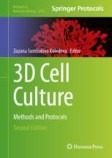
3D cell culture : Methods and protocols
Expands on the previous edition with discussions about the latest organoid models developed for many more organs; new hydrogels and devices for 3D culture; and the organoid systems that have been improved by incorporating more components of tissue microenvironments in the in vitro culture. The chapters in this book are organized into five parts and cover topics such as biofabrication, organoids, microfluidic systems, bioprinting, and image analysis. Written in the highly successful Methods in Molecular Biology series format, chapters include introductions to their respective topics, lists of the necessary materials and reagents, step-by-step, readily reproducible laboratory protocols, and tips on troubleshooting and avoiding known pitfalls.
