



الصفحة 149
الصفحة 149
Artificial intelligence : Methodology, systems, and applications ; 13th International Conference, AIMSA 2008, Varna, Bulgaria, September 4-6, 2008. Proceedings
This book constitutes the refereed proceedings of the 13th International Conference on Artificial Intelligence: Methodology, Systems, and Applications, AIMSA 2008, held in Varna, Bulgaria in September 2008.

Artificial intelligence : Methodology, systems, and applications ; 10th International Conference, AIMSA 2002, Varna, Bulgaria, September 4-6, 2002. Proceedings
The AIMSA conference series was frst conceived in 1984 as a gathering of AI researchers and students from Eastern and Central Europe.Sincethenthecon- rence has followed a biennial schedule of meetings in Bulgaria, attracting parti- pantsfrom awidergeographicalarea.The AIMSA organizers are delighted to present you with another exciting program, coveringmostareasof Artifcial Intelligence.Inkeepingwithitsm- sion to inform the research community and excite the commercial sector, AIMSA presents this year two invited contributions from world-leading European rese- chersworkingoncutting-edgeAIresearch: Prof.CaroleGoble, ontheSemantic Web.

Artificial immune systems ; Vol. 4163 : 5th International conference, ICARIS 2006, Oeiras, Portugal, September 4-6, 2006, Proceedings
ICARIS 2006 is the ?fth instance of a series of conferences dedicated to the comprehension and the exploitation of immunological principles through their translation into computational terms.Their axis of research tries to stabilize an on-going identity somewhere in the crossroad of engineering (building useful artifacts), natural sciences (biologyor psychology— improving the comprehension and prediction of natural phenomena) and t- oretical computer sciences (developing and mastering the algorithmic world). Accordingly and depending on which of these perspectives receives more s- port, they attempt at attracting di?erent kinds of scientists and at stimul- ing di?erent kinds of scienti?c attitudes. For many years and in the previous ICARIS conferences, it was clearly the “engineering.

Artificial immune systems ; Vol. 3627 ; 4th International conference, ICARIS 2005, Banff, Alberta, Canada, August 14-17, 2005, Proceedings
Your immune system is unique. It is in many ways as complex as your brain, butit is not centred in one location, like the brain. It is not a single organ—it consistsof many different cell types, diverse methods of intercellular communication, andmany different organs. Its functionality is blurred throughout you—we can’textract the immune system, or point to where it begins and ends. The immunesystem is not separable from the system it protects. It has integral links to everyorgan of our bodies.This has radical implications for the field of Artificial Immune Systems (AIS),that we are only now beginning to comprehend. One of the first insights is thatmodelling the immune system, or developing any kind of immune algorithm, isdifficult. The immune system is one aspect of biology that we find difficult toapply simple reductionist explanations to. We can very successfully extract sub-processes of the whole and create immune algorithms based on those processes.

Artificial immune systems ; 7th International Conference, ICARIS 2008, Phuket, Thailand, August 10-13, 2008. Proceedings
This book constitutes the refereed proceedings of the 7th International Conference on Artificial Immune Systems, ICARIS 2008, held in Phuket, Thailand, in August 2008.

Artificial immune systems ; 6th International Conference, ICARIS 2007, Santos, Brazil, August 26-29, 2007, Proceedings
This book contains sections on search and optimization, classification and clustering, anomaly detection and negative selection, robotics, control and electronics. Modeling papers, conceptual papers, and technical papers and general applications are also included.

Artificial evolution ; 7th International Conference, Evolution artificielle, EA 2005, revised selected papers
This book constitutes the thoroughly refereed post-proceedings of the 7th International Conference on Artificial Evolution, EA 2005, held in Lille, France, in October 2005. They cover all aspects of artificial evolution: genetic programming, machinelearning, combinatorial optimization, co-evolution, self-assembling, artificial lifeand bioinformatics.In addition, the program included an invited talk by David Corne on “Evolu-tionary Computation in Bioinformatics: How to Save Lives and Make ScientificBreakthrough.

Articulated motion and deformable objects ; 5th International Conference, AMDO 2008, Port d’Andratx, Mallorca, Spain, July 9-11, 2008. Proceedings
This book constitutes the refereed proceedings of the 5th International Conference on Articulated Motion and Deformable Objects, AMDO 2008, held in Port d'Andratx, Mallorca, Spain, in July 2008.
Arterial Grafting for Coronary Artery Bypass Surgery
The second edition of this book provides updated knowledge about the biological characteristics and clinical use of arterial grafts for coronary artery bypass surgery. The reader will find first-hand information on arterial grafts as well as vein grafts with regard to biological characteristics, clinical use including off-pump coronary bypass grafting surgery, results, and future developments. Written by world-renowned cardiac surgeons and cardiovascular research scientists working in this area.
Aritmetica : Un approccio computazionale = Arithmetic : A computational approach
Intended to be a contribution to the algorithmic re-reading of some classic topics of elementary number theory and an invitation to more demanding reading, according to the indications provided by the bibliography annexed to it.

Arithmetic of finite fields ; 8th International Workshop, WAIFI 2020, Rennes, France, July 6–8, 2020, Revised Selected and Invited Papers
This book constitutes the thoroughly refereed post-workshop proceedings of the 8th International Workshop on the Arithmetic of Finite Field, WAIFI 2020, held in Rennes, France in July 2020.
Arithmetic of finite fields ; 2nd International Workshop, WAIFI 2008 Siena, Italy, July 6-9, 2008 Proceedings
This book constitutes the refereed proceedings of the Second International Workshop on the Arithmetic of Finite Fields, WAIFI 2008, held in Siena, Italy, in July 2008.
Argumentation in multi-agent systems ; Vol. 4049 ; 2nd International Workshop, ArgMAS 2005, Utrecht, Netherlands, July 26, 2005, revised selected and invited papers
This book constitutes the thoroughly refereed post-proceedings of the Second International Workshop on Argumentation in Multi-Agent Systems held in Utrecht, Netherlands in July 2005 as an associated event of AAMAS 2005, the main international conference on autonomous agents and multi-agent systems. The 10 revised full papers presented together with an invited paper were carefully reviewed and selected from 17 submissions. The papers are organized in topical sections on foundations, negotiation, protocols, deliberation and coalition formation, and consensus formation.
Argumentation in multi-agent systems ; Third International Workshop, ArgMAS 2006, Hakodate, Japan, May 8, 2006, revised selected and invited papers
Argumentation provides tools for designing, implementing and analyzing sophisticated forms of interaction among rational agents. It has made a solid contribution to the practice of multiagent dialogues. Application domains include: legal disputes, business negotiation, labor disputes, team formation, scientific inquiry, deliberative democracy, ontology reconciliation, risk analysis, scheduling, and logistics.
Architecture of computing systems - ARCS 2008 ; 21st International Conference, Dresden, Germany, February 25-28, 2008. Proceedings
This book constitutes the refereed proceedings of the 21st International Conference on Architecture of Computing Systems, ARCS 2008, held in Dresden, Germany, in February 2008.
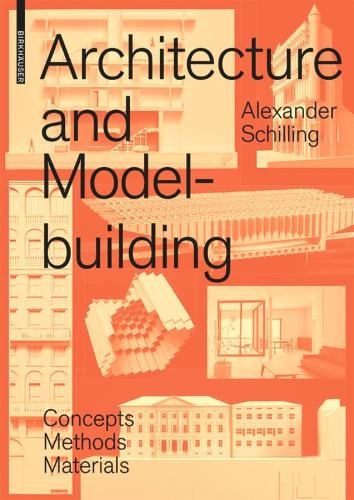
Architecture and modelbuilding : Concepts, methods, materials
Provides in-depth information Numerous practical tips, clear explanations, concrete examples Aims and Scope Architectural models are used at various stages of a project. As working models they support the design process: they are made up from time to time using simple materials, such as cardboard, without any attempt at accuracy, and continue to be adjusted and added to as the ideas and the design progress. The point here is to swiftly check a design idea, to allow it to be continued or dismissed. Presentational models are more involved; at this stage the design has been completed and the purpose of the model is to convey the ideas to the potential user in a clear and easy-to-understand way.
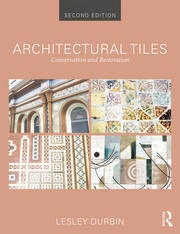
Architectural tiles : Conservation and restoration
It not only contains new and up to date information on materials, practical methods, and historical research but also reflects changes in the attitudes, outlook and perceptions within the wider conservation, architectural heritage and construction communities which give a new dimension to the conservation and restoration. The growing interest in the preservation of post war ceramic tile murals and the subsequent demand for information pertaining specifically to this era is a welcome and useful addition.

Architectural styles : A visual guide
A guide to architectural styles across the centuries and around the world. Modeled after an architect's plein air sketchbook, the volume features hundreds of detailed drawings by esteemed architectural illustrator Robbie Polley alongside incisive and informative descriptions. This unique guidebook takes readers from Europe and the Americas to Egypt, China, and India. It covers a host of historical and contemporary architectural styles, from ancient and classical to Pre-Columbian, Romanesque, Renaissance, Palladian, art nouveau, Brutalist, and biomorphic. It describes the histories and characteristics of the building traditions of each era and region of the world, and looks at key architectural elements such as buttresses, spandrels, curtain walls, and oculi. The book also includes a section on building parts-from domes and columns to towers, arches, roofs, and vaulting-along with a detailed glossary and bibliography. Comprehensive and authoritative, 'Architectural Styles' is an essential resource for architects and designers and a must-have illustrated guide for anyone interested in architecture or drawing.
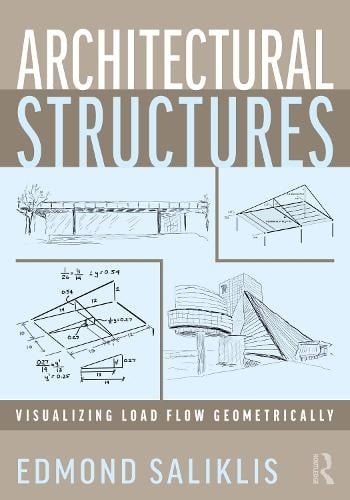
Architectural structures : Visualizing load flow geometrically
Presents an alternative approach to understanding structural engineering load flow using a visually engaging and three-dimensional format. This book presents a ground-breaking new way of establishing equilibrium in architectural structures using the Modern Müller-Breslau method. Includes approachable coverage of parametric modeling of two-dimensional and three-dimensional structures, as well as more advanced topics such as indeterminate structural analysis and plastic analysis. Hundreds of detailed drawings created by the author are included throughout to aid understanding. Architecture and structural engineering students can employ this novel method by hand sketching, or by programming in parametric design software.
Architectural graphics ; Vol.1 : Graphics for analysis
Reports on several advances in architectural graphics, with a special emphasis on education, training, and research. It gathers a selection of contributions to the 19th International Conference on Graphic Design in Architecture, EGA 2022, held on June 2–4, 2022, in Cartagena, Spain, with the motto: "Beyond drawings. The use of architectural graphics".
