



الصفحة 149
الصفحة 149
Applied mathematics and machine learning
The simultaneous availability of large datasets and high-performance computing capability in recent years has enabled the rapid development of powerful machine learning algorithms. On the one hand, state-of-the-art machine learning techniques have transformed many areas of science and engineering; on the other hand, theoretical discoveries in mathematical algorithms, differential equations, and statistical inferences, to name a few, have provided the foundation for the exploration of new multidisciplinary models for solving practical problems. This Special Issue endeavors to continue the journey that started in our previous Special Issue (Applied Mathematics and Computational Physics) by providing a platform for researchers from both academia and industry, as well as government, to present their new computational methods that have engineering and physics applications.
Applied Mathematical Demography
it focus on applications of demographic models, while extending its scope to matrix models for stage-classified populations.first introduce the life table to describe age-specific mortality, and then use it to develop theory for stable populations and the rate of population increase. This theory is then revisited in the context of matrix models, for stage-classified as well as age-classified populations. Reproductive value and the stable equivalent population are introduced in both contexts, and Markov chain methods are presented to describe the movement of individuals through the life cycle. Applications of mathematical demography to population projection and forecasting, kinship, microdemography, heterogeneity, and multi-state models are considered.
Applied Linear Algebra and Matrix Analysis
This new book offers a fresh approach to matrix and linear algebra by providing a balanced blend of applications, theory, and computation, while highlighting their interdependence.

Applied Hydrogeophysics
This book focuses on how hydrogeophysical methods can be applied to solve problems facing environmental engineers, geophysicists, agronomists, hydrologists, soil scientists and hydrogeologists. We present applications of hydrogeophysical methods to the understanding of hydrological processes and environmental problems dealing with the flow of water and the transport of solutes and contaminants. The majority of the book is organized as a series of process-driven chapters, each authored by leading experts. Areas covered include: infiltration and solute transport processes, biogeochemical functioning of soil-water systems, coastal groundwater interactions, cold region hydrology, engineered barriers and landfill processes. In addition, the book offers insight into the development of new data fusion methodologies, of value to many hydrogeophysical investigations, and provides an account how the rapidly developing self-potential technique can give valuable information about water fluxes and hydrochemical states within the subsurface.
Applied High-Speed Plate Penetration Dynamics
High-speed impact dynamics is of interest in the fundamental sciences, e.g., astrophysics and space sciences, and has a number of important applications in military technologies, homeland security and engineering.
Applied Graph Theory in Computer Vision and Pattern Recognition
It presents the application of graph theory to low-level processing of digital images, presents graph-theoretic learning algorithms for high-level computer vision and pattern recognition applications, and provides detailed descriptions of several applications of graph-based methods to real-world pattern recognition tasks.
Applied Geometry for Computer Graphics and CAD
Focusing on the manipulation and representation of geometrical objects, this book explores the application of geometry to computer graphics and computer-aided design (CAD). An introduction to transformations of the plane and three-dimensional space describes how objects can be constructed from geometric primitives and manipulated. This leads into a treatment of projections and the method of rendering objects on a computer screen by application of the complete viewing operation. Subsequently, the emphasis is on the two principal curve and surface representations, namely, Bézier and B-spline (including NURBS).
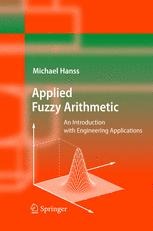
Applied Fuzzy Arithmetic : An Introduction with Engineering Applications
Applied Fuzzy Arithmetic provides a well-structured compendium that offers both a deeper knowledge about the theory of fuzzy arithmetic and an extensive view on its applications in the engineering sciences, making it a resource for students, researchers, and practical engineers. The first part of the book gives an introduction to the theory of fuzzy arithmetic, which aims to present the subject in a well-organized and comprehensible form. The derivation of fuzzy arithmetic from the original fuzzy set theory and its evolution towards a successful implementation is presented with existing formulations of fuzzy arithmetic included and integrated in the overall context. The second part of the book presents a diversified exposition of the application of fuzzy arithmetic, addressing different areas of the engineering sciences, such as mechanical, geotechnical, biomedical, and control engineering.
Applied Electromagnetism and Materials
Topics range from the spectroscopy and characterization of dielectrics and semiconductors, to non-linear effects and electromagnetic cavities, to ion-beam applications in materials science.
Applied cryptography and network security ; 6th International Conference, ACNS 2008, New York, NY, USA, June 3-6, 2008. Proceedings
This book constitutes the refereed proceedings of the 6th International Conference on Applied Cryptography and Network Security, ACNS 2008, held in New York, NY, USA, in June 2008.

Applied cryptography and network security ; 19th International Conference, ACNS 2021, Kamakura, Japan, June 21–24, 2021, Proceedings, Part I
The two-volume set LNCS 12726 + 12727 constitutes the proceedings of the 19th International Conference on Applied Cryptography and Network Security, ACNS 2021, which took place virtually during June 21-24, 2021. The 37 full papers presented in the proceedings were carefully reviewed and selected from a total of 186 submissions. They were organized in topical sections as follows: Part I: Cryptographic protocols; secure and fair protocols; cryptocurrency and smart contracts; digital signatures; embedded system security; lattice cryptography; Part II: Analysis of applied systems; secure computations; cryptanalysis; system security; and cryptography and its applications.
Applied computational materials modeling : Theory, simulation and experiment
this book provides the average person working in the materials field with a more balanced perspective of the role that computational modeling can play in every day research and development efforts. This is done by presenting a series of examples of the successful application of various computational modeling procedures (everything from first principles to quantum approximate to CALPHAD methods) to real life surface and bulk alloy problems.This book should have a large appeal in the materials community, both for experimentalists who would greatly benefit from adding computational methods to their everyday research regimes, as well as for those scientists/engineers familiar with a particular computational method who would like to add complementary techniques to their arsenal of research and development tools

Applied Charged Particle Optics
Authored by a pioneer of the field, this overview of charged particle optics provides a solid introduction to the field for all physicists wishing to design their own apparatus or better understand the instruments with which they work. Applied Charged Particle Optics begins by introducing electrostatic lenses and fields used for acceleration, focussing and deflection of ions or electrons. Subsequent chapters give detailed descriptions of electrostatic deflection elements, uniform and non-uniform magnetic sector fields, image aberrations, and, finally, fringe field confinement. A chapter on applications is added.
Applied and computational mathematics for digital environments
Contains the 11 papers that were accepted and published in the Special Issue “Applied and Computational Mathematics for Digital Environments” of the MDPI Mathematics journal. The topics of interest include, among others, scientific research, applied tasks, and problems in the following areas: The construction of mathematical and information models of intelligent computer systems for monitoring and controlling the parameters of digital environments; The development of intelligent optimization algorithms that search for optimal parameter values of mathematical and information models in digital environments; Software and mathematical technologies in the implementation of intelligent monitoring and computer control of the parameters of digital environments; The development and application of mathematical and information models, machine learning methods, and artificial intelligence for the analysis and processing of big data in digital environments.
Applicazioni ed esercizi di modellistica numerica per problemi differenziali = Applications and exercises in numerical modeling for differential problems
Contains a collection of exercises related to typical topics in a course on analytical and numerical methods offered in a degree program in Engineering or Mathematics. Starting with exercises in functional analysis and approximation theory, the text develops problems related to the numerical resolution of elliptic, parabolic, and hyperbolic partial differential equations, scalar or vector, in one or more spatial dimensions. Pure diffusion and pure convection problems are therefore addressed, alongside diffusion-transport problems and problems in compressible and incompressible fluid dynamics. Particular emphasis is given to the finite element method for the spatial discretization of the problems considered, although exercises on the finite difference and finite volume methods are also included.
Applications of Time Delay Systems
This book provides an update of the latest research in control of time delay systems and applications by world leading experts. It will appeal to engineers, researchers and students in Control.

Applications of three-dimensional imaging for craniofacial region
Provides sound knowledge of 3D imaging of dentofacial craniofacial region. It guides the students and faculty for understanding the dentofacial craniofacial region in depth. It incorporates the latest techniques, frameworks and technologies in the imaging area of oral health. The book emphasizes on the dentofacial and craniofacial region and thus fills the gap in the medical imaging literature.
Applications of Synchrotron Radiation : Micro Beams in Cell Micro Biology and Medicine
This book demonstrates the applications of synchrotron radiation in certain aspects of cell microbiology, specifically non-destructive elemental analyses, chemical-state analyses and imaging (distribution) of the elements within a cell. The basics for understanding and applications of synchrotron radiation are also described to make the contents easier to be understood for a wide group of researchers in medical and biological sciences who might not be familiar with the physics of synchrotron radiation. The two main techniques that are discussed in this book are the x-ray fluorescence spectroscopy (XRF) and the x-ray fine structure analysis (XAFS).
Applications of Supply Chain Management and E-Commerce Research
This volume contains a broad specturm of both research and applications in both supply chain management and e-business. Several chapters are written by practitioners at leading corporations. This volume is suitable for researchers in supply chain management, e-business, and applied operations research as well as graduate students in these and other related disciplines. It would also be of interest to industry practitioners in supply chain management and e-business with interests in operations managements and operations research.
Applications of Specification and Design Languages for SoCs : Selected papers from FDL 2005
This book provides detailed insights into recent works dealing with a large spectrum of issues in system-on-chip design, namely: assertion-based design, mapping on network-on-chip architectures, use of C/C++/SystemC design methodologies, hardware/software integration, mixing heterogeneous models of computation, analog/mixed-signal/mixed-technology system design and verification, UML/XML-based synthesis of analog and mixed-signal systems, UML to VHDL mapping, UML-based performance modeling, model transformation and formal verification, real-time system models, and Model Driven Architecture.
