



الصفحة 142
الصفحة 142
3-D Computer vision : Principles, algorithms and applications
Offers advanced content on computer vision (basic content can be found in its prerequisite textbook, “2D Computer Vision: Principles, Algorithms and Applications”), including the basic principles, typical methods and practical techniques. It is intended for graduate courses on related topics, e.g. Computer Vision, 3-D Computer Vision, Graphics, Artificial Intelligence, etc. The book is mainly based on my lecture notes for several undergraduate and graduate classes I have offered over the past several years, while a number of topics stem from my research publications co-authored with my students. This book takes into account the needs of learners with various professional backgrounds, as well as those of self-learners. Furthermore, it can be used as a reference guide for practitioners and professionals in related fields.
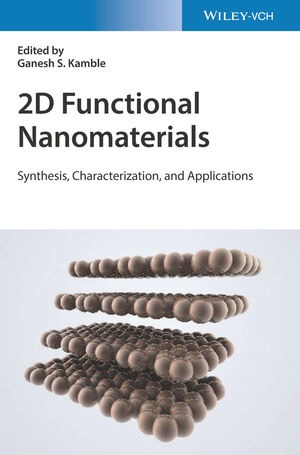
2D Functional Nanomaterials : Synthesis, Characterization, and Applications
In 2D Functional Nanomaterials: Synthesis, Characterization, and Applications, Dr. Ganesh S. Kamble presents an authoritative overview of the most recent progress in the rational design and synthesis of 2D nanomaterials and their applications in semiconducting catalysts, biosensors, electrolysis, batteries, and solar cells. This interdisciplinary volume is a valuable resource for materials scientists, electrical engineers, nanoscientists, and solid-state physicists looking for up-to-date information on 2D heterojunction nanomaterials.
25 Years of Model Checking : History, Achievements, Perspectives
Model checking technology is among the foremost applications of logic to computer science and computer engineering. The model checking community has achieved many breakthroughs, bridging the gap between theoretical computer science and hardware and software engineering, and it is reaching out to new challenging areas such as system biology and hybrid systems. Model checking is extensively used in the hardware industry and has also been applied to the verification of many types of software. Model checking has been introduced into computer science and electrical engineering curricula at universities worldwide and has become a universal tool for the analysis of systems.
13th International Conference on Electrical Bioimpedance and the 8th Conference on Electrical Impedance Tomography2007 ; ICEBI 2007, August 29th - September 2nd 2007, Graz, Austria
These proceedings continue the series edited in the framework of the traditional triennial International Conference on Electrical Bio-Impedance (ICEBI), the most important platform for presenting recent scientific achievements in the area of electrical bio-impedance. The XIII ICEBI was held from Aug. 29th – Sept. 02nd 2007 at the Graz University of Technology in Graz, Austria. As already in previous years the 13th ICEBI was held together with the 8th Conference on Electrical Impedance Tomography, the annual meeting for biomedical impedance imaging. Consequently, the proceedings also contain many contributions from this very important and challenging branch of bioimpedance research.
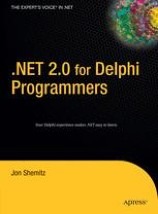
.NET 2.0 for Delphi Programmers
.NET 2.0 for Delphi Programmers explores .NET from a Delphi programmers viewpoint, and it is ideal for Delphi programmers moving to .NET. It presents the core concepts of the .NET world in terms you are familiar with. This book will help you with Delphi for .NET as well as C#. Apress publishes migration books for both Visual Basic 6 and C++ programmers moving to .NET. Consider this the Delphi installment of Apress migration books! There is ample coverage of C# as well as Delphi for .NET inside this edition.
