



الصفحة 140
الصفحة 140
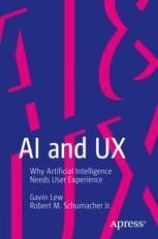
AI and UX : Why artificial intelligence needs user experience
Great effort has been put forth to continuously make AI “smarter.” But, will smarter always equal more successful AI? It is not just about getting a product to market, but about getting the product into a user’s hands in a form that will be embraced. This demands examining the product from the perspective of the user. Authors Gavin Lew and Robert Schumacher have written AI and UX to examine just how product managers and designers can best strike this balance. From exploring the history of the parallel journeys of AI and UX, to investigating past product examples and failures, to practical expert knowledge on how to best execute a positive user experience, AI and UX examines all angles of how AI can best be developed within a UX framework.

AI 2008 : Advances in artificial intelligence ; 21st Australasian Joint Conference on Artificial Intelligence Auckland, New Zealand, December 1-5, 2008. Proceedings
This book constitutes the refereed proceedings of the 21th Australasian Joint Conference on Artificial Intelligence, AI 2008, held in Auckland, New Zealand, in December 2008.

AI 2007: Advances in artificial intelligence ; 20th Australian Joint Conference on Artificial Intelligence, Gold Coast, Australia, December 2-6, 2007, Proceedings
The book is organized in topical sections on machine learning, neural networks, evolutionary computing, constraint satisfaction, satisfiability, automated reasoning, knowledge discovery, robotics, social intelligence, ontologies and semanti.

AI 2006 : Advances in artificial intelligence ; 19th Australian Joint Conference on Artificial Intelligence, Hobart, Australia, December 4-8, 2006, Proceedings
This volume contains the proceedings of the 19th Australian Joint Conference on Artificial Intelligence (AI 2006) held at Hobart, Australia. AI 2006 received a record number of submissions, a total of 689 submissions from 35 countries. The papers in this volume give an indication of recent advances in artificial int- ligence. The topics covered include Machine Learning, Robotics, AI Applications, Planning, Agents, Data Mining and Knowledge Discovery, Cognition and User Interface, Vision and Image Processing, Information Retrieval and Search, AI in the Web, Knowledge Representation, Knowledge-Based Systems, and Neural Networks.

AI 2004 : Advances in artificial intelligence ; 17th Australian Joint conference on artificial intelligence, Cairns, Australia, December 4-6, 2004, proceedings
AI 2004 was the seventeenth in the series of annual Australian artificial intelli-gence conferences. This conference is the major forum for artificial intelligenceresearch in Australia. It has consistently attracted strong international partic-ipation. This year more than two thirds of the submissions were from outsideAustralia.The current volume is based on the proceedings of AI 2004. AI 2004 was collo-cated with Complex 2004, the 7th Asia-Pacific Conference on Complex Systems,with the aim of promoting cross-fertilization and collaboration in areas of com-plex and intelligent systems
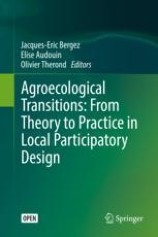
Agroecological transitions : From theory to practice in local participatory design
There is wide agreement on the need to change the prevalent agricultural models, given their negative impacts and their incompatibility with current societal issues. Agroecological transition has been promoted as a potential solution to the ecological, social and economic problems generated by these models. It however involves a systemic, multi-scale and transdisciplinary process. Due to this complexity, the overall picture of what farms and food systems “actually are” and “might be” may not be apparent at the individual level. Yet individuals’ knowledge and values provide complementary insights on how to proceed in deepening ecological modernisation. Expertise can also provide landmarks to be considered in that process. Because local stakeholders’ experience and skills are key resources in the adaptation and adoption of agroecological transition, new conceptual and methodological frameworks and tools have to be developed to support them in the design process of such a complex transition. This book presents feedback from the ‘Territorial Agroecological Transition in Action’- TATA-BOX research project, which was devoted to these specific issues.
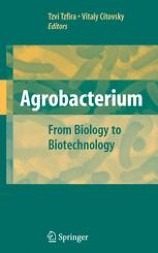
Agrobacterium : From Biology to Biotechnology
Agrobacterium’ is a comprehensive book on Agrobacterium research, including its history, application, basic biology discoveries, and effects on human society. Although the book largely focuses on providing a detailed review of virtually all molecular events of the genetic transformation process, it also provides coverage of ethical and legal issues relevant to the use of Agrobacterium as a "genetic transformation machine". The result is an all-inclusive text which readers—including scientists and students involved in plant genetic engineering—will find useful as a reference source for all major aspects of the Agrobacterium-mediated genetic transformation of plant and non-plant organisms.
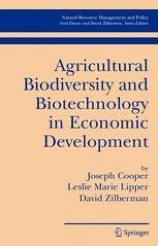
Agricultural biodiversity and biotechnology in economic development
The topics addressed in this book are of vital importance to the survival of humankind. Agricultural biodiversity, encompassing genetic diversity as well as human knowledge, is the base upon which agricultural production has been built, and protecting this resource is critical to ensuring the capacity of current and future generations to adapt to unforeseen challenges. Agricultural biodiversity underpins the productivity of all agricultural systems and is particularly important for poor and food-insecure farmers, who maintain highly diverse production systems in response to the marginal and risky production conditions they operate under. Understanding the importance of agricultural biodiversity in the livelihoods of the food insecure and enhancing its performance through the use of a variety of tools, including biotechnology, is a critically important issue in the world today
Aging, shaking, and cracking of infrastructures : From mechanics to concrete dams and nuclear structures
Focuses on the safety assessment of existing structures subjected to multi-hazard scenarios through advanced numerical methods. Whereas the focus is on concrete dams and nuclear containment structures, the presented methodologies can also be applied to other large-scale ones. This book is composed of seven sections: Fundamentals: theoretical coverage of solid mechnics, plasticity, fracture mechanics, creep, / seismology, dynamic analysis, probability and statistics / Damage: that can affect concrete structures, such as cracking of concrete, AAR, chloride ingress, and rebar corrosion, / Finite Element: formulation for both linear and nonlinear analysis including stress, heat and fracture mechanics, / Engineering Models: for soil/fluid-structure interaction, uncertainty quantification, probablilistic and random finite element analysis, machine learning, performance based earthquake engineering, ground motion intensity measures, seismic hazard analysis, capacity/fragility functions and damage indeces, / Applications to dams through potential failure mode analyses, risk-informed decision making, deterministic and probabilistic examples, / Applications to nuclear structures through modeling issues, aging management programs, critical review of some analyses, / Other applications and case studies: massive RC structures and bridges, detailed assessment of a nuclear containment structure evaluation for license renewal.

Aging and Senescence
Aging is characterized by a progressive loss of physiological integrity, leading to impaired function and increased vulnerability to death. This deterioration is the primary risk factor for major human pathologies, including cancer, diabetes, cardiovascular disorders, and neurodegenerative diseases. Aging research has experienced an unprecedented advance over recent years, particularly with the discovery that the rate of aging is controlled, at least to some extent, by genetic pathways and biochemical processes conserved in evolution. Although recent developments in molecular biology are far from understanding the biological basis of aging, research suggests that targeting the aging process itself could ameliorate many age-related pathologies.

Aggregation functions : A guide for practitioners
Aggregation of information is of primary importance in the construction of knowledge based systems in various domains, ranging from medicine, economics, and engineering to decision-making processes, artificial intelligence, robotics, and machine learning. This book gives a broad introduction into the topic of aggregation functions, and provides a concise account of the properties and the main classes of such functions, including classical means, medians, ordered weighted averaging functions, Choquet and Sugeno integrals, triangular norms, conorms and copulas, uninorms, nullnorms, and symmetric sums. It also presents some state-of-the-art techniques, many graphical illustrations and new interpolatory aggregation functions. A particular attention is paid to identification and construction of aggregation functions from application specific requirements and empirical data. This book provides scientists, IT specialists and system architects with a self-contained easy-to-use guide, as well as examples of computer code and a software package. It will facilitate construction of decision support, expert, recommender, control and many other intelligent systems.
Agent-oriented software engineering VI ; 6th International Workshop, AOSE 2005, Utrecht, The Netherlands, July 25, 2005. Revised and Invited Papers
This book represents the thoroughly refereed post-proceedings of the 6th International Workshop on Agent-Oriented Software Engineering, AOSE 2005, held in Utrecht, The Netherlands, in July 2005 as part of AAMAS 2005. The 18 revised full papers were carefully selected from 35 submissions during two rounds of reviewing and improvement. The papers are organized in topical sections on modeling tools, analysis and validation tools, multiagent systems design, implementation tools, and experiences and comparative evaluations.

Agent-oriented software engineering V ; 5th International workshop, AOSE 2004, New York, NY, USA, July 2004, revised selected papers
The explosive growth of application areas such as electronic commerce, ent- prise resource planning and mobile computing has profoundly and irreversibly changed our views on software systems. Nowadays, software is to be based on open architectures that continuously change and evolve to accommodate new components and meet new requirements. Software must also operate on di?- ent platforms, without recompilation, and with minimal assumptions about its operating environment and its users. Furthermore, software must be robust and ¨ autonomous, capable of serving a naive user with a minimum of overhead and interference. Agent concepts hold great promise for responding to the new realities of software systems. They o?er higher-level abstractions and mechanisms which address issues such as knowledge representation and reasoning, communication, coordination, cooperation among heterogeneous and autonomous parties, p- ception, commitments, goals, beliefs, and intentions, all of which need conceptual modelling. On the one hand, the concrete implementation of these concepts can lead to advanced functionalities.

Agent-oriented information systems II ; 6th International bi-conference workshop, AOIS 2004, Riga, Latvia, June 8, 2004 and New York, NY, USA, July 20, 2004, revised selected papers
Information systems have become the backbone of all kinds of organizations - day. In almost every sector – manufacturing, education, health care, government and businesses large and small – information systems are relied upon for - eryday work, communication, information gathering and decision-making. Yet, the in?exibilities in current technologies and methods have also resulted in poor performance, incompatibilities and obstacles to change. As many organizations are reinventing themselves to meet the challenges of global competition and e-commerce, there is increasing pressure to develop and deploy new technologies that are ?exible, robust and responsive to rapid and unexpected change. Agent concepts hold great promise for responding to the new realities of - formation systems. They o?er higher-level abstractions and mechanisms which address issues such as knowledge representation and reasoning, communication, coordination, cooperation among heterogeneous and autonomous parties, p- ception, commitments, goals, beliefs, intentions, etc., all of which need conc- tual modelling. On the one hand, the concrete implementation of these concepts can lead to advanced functionalities.
Agent-mediated electronic commerce VI ; Theories for and engineering of distributed mechanisms and systems, AAMAS 2004 Workshop, Amec 2004, New York, NY, USA, July 19, 2004, revised selected papers
The design of intelligent trading agents, mechanisms, and systems has receivedgrowing atttention in the agents and multiagent systems communities in aneffort to address the increasing costs of search, transaction, and coordinationwhich follows from the increasing number of Internet-enabled distibuted elec-tronic markets. Furthermore, new technologies and supporting business modelsare resulting in a growing volume of open and horizontally integrated markets fortrading of an increasingly diverse set of goods and services. However, growth oftechnologies for such markets requires innovative solutions to a diverse set of ex-isting and novel technical problems which we are only beginning to understand.Specifically, distributed markets present not only traditional
Agent Technology and e-Health
Multi-agent systems are one of the most exciting research areas in Artificial Intelligence. This book reports on the results achieved in this area, discusses the benefits (and drawbacks) that agent-based systems may bring to medical domains and society.
Agent Intelligence Through Data Mining
AGENT INTELLIGENCE THROUGH DATA MINING offers a self-contained overview of a relatively young but important area of research: the intersection of agent technology and data mining. This intersection leads to considerable advancements in the area of information technologies, drawing the increasing attention of both research and industrial communities. It can take two forms: a) the more mundane use of intelligent agents for improved data mining and; b) the use of data mining for smarter, more efficient agents. The second approach is the main focus of this volume. this book presents a methodology for developing multi-agent systems, describes available open-source tools to support this process, and demonstrates the application of the methodology on three different cases. AGENT INTELLIGENCE THROUGH DATA MINING is designed for a professional audience composed of researchers and practitioners in industry.

Agent and Multi-Agent Systems : Technologies and Applications ; 2nd KES International Symposium, KES-AMSTA 2008, Incheon, Korea, March 26-28, 2008. Proceedings
The KES-AMSTA Symposium Series is a sub-series of the KES Conference Series. The aim of the symposium was to provide an international forum for scientific research into the technologies and applications of agent and multi-agent systems.

Agent and multi-agent systems : Technologies and applications ; 1st KES International Symposium, KES-AMSTA 2007, Wroclaw, Poland, May 31-June 1, 2007, Proceedings
The aim of the symposium was to provide an international forum for scientific - search in the technologies and applications of agent and multi-agent systems. Agents and multi-agent systems are related to the modern software which has long been r- ognized as a promising technology for constructing autonomous, complex and intel- gent systems. A key development in the field of agent and multi-agent systems has been the specification of agent communication languages and formalization of - tologies. Agent communication languages are intended to provide standard decla- tive mechanisms for agents to communicate knowledge and make requests of each other, whereas ontologies are intended for conceptualization of the knowledge - main.
Ageing : The Paradox of Life : Why We Age
For centuries people have been puzzled by the inevitability of human aging. For most of the second half of the twentieth century aging remained a mystery, or an unsolved biological problem. At the end of the 20th century a remarkable scientific discovery emerged. It was not a single discovery in the usual sense, because it was based on a series of important interconnected insights over quite a long period of time. These insights made it possible for the very first time to understand the biological reasons for aging in animals and man. It can already be said, however, that the many observations and insights that explain aging will not be accepted as established knowledge for a long time.
