



الصفحة 14
الصفحة 14

History of computing and education 2 (HCE2) ; IFIP 19th World Computer Congress, WG 9.7, TC 9: History of computing, Proceedings of the 2nd Conference on the history of computing and education, August 21-24, Santiago, Chile
International Federation for Information Processing The IFIP series publishes state-of-the-art results in the sciences and technologies of information and communication. The scope of the series includes: foundations of computer science; software theory and practice; education; computer applications in technology; communication systems; systems modeling and optimization; information systems; computers and society; computer systems technology; security and protection in information processing systems; artificial intelligence; and human-computer interaction. Proceedings and post-proceedings of referred international conferences in computer science and interdisciplinary fields are featured. These results often precede journal publication and represent the most current research. The principal aim of the IFIP series is to encourage education and the dissemination and exchange of information about all aspects of computing.

Highway engineering : Planning, design, and operations ; 2nd ed.
Presents a clear and rigorous exposition of highway engineering concepts, including project development and the relationship between planning, operations, safety and highway types. The book includes important topics such as corridor selection and traverses, horizontal and vertical alignment, design controls, basic roadway design, cross section elements, intersection and interchange design, and the integration of new vehicle technologies and trends. It also presents end of chapter exercises to further aid understanding and learning. This edition has been fully updated with the current design policies and reference manuals essential for highway, transportation, and civil engineers who are required to work to these standards.

High-performance Packet Switching Architectures
Internet traffic is increasing at a rate of at least 200% per year. The world’s largest Internet Service Provider has recently stated that it expects traffic capacity on its regional trunks to grow to a 1-10 petabit range over the next four to five years. Wavelength division multiplexing (WDM), long-haul fiber-optic links and high-capacity all-optical circuit switches are now being employed at the Internet core to process such massive traffic, consequently creating a demand for novel high-performance packet switching technologies (IP routers, ATM switches, and Ethernet Switches) which feed the optical core.

High performance computing for drug discovery and biomedicine
Explores the application of high-performance computing (HPC) technologies to computational drug discovery (CDD) and biomedicine. Collects CDD approaches that, together with HPC, can revolutionize and automate drug discovery process, such as knowledge graphs, natural language processing (NLP), Bayesian optimization, automated virtual screening platforms, alchemical free energy workflows, fragment-molecular orbitals (FMO), HPC-adapted molecular dynamic simulation (MD-HPC), and the potential of cloud computing for drug discovery. And delves into computational algorithms and workflows for biomedicine, featuring an HPC framework to assess drug-induced arrhythmic risk, digital patient applications relevant to the clinic, virtual human simulations, cellular and whole-body blood flow modeling for stroke treatments, prediction of the femoral bone strength from CT data, and many more subjects.

High performance computing ; 4th International Symposium, ISHPC 2002, Kansai Science City, Japan, May 15-17, 2002. Proceedings
The objective of this symposium is to exchange the latest research results in software, architecture, and applications in HPC in a more informal and friendly atmosphere. I am delighted that the symposium is, like past successful ISHPCs, comprised of excellent invited talks, panels, workshops, as well as high-quality technical papers on various aspects of HPC. We hope that the symposium will provide an excellent opportunity for lively exchange and discussion about - rections in HPC technologies and all the participants will enjoy not only the symposium but also their stay in Kansai Science City.

High performance computational science and engineering : IFIP TC5 Workshop on High Performance Computational Science and Engineering (HPCSE), World Computer Congress, August 22-27, 2004, Toulouse, France
The IFIP series publishes state-of-the-art results in the sciences and technologies of information and communication. The scope of the series includes: foundations of computer science; software theory and practice; education; computer applications in technology; communication systems; systems modeling and optimization; information systems; computers and society; computer systems technology; security and protection in information processing systems; artificial intelligence; and human-computer interaction. Proceedings and post-proceedings of referred international conferences in computer science and interdisciplinary fields are featured. These results often precede journal publication and represent the most current research. The principal aim of the IFIP series is to encourage education and the dissemination and exchange of information about all aspects of computing.

Heritage building conservation : Sustainable and digital modelling
Covers: The technology used to digitally document heritage buildings, including LIDAR, photogrammetry, Heritage Building Information Modelling (HBIM), and Virtual Reality (VR) technologies Introducing a Maintainability Index of Heritage Buildings (MIHB) to support the decision-making and prioritization process for the maintenance of heritage buildings The adaptive reuse of heritage buildings Modelling embodied and operational energy performance Using Chatbot and Blockchain technology to support the management and preservation of heritage buildings Ultimately, this book presents a useful tool for use in heritage management and highlights how the reusability of heritage buildings is critical to the creation and survival of sustainable communities.
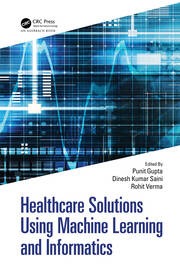
Healthcare solutions using machine learning and informatics
Covers novel and innovative solutions for the healthcare that apply machine learning and biomedical informatics technology. The healthcare sector is one of the most critical in society. This book presents a series of artificial intelligence, machine learning, intelligent IoT-based solutions for medical image analysis, medical big data processing, disease predictions. Machine learning and artificial intelligence use cases in healthcare presented in the book give researchers, practitioners, and students a wide range of practical examples of cross-domain convergence. The wide variety of topics covered include: Artificial Intelligence in healthcare Machine learning solutions for such disease as diabetes, arthritis, cardiovascular disease, and COVID-19 Big data analytics solutions for healthcare data processing Reliable biomedical applications using AI models Intelligent IoT in healthcare. The book explains fundamental concepts as well as the advanced use cases illustrating how to apply emerging technologies such as machine learning, AI models, data informatics into practice to tackle challenges in the field of healthcare with real-world scenarios. Chapters contributed by noted academicians and professionals examine various solutions, frameworks, applications, case studies, and best practices in the healthcare domain

Head and Neck Cancer Imaging ; 3rd ed.
This book is a comprehensive guide to imaging as a crucial part of the multidisciplinary approach to head and neck cancer management. Readers will find a detailed overview of the findings obtained using different imaging techniques during the evaluation of head and neck neoplasms, both before and after therapy. All anatomic areas in the head and neck are covered, and the impact of imaging on patient management is discussed in detail. Full account is taken of the rapid technological developments of recent years, with explanation of the potential applications, limitations, and advantages of existing and evolving imaging technologies – vital knowledge for all members of the multidisciplinary team. The authors are recognized experts in the field, and numerous high-quality images are included. This third edition includes information on the latest imaging developments in this area as well as the most recent staging classification of head and neck cancer.

Harvesting Operations in the Tropics
The book brings together information on harvest methods, system productivity, and methods for conducting safe, efficient, and environmentally acceptable operations in tropical forests. It highlights the challenges of harvest operations in the tropics, includes techniques that have been shown to be successful, and discusses newer technologies.

Handbook on Quality and Standardisation in E-Learning
The handbook provides a cross-national perspective on these issues and draws a clear picture of the situation in quality development and standardisation. It covers topics of a rather foundational nature in quality and standardisation research as well as descriptions of quality approaches, instruments, standards, experiences and best practices. The Handbook is directed to learners, professionals, researchers and policy makers – people creating the next generation of learning.

Handbook on Information Technologies for Education and Training
The handbook's goal is to enable the reader to gain a deep understanding of past, current and future research and applications in the field of educational technology. The reader will gain an in-depth understanding of complex theories, strategies, concepts, and methods relating to the design, development, implementation, and evaluation of educational technologies. Because it combines both the present experience in the field and the vision of its emerging directions, the handbook will be a comprehensive guide for researchers and practitioners working with educational technologies. All the chapters of the second edition are newly written, the handbook therefore presents the latest developments in the field.

Handbook on Decision Support Systems 1 : Basic Themes
Decision support systems have experienced a marked increase in attention and importance over the past 25 years. The aim of this book is to survey the decision support system (DSS) field – covering both developed territory and emergent frontiers. It will give the reader a clear understanding of fundamental DSS concepts, methods, technologies, trends, and issues. It will serve as a basic reference work for DSS research, practice, and instruction. To achieve these goals, the book has been designed according to a ten-part structure, divided in two volumes with chapters authored by well-known, well-versed scholars and practitioners from the DSS community.

Handbook of oleoresins : Extraction, characterization, and applications
This is a snapshot of information on oleoresins—production, composition, properties, applications (medicinal & health properties), and more. It is designed to be a practical tool for the various professionals who develop and market spices and oleoresins

Handbook of nutraceuticals and natural products : Biological, medicinal, and nutritional properties and applications ; 2 Volume set
Describes the preparation techniques and functional uses of nutraceuticals and natural products with a focus on the technologies involved. The book includes coverage of the biological, medicinal, and nutritional properties and applications of functional foods, as well as the advanced technologies used in the extraction and functionalization of nano components and the nanomaterial and nanochemical aspects of the products.

Handbook of Nature-Inspired and Innovative Computing : Integrating Classical Models with Emerging Technologies
This comprehensive handbook, the first of its kind to address the connection between nature-inspired and traditional computational paradigms, is a repository of case studies dealing with different problems in computing and solutions to these problems based on nature-inspired paradigms. The "Handbook of Nature-Inspired and Innovative Computing: Integrating Classical Models with Emerging Technologies" is an essential compilation of models, methods, and algorithms for researchers, professionals, and advanced-level students working in all areas of computer science, IT, biocomputing, and network engineering.

Handbook of modern sensors. physics, designs, and applications
Presents a comprehensive and up-to-date account of the theory (physical principles), design, and practical implementations of various sensors for scientific, industrial, and consumer applications. This latest edition focuses on the sensing technologies driven by the expanding use of sensors in mobile devices. These new miniature sensors will be described, with an emphasis on smart sensors which have embedded processing systems. The chapter on chemical sensors has also been expanded to present the latest developments.

Handbook of genetic diagnostic technologies in reproductive medicine : Improving patient success rates and infant health
Different genetic diagnostic and treatment options are used worldwide to improve routine IVF procedures for the benefit of patients. This handbook updates the new genetic diagnostic technologies that have been translated to the clinic, aiming to improve outcomes in the clinic and result in a healthy baby in the home. Chapters cover the use of genetic technologies in a personalized manner to unravel the possible genetic risks for the couple wishing to conceive, in terms of sperm, the embryo, the endometrium, miscarriage, and finally the fetus.

Handbook of Biodegradable Materials
Discusses the recent advances in biodegradation technologies and highlights emerging sustainable materials, including environmentally friendly nano-based materials for replacing plastics. It is useful to scientists, engineers, biologists, medical doctors and provides alternative eco-friendly materials to replace the currently used ones with harmful impact on the environment and life. The chapters present different types of alternative materials in diverse areas, such as food packaging materials, materials for construction and agricultural materials. The principles and types of biodegration technologies are described in depth.

Handbook of big data analytics ; Vol.2 : Applications in ICT, security and business analytics
Big Data analytics is the complex process of examining big data to uncover information such as correlations, hidden patterns, trends and user and customer preferences, to allow organizations and businesses to make more informed decisions. These methods and technologies have become ubiquitous in all fields of science, engineering, business and management due to the rise of data-driven models as well as data engineering developments using parallel and distributed computational analytics frameworks, data and algorithm parallelization, and GPGPU programming. However, there remain potential issues that need to be addressed to enable big data processing and analytics in real time.
