



الصفحة 14
الصفحة 14

Effect of Cranberry in the Treatment of E. Coli
Escherichia coli (E. coli) bacteria normally live in the intestines of healthy people and animals. It may cause severe stomach cramps, bloody diarrhoea, vomiting and UTI. You may be exposed to E. coli from contaminated water or food especially raw vegetables and undercooked ground beef. Healthy adults usually recover from infection with E. coli within a week. Young children and older adults have a greater risk of developing a life-threatening form of kidney failure. Cranberries are a popular superfood. People can consume them in the form of a sauce or a juice. They can also add them to stuffing, casseroles, or dessert. In fact, research has linked the nutrients in cranberries to a lower risk of urinary tract infection (UTI), the prevention of certain types of cancer, improved immune function, and decreased blood pressure

Ecotoxicology, Ecological Risk Assessment and Multiple Stressors
The science of ecotoxicology and the practice of ecological risk assessment are evolving rapidly. Ecotoxicology as a subject area came into prominence in the 1960s after the publication of Rachel Carson's book on the impact of pesticides on the environment. The rise of public and scientific concern for the effects of chemical pollutants on the environment in the 1960s and 1970s led to the development of the discipline of ecotoxicology, a science that takes into account the effects of chemicals in the context of ecology. Until the early 1980s, in spite of public concern and interest among scientists, the assessment of ecological risks associated with natural or synthetic pollutants was not considered a priority issue by most government. However, as the years passed, a better understanding of the importance of ecotoxicology emerged and with it, in some countries, the progressive formalization of an ecological risk assessment process.

Ecosystem-Based Management, Ecosystem Services and Aquatic Biodiversity : Theory, Tools and Applications
Aquatic ecosystems are rich in biodiversity and home to a diverse array of species and habitats, providing a wide variety of benefits to human beings. Many of these valuable ecosystems are at risk of being irreversibly damaged by human activities and pressures, including pollution, contamination, invasive species, overfishing and climate change. Such pressures threaten the sustainability of these ecosystems, their provision of ecosystem services and ultimately human well-being.

Economics: Complex Windows
This volume contains papers that provide an analysis of topics in the following areas: Agent Based Models, Non-linear Time Series Analysis, Financial Market Dynamics, Econo-physics, Deterministic Chaos, Macroeconomic Dynamics. Economics: Complex Windows, does not present contributions to the sterile debate as to the merits of the different grand, or potentially grand paradigms of economics. Rather it offers a balanced collection of methodological advances which can be applied to concrete economic problems. Starting with a presentation of the "complexity approach" to economics, it goes on to provide a collection of applications to areas such as the analysis of market imperfections, risk assessment, non-linear dynamics, forecasting and highly irregular fluctuations. The tools used help to provide a clearer understanding and a more accurate analysis of these areas of economics. They also highlight the gulf which exists between current economic theory and real economic practice. The basic idea is to encourage economic researchers to embrace a more open and pragmatic approach to economics rather than to reluctantly move in this direction as if it were somehow a betrayal of established dogma. We hope, in this way, to open up avenues which will lead to progress beyond the "holy trinity", (rationality, equilibrium and greed) of modern economics.

Economics of the Environment : Theory and Policy
Interprets nature and the environment as a scarce resource. It offers a theoretical study of the allocation problem and describes different policy approaches to the environmental problem. The entire spectrum of the allocation issue is studied: the use of the environment in a static context, international and trade aspects of environmental allocation, regional dimensions, global environmental media, environmental use over time and under uncertainty. The book incorporates a variety of economic approaches, including neoclassical analysis, the public-goods approach, benefit-cost analysis, property-rights ideas, economic policy and public-finance reasoning, international trade theory, regional science, optimization theory, and risk analysis. The different aspectsof environmental allocation are studied in the context of a single model that is used through the book.

Economics and Management of Climate Change : Risks, Mitigation and Adaptation
Climate change is one of the biggest challenges for mankind. Although there is increasing evidence that climate change is already occurring, there is neither sufficient knowledge as to what extent climate change poses risks to societies and companies, nor about adequate strategies to cope with these risks. Bringing together an international group of scholars from environmental economics, political science and business, this book describes, analyses and evaluates climate change risks and responses of societies and companies. The book contributes to the question of how climate change can be mitigated by discussing efficient and effective design of mitigation measures, in particular emissions trading and clean development mechanism (CDM). Placing special emphasis on the impact of climate change risks on business, the book investigates in which way selected sectors of the economy are affected and what measures they can undertake to adapt to climate change risks.

Economic dynamics and information
This book analyzes the existence of equilibria in economies having a measured space of agents and a continuum of agents and commodities. Excessive homogeneity with respect to agent productivity leads to instability and non-uniqueness of a given stationary state and the indeterminacy of the corresponding stationary state equilibrium. Sufficient heterogeneity leads to global saddle-path stability, uniqueness of a given stationary state and the global uniqueness of the corresponding equilibrium.

Ecological risks associated with the destruction of chemical weapons ; Proceedings of the NATO ARW on ecological risks associated with the destruction of chemical weapons, Lüneburg, Germany, from 22-26 October 2003
Chemical Weapons Convention after the First Review Conference -- Implementation of Russia’s Obligation to Destroy chemical Weapons in the Udmurt Republic -- The CWC after the Review Conference . Prof. Dr. Vladimir Mikhailovitsh Kolodkin , Prof. Dr.-Ing. Wolfgang Ruck 1 Institute of Natural and Technogenic Disasters, Udmurt State University, Izhevsk (Russia), 2 Institute of Ecology and Environmental Chemistry, University Lüneburg (Germany) During the Cold War a whole arsenal of deadly chemical weapons was allowed to build up on both sides of the ideological divide. Happily, today the problems are reversed. Expertise is now required in the field of safe and environment-friendly disposal of chemical weapons and cleaning up of contaminated sites all around the world, but not least in the ex-Soviet-led countries. In all, there were 57 participants, of which 11 dispatched from the TACIS project “The development of the chemical weapons” facility at the detached plant No 4 of OAO Khimprom, Novocheboksarsk.

Ecological Risk Assessment for Chlorpyrifos in Terrestrial and Aquatic Systems in the United States
Reviews of Environmental Contamination and Toxicology attempts to provide concise, critical reviews of timely advances, philosophy and significant areas of accomplished or needed endeavor in the total field of xenobiotics, in any segment of the environment, as well as toxicological implications.

Earthquakes, Tsunamis and Nuclear Risks : Prediction and Assessment Beyond the Fukushima Accident
This book covers seismic probabilistic risk assessment (S-PRA) and related studies which have become more important to increase the safety of nuclear facilities against earthquakes and tsunamis in the face of the many uncertainties after the Fukushima accident. The topics are (1) Active faults and active tectonics important for seismic hazard assessment of nuclear facilities,(2) Seismic source modeling and simulation and modeling techniques indispensable for strong ground motion prediction, and (3) PRA with external hazard and risk communication.

Earthquake Geotechnical Engineering ; 4th International Conference on Earthquake Geotechnical Engineering-Invited Lectures
This book contains the full papers on which the invited lectures of the 4th International Conference on Geotechnical Earthquake Engineering (4ICEGE) were based. It provides a comprehensive overview of the progress achieved to date in soil dynamics and geotechnical earthquake engineering, as well as in engineering seismology and seismic risk assessment and management. In situ and laboratory testing, theoretical issues and numerical modeling of soil dynamics, seismic hazard with emphasis on the long-period ground motion displacements, site effects and microzonation, liquefaction assessment and mitigation, soil-structure interaction, performance based design of geotechnical structures, earthquake resistant design and performance of shallow and deep foundations, retaining structures, embankments and dams, underground structures and lifelines, are all among the different topics covered in this book. Interdisciplinary subjects such as vulnerability assessment of, transportation networks and lifelines as well as of geotechnical structures are also discussed. Finally, the book provides a thorough presentation of the existing worldwide important large-scale testing facilities and geotechnical strong ground motion arrays.
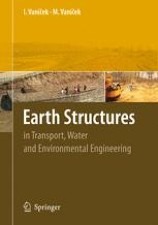
Earth Structures : In Transport, Water and Environmental Engineering
This book describes the principles of working with soil as a construction material, including two basic ways of treating it: geosynthetics and stabilization. The book discusses the design logic and ways to control Earth Structures, which differ significantly from other construction materials. Building with Earth involves greater uncertainty and risk, which means that there is a need for better design detailing and improvement in the quality of financial calculations. The general part of the book gives a detailed description of the principles of limit states according to Eurocode 7, after which geotechnical design is also described. Subsequent chapters concentrate on earth structures for transport, water, and environmental projects. The chapter on Earth Structures in transport engineering presents detailed coverage of limit states of stability and deformation. Earth Structures in water engineering prioritizes the limit state of internal erosion. Earth Structures in environmental engineering describes new designs, in which part of the structure is created from non-standard materials which are usually susceptible to internal collapse, double porosity, unsaturation, etc. It also focuses on protecting the surrounding environment from contamination.
Earth observation science and applications for risk reduction and enhanced resilience in Hindu Kush Himalaya Region : A decade of experience from SERVIR
This book is a consolidation of lessons learnt and experiences gathered from our efforts to utilise Earth observation (EO) science and applications to address environmental challenges in the Hindu Kush Himalayan region.

Early Life Origins of Health and Disease
Early Life Origins of Health and Disease is a new book which presents and discusses the many factors that may have impact on normal development. In a concise and readable manner, the authors consider both the proven and suggestive evidence that the high prevalence of hypertension, diabetes, obesity and, in some populations, kidney disease, may not be all due to genetics or adult environment alone. There is good evidence that stress and more subtle dietary deficiencies, as well as placental malfunction, may increase the risk that the offspring will develop these problems in later life. Finally, new and emerging evidence for other areas of human health and disease such a motor control and mental health is critically reviewed for the first time. The book is a ‘must’ for all scientists interested in researching these areas, as there is a critical evaluation of the methodology used and suggestions for the ‘optimal’ way in which to investigate these phenomena.

Early Childhood Oral Health
Addresses the biology and epidemiology of caries, the clinical management of early childhood caries, risk assessment, and early diagnosis. Other topics include public health approaches to managing caries worldwide, implementation of new caries prevention programs, fluoride regimens, and community programs, and family oral health education. Brand new are four chapters on the medical management of early childhood caries, considerations for children with special needs, interprofessional education and practice, and how the newest policy issues and the Affordable Care Act affect dental care.

Dynamic Methods for Damage Detection in Structures
Presents an overview of dynamic methods for structural health monitoring and damage detection in structures. This book explains both theoretical and experimental aspects of dynamic non-destructive methods and their connection with inverse and identification problems in structural dynamics.

Dynamic Asset Allocation with Forwards and Futures
DYNAMIC ASSET ALLOCATION WITH FORWARD AND FUTURES is an advanced text on the theory of forward and futures markets which aims at providing readers with a comprehensive knowledge of how prices are established and evolve over time, what optimal strategies one can expect from the participants, what characterizes such markets, and what major theoretical and practical differences distinguish futures from forward contracts. The book proposes an approach of these markets from the perspective of dynamic asset allocation and asset pricing theory within an inter-temporal framework. The main ingredients that are used are the assumed absence of frictions and arbitrage opportunities in financial and real markets, the uniqueness of the economic general equilibrium, when such an equilibrium is required and the tools of continuous time finance, namely martingale theory and stochastic dynamic programming. The scope of DYNAMIC ASSET ALLOCATION WITH FORWARD AND FUTURES is essentially theoretical, with emphasis on economic meaning and financial interpretation. Regarding investment and/or hedging, focus is on optimal strategies rather than on actual practice. Simulations, however, are performed when important insights can be delivered as to the practical relevance of some theoretical results. Also, optimal strategies using futures are shown to differ markedly from those using forwards. The following issues are examined: pure hedging, investment and hedging in complete or incomplete markets, currency risk, optimal spreading, presence of stochastic dividend or convenience yields, pricing of non-redundant futures or forwards by means of general equilibrium analysis, and revisiting of existing Capital Asset Pricing Models.

Drug-Induced Oral Complications
Provides detailed information on the prevalence and manifestations of the most important oral complications associated with different drug treatments, focusing especially on recently developed therapies. Among the diverse adverse drug reactions covered are gingival overgrowth, ulcerations, lichenoid reactions, pigmentation, and bullous reactions. The potential direct toxic effects on bone of drugs that prevent bone mass loss, such as bisphosphonates and denosumab, are fully examined, as is the occurrence of spontaneous oral bleeding in patients receiving antithrombotic therapies. Further chapters focus on drug-induced taste disorders and salivary gland disturbances, including xerostomia, swelling, and hypersalivation. The enhanced risk of oral infections when using chemotherapy and biotherapy is addressed, and the closing chapter examines drug-related perioral and facial complications. This book is a collaborative work that brings together clinicians, surgeons, and specialists in drug safety surveillance.

Drug safety evaluation
Presents an all-inclusive practical guide for those who are responsible for developing new drugs and ensuring the safety of an ever-expanding spectrum of therapeutics. This book helps readers understand how the safety of these products are evaluated for use. Extensively revised to reflect up-to-date information, this edition includes changes to the scope of products (vaccines, small synthetic, large protein moieties, cells and tissues), harmonized global and national regulatory requirements, the therapeutic development process, and available technologies to identify and evaluate the relevance of potential patient risks

Drug interactions in infectious diseases : Mechanisms and models of drug interactions
Provides a comprehensive review of basic clinical pharmacology with a focus on metabolism and transporter-mediated drug interactions. The chapters address materials that cannot be retrieved easily in the medical literature, including materials focused on the complex interrelationship of acute infection, inflammation, and the risk of drug interactions in the Drug-Cytokine chapter. The Food-Drug and Herb-Drug interactions chapters remain definitive resources. A new chapter on in vitro modeling of drug interactions is included along with updates on design and data analysis of clinical drug interaction studies. Authoritative discussion of models for regulatory decision-making on drug-drug interactions provides the necessary framework to aid antimicrobial drug development. This concise review of the mechanisms and models of drug interactions provides important insights to health care practitioners as well as scientists in drug development
