



الصفحة 14
الصفحة 14

Location- and Context-Awareness ; Vol. 3987 ; 2nd International Workshop, LoCA 2006, Dublin, Ireland, May 10-11, 2006, Proceedings
Contain the papers presented at the 2 International Workshop on Location- and Context-Awareness in May of 2006. As computing moves increasingly into the everyday world, the importance of location and context knowledge grows. The range of contexts encountered while sitting at a desk working on a computer is very limited compared to the large variety of situations experienced away from the desktop. For computing to be relevant and useful in these situations, the computers must have knowledge of the user’s activity, resources, state of mind, and goals, i.e., the user’s context, of which location is an important indicator. This workshop was intended to present research aimed at sensing, inferring, and using location and context data in ways that help the user.

Location- and context-awareness ; 3rd International Symposium, LoCA 2007, Oberpfaffenhofen, Germany, September 20-21, 2007, Proceedings
These proceedings contain the papers presented at the 3rd International S- posium on Location- and Context-Awareness in September of 2007. Computing has become mobile, wireless, and portable. The rangeof contexts encountered while sitting at a desk working on a computer is very limited c- pared to the large variety of situations experienced away from the desktop.
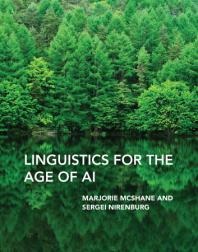
Linguistics for the age of AI
One of the original goals of artificial intelligence research was to endow intelligent agents with human-level natural language capabilities. Recent AI research, however, has focused on applying statistical and machine learning approaches to big data rather than attempting to model what people do and how they do it. In this book, Marjorie McShane and Sergei Nirenburg return to the original goal of recreating human-level intelligence in a machine. They present a human-inspired, linguistically sophisticated model of language understanding for intelligent agent systems that emphasizes meaning—the deep, context-sensitive meaning that a person derives from spoken or written language.

Life as We Know It
Life As we Know It ["LAKI"] covers several aspects of Life, ranging from the prebiotic level, origin of life, evolution of prokaryotes to eukaryotes and finally to various affairs of human beings. Although it is hard to define Life, one can, however, characterize it and describe its features. Topics treated are categories of bacteria, algae and fungi, conscience, philosophy, theology, aesthetics, appearance of sport and life destiny, life after clinical death, and thoughts of the world to come ("Olam Haba"). The various chapters have been written so that they are accessible to all - from the avid lay reader to the specialist – and make available multidisciplinary sources of information about Life. This volume will interest open minded scholars, students at all levels of general sciences, natural and Life science, researchers of philosophy, theology, history of Life, astrobiology, and those who wish to widen their knowledge about "who are we in the universe".

Learning and Intelligent Optimization ; 2nd International Conference, LION 2007 II, Trento, Italy, December 8-12, 2007. Selected Papers
The papers cover current issues of machine learning, artificial intelligence, mathematical programming and algorithms for hard optimization problems and are organized in topical sections on improving optimization through learning, variable neighborhood search, insect colony optimization, applications, new paradigms, cliques, stochastic optimization, combinatorial optimization, fitness and landscapes, and particle swarm optimization.

Lean Brain Management : More Success and Efficiency by Saving Intelligence
Intelligence is wasted on problems that themselves have been caused by an excess of intelligence. Lean Brain Management strives toward uncompromising Lean Brain Quality. Lean Brain stands for consistent economization of intelligence in all realms of life: Intelligent systems will only be operated by unskilled workers. Education, universities, and schools would become obsolete. A week of training would be enough for virtually any job. ("You are now the physician for the measles in the State of Ohio. In response to phone calls, send this prescription.") Lean Brain is not aimed at dumbing down! Lean Brain can survive on just a very small amount of central intelligence. Potential savings amount to trillions! This is demonstrated using Germany as an example. With this book, Dueck presents a radical suggestion for world improvement. The desire to laugh infinitely about it will eventually segue into a collective rude awakening. The book contains concrete advice for managers to economize on intelligence, and is thus--in keeping with the theme--written in an easy-to-read fashion.

Knowledge-Driven Computing : Knowledge Engineering and Intelligent Computations
Knowledge-Driven Computing constitutes an emerging area of intensive research located at the intersection of Computational Intelligence and Knowledge Engineering with strong mathematical foundations. It embraces methods and approaches coming from diverse computational paradigms, such as evolutionary computation and nature-inspired algorithms, logic programming and constraint programming, rule-based systems, fuzzy sets and many others. The use of various knowledge representation formalisms and knowledge processing and computing paradigms is oriented towards the efficient resolution of computationally complex and difficult problems.

Knowledge-Based Virtual Education : User-Centred Paradigms
The book covers a multitude of important issues on the subject of "Innovations in Knowledge-Based Virtual Education ", aiming at researchers and practitioners from academia, industry, and government. The carefully selected contributions report on research, development and real-world experiences of virtual education.

Knowledge-Based Intelligent Information and Engineering Systems ; Vol.3684 : 9th International Conference, KES 2005, Melbourne, Australia, September 14-16, 2005, Proceedings, Part IV
The KES conference series has been established for almost a decade, and it cont- ues each year to attract participants from all geographical areas of the world, including Europe, the Americas, Australasia and the Paci?c Rim. The KES conferences cover a wide range of intelligent systems topics. The broad focus of the conference series is the theory and applications of intelligent systems. From a pure research ?eld, intel- gent systems have advanced to the point where their abilities have been incorporated into many business and engineering application areas. KES 2005 provided a valuable mechanism for delegates to obtain an extensive view of the latest research into a range of intelligent-systems algorithms, tools and techniques. The conference also gave de- gates the chance to come into contact with those applying intelligent systems in diverse commercial areas. The combination of theory and practice represented a unique opp- tunity to gain an appreciation of the full spectrum of leading-edge intelligent-systems activity. The papers for KES 2005 were either submitted to invited sessions, chaired and organized by respected experts in their ?elds, or to a general session, managed by an extensive International Program Committee, or to the Intelligent Information Hiding and Multimedia Signal Processing (IIHMSP) Workshop, managed by an International Workshop Technical Committee.

Knowledge-Based Intelligent Information and Engineering Systems ; Vol.3683 : 9th International Conference, KES 2005, Melbourne, Australia, September 14-16, 2005, Proceedings, Part III
The KES conference series has been established for almost a decade, and it cont- ues each year to attract participants from all geographical areas of the world, including Europe, the Americas, Australasia and the Paci?c Rim. The KES conferences cover a wide range of intelligent systems topics. The broad focus of the conference series is the theory and applications of intelligent systems. From a pure research ?eld, intel- gent systems have advanced to the point where their abilities have been incorporated into many business and engineering application areas. KES 2005 provided a valuable mechanism for delegates to obtain an extensive view of the latest research into a range of intelligent-systems algorithms, tools and techniques. The conference also gave de- gates the chance to come into contact with those applying intelligent systems in diverse commercial areas. The combination of theory and practice represented a unique opp- tunity to gain an appreciation of the full spectrum of leading-edge intelligent-systems activity. The papers for KES 2005 were either submitted to invited sessions, chaired and organized by respected experts in their ?elds, or to a general session, managed by an extensive International Program Committee, or to the Intelligent Information Hiding and Multimedia Signal Processing (IIHMSP) Workshop, managed by an International Workshop Technical Committee.

Knowledge-Based Intelligent Information and Engineering Systems ; Vol.3682 : 9th International Conference, KES 2005, Melbourne, Australia, September 14-16, 2005, Proceedings, Part II
The KES conference series has been established for almost a decade, and it cont- ues each year to attract participants from all geographical areas of the world, including Europe, the Americas, Australasia and the Paci?c Rim. The KES conferences cover a wide range of intelligent systems topics. The broad focus of the conference series is the theory and applications of intelligent systems. rom a pure research ?eld, intel- gent systems have advanced to the point where their abilities have been incorporated into many business and engineering...

Knowledge-Based Intelligent Information and Engineering Systems ; Vol.3681 : 9th International Conference, KES 2005, Melbourne, Australia, September 14-16, 2005, Proceedings, Part I
The KES conferences cover a wide range of intelligent systems topics. The broad focus of the conference series is the theory and applications of intelligent systems. From a pure research ?eld, intel- gent systems have advanced to the point where their abilities have been incorporated into many business and engineering application areas. KES 2005 provided a valuable mechanism for delegates to obtain an extensive view of the latest research into a range of intelligent-systems algorithms, tools and techniques. The conference also gave de- gates the chance to come into contact with those applying intelligent systems in diverse commercial areas. The combination of theory and practice represented a unique opp- tunity to gain an appreciation of the full spectrum of leading-edge intelligent-systems activity. The papers for KES 2005 were either submitted to invited sessions, chaired and organized by respected experts in their ?elds, or to a general session, managed by an extensive International Program Committee, or to the Intelligent Information Hiding and Multimedia Signal Processing (IIHMSP) Workshop, managed by an International Workshop Technical Committee.

Knowledge-Based Intelligent Information and Engineering Systems ; Vol. 4253 ; 10th International Conference, KES 2006, Bournemouth, UK, October 9-11 2006, Proceedings, Part III
Delegates and friends, we are very pleased to extend to you the sincerest of welcomes to this, the 10th International Conference on Knowledge Based and Intelligent Information and Engineering Systems at the Bournemouth International Centre in Bournemouth, UK, brought to you by KES International. This is a special KES conference, as it is the 10th in the series, and as such, it represents an occasion for celebration and an opportunity for reflection. The first KES conference was held in 1997 and was organised by the KES conference founder, Lakhmi Jain. In 1997, 1998 and 1999 the KES conferences were held in Adelaide, Australia. In 2000 the conference moved out of Australia to be held in Brighton, UK; in 2001 it was in Osaka, Japan; in 2002, Crema near Milan, Italy; in 2003, Oxford, UK; in 2004, Wellington, New Zealand; and in 2005, Melbourne, Australia. The next two conferences are planned to be in Italy and Croatia. Delegate numbers have grown from about 100 in 1997, to a regular figure in excess of 500. The conference attracts delegates from many different countries, in Europe, Australasia, the Pacific Rim, Asia and the Americas, and may truly be said to be ‘International’.

Knowledge-Based Intelligent Information and Engineering Systems ; Vol. 4252 ; 10th International Conference, KES 2006, Bournemouth, UK, October 9-11 2006, Proceedings, Part II
Delegates and friends, we are very pleased to extend to you the sincerest of welcomes to this, the 10th International Conference on Knowledge Based and Intelligent Information and Engineering Systems at the Bournemouth International Centre in Bournemouth, UK, brought to you by KES International. This is a special KES conference, as it is the 10th in the series, and as such, it represents an occasion for celebration and an opportunity for reflection. The first KES conference was held in 1997 and was organised by the KES conference founder, Lakhmi Jain. In 1997, 1998 and 1999 the KES conferences were held in Adelaide, Australia.

Knowledge-Based Intelligent Information and Engineering Systems ; Vol. 4251 ; 10th International Conference, KES 2006, Bournemouth, UK, October 9-11 2006, Proceedings, Part I
Delegates and friends, we are very pleased to extend to you the sincerest of welcomes to this, the 10th International Conference on Knowledge Based and Intelligent Information and Engineering Systems at the Bournemouth International Centre in Bournemouth, UK, brought to you by KES International. This is a special KES conference, as it is the 10th in the series, and as such, it represents an occasion for celebration and an opportunity for reflection. The first KES conference was held in 1997 and was organised by the KES conference founder, Lakhmi Jain. In 1997, 1998 and 1999 the KES conferences were held in Adelaide, Australia. In 2000 the conference moved out of Australia to be held in Brighton, UK; in 2001 it was in Osaka, Japan; in 2002, Crema near Milan, Italy; in 2003, Oxford, UK; in 2004, Wellington, New Zealand; and in 2005, Melbourne, Australia. The next two conferences are planned to be in Italy and Croatia. Delegate numbers have grown from about 100 in 1997, to a regular figure in excess of 500. The conference attracts delegates from many different countries, in Europe, Australasia, the Pacific Rim, Asia and the Americas, and may truly be said to be ‘International’.

Knowledge-Based Intelligent Information and Engineering Systems ; 12th International Conference, KES 2008, Zagreb, Croatia, September 3-5, 2008, Proceedings, Part III
Constitutes the refereed proceedings of the 12th International Conference on Knowledge-Based Intelligent Information and Engineering Systems, KES 2008, held in Zagreb, Croatia, in September 2008.The 316 revised papers presented were carefully reviewed and selected. The papers present a wealth of original research results from the field of intelligent information processing in the broadest sense; topics covered in the third volume are intelligent data processing in process systems and plants; neural information processing for data mining; soft computing approach to management engineering; advanced groupware; agent and multi-agent systems.

Knowledge-Based Intelligent Information and Engineering Systems ; 12th International Conference, KES 2008, Zagreb, Croatia, September 3-5, 2008, Proceedings, Part II
The papers present a wealth of original research results from the field of intelligent information processing in the broadest sense; topics covered in the second volume are artificial intelligence driven engineering design optimization; biomedical informatics: intelligent information management from nanomedicine to public health; communicative intelligence; computational intelligence for image processing and pattern recognition; computational intelligence in human cancer research; computational intelligence techniques for Web personalization; computational intelligent techniques for bioprocess modelling, monitoring and control; intelligent computing for Grid.

Knowledge-Based Intelligent Information and Engineering Systems ; 12th International Conference, KES 2008, Zagreb, Croatia, September 3-5, 2008, Proceedings, Part I
The 316 revised papers presented were carefully reviewed and selected. The papers present a wealth of original research results from the field of intelligent information processing in the broadest sense; topics covered in the first volume are artificial neural networks and connectionists systems; fuzzy and neuro-fuzzy systems; evolutionary computation; machine learning and classical AI; agent systems; knowledge based and expert systems; intelligent vision and image processing; knowledge management, ontologies, and data mining; Web intelligence, text and multimedia mining and retrieval; and intelligent robotics and control.

Knowledge-Based Intelligent Information and Engineering Systems ; 11th International Conference, KES 2007, Vietri sul Mare, Italy, September 12-14, 2007, Proceedings, Part III
Annotation The three volume set LNAI 4692, LNAI 4693, and LNAI 4694, constitute the refereed proceedings of the 11th International Conference on Knowledge-Based Intelligent Information and Engineering Systems, KES 2007, held in Vietri sul Mare, Italy, September 12-14, 2007. The papers present a wealth of original research results from the field of intelligent information processing in the broadest sense.

Knowledge-Based Intelligent Information and Engineering Systems ; 11th International Conference, KES 2007, Vietri sul Mare, Italy, September 12-14, 2007, Proceedings, Part II
Annotation The three volume set LNAI 4692, LNAI 4693, and LNAI 4694, constitute the refereed proceedings of the 11th International Conference on Knowledge-Based Intelligent Information and Engineering Systems, KES 2007, held in Vietri sul Mare, Italy, September 12-14, 2007. The papers present a wealth of original research results from the field of intelligent information processing in the broadest sense.
