



الصفحة 14
الصفحة 14

Modellistica Numerica per Problemi Differenziali = Numerical Modeling for Differential Problems
This text introduces the fundamental concepts for the numerical modeling of partial differential problems. We consider the classic linear elliptic, parabolic and hyperbolic equations, but also other equations, such as those of diffusion and transport, of Navier-Stokes, and the conservation laws. Numerous physical examples underlying these equations are provided, their main mathematical properties are studied, then numerical resolution methods based on finite elements, finite differences, finite volumes and spectral methods are proposed and analyzed. In particular, the algorithmic and computer implementation aspects are discussed and some easy-to-use programs in C ++ language are provided. The text does not presuppose an advanced mathematical knowledge of partial differential equations: the strictly indispensable concepts in this regard are reported in the Appendix. The volume is therefore suitable for students of scientific degree courses (Engineering, Mathematics, Physics, Chemistry, Information Sciences) and recommended for researchers from the academic and extra-academic world who want to approach this interesting branch of applied mathematics.

Modelling, Computation and Optimization in Information Systems and Management Sciences ; 2nd International Conference MCO 2008, Metz, France - Luxembourg, September 8-10, 2008. Proceedings
This book constitutes the refereed proceedings of the Second International Conference MCO 2008, Metz, France, September 2008.The 65 revised full papers presented were carefully reviewed and selected from 160 submissions. The papers are organized in topical sections on optimization and decision making; data mining theory, systems and applications; computer vision and image processing; computer communications and networks; optimization and search techniques for security, reliability, trust.

Modelling of Powder Die Compaction
In particular, the book presents a number of case studies that have been developed to test compaction models. Full details of the data required for input to compaction models of these case studies is given, together with a survey of the techniques used to generate the data. Details are also given of methods to produce and assess components for validation of die compaction models. The inclusion of information on case studies then provides a reference for the testing and validation of compaction models.

Modelling Land-Use Change : Progress and Applications
land-use change simulation modelling is a relatively new and dynamic field of study and this book provides a full overview of the topic, a wide range of applications (both geographically and thematically), a mix of theory and practice, a synthesis of recent research progress, and educational material for students and teachers.
Modelling Autonomic Communications Environments ; 3rd IEEE International Workshop, MACE 2008, Samos Island, Greece, September 22-26, 2008. Proceedings
Research and development of autonomics have come a long way, and we are delighted to present the proceedings of the 3rd IEEE International Workshop on Modelling Autonomic Communications Environments (MACE 2008).Asin the last two years, this workshopwasheld aspart of Manweek, the International Week on Management of Networks and Services, which took place on the lovely Island of Samos in Greece .MACE started as anexperimentin2006,andcreatedasmallcommunitythat nowfnds it self attracted backeachyearby afeeling ofexcitement-thatthere is something new going on. Certainly, MACE is not as shiny or practiced as other well-known conferences and workshops, but we consider this a feature of the workshopitself.
Modelling and Reasoning with Vague Concepts
This volume outlines a formal representation framework for modelling and reasoning with vague concepts in Artificial Intelligence. The new calculus has many applications, especially in automated reasoning, learning, data analysis and information fusion. This book gives a rigorous introduction to label semantics theory, illustrated with many examples, and suggests clear operational interpretations of the proposed measures. It also provides a detailed description of how the theory can be applied in data analysis and information fusion based on a range of benchmark problems.

Modelling and Identification with Rational Orthogonal Basis Functions
Models of dynamical systems are of great importance in almost all fields of science and engineering and specifically in control, signal processing and information science.
Modelling and Analysis of Hybrid Supervisory Systems : A Petri Net Approach
Modelling and Analysis of Hybrid Supervisory Systems introduces a modelling formalism that merges Petri nets, differential equation systems and object-oriented methods; a formalism that is adequate for modelling complex and large-scale systems. To guide the designer and conduct hybrid modelling, the book describes a method that starts from the requirements of a supervisory system and results in a proposal for such a system. The method is mainly based on Unified Modelling Language diagrams, well-known tools in both academia and industry. In order to ensure that the supervisory system will behave as expected under any operational circumstances, a validation procedure that allows verification of the formal properties of the hybrid model is presented.

Modeling, Estimation and Control : Festschrift in Honor of Giorgio Picci on the Occasion of his Sixty-Fifth Birthday
Coefficients of Variations in Analysis of Macro-Policy Effects: An example of two-parameter Poisson-Dirichlet distributions.- How Many Experiments Are Needed to Adapt?- A Mutual Information Based Distance for Multivariate Gaussian Processes.- Differential Forms and Dynamical Systems.- An Algebraic Framework for Bayes Nets of Time Series.- A Birds Eye View on System Identification.- Further Results on the Byrnes-Georgiou-Lindquist Generalized Moment Problem.- Factor Analysis and Alternating Minimization.- Tensored PolynomialModels.- Distances Between Time-Series and Their Autocorrelation Statistics.- Global Identifiability of Complex Models, Constructed from Simple Submodels.- Identification of Hidden MarkovModels - Uniform LLN-s.- Identifiability and Informative Experiments in Open and Closed-Loop Identification.- On Interpolation and the Kimura-Georgiou Parametrization.- The Control of Error in Numerical Methods.- Contour Reconstruction and Matching Using Recursive Smoothing Splines.- Role of LQ Decomposition in Subspace Identification Methods.- Canonical Operators on Graphs.
Modeling Semantic Web Services : The Web Service Modeling Language
In this book, Jos de Bruijn and his coauthors lay the foundations for understanding the requirements that shape the description of the various aspects related to Semantic Web services, such as the static background knowledge in the form of ontologies, the functional description of the service, and the behavioral description of the service. They introduce the Web Service Modeling Language (WSML), which provides means for describing the functionality and behavior of Web services, as well as the underlying business knowledge, in the form of ontologies, with a conceptual grounding in the Web Service Modeling Ontology.

Modeling of Soft Matter
Soft matter plays a role in a wide variety of important processes and application. For example, gel swelling and dynamics are an essential part of many biological and individual processes, such as motility mechanisms in bacteria and the transport and absorption of drugs. Ferroelectrics, liquid crystals, and elastomers are being used to design ever faster switching devices. Experimental studies, such as scattering, optical and electron microscopy, have provided a great deal of detailed information on structures. But the integration of mathematical modeling and analysis with experimental approaches promises to greatly increase our understanding of structure-property relationships and constitutive equations. The workshop on Modeling of Soft Matter has taken such an integrated approach.

Modeling Decisions for Artificial Intelligence ; 5th International Conference, MDAI 2008 Sabadell, Spain, October 30-31, 2008. Proceedings
This book constitutes the refereed proceedings of the 5th International Conference on Modeling Decisions for Artificial Intelligence, MDAI 2008, held in Sabadell, Spain, in October 2008.The 19 revised full papers presented together with 2 invited lectures were thoroughly reviewed and selected from 43 submissions; they are devoted to theory and tools for modeling decisions, as well as applications that encompass decision making processes and information fusion techniques. The papers are organized in topical sections on aggregation operators, decision making, clustering and similarity, computational intelligence and optimization, as well as data privacy.
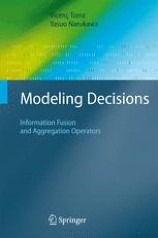
Modeling decisions : Information fusion and aggregation operators
This book covers the underlying science and application issues related to aggregation operators, focusing on tools used in practical applications that involve numerical information. Starting with detailed introductions to information fusion and integration, measurement and probability theory, fuzzy sets, and functional equations.

Modeling Chemical Systems using Cellular Automata
The book will be of great value in undergraduate courses in chemistry, physics, biology, applied mathematics, and bioinformatics, and as a supplement for laboratory courses in introductory chemistry, organic chemistry, physical chemistry, medicinal chemistry, chemical engineering and other courses dealing with statistical and dynamic systems. It allows the exploration of a wide range of dynamic phenomena, many of which are not normally accessible within conventional laboratory settings due to limitations of time, cost, and experimental equipment. The book is both a textbook on applied Cellular Automata and a lab manual for chemistry (physics, engineering) courses with lab activity. It would supplement other lab work and be an additonal book the students would use in the course.

Modeling biological systems : Principles and applications
This extensively revised second edition of Modeling Biological Systems: Principles and Applications describes the essentials of creating and analyzing mathematical and computer simulation models for advanced undergraduates and graduate students. It offers a comprehensive understanding of the underlying principle, as well as details and equations applicable to a wide variety of biological systems and disciplines. Students will acquire from this text the tools necessary to produce their own models. The text contains two major sections: Principles and Applications. The first section discusses the principles of biological systems with a thorough description of the essential modeling activities of formulation, implementation, validation, and analysis. These activities are illustrated by a set of example models taken from recent and classical literature, chosen for their breadth of coverage and current timeliness. The new edition updates extensively many of these topics, especially quantitative model formulation, validation and model discrimination using information theory measures and Bayesian probability, and stability analysis and non-dimensionalization.
Modeling and using context ; 6th International and interdisciplinary Conference, CONTEXT 2007, Roskilde, Denmark, August 20-24, 2007, Proceedings
This volume contains the papers presented at CONTEXT 2007, the Sixth International and Interdisciplinary Conference on Modeling and Using Context. We believe that the papers of this volume represent a snapshot of current work and contribute to both theoretical and applied aspects of research.
Modeling and Using Context ; 5th International and Interdisciplinary Conference, CONTEXT 2005, Paris, France, July 5-8, 2005, Proceedings
Context is of crucial importance for research and applications in many disciplines, as evidenced by many workshops, symposia, seminars, and conferences on specific aspects of context. The International and Interdisciplinary Conference on Modeling and Using Context (CONTEXT), the oldest conference series focusing on context, provides a unique interdisciplinary emphasis, bringing together participants from a wide range of disciplines, including artificial intelligence, cognitive science, computer science, linguistics, organizational science, philosophy, psychology, ubiquitous computing, and application areas such as medicine and law, to discuss and report on context-related research and projects. Previous CONTEXT conferences were held in Rio de Janeiro, Brazil (1997), Trento, Italy (1999, LNCS 1688), Dundee, UK (2001, LNCS 2116), and Palo Alto, USA (2003, LNCS 2680). CONTEXT 2005 was held in Paris, France during July 5–8, 2005. There was a strong response to the CONTEXT 2005 Call for Papers, with 120 submissions received. A careful review process assessed all submissions, with each paper first reviewed by the international Program Committee, and then reviewer discussions were initiated as needed to assure that the final decisions carefully considered all aspects of each paper. Reviews of submissions by the Program Chairs were supervised independently and anonymously, to assure fair consideration of all work. Out of the 120 submissions, 23 were selected as full papers for oral presentation, and 20 were selected as full papers for poster presentation. These outstanding papers are presented in this proceedings.

Modeling and simulation of complex communication networks
Covers important topics and approaches related to the modeling and simulation of complex communication networks from a complex adaptive systems perspective. The authors present different modeling paradigms and approaches as well as surveys and case studies. Modern network systems such as Internet of Things, Smart Grid, VoIP traffic, Peer-to-Peer protocol, and social networks, are inherently complex. They require powerful and realistic models and tools not only for analysis and simulation but also for prediction. With contributions from an international panel of experts, this book is essential reading for networking, computing, and communications professionals, researchers and engineers in the field of next generation networks and complex information and communication systems, and academics and advanced students working in these fields.
Modeling and Retrieval of Context ; 2nd International Workshop, MRC 2005, Edinburgh, UK, July 31-August 1, 2005, Revised Selected Papers
Computing in context has become a necessity in modern and intelligent IT - plications. With the use of mobile devices and current research on ubiquitous computing, context-awareness has become a major issue. However, context and context-awareness are crucial not only for mobile and ubiquitous computing. They are also vital for spanning various application areas, such as collaborative softwareand Web engineering,personaldigital assistantsand peer-to-peer inf- mation sharing, health care work?ow and patient control, and adaptive games and e-learning solutions. In these areas, context serves as a major source for reasoning, decision making, and adaptation, as it covers not only application knowledge but also environmental knowledge.Likewise, modeling and retrieving context is an important part of modern knowledge management processes.
Modeling and Management of Fuzzy Semantic RDF Data
Presents the latest research findings in fuzzy RDF data modeling and management. Fuzziness widely exist in many data and knowledge intensive applications. With the increasing amount of metadata available, efficient and scalable management of massive semantic data with uncertainty is of crucial importance. This book goes to great depth concerning the fast-growing topic of technologies and approaches of modeling and managing fuzzy metadata with Resource Description Framework (RDF) format. Its major topics include representation of fuzzy RDF data, fuzzy RDF graph matching, query of fuzzy RDF data, and persistence of fuzzy RDF data in diverse databases. The objective of the book is to provide the state-of-the-art information to researchers, practitioners, and postgraduates students who work on the area of big data intelligence and at the same time serve as the uncertain data and knowledge engineering professional as a valuable real-world reference.
