



الصفحة 14
الصفحة 14

Flowering Plants. Eudicots: Asterales
This volume contains a complete systematic treatment of the flowering plant order Asterales, comprising 12 families with approx. 1,720 genera and about 26,300 species. The order includes Compositae as the largest family of flowering plants. Based on traditional studies, several of the constituent families have long been recognized as being closely interrelated. The inclusion in the order of Alseuosmiaceae, Argophyllaceae, Carpodetaceae, Phellinaceae and Rousseaceae is the result mainly of new advances in molecular systematics. Identification keys are provided for all genera, and likely phylogenetic relationships are discussed extensively. The wealth of information contained in this volume makes it an indispensable source for all working in the fields of pure and applied plant sciences.

Flowering Plants. Eudicots : Berberidopsidales, Buxales, Crossosomatales, Fabales p.p., Geraniales, Gunnerales, Myrtales p.p., Proteales, Saxifragales, Vitales, Zygophyllales, Clusiaceae Alliance, Passifloraceae Alliance, Dilleniaceae, Huaceae, Picramniaceae, Sabiaceae
In this volume, the ninth of the series, treatments are offered for 52 families containing 432 genera belonging to 13 eudicot orders, many of which have recently been newly designed; four families remain unassigned to order. Emphasis is on the early-diverging eudicots and basal core eudicots the phylogenetic relationships and diversification of which have recently been in focus and are critically discussed. Systematically relevant information includes descriptions of families and genera, keys to the genera, and references to recent revisions. Introductions to the families provide convenient, in-depth overviews of key aspects of systematics. The wealth and precision of information contained in this volume will make it an important source of reference for both the scholar and the practitioner in the fields of pure and applied plant sciences.
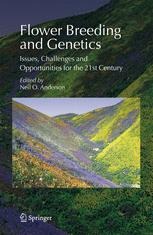
Flower Breeding and Genetics : Issues, Challenges and Opportunities for the 21st Century
This book provides a unique and valuable resource on the many issues and challenges facing flower breeders, as well as the industry at-large. In this volume, the first comprehensive assemblage of its kind, a team of 32 international authorities has contributed to make this book a ‘must-have’ reference to research and develop flower crops for the 21st century consumers. Part 1 of this book (flower breeding program issues) contains unique features of interest to horticultural professionals and students, include coverage of plant protection strategies, cultivar trialing methodology, germplasm collection/preservation, preventing invasiveness, and other timely topics. The collective body of knowledge for 24 flower crops (Part 2: Crop-specific Breeding and Genetics) represents the in-depth science and art of breeding technology available for bedding plants, flowering potted plants, cut flowers, and herbaceous perennials. Each author provides crop-specific history, evolution, biology, taxonomy, state-of-the-art breeding/genetics, classical/molecular technologies, species traits, interspecific hybridization, and directions for future development/enhancement.

Flavours and Fragrances : Chemistry, Bioprocessing and Sustainability
This book is an introduction to the fascinating world of aroma chemicals, essential oils, fragrances and flavour compositions for the food, cosmetics and pharmaceutical industry. The present state-of-the-art technology, the future use of resources and biotechnological approaches for the production of the respective chemical compounds are described. A large section is devoted to the description of the renewable resources of flavours: spice plants, fruits from moderate to tropical climates, vegetables, fermented and heated plants. Analytical methods, such as gas chromatography coupled to human or electronic noses or to a mass spectrometer, are outlined and consumer trends, legal and safety aspects are described. Novel renewable resources come from biotechnology.

First course on fuzzy theory and applications
This basic textbook gives an easily accessible introduction to Fuzzy theory and its applications. It provides basic and concrete concepts of the field in a self-contained, condensed and understandable style. This "First Course on Fuzzy Theory and Applications" includes numerous examples, descriptive illustrations and figures of the basic concepts, as well as exercises at the end of each chapter. The author has long time experience in teaching on fuzzy theory and its applications and continuously developed and summarized his didactic lecture notes into this book. This book can be used in introductory graduate and undergraduate courses in Fuzziness and Soft Computing and is recommendable to students, scientists, engineers, or professionals in the field for self-study.

Fine-Tuning of RNA Functions by Modification and Editing
This book provides advance information on RNA modification, including the associated editing machinery, while offering the reader some perspective on the significance of such modifications in fine-tuning the structure and functions of mature RNA molecules and hence the ability to influence the efficiency and accuracy of genetic expression.

Farewell to the Internal Clock : A contribution in the field of chronobiology
Nearly everything making up what we call the “environment” of a plant has an infuence on the way it grows. Sunlight, te- perature, moisture contents of soil and atmosphere and vib- tions are all obvious examples of environmental components, and transient variations in their amount or intensity lead the plant to manifest more or less immediate responses. Small changes in carbon dioxide level in the atmosphere can even have effects, but these take a longer time to be registered – at least those that are visible, albeit at the microscopic level. Plants meet the challenges of the environment by means of acclimation. In this respect, plants are notable for the pl- ticity of their development. However, where morphological or physiological plasticity is no longer an option, the responses would be by means of adaptations as a result of genetic - lection or genetic “assimilation” (Waddington 1957).

Familial mediterranean fever
Familial Mediterranean Fever (FMF), a genetic disorder causing recurrent inflammatory attacks. It delves into various aspects of FMF, including: Definition and historical background of FMF Underlying causes, signs, and symptoms of the disease Modes of transmission through autosomal recessive inheritance Diagnostic methods encompassing genetic, urine, blood, and imaging tests, emphasizing the significance of early diagnosis The link between FMF and amyloidosis, a serious complication...

Extending the Scalability of Linkage Learning Genetic Algorithms : Theory & Practice
This book aims to gain better understanding of the LLGA in theory and to improve the LLGA's performance in practice. It starts with a survey and classification of the existing genetic linkage learning techniques and describes the steps and approaches taken to tackle the research topics, including using promoters, developing the convergence time model, and adopting subchromosomes. It also provides the experimental results for observation of the linkage learning process as well as for verification of the theoretical models proposed in this study.

Extending the Horizons : Advances in Computing, Optimization, and Decision Technologies
Computer Science and Operations Research continue to have a synergistic relationship and this book represents the results of cross-fertilization between OR/MS and CS/AI. It is this interface of OR/CS that makes possible advances that could not have been achieved in isolation. Taken collectively, these articles are indicative of the state-of-the-art in the interface between OR/MS and CS/AI and of the high caliber of research being conducted by members of the INFORMS Computing Society.

Experimental Glycoscience : Glycobiology
The aim of this book is to provide experimental protocols covering many aspects of glycobiology, glycotechnology, and chemistry: biochemistry, molecular and cellular biology, genetics, physiology, and medicine. The protocols are all self-contained descriptions of the equipment and reagents needed, followed by details of the experimental procedure.

Experimental Glycoscience : Glycobiology
The aim of this book is to provide experimental protocols covering many aspects of glycobiology, glycotechnology, and chemistry: biochemistry, molecular and cellular biology, genetics, physiology, and medicine. The protocols are all self-contained descriptions of the equipment and reagents needed, followed by details of the experimental procedure.

Expanding Horizons in Bioethics
What are the resources and needs, the strengths and the vulnerabilities of patients, of society, or of nature? How do we evaluate the societal potential of scientific discovery? It is fairly well assured that we are influencing the terms of existence of many inhabitants of this planet, from flora to fauna to humans. Moreover, history has shown that while technologies can be used neutrally, they can be (and have been) used to the great benefit – or the great detriment – of human life and the fate of the world as a whole. How various types of knowledge and technological ability will be deployed is up to us, individually and collectively. How such information and ability should be deployed, and for what reasons, are questions at the core of bioethical inquiry. These are the "expanding horizons in bioethics" to which this volume refers. This volume is comprised of fourteen essays. It is a rare gathering of scholarly opinion, featuring well-known experts from a diversity of disciplines. The topics addressed are of immediate concern to the public. The essays ask questions about human nature, genetic technologies, reproductive rights, human subjects research, and environmental issues – all in provocative and challenging new ways. Yet the themes that emerge throughout the volume are of enduring interest to anyone concerned about the interactions of scientific development, ethics, and society. This volume is of interest to students and teachers of bioethics and related topics, as well as to professionals working in these disciplines.

Exogenous and endogenous factors affecting happiness, happy mind, happy life
Emotions are the language of the soul. Our brain is the emotional center where every emotion is produced including happiness. Happiness underlying factors are considerable from two dimensions: endogenous factors and exogenous factors Therefore, this research aimed to consider biological factors that underlie happiness. The research is divided into several sub-groups (brain, genetics, neurotransmitters, endocrinology, hormones, drugs, diseases, and other exogenous factors). In spite of difficulties in finding special genes, several genes distributed to emotion and mood. Neuroscience studies showed that some part of brain (e.g. amygdala, hipocamp and limbic system) and neurotransmitters (e.g. dopamine, serotonin, norepinefrine and endorphin) play a role in control of happiness. A few studies pointed to the role of cortisol and adrenaline (adrenal gland) and oxitocin (pituitary gland) in controlling happiness.

Evolving Connectionist Systems : The Knowledge Engineering Approach
Evolving Connectionist Systems is aimed at all those interested in developing and using intelligent computational models and systems to solve challenging real world problems in computer science, engineering, bioinformatics and neuroinformatics. The book challenges scientists and practitioners with open questions about future creation of new information models inspired by Nature. This edition includes new methods for adaptive, knowledge-based learning, such as online incremental feature selection, spiking neural networks, transductive neuro-fuzzy inference, adaptive data and model integration, cellular automata and artificial life systems, particle swarm optimisation, ensembles of evolving systems, and quantum inspired neural networks. New applications to gene and protein interaction modelling, brain data analysis and brain model creation, computational neuro-genetic modelling, adaptive speech, image and multimodal recognition, language modelling, adaptive robotics, modelling dynamic financial and socio-economic systems, and ecological modelling, are covered. An important new feature of the book is the attempt to connect different structural and functional levels of a complex, intelligent system, looking for inspiration from functional relationships in natural systems, such as the genetic and the brain activity.

Evolvable systems : From biology to hardware ; 7th International Conference, ICES 2007, Wuhan, China, September 21-23, 2007, Proceedings
The 41 revised full papers collected in this volume are organized in topical sections on digital hardware evolution, analog hardware evolution, bio-inspired systems, mechanical hardware evolution, evolutionary design, evolutionary algorithms in hardware design, and hardware implementation of evolutionary algorithms.

Evolvable Machines : Theory & Practice
Methods for the artificial evolution of active components, such as programs and hardware, are rapidly developing branches of adaptive computation and adaptive engineering. "Evolvable Machines" reports innovative and significant progress in automatic and evolutionary methodology applied to machine design. This book presents theoretical as well as practical chapters concentrating on Evolvable Robots, Evolvable Hardware Synthesis, as well as Evolvable Design.

Evolvable Hardware
The contributions in this book provide the basics of reconfigurable devices so that readers will be fully prepared to understand what EHW is, why it is necessary and how it is designed. The book also discusses the leading research in digital, analog and mechanical EHW. Selections from leading international researchers offer examples of cutting-edge research and applications, placing particular emphasis on their practical usefulness.
Evolutionary Synthesis of Pattern Recognition Systems
Evolutionary Synthesis of Pattern Recognition Systems presents novel effective approaches based on evolutionary computational techniques, such as genetic programming (GP), linear genetic programming (LGP), coevolutionary genetic programming (CGP) and genetic algorithms (GA) to automate the synthesis and analysis of object detection and recognition systems. The book’s concepts, principles, and methodologies will enable readers to automatically build robust and flexible systems—in a systematic manner—that can provide human-competitive performance and reduce the cost of designing and maintaining these systems. Its content covers all key aspects of object recognition: object detection, feature selection, feature discovery, object recognition, domain knowledge. Basic knowledge of programming and data structures, and some calculus, is presupposed.ing the book’s novel ideas

Evolutionary Scheduling
Evolutionary scheduling is a vital research domain at the interface of two important sciences - artificial intelligence and operational research. Scheduling problems are generally complex, large scale, constrained, and multi-objective in nature, and classical operational research techniques are often inadequate at solving them effectively. With the advent of computation intelligence, there is renewed interest in solving scheduling problems using evolutionary computational techniques. These techniques, which include genetic algorithms, genetic programming, evolutionary strategies, memetic algorithms, particle swarm optimization, ant colony systems, etc, are derived from biologically inspired concepts and are well-suited to solve scheduling problems since they are highly scalable and flexible in terms of handling constraints and multiple objectives. This edited book gives an overview of many of the current developments in the large and growing field of evolutionary scheduling, and demonstrates the applicability of evolutionary computational techniques to solve scheduling problems, not only to small-scale test problems, but also fully-fledged real-world problems.
