



الصفحة 14
الصفحة 14

Designers' guide to EN 1993-1-1 Eurocode 3 : Design of Steel Structures: General Rules and Rules for Buildings
After some 25 years in preparation, the key parts of EN 1993 Eurocode 3: Design of steel structures have now been finalised.? Designers Guide to EN 1993-1-1 covers many forms of steel construction and provides the most comprehensive and up-to-date set of design guidance currently available.

Designed to perform : an illustrated guide to delivering energy efficient homes
The performance gap between predicted and actual energy use in new homes has been identified as key problem by government and industry experts. Illustrates practical design guide to delivering better energy performance in all types of new build homes. It introduces readers to the concept of the performance gap and highlights clear issues and solutions to help architects improve their detailing at design stage. Features annotated details with photos taken from live construction sites. Includes accessible practical guidance for busy practitioners. Raises construction quality and performance of new homes. Promotes the case for more architect supervision throughout the construction process. Features innovative, low-carbon building methods, including hempcrete blocks, clay blocks and straw bales.

Design to Value : The architecture of holistic design and creative technology
Design to Value is a commitment to process above all else. Well understood and applied in the manufacturing industries, its potential is only now starting to be realised in architecture, engineering and construction. It challenges designers to lead the way in creating more innovative and stakeholder-centric analyses, workflows, construction techniques and products. Through architectural thinking, value in the built environment can be maximised. Seeking to create deep and lasting impacts on industry, society and the planet, Design to Value rejects architecture’s current professional services model. The design and delivery stages of traditional procurement routes are not sustainable, and Design to Value outlines a new path for informed design processes.

Design Technology in Contemporary Architectural Practice
Offers rare insights about how these firms apply technology to purposefully disrupt and support their creative design processes in order to then explore how technology can be integrated on an organisational level. The resulting practice stories are loosely tied to four chapters that discuss how Design Technology corresponds to studio culture, collaboration and delivery protocols, business opportunities, knowledge sharing, staff empowerment, and more. Focused on cultural and organisational challenges and opportunities. This book benefits both the professional market (such as design firms reflecting on their technology use), as well as the academic context (with its critical reflection on the interface between design process and technology support). Stories from the following design firms are included: Coop Himmelb(l)au ; Foster + Partners ; Bjarke Ingels Group (BIG) ; Zaha Hadid Architects ; Diller Scofidio + Renfo ; Heatherwick Studio ; Morphosis Architects ; SO-IL ; Woods Bagot ; Herzog & de Meuron ; LASSA

Design of structural elements : Concrete, steelwork, masonry and timber designs to Eurocodes
Topics include the philosophy of design, sustainable development, basic structural concepts, and material properties. After an overview of structural design, the book contains self-contained chapters with numerous diagrams and worked examples on design in reinforced concrete, structural steelwork and steel/concrete composites, masonry and timber based on EN 1990-1997. Elements considered cover reinforced concrete and composite floors, isolated foundation, cantilever retaining wall, load-bearing and panel walls, stud wall and connections.

Design of steel-concrete composite structures using high-strength materials
Design of Steel-Concrete Composite Structures Using High Strength Materials provides guidance on the design of composite steel-concrete structures using combined high-strength concretes and steels. The book includes a database of over 2,500 test results on composite columns to evaluate design methods, and presents calculations to determine critical parameters affecting the strength and ductility of high-strength composite columns. Finally, the book proposes design methods for axial-moment interaction curves in composite columns. This allows a unified approach to the design of columns with normal- and high-strength steel concrete materials.

Design of Reinforced Concrete Sections Under Bending and Axial Forces : Tables and Charts According to EUROCODE 2
Contains auxiliary calculation tools to facilitate the safety assessment of reinforced concrete sections. Essential parameters in the design to the ultimate limit state of resistance such as the percentage of reinforcement and the position of the neutral axis in concrete cross-sections, as well as the control of the maximum stresses in service limit states are provided by these tools.

Design of Observational Studies
This book introduction to statistical inference in observational studies and a detailed discussion of the principles that guide the design of observational studies. An observational study is an empiric investigation of effects caused by treatments when randomized experimentation is unethical or infeasible. Observational studies are common in most fields that study the effects of treatments on people, including medicine, economics, epidemiology, education, psychology, political science and sociology. The quality and strength of evidence provided by an observational study is determined largely by its design. Design of Observational Studies is organized into five parts. Chapters 2, 3, and 5 of Part I cover concisely many of the ideas discussed in Rosenbaum’s Observational Studies. Part II discusses the practical aspects of using propensity scores and other tools to create a matched comparison that balances many covariates, and includes an updated chapter on matching in R. In Part III, the concept of design sensitivity is used to appraise the relative ability of competing designs to distinguish treatment effects from biases due to unmeasured covariates. Part IV discusses evidence factors and the computerized construction of more than one comparison group. Part V discusses planning the analysis of an observational study, with particular reference to Sir Ronald Fisher’s striking advice for observational studies: "make your theories elaborate."

Design of Integrally-Attached Timber Plate Structures
Outlines a new design methodology for digitally fabricated spatial timber plate structures, presented with examples from recent construction projects. It proposes an innovative and sustainable design methodology, algorithmic geometry processing, structural optimization, and digital fabrication; technology transfer and construction are formulated and widely discussed. The methodology relies on integral mechanical attachment whereby the connection between timber plates is established solely through geometric manipulation, without additional connectors, such as nails, screws, dowels, adhesives, or welding.

Design of industrial structures : Reinforced cement concrete and steel
Bridges the gap between academic and professional field pertaining to design of industrial reinforced cement concrete and steel structures. It covers pertinent topics on contracts, specifications, soil survey and design criteria to clarify objectives of the design work. Further, it gives out guiding procedures on how to proceed with the construction in phases at site, negotiating changes in equipment and design development. Safety, quality and economic requirements of design are explained with reference to global codes. Latest methods of analysis, design and use of advanced construction materials have been illustrated along with a brief on analysis software and drafting tool.

Design of Hybrid Structures : Where Steel Profiles Meet Concrete
Focuses on design approaches for concrete structures reinforced in an unconventional way by steel profiles. It explains force transfer mechanisms of steel profiles and oncrete interfaces, and an analysis of the characteristics of hybrid structures, including slendercomponents. Several types of hybrid designs are addressed: walls and columns with several embedded steel profiles, connections strengthened by steel profiles between steel and composite or reinforced concrete components, including the specific case of shear keys connecting deep beams or flat slabs to columns. The transition zones in partly reinforced concrete and partly composite columns are also covered.
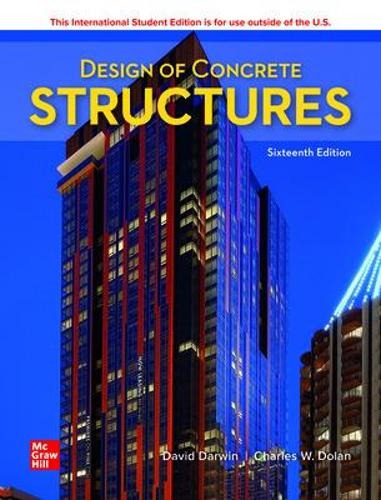
Design of Concrete Structures
Presents the basic mechanics of structural concrete and methods for the design of individual members subjected to bending, shear, torsion, and axial forces. It additionally addresses in detail applications of the various types of structural members and systems, including an extensive presentation of slabs, beams, columns, walls, footings, retaining walls, and the integration of building systems

Design examples for high strength steel reinforced concrete columns : A Eurocode 4 approach
SRC column subjected to axial compression -- SRC column with normal strength material -- SRC column with high strength concrete -- SRC column with high strength steel -- SRC column with high strength concrete and steel -- SRC column subjected to combined compression and bending -- SRC column with normal strength material -- SRC column with high strength concrete -- SRC column with high strength steel -- SRC column

Design build with the scarcity and creativity studio
Scarcity and Creativity Studio has developed a teaching method which reaffirms a commitment to architecture as a service to society, questions the idea of the individual creator in favour of collaborative design, and challenges the traditional master-student relationship. This book documents the projects and, in so doing, explains the practices and pedagogic methods which the studio has developed in relation to architecture education in general and design build education in particular. Aimed at students, teachers, and professionals who are exploring the possibilities of design build, the 16 built projects are fully documented in text, drawings, and photos and can be used as both inspiration and references. Projects are based in Norway, Finland, Chile, Ecuador (Galápagos), Kenya, South Africa, China, Argentina, and Lebanon.

Design applications of raft foundations
Examines alternative design procedures for plain and piled raft foundations. Chapters are written by leading consultants and contractors from around the world who draw on their extensive experience in the UK and overseas. It explores the broad assumptions that are made in the analysis of soil - structure interaction, together with the associated calculation methods. In particular, the book contains extensive references to recent work on the subject, and gives many examples of project applications covering a wide range of structural forms and ground conditions.

Design and Performance of Underground Excavations : ISRM Symposium — Cambridge, U.K., 3–6 September 1984
These proceedings contain the papers presented at the ISRM-sponsored Symposium "The Design and Performance of Underground Excavations" held at Cambridge in England on 3-6 September, 1984. The major themes of the Symposium "Design, Construction and Performance" are addressed by plenary and specialist sessions papers concerning both civil and mining engineering.With contributions from twenty countries, this volume is a rich source of theory and experience for the researcher and practical engineering alike.

Design and Construction of Tunnels : Analysis of controlled deformation in rocks and soils (ADECO-RS)
It uses the advance core (the core of ground ahead of the face) as a structural tool for the long and short term stabilisation of tunnels, after its rigidity has first been regulated using conservation techniques. Tunnels can consequently be driven in difficult stress-strain conditions to predetermined safety standards with operations industrialised and scheduled precisely.

Design Added Value : How Design Increases Value for Architects and Engineers
Enables architects, engineers, contractors and owner-clients of buildings to benefit from extraordinary design and construction features. It explains the rationale and motivation for D-AV methodology, outlines and illustrates this methodology with examples, provides complete and detailed examples of how the key analysis techniques work through historical case studies, and describes specific methods used in application of the D-AV methodology, such as Bayesian statistics, cost benefit analysis, pairwise comparison techniques, cognitive walkthroughs, and optimization.

Dental implants and bone grafts : materials and biological issues
Provides detailed coverage of biomaterials for dental implants and bone graft, enabling scientists and clinicians to gain a thorough knowledge of advances and applications in this field. As tooth loss and alveolar bony defects are common and pose a significant health problem in dental clinics, this book deals with timely topics, including alveolar bone structures and pathological changes, reviews of indications and advantages of biomaterials for dental implants and bone graft, design and surface modification, biological interaction and biocompatibility of modern dental implants and bone graft, and new frontiers.This book is a highly valuable resource for scientists, clinicians and implantologists interested in biomaterial and regenerative strategies for alveolar bone reconstruction.

Deformations of Algebraic Schemes
This study has become increasingly important in algebraic geometry in every context where variational phenomena come into play, and in classification theory, e.g. the study of the local properties of moduli spaces.Today deformation theory is highly formalized and has ramified widely within mathematics. This self-contained account of deformation theory in classical algebraic geometry (over an algebraically closed field) brings together for the first time some results previously scattered in the literature, with proofs that are relatively little known, yet of everyday relevance to algebraic geometers. Based on Grothendieck's functorial approach it covers formal deformation theory, algebraization, isotriviality, Hilbert schemes, Quot schemes and flag Hilbert schemes. It includes applications to the construction and properties of Severi varieties of families of plane nodal curves, space curves, deformations of quotient singularities, Hilbert schemes of points, local Picard functors, etc. Many examples are provided. Most of the algebraic results needed are proved.
