



الصفحة 14
الصفحة 14

Mouse controller using electroencephalography (EEG) device
The growing technologies related to neuroscience has to lead many innovative applications, most importantly Electroencephalography, or EEG for short. This field of study has become recently a trend that many companies around the world have started to enter the race of conquering the brain and controlling everything from a mouse controller to the whole human body. This project aims to help disabled people use a computer with ease and simplicity without needing to use their hands, or anything really, which they can achieve by wearing a headset or get someone to put it on them. The headset is designed to read brain activities and send it to a computer program to understand where the user wants to move the mouse cursor on the computer screen using an Artificial Intelligence model. This project helps further researches in this field which pushes the technology even further from where it is now. The device designed for this project can be repurposed pretty easily to serve many different applications other than controlling a mouse.

Motion-Free Super-Resolution
With the explosion of Internet technology and graphics engines, digital images are now everywhere. Image capturing tools are all pervading - in our pockets to inside a satellite. And although imaging applications demand an availability to high resolution images, such images are not picture perfect and may be lacking sufficient details. This requires that these images be super-resolved for improved details. How to achieve this is what constitutes research in the area of image super-resolution. Motion-Free Super-Resolution explores new technology for image super-resolution - applying cues other than the motion cue in super-resolving a scene. This book will serve as an essential reference for both academecians and practicing engineers in the area of image processing and computer vision, as well as providing a basis for ongoing research in this field.

Motion in Games ; 1st International Workshop, MIG 2008, Utrecht, The Netherlands, June 14-17, 2008. Revised Papers
This book constitutes the thoroughly refereed post-workshop proceedings of the First International Workshop on Motion in Games, held in Utrecht, The Netherlands, during June 14-17, 2008, in collaboration with the NLGD Festival of Games.The 24 revised papers presented during the workshop cover topics on crowd simulation; virtual humans; motion synthesis; interfaces; navigation and steering; and facial and behavioral animation.
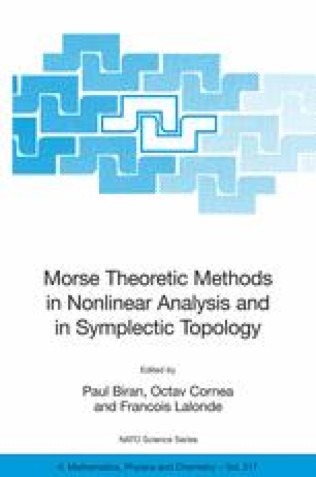
Morse Theoretic Methods in Nonlinear Analysis and in Symplectic Topology
It covered an ample spectrum of subjects which are re ected in the present volume: Morse theory and related techniques in in nite dim- sional spaces, Floer theory and its recent extensions and generalizations, Morse and Floer theory in relation to string topology, generating functions, structure of the group of Hamiltonian difieomorphisms and related dynamical problems, applications to robotics and many others. We thank all our main speakers for their stimulating lectures and all p- ticipants for creating a friendly atmosphere

Morphological Models of Random Structures
This book covers methods of Mathematical Morphology to model and simulate random sets and functions (scalar and multivariate). The introduced models concern many physical situations in heterogeneous media, where a probabilistic approach is required, like fracture statistics of materials, scaling up of permeability in porous media, electron microscopy images (including multispectral images), rough surfaces, multi-component composites, biological tissues, textures for image coding and synthesis. The common feature of these random structures is their domain of definition in n dimensions, requiring more general models than standard Stochastic Processes.The main topics of the book cover an introduction to the theory of random sets, random space tessellations, Boolean random sets and functions, space-time random sets and functions (Dead Leaves, Sequential Alternate models, Reaction-Diffusion), prediction of effective properties of random media, and probabilistic fracture theories.

Monte Carlo Methods in Fuzzy Optimization
This book is a concise and readable introduction to Monte Carlo methods to find good approximate solutions to fuzzy optimization problems. Various basic applications and illustrative examples are presented in an understandable way. The aim of the book is to convince the reader that Monte Carlo methods can be useful in generating approximate solutions to fuzzy optimization problems.

Monte Carlo and Quasi-Monte Carlo Methods 2006
This book represents the refereed proceedings of the Seventh International Conference on Monte Carlo and Quasi-Monte Carlo Methods in Scientific Computing, held in Ulm (Germany) in August 2006. The proceedings include carefully selected papers on many aspects of Monte Carlo and quasi-Monte Carlo methods and their applications, as well as providing information on current research in these very active areas. Besides covering theory, the book is an excellent resource work for practitioners as well.

Moment Analysis for Subsurface Hydrologic Applications
This book deals with the concept of moments, and how they find application in subsurface hydrologic problems-particularly those dealing with solute transport. This book will be very valuable to researchers who are beginning to learn about moment analysis, and will also be of interest to advanced researchers as well. Both temporal and spatial moments are dealt with in some detail for a wide variety of problems. Several examples using experimental data, both from laboratory columns and field experiments, are provided to give the readers a clear idea about the scope of this method. Apart from conventional uses of moments for solute transport problems, this book contains chapters dealing with use of moments in interval computing, vapour phase transport applications, transfer functions to subsurface tile drains, and construction of breakthrough curves from knowledge of moments.

Molluscs : From Chemo-ecological Study to Biotechnological Application
Marine molluscs are very promising candidates for a wide range of biotechnological applications. For example, they possess analgesic drugs more potent than morphine and very effective anticancer agents. The present book gives an up-to-date overview of the main classes of bioactive compounds from molluscs, moving from ecological observations, to chemical characterization, to biosynthesis, to large-scale synthesis, and to pharmacological applications. A truly outstanding international panel of experts from all continents provides complete coverage of the most stimulating topics related to molluscs. This knowledge of their history and current studies provides an open door to the future.

Molecular Materials with Specific Interactions - Modeling and Design
One of the first requirements to initiate the molecular modeling of molecular materials is an accurate and realistic description of the electronic structure, intermolecular interactions and chemical reactions at microscopic and macroscopic scale. Therefore the first four chapters contain an extensive introduction into the latest theories of intermolecular interactions, functional density techniques, microscopic and mezoscopic modeling techniques as well as first-principle molecular dynamics.In the following chapters, techniques bridging microscopic and mezoscopic modeling scales are presented. The authors then illustrate various successful applications of molecular design of new materials, drugs, biocatalysts, etc. before presenting challenging topics in molecular materials design.

Molecular Imaging II
The aim of this textbook of molecular imaging is to provide an up to date review of this rapidly growing field and to discuss basic methodological aspects necessary for the interpretation of experimental and clinical results. Emphasis is placed on the interplay of imaging technology and probe development, since the physical properties of the imaging approach need to be closely linked with the biologic application of the probe (i.e. nanoparticles and microbubbles). Various chemical strategies are discussed and related to the biologic applications. Reporter-gene imaging is beeing addressed not only in experimental protocols, but also first clinical applications are discussed. Finally, strategies of imaging to characterize apoptosis and angiogenesis are described and discussed in the context of possible clinical translation.
Molecular Imaging I
The aim of this textbook of molecular imaging is to provide an up to date review of this rapidly growing field and to discuss basic methodological aspects necessary for the interpretation of experimental and clinical results. Emphasis is placed on the interplay of imaging technology and probe development, since the physical properties of the imaging approach need to be closely linked with the biologic application of the probe (i.e. nanoparticles and microbubbles). Various chemical strategies are discussed and related to the biologic applications. Reporter-gene imaging is being addressed not only in experimental protocols, but also first clinical applications are discussed. Finally, strategies of imaging to characterize apoptosis and angiogenesis are described and discussed in the context of possible clinical translation.

Molecular Imaging ; An Essential Tool in Preclinical Research, Diagnostic Imaging, and Therapy
The continuous progress in the understanding of molecular processes of disease formation and progression attributes an increasing importance to biomedical molecular imaging methods. The purpose of this workshop was to discuss and overview multiple applications and emerging technologies in the area of diagnostic imaging including its fundamental capabilities in preclinical research, the opportunities for medical care, and the options involving therapeutic concepts. The book provides the reader with state-of-the-art information on the different aspects of diagnostic imaging, illuminating new developments in molecular biology, imaging agents and molecular probe design, and therapeutic techniques.

Molecular Imaging : Computer Reconstruction and Practice
This book reports the majority of lectures given during the NATO Advanced Study Institute ASI-982440, which was held at the European Scienti?c Institute of Archamps (ESI, Archamps – France) from November 9 to November 21, 2006. The ASI course was structured in two parts, the ?rst was dedicated to individual imaging techniques while the second is the object of this volume and focused on data modelling and processing and on image archiving and distribution. Courses devoted to nuclear medicine and digital imaging techniques are collected in a c- plementary volume of NATO Science Series entitled “Physics for Medical Imaging Applications”
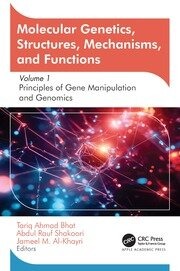
Molecular genetics, structures, mechanisms, and functions : Principles of gene manipulation and genomics ; Vol.1
Provides an overview of the future of genetic engineering and delves into the role of biotechnology and its applications in genetic engineering. It discusses the tools of recombinant technology, which have brought about revolution in our understanding of various complex biological phenomena. Chapters cover mutagenesis, construction, and sequencing of DNA libraries along with applications of genetic engineering for improving health, preventing genetic diseases, enhancing food resources, managing environmental bioremediation, and more. Topics include genetic engineering tools for restriction enzymes and vectors, gene and cell division, mutation detection and screening in plants, population genetics, sexuality in bacteria, and more. Several chapters focus on the tools of recombinant technology, such as restriction enzymes, vectors, etc., that have paved the way for creating organisms of choice and opened new horizons in the field of medicine, agriculture, and industry for human welfare.

Molecular genetics, structures, mechanisms, and functions : Applications and exploring the nucleus ; Vol.2
Continues the coverage of generic engineering, dealing with the concept of genes, their relationship with chromosomes, and their functional manifestation to the benefit of organisms at large and for human in particular. Topics include Mendel’s Laws of Inheritance, which explains the inheritance of traits visible through generations; , genome diversity and evolution genetic protein synthesis, recombination and evolution of DNA, transposable elements in genetics, chromosomal aberrations, and more. The volume also addresses genetic engineering in agricultural science for increased crop yields, to reduce costs for food or drug production, to reduce the need for pesticides, to enhance crop quality, etc.

Molecular Gels : Materials with Self-Assembled Fibrillar Networks
Molecular gels and fibrillar networks – a comprehensive guide to experiment and theory Molecular Gels: Materials with Self-Assembled Fibrillar Networks provides a comprehensive treatise on gelators, especially low molecular-mass gelators (LMOGs), and the properties of their gels. The structures and modes of formation of the self-assembled fibrillar networks (SAFINs) that immobilize the liquid components of the gels are discussed experimentally and theoretically. The spectroscopic, rheological, and structural features of the different classes of LMOGs are also presented. Many examples of the application of the principal analytical techniques for investigation of molecular gels (including SANS, SAXS, WAXS, UV-vis absorption, fluorescence and CD spectroscopies, scanning electron, transmission electron and optical microscopies, and molecular modeling) are presented didactically and in-depth, as are several of the theories of the stages of aggregation of individual LMOG molecules leading to SAFINs. Several actual and potential applications of molecular gels in disparate fields (from silicate replication of nanostructures to art conservation) are described. Special emphasis is placed on perspectives for future developments.

Molecular Gas Dynamics : Theory, Techniques, and Applications
This self-contained work is an up-to-date treatment of the basic theory of molecular gas dynamics and its various applications. Recent progress in the field has greatly enhanced the original theory and stimulated interesting and critical gas dynamic phenomena and problems. This book, unique in the literature, presents working knowledge, theory, techniques, and typical phenomena in rarefied gases for theoretical development and applications.

Molecular Electronics Materials, Devices and Applications
another goal of Molecular Electronics Materials, Devices and Applications is also to promote a practical approach. As a starting point for future developments, a pragmatic methodology for VHDL-AMS device modelling and circuit design based on experimental data is then proposed. It includes an original fault tolerant memory architecture based on molecular electronics.

Molecular docking for computer-aided drug design : Fundamentals, techniques, resources and applications
Molecular Docking for Computer-Aided Drug Design: Fundamentals, Techniques, Resources and Applications offers in-depth coverage on the use of molecular docking for drug design. The book is divided into three main sections that cover basic techniques, tools, web servers and applications. It is an essential reference for students and researchers involved in drug design and discovery.
