



الصفحة 134
الصفحة 134

Machine Learning : ECML 2005 ; 16th European Conference on Machine Learning, Porto, Portugal, October 3-7, 2005, Proceedings
The European Conference on Machine Learning (ECML) and the European Conference on Principles and Practice of Knowledge Discovery in Databases (PKDD) were jointly organized this year for the ?fth time in a row, after some years of mutual independence before. After Freiburg (2001), Helsinki (2002), Cavtat (2003) and Pisa (2004), Porto received the 16th edition of ECML and the 9th PKDD in October 3–7. Having the two conferences together seems to be working well: 585 di?erent paper submissions were received for both events, which maintains the high s- mission standard of last year. Of these, 335 were submitted to ECML only, 220 to PKDD only and 30 to both. Such a high volume of scienti?c work required a tremendous e?ort from Area Chairs, Program Committee members and some additional reviewers. On average, PC members had 10 papers to evaluate, and Area Chairs had 25 papers to decide upon. We managed to have 3 highly qualified independent reviews per paper (with very few exceptions) and one additional overall input from one of the Area Chairs. After the authors’ responses and the online discussions for many of the papers, we arrived at the ?nal selection of 40 regular papers for ECML and 35 for PKDD. Besides these, 32 others were accepted as short papers for ECML and 35 for PKDD. This represents a joint acceptance rate of around 13% for regular papers and 25% overall.
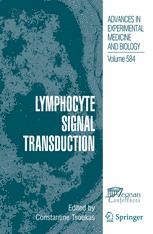
Lymphocyte Signal Transduction
Signal transduction through leukocyte receptors involves a variety of signaling molecules including kinases, phosphatases, adaptor proteins, small GTPases GTP exchange factors, membrane phospholipids as well as others. These signal transducers, regulated by inter- and intra-molecular interactions, as well as by various post-translational modifications, lead to the activation of transcription factors that mediate cellular differentiation and growth, effector cell functions, and apoptotic cell death. Several investigators from various parts of the world convened at the 3rd Lymphocyte Signal Transduction Workshop in Crete, Greece from May 27 to June 1, 2005 to discuss their most recent findings in leukocyte signaling. This volume represents a collection of topics discussed during the conference.
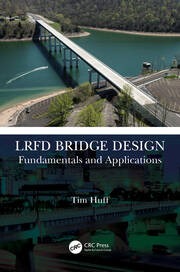
LRFD Bridge Design : Fundamentals and Applications
Examines and explains material from the 9th edition of the AASHTO LRFD Bridge Design Specifications, including deck and parapet design, load calculations, limit states and load combinations, concrete and steel I-girder design, bearing design, and more. With increased focus on earthquake resiliency, two separate chapters– one on conventional seismic design and the other on seismic isolation applied to bridges– will fully address this vital topic. The primary focus is on steel and concrete I-girder bridges, with regard to both superstructure and substructure design. / Includes several worked examples for a project bridge as well as actual bridges designed by the author / Examines seismic design concepts and design details for bridges / Presents the latest material based on the 9th edition of the LRFD Bridge Design Specifications / Covers fatigue, strength, service, and extreme event limit states / Includes numerous solved problems and exercises at the end of each chapter to illustrate the concepts presented
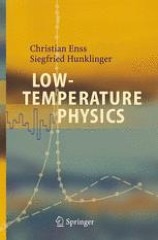
Low-Temperature Physics
This book provides a concise but thorough introduction to important phenomena of low-temperature physics. It is ideally suited as a textbook for advanced undergraduates but will also be valuable for graduate students, scientists and engineers working in this field. Clear explanations of both theoretical and experimental approaches coupled with carefully selected problems will enable students to gain a firm understanding of even the most recent research developments.
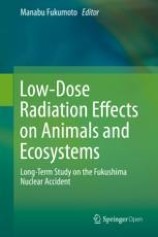
Low-Dose Radiation Effects on Animals and Ecosystems : Long-Term Study on the Fukushima Nuclear Accident
Brings together the works of radiation biologists and ecologists to provide reliable radioecology data and gives insight into future radioprotection. The book examines the environmental pollution and radiation exposure, and contains valuable data from abandoned livestock in the ex-evacuation zone and from wild animals including invertebrates and vertebrates, aqueous and terrestrial animals, and plants that are subjected to long-term exposure in the area still affected by radiation. It also analyzes dose evaluation, and offers new perspectives gained from the accident, as well as an overview for future studies to promote radioprotection of humans and the ecosystem.

Low-Cost Approaches to Promote Physical and Mental Health : Theory, Research, and Practice
Most physical and mental health professionals will agree that their time, space, and funds are generally in short supply, even under optimal conditions. Their participants (clients or patients), too, will admit to similar deficits of time and patience, even with optimal motivation. Overburdened mental health facilities are trying to cope with limited budgets and overworked and underpaid personnel. Low-Cost Approaches to Promote Physical and Mental Health addresses both sides of this shortfall by offering either self-administered or easily administered verbal and non-verbal interventions designed to promote positive health behaviors while requiring little or no outside funding.
Low Power Methodology Manual : For System-on-Chip Design
"Tools alone aren't enough to reduce dynamic and leakage power in complex chip designs - a well-planned methodology is needed. Following in the footsteps of the successful Reuse Methodology Manual (RMM), authors from ARM and Synopsys have written this Low Power Methodology Manual (LPMM) to describe [such] [a] low-power methodology with a practical, step-by-step approach." "Excellent compendium of low-power techniques and guidelines with balanced content spanning theory and practical implementation. The LPMM is a very welcome addition to the field of low power SoC implementation that has for many years operated in a largely ad-hoc fashion."

Low Molecular Mass Gelators : Design, Self-Assembly, Function
Chapter 1 presents the physical principles of the growth mechanism of fiber and fiber network with LMGs, as treated on the basis of the heterogeneous nucleation model. in Chaps. 2 and 3, respectively. These chapters are intended to outline useful synthetic guidelines for the generation of an ever-increasing variety of molecular architectures within these two families of gelators. Recent developments in the chemistry of nucleobase-containing LMGs are described in Chap. 4. Hydrogen-bonding within these molecular systems involves complementary base pair formation, a process relevant to DNA double-helix formation The self-assembly of chiral organo- or hydrogelators is the subject of Chap. 5. result from the orthogonal self-assembly of liquid crystals and LMGs are presented in Chap. 6. The volume concludes with Chap. 7, a review of the emerging field of dendritic gels.

Low impact building : Housing using renewable materials
Guides to the designs, technologies and materials that really make green buildings work will help architects, specifiers and clients make informed choices, based on reliable technical information. Low Impact Building: Housing using Renewable Materials is about changing the way we build houses to reduce their 'carbon' footprint and to minimise environmental damage. One of the ways this can be done is by reducing the energy and environmental impact of the materials and resources used to construct buildings by choosing alternative products and systems. In particular, we need to recognise the potential for using natural and renewable construction materials as a way to reduce both carbon emissions but also build in a more benign and healthy way.
Long-Term Preservation of Digital Documents : Principles and Practices
Key to our culture is that we can disseminate information, and then maintain and access it over time. While we are rapidly advancing from vulnerable physical solutions to superior, digital media, preserving and using data over the long term involves complicated research challenges and organization efforts. Uwe Borghoff and his coauthors address the problem of storing, reading, and using digital data for periods longer than 50 years. They briefly describe several markup and document description languages like TIFF, PDF, HTML, and XML, explain the most important techniques such as migration and emulation, and present the OAIS (Open Archival Information System) Reference Model. To complement this background information on the technology issues the authors present the most relevant international preservation projects, such as the Dublin Core Metadata Initiative, and experiences from sample projects run by the Cornell University Library and the National Library of the Netherlands. A rated survey list of available systems and tools completes the book.
Long-Run Growth Forecasting
Explores how to set up an empirical model that helps with forecasting long-term economic growth in a large number of countries. It offers a systematic approach to models of potential GDP that can also be used for forecasts of more than a decade. It is an attempt to fill the wide gap between the high demand for such models by commercial banks, international organizations, central banks and governments on the one hand and the limited supply on the other hand. Frequent forecast failures in the past (e.g. Japan 1990, Asia 1997) and the heavy economic losses they produced motivated the work. The book assesses the large number of different theories of economic growth, the drivers of economic growth, the available datasets and the empirical methods on offer. A preference is shown for evolutionary models and an augmented Kaldor model. The book uses non-stationary panel techniques to find pair-wise cointegration among GDP per capita and its main correlates such as physical capital, human capital and openness.
Logos of phenomenology and phenomenology of the logos ; Book Two : The Human Condition in-the-Unity-of-Everything-there-is-alive Individuation, Self, Person, Self-determination, Freedom, Necessity
The Human Condition-in-the-unity-of-everything-there-is-alive, under whose aegis the present selection of essays falls, offers the urgently needed new approach to reinvestigating humanness. While recent advances in the neurosciences, genetics and bio-engineering challenge the traditional abstract conception of "human nature", indicating its transformability, thus putting in question the main tenets of traditional philosophical anthropology, in the new perspective of the Human Creative Condition the human individual is seen in its emergence and unfolding within the dynamic networks of the logos of life, and within the evolution of living types.

Logos of phenomenology and phenomenology of the logos ; Book Four : The logos of scientific interrogation, participating in nature-Life-saring in life
Prompted and ever diversified by the specifically human interrogative logos, scientific inquiries seek a common system of links in order to mutually confirm and rectify their results. Coming closer and closer to phenomenology, the sciences of life find the common ground of the reality in the ontopoiesis of life.Could it not be that the interrogative logos of science, participating in human creative inventiveness will bring together also the divergent scientific methods in a common network? A network which comprises natural processes, societal sharing-in-life, and existential communication.

Logos of phenomenology and phenomenology of the logos ; Book Five : The creative logos. aesthetic ciphering in fine arts, literature and aesthetics
Having established in the ontopoiesis/phenomenology of life the creative function of the human being as the fulcrum of our beingness-in-becoming, let us now turn to investigate the creative logos.In this collection, the momentum of a gathering "creative brainstorm" leads to the vertiginous imaginative transformability of the creative logos as it ciphers through the aesthetic sense, the elements of experience – sensing, feeling, emotions, forming – in works of art, thus lifting human experience into spirit and culture.

Logistics Systems Analysis
It has two new sections, a new appendix, and more than half a dozen new figures. A few references have also been added, Much of the new material is based on work , The financial support of the National Science Foundation and the Volvo Foundations Center of Excellence for the Future of Urban Transportation at U. C. Berkeley is also acknowledged. The new appendix presents the logic behind the traveling salesman and vehicle routing results used in Sec. 4. 2 to describe the transportation ope- tion; Chapter 4 is more self-contained as a result. New section 5. 6 int- duces and evaluates a general method that automatically translates the c- tinuum approximation recipes of Chapters 4 and 5 into discrete system designs. This closes a gap in previous editions. Other additions include an explanation of how to develop system designs that can efficiently acc- modate real-time control strategies to manage uncertainty (new section 4. 6. 3), and extensions of the many-to-many design ideas of Chap. 6
Logistics Systems : Design and Optimization
In a context of global competition, the optimization of logistics systems is inescapable. LOGISTICS SYSTEMS: Design and Optimization falls within this perspective and presents twelve chapters that well illustrate the variety and the complexity of logistics activities. Each chapter is written by recognized researchers who have been commissioned to survey a specific topic or emerging area of logistics. The first chapter, by Riopel, Langevin, and Campbell, develops a framework for the entire book. It classifies logistics decisions and highlights the relevant linkages to logistics decisions. The intricacy of these linkages demonstrates how thoroughly the decisions are interrelated and underscores the complexity of managing logistics activities. Each of the following chapters focus on quantitative methods for the design and optimization of logistics systems.

Logical aspects of computational linguistics ; 4th International Conference, LACL 2001, Le Croisic, France, June 27-29, 2001, Proceedings
Structural Equations in Language Learning.- On the Distinction between Model-Theoretic and Generative-Enumerative Syntactic Frameworks.- Contributed Papers.- A Formal Definition of Bottom-Up Embedded Push-Down Automata and Their Tabulation Technique.- An Algebraic Approach to French Sentence Structure.- Deductive Parsing of Visual Languages.- Lambek Grammars Based on Pregroups.- An Algebraic Analysis of Clitic Pronouns in Italian.- Consistent Identification in the Limit of Any of the Classes k-Valued Is NP-hard.- Polarized Non-projective Dependency Grammars.- On Mixing Deduction and Substitution in Lambek Categorial Grammars.- A Framework for the Hyperintensional Semantics of Natural Language with Two Implementations.- A Characterization of Minimalist Languages.- of Speech Tagging from a Logical Point of View.- Transforming Linear Context-Free Rewriting Systems into Minimalist Grammars.- Recognizing Head Movement.- Combinators for Paraconsistent Attitudes.- Combining Syntax and Pragmatic Knowledge for the Understanding of Spontaneous Spoken Sentences.- Atomicity of Some Categorially Polyvalent Modifiers.

Logical approaches to computational barriers ; 2nd Conference on Computability in Europe, CiE 2006, Swansea, UK, June 30-July 5, 2006, Proceedings
The sources of new ideas and methods include practical developments in areas such as neural networks, quantum computation, natural computation, molecular computation, and computational learning. Applications are everywhere, especially, in algebra, analysis and geometry, or data types and programming. This volume, Logical Approaches to Computational Barriers, is the proce- ings of the second in a series of conferences of CiE that was held at the Depa- ment of Computer Science, Swansea University, 30 June - 5 July, 2006.
Logical and Relational Learning
This textbook covers logical and relational learning in depth, and hence provides an introduction to inductive logic programming (ILP), multirelational data mining (MRDM) and (statistical) relational learning (SRL). These subfields of data mining and machine learning are concerned with the analysis of complex and structured data sets that arise in numerous applications, such as bio- and chemoinformatics, network analysis, Web mining, natural language processing, within the rich representations offered by relational databases and computational logic.

Logic, language, information and computation ; 15th International Workshop, WoLLIC 2008 Edinburgh, UK, July 1-4, 2008 Proceedings
The papers cover all pertinent subjects in computer science with particular interest in cross-disciplinary topics. Typical areas of interest are: foundations of computing and programming; novel computation models and paradigms; broad notions of proof and belief; formal methods in software and hardware development; logical approach to natural language and reasoning; logics of programs, actions and resources; foundational aspects of information organization, search, flow, sharing, and protection.
