



الصفحة 133
الصفحة 133

Atmospheric Boundary Layers : Nature, Theory, and Application to Environmental Modelling and Security
This collection of peer reviewed papers represents a concise, up-to-date summary of our current knowledge of planetary boundary layer (PBL) physics and parameterization. As such, it makes a major contribution to the interchange of knowledge and ideas between physicists, meteorologists and environmental modellers and sets out the course to be followed in subsequent research to improve PBL parameterizations in climate, numerical weather prediction, air quality, and emergency preparedness models. Major themes covered are: Nature and theory of turbulent boundary layers, Boundary layer flows - modelling and applications to environmental security, Nature, theory and modelling of boundary-layer flows, and Air flows within and above urban and other complex canopies - air-sea-ice interactions.

Atlas of topographical and pathotopographical anatomy of the head and neck
Presents the ultrasonic topographical and pathotopographical anatomy of the head and neck, offering further detail into these important areas for use by medical professionals. This atlas of topographic and pathotopographic human anatomy is a fundamental and practically important book designed for doctors of all specializations and students of medical schools. Here you can find almost everything that is connected with the topographic and pathotopographic human anatomy, including original graphs of logical structures of topographic anatomy and development of congenital abnormalities, topography of different areas in layers, pathotopography, computer and magnetic resonance imaging (MRI) of topographic and pathotopographic anatomy.

Atlas of Regional Anatomy of the Brain Using MRI : with functional correlations
The volume provides a unique review of the essential topographical anatomy of the brain from an MRI perspective, correlating high-quality anatomical plates with the corresponding high-resolution MRI images. The book includes a historical review of brain mapping and an analysis of the essential reference planes used for the study of the human brain. Subsequent chapters provide a detailed review of the sulcal and the gyral anatomy of the human cortex, guiding the reader through an interpretation of the individual brain atlas provided by high-resolution MRI.

Atlas of Practical Applications of Cardiovascular Magnetic Resonance
The Atlas of Practical Applications of Cardiovascular Magnetic Resonance contains over two hundred illustrations and a Glossary of terms. This atlas will assist cardiologists to determine when a CMR exam is useful for diagnosis and provide details on how to plan and read CMR studies.

Atlas of Operative Oral and Maxillofacial Surgery
Comprised of concise text and detailed vignettes focusing on surgical indications, contraindications, pertinent anatomy, virtual surgical planning, operative techniques, postoperative management, complications and key points with over 2,000 high-quality images. Serves as an innovative, multidisciplinary, surgical atlas covering core aspects of oral and maxillofacial surgery, head and neck reconstructive surgery, and facial cosmetic surgery. Chapters are written by experts in their fields and are designed to provide high-yield information utilizing a case report format.

Atlas of Morphology and Functional Anatomy of the Brain
Divided into a morphological and a functional imaging section. The morphological atlas includes 3D surface images, axial, coronal, and sagittal scans acquired with high-definition T2 fast spin echo (FSE) sequences, and standard and inverted-contrast images. The MR scans are shown side by side with the corresponding anatomical brain sections, provided by Prof. Henri Duvernoy, for more effective comparison. The anatomical nomenclature adopted for both the MR and the anatomical images is listed in an jacket flap for easier consultation.

Atlas of genetic diagnosis and counseling
Many birth defects, although rare individually, are encountered in clinical practice and have now become treatable if properly diagnosed. In the Atlas of Genetic Diagnosis and Counseling, Harold Chen, MD, shares his almost 40 years of clinical genetics practice in a comprehensive pictorial atlas of 203 genetic disorders, malformations, and malformation syndromes. The author provides a detailed outline for each disorder, describing its genetics, basic defects, clinical features, diagnostic tests, and counseling issues, including recurrence risk, prenatal diagnosis, and management. Numerous color photographs of prenatal ultrasounds, imagings, cytogenetics, and postmortem findings illustrate the clinical features of patients at different ages, patients with varying degrees of severity, and the optimal diagnostic strategies. The disorders cited are supplemented by case histories and diagnostic confirmation by cytogenetics, biochemical, and molecular techniques, when available.

Atlas of dermatological conditions in populations of African Ancestry
This book presents the nuances of dermatology from the African diaspora and the tropics. It not only addresses the dark pigmentation of the patient’s skin and the occurrence of tropical infections, but also the socioeconomic conditions which lead to unique features and the development of skin diseases. Chapters present numerous dermatological cases, with clear/relevant pictures, to serve as illustration of how skin conditions present in African/dark skin. Of these specific conditions, the book includes chapters on eczema, bullous diseases, hair disorders, acne, and papulosquamous disorders.

Atlas of clinical hematology
The volume covers all the microscopic methods in hematology that form the basis of diagnosis as well as the results of modern immunologic, cytogenetic and molecular-genetic investigation. Special emphasis is placed on the cytogenetic and molecular-genetic characterization of biological entities that might form the basis for innovative therapies.

Asymmetric Cell Division
Cell biologists have recently become aware that the asymmetry of cell division is an important regulatory phenomenon in the fate of a cell. During development, cell diversity originates through asymmetry; in the adult organism asymmetric divisions regulate the stem cell reservoir and are a source of the drift that contributes to the aging of organisms with renewable cell compartments. Because of the concept of semi-conservative DNA synthesis, it was thought that the distribution of DNA between daughter cells was symmetric. The analysis of the phenomenon in cells during mitosis, however, revealed the asymmetry in the distribution of the genetic material that creates the drift contributing to aging of mammals. On the other hand, cancer cells can originate from a deregulation of asymmetry during mitosis in particular during stem cell expansion. The book describes the phenomenon in different organisms from plants to animals and addresses its implications for the development of the organism, cell differentiation, human aging and the biology of cancers.

Astrophysics Update 2
"Astrophysics Updates" is intended to serve the information needs of professional astronomers and postgraduate students about areas of astronomy, astrophysics and cosmology that are rich and active research spheres. Observational methods and the latest results of astronomical research are presented as well as their theoretical foundations and interrelations. The contributed commissioned articles are written by leading exponents in a format that will appeal to professional astronomers and astrophysicists who are interested in topics outside their own specific areas of research. This collection of timely reviews may also attract the interest of advanced amateur astronomers seeking scientifically rigorous coverage.

Astrophysics : A new approach
For a quantitative understanding of the physics of the universe - from the solar system through the milky way to clusters of galaxies all the way to cosmology - these edited lecture notes are perhaps among the most concise and also among the most critical ones: Astrophysics has not yet stood the redundancy test of laboratory physics, hence should be wary of early interpretations. Special chapters are devoted to magnetic and radiation processes, supernovae, disks, black-hole candidacy, bipolar flows, cosmic rays, gamma-ray bursts, image distortions, and special sources. At the same time, planet earth is viewed as the arena for life, with plants and animals having evolved to homo sapiens during cosmic time. -- This text is unique in covering the basic qualitative and quantitative tools, formulae as well as numbers, needed for the precise interpretation of frontline phenomena in astrophysical research. The author compares mainstream interpretations with new and even controversial ones he wishes to emphasize.
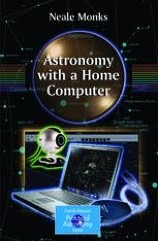
Astronomy with a home computer
Here is a one-volume guide to just about everything computer-related for amateur astronomers!Today’s amateur astronomy is inextricably linked to personal computers. Computer-controlled "go-to" telescopes are inexpensive. CCD and webcam imaging make intensive use of the technology for capturing and processing images. Planetarium software provides information and an easy interface for telescopes. The Internet offers links to other astronomers, information, and software. The list goes on and on.
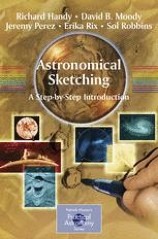
Astronomical sketching : A step-by-step introduction
At some time we have all gazed through the telescope eyepiece at the magnificent rings and banded globe of Saturn, or seen long shadows reaching across crater floors at the Moon’s terminator – and wondered at the sheer beauty of the sight. It seems almost anachronistic to think of sketching when CCD imaging is available, but astronomical sketching provides an entirely different and deeply personal experience. It means spending time at the eyepiece to really look at what you can see, training your eye to perceive ever greater detail to take the fullest advantage of your telescope's light grasp and resolution.

Astrobiology : Future perspectives
Astrobiology, a new exciting interdisciplinary research field, seeks to unravel the origin and evolution of life wherever it might exist in the Universe. The current view of the origin of life on Earth is that it is strongly connected to the origin and evolution of our planet and, indeed, of the Universe as a whole. We are fortunate to be living in an era where centuries of speculation about the two ancient and fundamental problems: the origin of life and its prevalence in the Universe are being replaced by experimental science. The subject of Astrobiology can be approached from many different perspectives. This book is focused on abiogenic organic matter from the viewpoint of astronomy and planetary science and considers its potential relevance to the origins of life on Earth and elsewhere. Guided by the review papers in this book, the concluding chapter aims to identify key questions to motivate future research and stimulate astrobiological applications of current and future research facilities and space missions. Today’s rich array of new spacecraft, telescopes and dedicated scientists promises a steady flow of discoveries and insights that will ultimately lead us to the answers we seek.

Associative and endophytic nitrogen-fixing bacteria and cyanobacterial associations
Associative and Endophytic Nitrogen-fixing Bacteria and Cyanobacterial Associations This book is part of the seven-volume series that was launched a few years ago with the ambitious objectives of reviewing the field of nitrogen fixation from its earliest beginnings through the millennium change and of consolidating the relevant information - from fundamental to agricultural and environmental aspects – all in one place. Volume 5 covers the biology of bacteria that associate with n- leguminous plants. The subject matter includes a wide range of associations; it covers the bacterial species that associate either with the surface or within the tissues of grasses (often referred as plant growth-promoting rhizobacteria) and also the symbiotic associations that cyanobacteria form with fungi, algae, and both lower and higher plants. This volume does not deal with the Frankia-actinorhizal plant associations, which is the topic of Volume 6
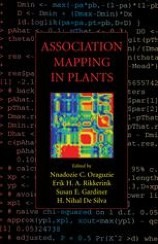
Association Mapping in Plants
For the past decade, there has been success in using conventional map-based strategies in identification and cloning of quantitative trait loci (QTL) in model plant species including tomato and Arabidopsis. These quantitative traits are generally the products of many loci with varying degrees of effect upon the observed phenotypes. Recently, a new approach to genetic mapping has emerged called association mapping. This new technique takes into account the thousands of genes to evaluate for QTL effect and is a more efficient approach that does not require generation of segregating populations/large numbers of progeny. As it can utilize all of the historic recombination events in a diverse population of individuals it can generate higher resolution genetic maps and, is needed to complement current map based cloning methods.

Assessing Quality in European Higher Education Institutions : Dissemination, Methods and Procedures
This book collects the evaluation and accreditation experiences gathered by higher education institutions in Finland, France, Germany, Italy, the Netherlands, Portugal, the United Kingdom and Sweden.

Assembly Line Design : The Balancing of Mixed-Model Hybrid Assembly Lines with Genetic Algorithms
Efficient assembly line design is a problem of considerable industrial importance. Assembly Line Design will be bought by technical personnel working in design, planning and production departments in industry as well as managers in industry who want to learn more about concurrent engineering.

Aspirin and omeprazole pellets
The objective of this study was to combine Aspirin and Omeprazole which are often used together in a singular capsule. Aspirin is a common drug for relieving minor aches, pains, and fevers. People also use it as an anti-inflammatory or a blood thinner. Because of its regular and continuous usage, it may cause peptic ulcers. Peptic ulcers are open sores that develop on the inside lining of your stomach and the upper portion of your small intestine which can be uncomfortable and painful. Consequently, people with ulcers resort to omeprazole to treat them...
