



الصفحة 133
الصفحة 133

A Practical Programming Model for the Multi-Core Era ; 3rd International Workshop on OpenMP, IWOMP 2007, Beijing, China, June 3-7, 2007 Proceedings
This book constitutes the thoroughly refereed post-workshop proceedings of the Third International Workshop on OpenMP, IWOMP 2007, held in Beijing, China, in June 2007.The 14 revised full papers and 8 revised short papers presented were carefully reviewed and selected from 28 submissions. The papers address all topics related to OpenMP, such as OpenMP performance analysis and modeling, OpenMP performance and correctness tools and proposed OpenMP extensions, as well as applications in various domains, e.g., scientific computation, video games, computer graphics, multimedia, information retrieval, optimization, text processing, data mining, finance, signal and image processing, and numerical solvers.
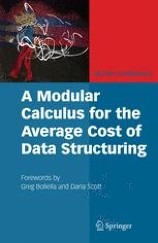
A Modular Calculus for the Average Cost of Data Structuring
This volume, with forewords by Greg Bollella and Dana Scott, presents novel programs based on the new advances in this area, including the first randomness-preserving version of Heapsort. Programs are provided, along with derivations of their average-case time, to illustrate the radically different approach to average-case timing. The automated static timing tool applies the Modular Calculus to extract the average-case running time of programs directly from their MOQA code.
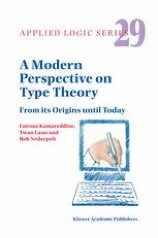
A Modern Perspective on Type Theory : From its Origins until Today
The first part of the book is historical, yet at the same time, places historical systems (like Russell's RTT) in the modern setting. The second part deals with modern type theory as it developed since the 1940s, and with the role of propositions as types (or proofs as terms), but at the same time, places another historical system (the proof checker Automath) in the modern setting. The third part uses this bridging in the first two parts between historical and modern systems to propose new systems that bring more advantages together. This book has much to offer to mathematicians, logicians and to computer scientists in general. It will have considerable influence for many years to come.' - Henk Barendregt
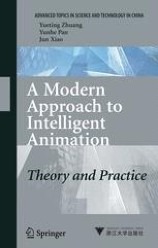
A Modern Approach to Intelligent Animation : Theory and Practice
Part of the new series, Advanced Topics in Science and Technology in China, this book discusses concepts, theory, and core technologies of intelligent theory and human animation, including video based human animation, and intelligent technology of motion data management and reusing. It introduces systems developed to demonstrate the technologies of video based animation. Each chapter is independent. Lively pictures and demos will be presented to make the theory and technologies more understandable.
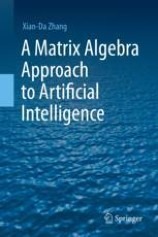
A Matrix Algebra Approach to Artificial Intelligence
The book consists of two parts: the first discusses the fundamentals of matrix algebra in detail, while the second focuses on the applications of matrix algebra approaches in AI. Highlighting matrix algebra in graph-based learning and embedding, network embedding, convolutional neural networks and Pareto optimization theory, and discussing recent topics and advances, the book offers a valuable resource for scientists, engineers, and graduate students in various disciplines
A High-Performance Logical Framework -- All About Maude : How to Specify, Program, and Verify Systems in Rewriting Logic
This book gives a comprehensive account of Maude, a language and system based on rewriting logic. Many examples are used throughout the book to illustrate the main ideas and features of Maude, and its many possible uses. Maude modules are rewrite theories. Computation with such modules is - cient deduction by rewriting. Because of its logical basis and its initial model semantics,aMaude module defines a precise mathematical model.This means that Maude and its formal tool environment can be used in three, mutually reinforcing ways: • as a declarative programming language; • as an executable formal specification language; and • as a formal verification system. Maude’s rewriting logic is simple, yet very expressive. This gives Maude good representational capabilities as a semantic framework to formally represent a wide range of systems, including models of concurrency, distributed al- rithms, network protocols, semantics of programming languages, and models of cell biology. Rewriting logic is also an expressive universal logic,making Maude a fiexible logical framework in which many difierent logics and - ference systems can be represented and mechanized. This makes Maude a useful metatool to build many other tools, including those in its own formal tool environment. Thanks to the logic’s simplicity and the use of advanced semi-compilation techniques, Maude has a high-performance implementation, making it competitive with other declarative programming languages.
A Guide to Graph Algorithms
Offers high-quality content in the research area of graph algorithms and explores the latest developments in graph algorithmics. The reader will gain a comprehensive understanding of how to use algorithms to explore graphs. It is a collection of texts that have proved to be trend setters and good examples of that. The book aims at providing the reader with a deep understanding of the structural properties of graphs that are useful for the design of efficient algorithms. These algorithms have applications in finite state machine modelling, social network theory, biology, and mathematics. The book contains many exercises, some up at present-day research-level. The exercises encourage the reader to discover new techniques by putting things in a clear perspective.
A Graph-Theoretic Approach to Enterprise Network Dynamics
This monograph treats the application of numerous graph-theoretic algorithms to a comprehensive analysis of dynamic enterprise networks. Network dynamics analysis yields valuable information about network performance, efficiency, fault prediction, cost optimization, indicators and warnings.

A Geometry of Approximation : Rough Set Theory: Logic, Algebra and Topology of Conceptual Patterns
A Geometry of Approximation' addresses Rough Set Theory, a field of interdisciplinary research first proposed by Zdzislaw Pawlak in 1982, and focuses mainly on its logic-algebraic interpretation. The theory is embedded in a broader perspective that includes logical and mathematical methodologies pertaining to the theory, as well as related epistemological issues. Any mathematical technique that is introduced in the book is preceded by logical and epistemological explanations. Intuitive justifications are also provided, insofar as possible, so that the general perspective is not lost.

A Course on Mathematical Logic
This is a short, distinctive, modern, and motivated introduction to mathematical logic for senior undergraduate and beginning graduate students in mathematics and computer science. Any mathematician who is interested in knowing what logic is concerned with and who would like to learn Gödel’s incompleteness theorems should find this book particularly convenient. The treatment is thoroughly mathematical, and the entire subject has been approached like a branch of mathematics. Serious efforts have been made to make the book suitable for the classroom as well as for self-reading. The book does not strive to be a comprehensive encyclopedia of logic. Still, it gives essentially all the basic concepts and results in mathematical logic. The book prepares students to branch out in several areas of mathematics related to foundations and computability such as logic, axiomatic set theory, model theory, recursion theory, and computability.
A Concise Introduction to Software Engineering
This text focuses on the essential elements, providing readers with the basic skills and introductory knowledge required to execute a software project successfully.

A Concise Introduction to Mathematical Logic
This book is unique in that it is more concise than most others; the material is treated in a streamlined fashion. This allows the lecturer to select the material for a one-semester course on a topic more easily. These initial chapters cover just the material for an introductory course on mathematical logic combined with the necessary material from set theory. Chapter 3 is partly of a descriptive nature, providing a view towards decision problems, automated theorem proving, non-standard models and related subjects. The other chapters contain material on logic programming for computer scientists, model theory, recursion theory, Gödel's Incompleteness Theorems, and applications of mathematical logic. Philosophical and foundational problems of mathematics are discussed where appropriate.
A Concise Introduction to Languages and Machines
This easy-to-follow text provides an accessible introduction to the key topics of formal languages and abstract machines within Computer Science.
A Concise Introduction to Data Compression
Compressing data is an option naturally selected when faced with problems of high costs or restricted space. Written by a renowned expert in the field, this book offers readers a succinct, reader-friendly foundation to the chief approaches, methods and techniques currently employed in the field of data compression.

A Computer Scientists Guide to Cell Biology
Provides a succinct treatment of the general concepts of cell biology, furnishing the computer scientist with the tools necessary to read and understand current literature in the field.After a brief introduction to cell biology, the text focuses on the principles behind the most-widely used experimental procedures and mechanisms, relating them to well-understood concepts in computer science. The presentation of the material has been prepared for the reader’s quick grasp of the topic: comments on nomenclature and background notes can be ascertained at a glance, and essential vocabulary is boldfaced throughout the text for easy identification.
A Computational Model of Natural Language Communication : Interpretation, Inference, and Production in Database Semantics
Presents a high-level description of an artificial agent which humans can freely communicate with in their accustomed language. Part II analyzes the major constructions of natural language, i.e., intra- and extrapropositional functor - argument structure, coordination, and coreference, in the speaker and the hearer mode. Part III defines declarative specifications for fragments of English, which are used for an implementation in Java.
A Classical Introduction to Cryptography Exercise Book
A Classical Introduction to Cryptography Exercise Book for A Classical Introduction to Cryptography: Applications for Communications Security covers a majority of the subjects that make up today's cryptology, such as symmetric or public-key cryptography, cryptographic protocols, design, cryptanalysis, and implementation of cryptosystems. Exercises do not require a large background in mathematics, since the most important notions are introduced and discussed in many of the exercises.
A Classical Introduction to Cryptography : Applications for Communications Security
This advanced-level textbook covers conventional cryptographic primitives and cryptanalysis of these primitives; basic algebra and number theory for cryptologists; public key cryptography and cryptanalysis of these schemes; and other cryptographic protocols, e.g. secret sharing, zero-knowledge proofs and undeniable signature schemes.
A Brief History of Computing
This text provides a comprehensive introduction to the key topics in the history of computing, in an easy-to-follow and concise manner. It covers the significant areas and events in the field.

6G Mobile Wireless Networks
Specifically, this book covers the following topics: 6G Use Cases, Requirements, Metrics and Enabling Technologies, PHY Technologies for 6G Wireless, Reconfigurable Intelligent Surface for 6G Wireless Networks, Millimeter-wave and Terahertz Spectrum for 6G Wireless, Challenges in Transport Layer for Tbit/s Communications, High-capacity Backhaul Connectivity for 6G Wireless, Cloud Native Approach for 6G Wireless Networks, Machine Type Communications in 6G, Edge Intelligence and Pervasive AI in 6G, Blockchain: Foundations and Role in 6G, Role of Open-source Platforms in 6G, and Quantum Computing and 6G Wireless.
