



الصفحة 13
الصفحة 13
Case-Based Reasoning on Images and Signals
This book is the first edited book that deals with the special topic of signals and images within Case-Based Reasoning (CBR). It offers different learning capabilities, for all phases of a signal-interpreting system, that satisfy different needs during the development process of a signal-interpreting system.
Cardiovascular MRI in practice : A teaching file approach
This text resource outlines the systematic approach to CMR interpretation. The depiction of a "core exam" and the modifications used for a variety of patient circumstances are demonstrated using simple visual assessment of the images. Special emphasis on the advantages of CMR relative to other modalities reinforces practical learning objectives, organized so that the reader starts with patient images – as one would in a clinical scenario – and works back to the didactic material.
Cancer Informatics in the Post Genomic Era : Toward Information-Based Medicine
Medical information science requires analytic tools. This is achieved by developing and assessing methods and systems for the acquisition, processing, and interpretation of patient data, aided by scientific discovery. Cancer Informatics in Post-Genomic Era provides both the necessary methodology and practical information tools.Key challenges include integrating research and clinical care, sharing data, and establishing partnerships within and across sectors of patient diagnosis and treatment.Addressing important clinical questions in cancer research will benefit from expanding computational biology.
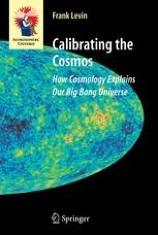
Calibrating the Cosmos : How Cosmology Explains Our Big Bang Universe
Calibrating the Cosmos describes hard science, but is gently written. It explains in clear, non-mathematical language the measurements and the interpretation of the resulting data that have led to the current understanding of the origin, evolution and properties of our expanding Big Bang universe. Many people have a sketchy idea of the work of cosmologists, but Professor Levin’s experience in teaching both scientific and liberal arts students has enabled him to impart much of our current thinking without resorting to difficult mathematics. Theoretical concepts are emphasized, in particular the symmetries of homogeneity and isotropy enjoyed by our universe on the largest scales, how these symmetries lead to only one quantity being needed to describe the growth of the universe from its infancy to the present time, and how the so-called parameters of the universe are the ingredients used to construct the model universes to which ours – the real thing – is compared.

C# 10 Quick Syntax Reference : A Pocket Guide to the Language, APIs, and Library
Reviews the essential C# 10 and earlier syntax, not previously covered, in a well-organized format that can be used as a handy reference. Specifically, unions, generic attributes, CallerArgumentExpression, params span, Records, Init only setters, Top-level statements, Pattern matching enhancements, Native sized integers, Function pointers and more. You will: Employ nullable reference types / Work with ranges and indices / Apply recursive patterns to your applications / Use switch expressions
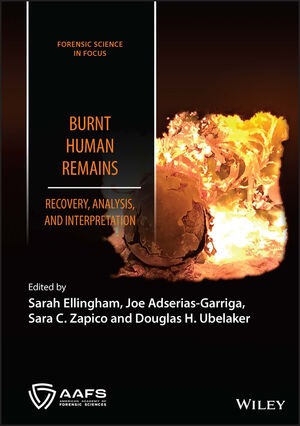
Burnt human remains : Recovery, analysis, and interpretation
Presents an in-depth multidisciplinary approach to the detection, recovery, analysis, and identification of thermally altered remains. Bridging the gap between research and practice, this invaluable one-stop reference provides detailed coverage of analytical techniques in forensic medicine and pathology, forensic anthropology, forensic odontology, and forensic chemistry and forensic biology.

Burket's oral medicine, 13th ed.
"Detailed discussions on: orofacial pain, temporomandibular disorders, headache and salivary gland disease / oral and oropharyngeal cancers, including the management of oral complications of cancer therapy / genetics, laboratory medicine and transplantation medicine pediatric and geriatric oral medicine / psychiatry and psychology / clinical research / and interpreting the biomedical literature"
Building Theories : Architecture as the Art of Building
Discusses the content of treatises, essays, articles, and letters by those who have been, throughout history, committed to the art of building. In this, Building Theories argues for the return of a practice of architectural theory that is set amongst building, buildings, and builders. This journey of close reading reinterprets the words of Vitruvius, Alberti, de L’Orme, Le Camus de Mézières, Boullée, Laugier, Rondelet, Semper, Viollet-le-Duc, Hübsch, Bötticher, Berlage, Muthesius, Wagner, Behrendt, Gropius, and Arup. With chapters dedicated to texts from antiquity, the Renaissance, and the nineteenth century, and with a critical eye on architectural theory popularized in the Anglo-Saxon world post-1968, readers are introduced to a wider, more inclusive definition of architectural ideas.
Building meaning : An architecture studio Primer on design, theory, and history
Introduction to the complex relationship between form making, historical analysis, and conceptual explorations. This book focuses on the relationship and interdependence between design, theory, and history for an innovative and holistic studio approach. Draws from a diverse range of thinkers and designers to highlight the many interpretations of key architectural concepts, and provides readers with the context essential for developing their own approaches to any design problem.
Brand metrics : Measuring brand efficacy along the customer journey
The metrics covered in the book correspond with the customer journey, moving through measuring brand awareness, consideration and purchase, to customer loyalty and brand advocacy, and finally an overall analysis of the brand's strength. The book not only shows the formula for a metric and explains how it should be interpreted, but also considers what each metric really measures, how it impacts the brand's equity and how is it related to other metrics.

Blood traces : Interpretation of deposition and distribution
Blood Traces provides an authoritative resource that reviews many of the aspects of the interpretation of blood traces that have not been treated with the thoroughness they deserve. With strict adherence to the scientific method, the authors — noted experts on the topic — address the complexities encountered when interpreting blood trace configurations. The book provides an understanding of the scientific basis for the use of blood trace deposits, i.e. bloodstain patterns, at crime scenes to better reconstruct a criminal event.
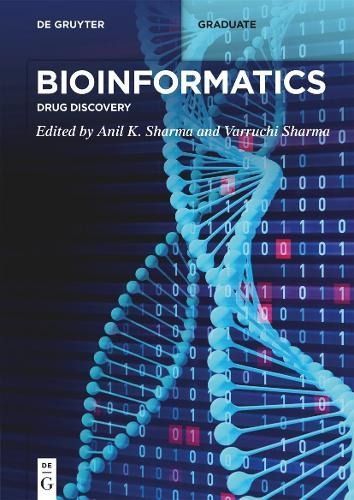
Bioinformatics drug discovery
Quantitative tools are becoming increasingly important in order to understand complex cascade of signal transduction events, pathways or biochemical reactions. The book showcases how computational techniques and algorithms are applied to biological data analysis, interpretation, and modelling. It covers applications in drug design and discovery, immune systems, phylogenetic analysis and protein structures.
Bioinformatics and Computational Biology Solutions Using R and Bioconductor
Bioconductor is a widely used open source and open development software project for the analysis and comprehension of data arising from high-throughput experimentation in genomics and molecular biology. Bioconductor is rooted in the open source statistical computing environment R. This volume's coverage is broad and ranges across most of the key capabilities of the Bioconductor project, including: Importation and preprocessing of high-throughput data from microarray, proteomic, and flow cytometry platforms / Curation and delivery of biological metadata for use in statistical modeling and interpretation. / Statistical analysis of high-throughput data, including machine learning and visualization,modeling and visualization of graphs and networks. This book is a dynamic document. Code underlying all of the computations that are shown is made available on a companion website, and readers can reproduce every number, figure, and table on their own computers.
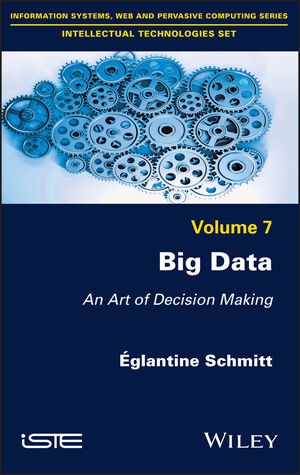
Big Data : An Art of Decision Making
Manipulating and processing masses of digital data is never a purely technical activity. It requires an interpretative and exploratory outlook - already well known in the social sciences and the humanities - to convey intelligible results from data analysis algorithms and create new knowledge. Big Data is based on an inquiry of several years within Proxem, a software publisher specializing in big data processing. The book examines how data scientists explore, interpret and visualize our digital traces to make sense of them, and to produce new knowledge. Grounded in epistemology and science and technology studies, Big Data offers a reflection on data in general, and on how they help us to better understand reality and decide on our daily actions.
Between dirt and discussion : Methods, methodology and interpretation in historical archaeology
The cases presented in this volume revisit old methods and previous scholarly approaches with new perspectives, along with incorporating the newest technologies available to understanding the past.
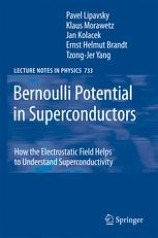
Bernoulli potential in superconductors : How the electrostatic field helps to understand superconductivity
The motion of electrons in superconductors seems to defy our imagination based on daily experience with Newtonian mechanics. This book shows that the classical concepts, such as the balance of forces acting on electrons, are useful for understanding superconductivity. The electrostatic field plays a natural part in this balance as it mediates forces between electrons at long distances. Due to its classical interpretation, the theory presented in this book is suitable for introductory courses.

Beginning PyQt : A hands-on approach to GUI programming with PyQt6
Learn GUI application development from the ground up by building simple projects that teach the fundamentals of using PyQt6. This 2nd edition includes updated code, programs, and new chapters to get you started using the newest version. Taking a practical approach, each chapter will gradually teach more advanced and diverse concepts to aid you in designing and customizing interesting and professional applications. Using this knowledge, you’ll be able to build a photo editor, games, a text editor, a working web browser, and an assortment of other GUIs. In the end, this book will guide you through the process of creating UIs to help you bring your own ideas to life. Find out what you need to begin making your own applications with PyQt! You will: Develop cross-platform UIs with PyQt and Python / Use PyQt’s many widgets and apply them by building real applications / Build larger applications through a step-by-step approach and break the code into smaller chunks for deeper understanding / Work with more complex applications in PyQt, covering SQL databases, multithreading, web browsers, and more / Create modern-looking UIs with Qt Quick and QtQml using the latest version of PyQt

Beginning IntelliJ IDEA : Integrated development environment for Java programming
Shows you how to leverage IntelliJ’s tools to develop clean, efficient Java applications. The last portion of the book focuses on application testing and deployment, and language- and framework- specific guidelines. After reading this book and working through its freely available source code, you'll be up to speed with this powerful IDE for today's Java development. You will: Use IntelliJ IDEA to build Java applications / Set up your IDE and project / Work with source code / Extend your Java application to data science and other kinds of applications / Test and deploy your application and much more
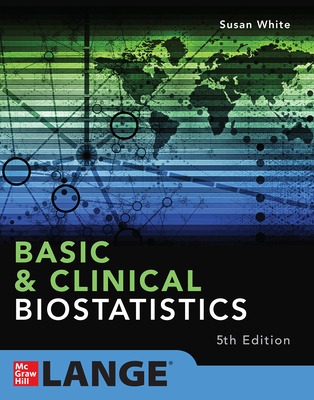
Basic & Clinical Biostatistics
Provides medical students, researchers, and practitioners with the knowledge needed to develop sound judgment about data applicable to clinical care. This fifth edition has been updated throughout to deliver a comprehensive, timely introduction to biostatistics and epidemiology as applied to medicine, clinical practice, and research. Particular emphasis is on study design and interpretation of results of research.
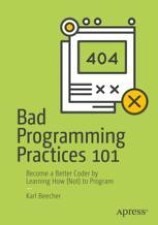
Bad programming practices 101 : Become a better coder by learning how (Not) to program
Takes a humorous slant on the programming practice manual by reversing the usual approach: under the pretence of teaching you how to become the world’s worst programmer who generally causes chaos, the book teaches you how to avoid the kind of bad habits that introduce bugs or cause code contributions to be rejected.
