



الصفحة 13
الصفحة 13

Medicinal plants and antimicrobial therapies
Serves as an excellent comprehensive material covering the current understandings and updates on antimicrobial resistance (AMR) and the use of medicinal plant resources for tackling it. Chapters cover important aspects of AMR and strategies to address this threatening issue with medicinal plants and their resources. One health perspectives for addressing AMR have been presented for the readers. Antimicrobial medicinal plant therapeutic resources including crude extracts, active fractions, pure molecules and essential oils, besides using them as functionalizing agents for nano-antimicrobials have been covered. Further, plant endophytes as a source of antimicrobial compounds have been discussed. Chapters cover both the bactericidal as well as resistance-reversal (or potentiating/ combinatorial therapies) potencies of medicinal plant resources. The book also focuses on how medicinal plant resources effectively target major determinants of AMR.

Medicinal compounds in modern healthcare : From tradition to innovation
Reviews the evolution, development, and application of medicinal compounds, beginning with their historical context and advancing to modern innovations. The book describes the therapeutic potential of bioactive compounds from microorganisms, the role of antioxidants and anti-inflammatory agents in managing chronic diseases, and the use of small molecules in pain management and mental healthcare. It further explores immunomodulatory compounds, epigenetic modifiers, and the latest advancements in drug development, including integrative medicine approaches and the applications of nanotechnology in traditional medicine. Additionally, the book addresses the use of immunomodulatory agents like methotrexate and paclitaxel in cancer treatment, regulatory considerations for ensuring safety and efficacy in medicinal compounds, and the growing field of nutraceuticals. Towards the end, the book covers the extraction, profiling, and ADMET evaluation of medicinal compounds, intellectual property challenges, and the significance of traditional medicine in modern healthcare.

Medical imaging systems : An introductory guide
Gives a complete and comprehensive introduction to the fields of medical imaging systems, as designed for a broad range of applications. The authors of the book first explain the foundations of system theory and image processing, before highlighting several modalities in a dedicated chapter. The initial focus is on modalities that are closely related to traditional camera systems such as endoscopy and microscopy. This is followed by more complex image formation processes: magnetic resonance imaging, X-ray projection imaging, computed tomography, X-ray phase-contrast imaging, nuclear imaging, ultrasound, and optical coherence tomography.

Medical biotechnology, biopharmaceutics, forensic : science and bioinformatics
Covers a range of topics on exploiting Nigeria’s mega biodiversity for food security and health; DNA forensic science and its applications; medical biotechnology and biopharmaceutics; medicinal and underutilized plants; impact and mitigation of antibiotic resistance; bioinformatics applications; medical insect biotechnology; etc. The book will be useful reference material for the scientists and researchers working in the fields of nutraceuticals, molecular diagnostics and DNA forensics, biopharmaceuticals and medical biotechnology, nanotechnology, antimicrobials from indigenous plant species, bioinformatics, etc.

Mechanics of Microelectronics
Written by the leading experts with both profound knowledge and rich practical experience in advanced mechanics and microelectronics industry, this book aims to provide the cutting edge knowledge and solutions for various mechanical related problems, in a systematic way. It contains essential and detailed information about the state-of-the-art theories, methodologies, the way of working and real case studies.

Mechanics of Microelectromechanical Systems
This book offers a comprehensive coverage to the mechanics of microelectromechanical systems (MEMS), which are analyzed from a mechanical engineer’s viewpointelectric energy.
Mechanics and Physics of Fracture : Multiscale Modeling of the Failure Behavior of Solids
Provides a comprehensive understanding of the macroscopic failure behavior of solids from the description of the microscopic failure processes and their coupling with the microstructure. Several fundamental questions were addressed: the relation between the microstructural features of materials and their fracture properties and crack trajectories; the role of damage mechanisms and non-linear deformations near the crack tip on the failure behavior of solids; and finally the role of dynamic inertial effects during fast fracture was more briefly evoked.

Meat Biotechnology
The main goal of this book is to provide the reader with the recent developments in biotechnology and their applications in the meat processing chain. To achieve this goal, the book is divided into four parts. The first part deals with the use of modern biotechnology applied to farm animals. The second part focuses on the recent biotechnological developments in starter cultures for better meat fermentation. The third part discusses current approaches to improve the quality and nutritional properties of meats. The final part presents the latest advances in protection against foodborne pathogens, and other recent trends in the field. Written by distinguished international contributors, this book brings together the advances in such varied and different biotechnological topics

Measuring the Business Value of Cloud Computing
The importance of demonstrating the value achieved from IT investments is long established in the Computer Science (CS) and Information Systems (IS) literature. However, emerging technologies such as the ever-changing complex area of cloud computing present new challenges and opportunities for demonstrating how IT investments lead to business value.
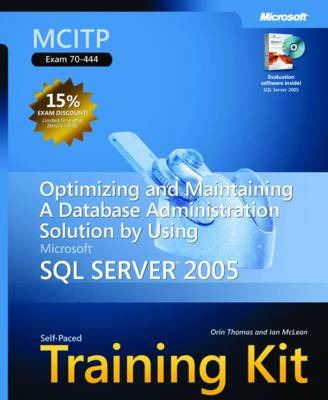
MCITP self-paced training Kit (Exam 70-444) : Optimizing and maintaining a database administration solution microsoft SQL server 2005
Designed to help you make the most of your study time. Maximize your performance on the exam by learning to: * Monitor and troubleshoot queries, databases, and servers * Help defend against injection attacks, denial of service attacks, worms, and viruses * Manage security strategies and perform audits * Detect and resolve data conflicts * Diagnose faults and recover from database failures and disasters * Optimize database availability with failover clustering, database mirroring, log shipping, and replication * Customize a maintenance strategy and automate routine tasks * Build, debug, and deploy SQL Server Integration Services packages PRACTICE TESTS Assess your skills with practice tests on CD. You can work through hundreds of questions using multiple testing modes to meet your specific learning needs. You get detailed explanations for right and wrong answers-including a customized learning path that describes how and where to focus your studies. Your training kit includes: Details inside. * Official self-paced study guide. * Practice tests with multiple, customizable testing options and a learning plan based on your results. *400+ practice and review questions. * Case scenarios, practice exercises, and best practices. *180-day evaluation version of Microsoft SQL Server 2005 Enterprise Edition. * Fully searchable eBook of this guide.

Islamic Philosophy and Occidental Phenomenology on the Perennial Issue of Microcosm and Macrocosm
this volume are reviving the perennial positioning of the human condition in the play of forces within and without the human being. This theme has run from Plato through the Middle Ages, Renaissance and Modernity, and has been ignored by contemporaries. It now acquires a new pertinence and striking significance due to the scientific discoveries into the "infinitely small" in life, on the one hand, and the prodigious technological discoveries of the "infinitely great" on the other. Both open up undreamt-of prospects for the continuing conquest of cosmic forces.

Iron Nutrition in Plants and Rhizospheric Microorganisms
This book uses an interdisciplinary approach to provide a comprehensive review on the status of iron nutrition in plants. International scientists discuss research on acquisition of iron by strategy I and strategy II plants. These reviews summarize a variety of plant species and include both laboratory and field observations. Topics covered in this book include: plants as a source of iron for animals and humans, iron translocation in the plants, iron-stimulated activities that influence crop yield and fruit tree productivity, iron uptake by plants as influenced by microorganisms (i.e. free living soil microorganisms, symbiotic nitrogen-fixing and pathogenic bacteria), the role of plant hormones in iron transport, iron-metal competition in phytoremediation, root zone activities involving interactions between minerals and organic matter, the role of microbial siderophores in rhizospheric iron cycling, iron storage as phytoferritin, proteomic and metabolic studies associated with iron stress response, methods for studying iron metabolism including stable isotopes, and the correction of iron deficiency through the use of synthetic or natural chelates.

Iron metabolism : Methods and protocols
Explores classical and cutting-edge methods optimized and validated to analyze various aspects of iron metabolism, from in vitro to multi-organ level. Opening with a section on basic iron metabolism methods, the book continues with methods applicable to a variety of systems, ranging from bacteria to cultured mammalian cells and tissues, with a focus on cellular heme and iron-sulfur cluster species, as well as mitochondrial iron and its derivatives. Written for the highly successful Methods in Molecular Biology series, chapters include introductions to their respective topics, lists of the necessary materials and reagents, step-by-step and readily reproducible laboratory protocols, and tips on troubleshooting and avoiding known pitfalls.

IOT glass tempering controller
The Internet of things (IoT) subject speaks to a thought for the electronic-mechanical arrangement of devices to detect and gather data from the encompassing environmental factors and a short time later share that data over the Internet where it will, in general, be arranged and utilized for various purposes. This project will show the use of Iot in the process of Harding glass to accomplish a well-tempered glass and solving the problem of arching glass which is caused because of the difference of the temperature in the upper and lower heat, Iot will help in monitoring and controlling the temperature through blynk program.
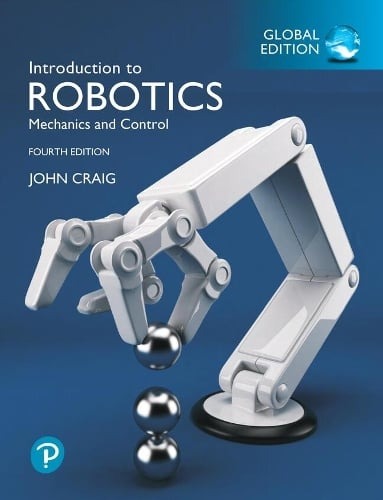
Introduction to robotics : Analysis, control, applications
Offers a guide to the fundamentals of robotics, robot components and subsystems and applications. The author—a noted expert on the topic—covers the mechanics and kinematics of serial and parallel robots, both with the Denavit-Hartenberg approach as well as screw-based mechanics. In addition, the text contains information on microprocessor applications, control systems, vision systems, sensors, and actuators.

Introduction to Reconfigurable Computing : Architectures, Algorithms, and Applications
“Introduction to Reconfigurable Computing” provides a comprehensive study of the field Reconfigurable Computing. It provides an entry point to the novice willing to move in the research field reconfigurable computing, FPGA and system on programmable chip design. The book can also be used as teaching reference for a graduate course in computer engineering, or as reference to advance electrical and computer engineers. It provides a very strong theoretical and practical background to the field of reconfigurable computing, from the early Estrin’s machine to the very modern architecture like coarse-grained reconfigurable device and the embedded logic devices.

Introduction to Ion Beam Biotechnology
It presents treatment of modern ion beam biotechnology and with respect to applications of ion beam bombardment of living cellular material in the hybrid field of ion beam physics and biology.Key Topics include: – Ion beam formation – Ion implantation fundamentals – Interaction between energetic ions and biological organisms – Reaction processes of ion implanted biological small molecules – Damage and repair of ion-bombarded DNA – Cell damage due to ion bombardment – Biological effects of ion implantation – Fundamentals of ion-bombardment-induced genetic variation – Ion beam mutation breeding of crops – Ion beam mutation breeding of microbes – Ion beam induced gene transfer – Ion beam induced synthesis of organic molecules – Single-ion bombardment mutation of cells

Introduction to food chemistry
Bridges this gap in the relevant literature, as it employs the latest pedagogical theories in textbook writing to present the subject to students with broad range of cognitive skills. This book presents specific learning objectives for each chapter and is self-contained so students will not need to search for essential information outside the textbook. This new edition has been expanded to include chapters on sweeteners, glass transition, amino acids, proteins for major food commodities and food additives. All of the original chapters have been updated and expanded to include new research and technologies.
Introduction to Focused Ion Beams : Instrumentation, Theory, Techniques and Practice
Introduction to Focused Ion Beams is geared towards techniques and applications. The first portion of this book introduces the basics of FIB instrumentation, milling, and deposition capabilities. The chapter dedicated to ion-solid interactions is presented so that the FIB user can understand which parameters will influence FIB milling behavior. The remainder of the book focuses on how to prepare and analyze samples using FIB and related tools, and presents specific applications and techniques of the uses of FIB milling, deposition, and dual platform techniques. This is the only text that discusses and presents the theory directly related to applications and the only one that discusses the vast applications and techniques used in FIBs and Dual platform instruments.
Introduction to basics of pharmacology and toxicology ; Vol.3 : Experimental pharmacology : Research methodology and biostatistics
Elaborates on the general principles of experimental pharmacology. Describes about the screening methods for the evaluation of different categories of drugs. Summarizes the various aspects of research methodology and biostatistics.
