



الصفحة 13
الصفحة 13
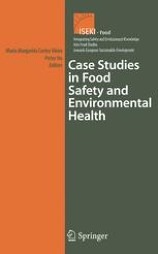
Case Studies in Food Safety and Environmental Health
The ISEKI-Food book series is a collection where various aspects of food safety and environmental issues are introduced and reviewed by scientists specializing in the field. In all of the books a special emphasis is placed on including case studies applicable to each specific topic. The books are intended for graduate students and senior level undergraduate students as well as professionals and researchers interested in food safety and environmental issues applicable to food safety.
Cadmium toxicity : challenges and solutions
Offers a comprehensive collection of review and case chapters that cover cadmium toxicity and remediation. It covers sources of cadmium contamination, its impact on human health, and prospective remediation strategies, taking a multi-disciplinary approach a focus on application of recent advanced biological technology. The chapters here bring together a diverse group of environmental science, sustainability and health researchers to address the challenges caused by cadmium contamination, explaining the routes of exposure to environmental cadmium, how cadmium is transported in ecosystems, and the health risks linked to cadmium exposure in food and the environment.
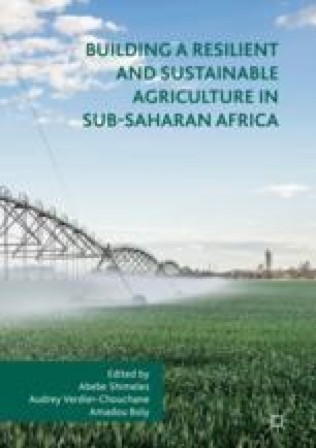
Building a Resilient and Sustainable Agriculture in Sub-Saharan Africa
What are the challenges and action points for agricultural sustainability in Sub-Saharan Africa? This collection of papers offers technical analyses, policy recommendations and an overview of success stories to date. Each carefully selected paper provides valuable insights for improved policy making and defines relevant strategic priorities on Africa’s sustainable transformation process, which is in line with the international development agenda. Although agriculture remains the main source of income for Africa’s population, the sector is rain-fed subjecting it to the vagaries of weather and climate change. This volume demonstrates the rationale of developing a competitive, inclusive and sustainable agribusiness sector for Africa’s food security and structural transformation.

Botox side effect and natural alternatives
Botox is a drug made from a toxin produced by the bacterium Clostridium botulinum. It's the same toxin that causes a life-threatening type of food poisoning called botulism. Doctors use it in small doses to treat health problems. Botox injections work by weakening or paralyzing certain muscles or by blocking certain nerves. The effects last about three to twelve months, depending on what you are treating...
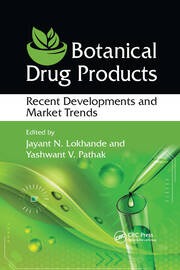
Botanical drug products : Recent developments and market trends
Botanicals, which have been part of human food and medicine for thousands of years, are perceived as being safer than synthetic pharmaceuticals. The global botanical drug market was expected to reach $26.6 billion by 2017. In terms of FDA regulations, botanical drugs are no different from non-botanical products, having to meet the safety and effectiveness standards of a new drug in accordance. This book comprises a complete start-to-end process from drug-idea conception, to drug development process.
Biotechnology for Odor and Air Pollution Control
An international board of authors from universities, research institutes, and industries describe various biotechnological methods ranging from laboratory, to pilot evaluation and to full-scale process implementation. Topics include bioprocesses for the treatment of odors and air pollutants in wastewater treatment plants, rendering plants, chemical production facilities, and food and flavor manufacturing facilities. In addition to the basic microbiological and engineering aspects, the design, modeling and control of bioreactors are also presented.
Bioremediation of Soils Contaminated with Aromatic Compounds
Environmental biotechnology, which was in its infancy in the early 80's, has evolved thanks to the revolution brought about by molecular biology. Multiple successes in the biological cleanup of civil and industrial wastewater and of hydrocarbon soil pollution, demonstrate the vast power of clean technologies. In addition, the buildup of information on the activities of microorganisms as catalysts in all sorts of natural, industrial and animal environments has flourished. There is a continuing realization of the critical role of microbial processes in biological, industrial and geological systems. Since environmental biotechnology has matured, it is ready to tackle bigger challenges: the scaling up of many bioremediation systems still in progress, the search for novel biocatalysts for industrial applications, the continuing effort against common human life-threatening processes such as antibiotic resistance, the accumulation of hormone-mimicking substances (endocrine disrupters), the deposition of air-borne pesticides in the environment and, the degradation of recalcitrant contaminants. These endeavors will help prevent the contamination of food chains, protect human life and allow for human activity and economic development that do not compromise environmental sustainabijity.
Biopolymers in nutraceuticals and functional foods
Comprehensive book covers new applications of biopolymers in the research and development of industrial scale nutraceutical and functional food grade products.
Biomedical applications and toxicity of nanomaterials
Covers the recent trends on the biological applications of nanomaterials, methods for their preparation, and techniques for their characterization. Further, the book examines the fundamentals of nanotoxicity, methods to assess the toxicity of engineered nanomaterials, approaches to reduce toxicity during synthesis. It also provides an overview of the state of the art in the application of Artificial intelligence-based methodologies for evaluation of toxicity of drugs and nanoparticles. The book further discusses nanocarrier design, routes of various nanoparticle administration, nano based drug delivery systems, and the toxicity challenges associated with each drug delivery method. It presents the latest advances in the interaction of nanoparticles with the cellular environment and assess nanotoxicity of these engineered nanoparticles. The book also explores the comparative and mechanistic genotoxicity assessment of the nanomaterials. This book is useful source of information for industrial practitioners, policy makers, and other professionals in the fields of toxicology, medicine, pharmacology, food, and drugs.
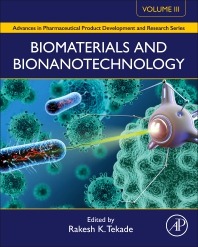
Biomaterials and bionanotechnology ; 1st ed.
Examines the current state of the field within pharmaceutical sciences and concisely explains the history of biomaterials including key developments. Written by experts in the field, this volume within the Advances in Pharmaceutical Product Development and Research series deepens understanding of biomaterials and bionanotechnology within drug discovery and drug development. Each chapter delves into a particular aspect of this fast-moving field to cover the fundamental principles, advanced methodologies and technologies employed by pharmaceutical scientists, researchers and pharmaceutical industries to transform a drug candidate or new chemical entity into a final administrable dosage form, with particular focus on biomaterials and bionanomaterials. This book provides a comprehensive examination suitable for researchers working in the pharmaceutical, cosmetics, biotechnology, food and related industries as well as advanced students in these fields.
Biogeochemistry of Trace Elements in Arid Environments
Global warming has worsened the water resource crisis in many arid zones worldwide, from Africa to Asia, affecting millions of people and putting them at risk of hunger. Effective management of arid zone resources, including understanding the risks of toxic trace and heavy elements to humans, coupled with the need to produce more food to feed the world’s growing population, has thus become increasingly important. This very timely book, the only one of its kind on the market, fills the gap of our knowledge of trace elements in these regions. This book begins by introducing the nature and properties of arid zone soil, followed by an updated overview and comprehensive coverage of the major aspects of the trace elements and heavy metals of most concern in the world’s arid and semi-arid soils. These aspects include: - content and distribution - solution chemistry - solid-phase chemistry - selective sequential dissolution techniques - transfer fluxes - bioavailability - pollution and remediation In order to illustrate the themes, a comprehensive and focused case study on transfer fluxes of trace elements in Israeli arid soils is presented. Finally it closes with the global perspectives on anthropogenic interferences in the natural trace elements’ distribution.
Biofuels, Solar and Wind as Renewable Energy Systems : Benefits and Risks
With shortages of fossil energy, especially oil and natural gas, and heavy biomass energy use occurring in both developed and developing countries, a major focus has developed worldwide on renewable energy systems. Renewable energy systems include wind power, biomass, photovoltaics, hydropower, solar thermal, thermal ponds, and biogas. Currently, a heavy focus is on biofuels made from crops, such as corn, sugarcane, and soybeans, for use as renewable energy sources. Wood and crop residues also are being used as fuel. Though it may seem beneficial to use renewable plant materials for biofuel, the use of crop residues and other biomass for biofuels raises many concerns about major environmental problems, including food shortages and serious destruction of vital soil resources.
Bioeconomy : Shaping the transition to a sustainable, biobased economy
This book defines the new field of "Bioeconomy" as the sustainable and innovative use of biomass and biological knowledge to provide food, feed, industrial products, bioenergy and ecological services. The chapters highlight the importance of bioeconomy-related concepts in public, scientific, and political discourse. Using an interdisciplinary approach, the authors outline the dimensions of the bioeconomy as a means of achieving sustainability.
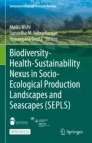
Biodiversity-health-sustainability Nexus in socio-ecological production landscapes and seascapes (SEPLS)
It is a compilation of case studies that provide useful knowledge and lessons that derive from on-the-ground activities and contribute to policy recommendations, focusing on the interlinkages between biodiversity and multiple dimensions of health (e.g., physical, mental, and spiritual) in managing socio-ecological production landscapes and seascapes (SEPLS). This book provides insights on how SEPLS approaches can contribute to more sustainable management of natural resources, achieving global biodiversity and sustainable development goals, and good health for all. It is also expected to offer useful knowledge and information for an upcoming three-year thematic assessment of “the interlinkages among biodiversity, water, food, and health” (the so-called “nexus assessment”) by the Intergovernmental Science-Policy Platform on Biodiversity and Ecosystem Services (IPBES). The book begins with an introductory chapter followed by eleven case study chapters demonstrating the nexus between biodiversity, health, and sustainable development, and then a synthesis chapter clarifying the relevance of the case study findings to policy and academic discussions. It will be of interest to scholars, policymakers, and professionals in the field related to sustainable development.
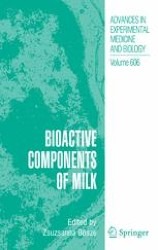
Bioactive components of milk
Of all food products dairy foods have the most potential concerning functional foods. Therefore, there is a tremendous amount of interest in value-added milk products and the identification of components in food which have health benefits. Bioactive Components of Milk provides an overview of these derived components and their diverse activities including: the stimulation of beneficial microflora, alerting the immune system to the presence of potential pathogens and allergens, binding and eliminating toxins, etc. The book is divided into four parts. The first part focuses on bioactive milk lipid components, which very widely among mammalian species. The second part describes different aspects of biological active colostrums and milk proteins and their derivatives, with special concern on species specific effects. The third part reviews the production of recombinant human proteins in the milk of livestock animals - including ethical issues - and the aims of altering milk composition for the benefit of both the animals themselves and the consumers. The final part focuses on the influence of ruminants nutrition on the biological activity of milk.
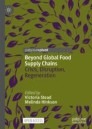
Beyond global food supply chains : Crisis, disruption, regeneration
Through a set of incisive essays, this incredibly timely book shows how much the COVID-19 pandemic has exposed both vulnerabilities and opportunities - for (racial) capitalism and its discontents alike to intervene in food supply chains. A most welcome publication! This book takes the upheaval of the global COVID-19 pandemic as a springboard from which to interrogate a larger set of structural, environmental and political fault lines running through the global food system. In a context in which disruptions to the production, distribution, and consumption of food are figured as exceptions to the smooth, just-in-time efficiencies of global supply chains, these essays reveal the global food system as one that is inherently disruptive of human lives and flourishing, and of relationships between people, places, and environments. The pandemic thus represents a particular, acute moment of disruption, offering a lens on a deeper, longer set of systemic processes, and shining new light on transformational possibilities.
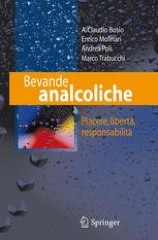
Bevande analcoliche : Piacere, libertá, responsabilitá = Non-alcoholic drinks : Pleasure, freedom, responsibility
The increase in physical activity and responsible moderation in the intake of food and drinks represent the best strategy to control the phenomenon of obesity in our society.
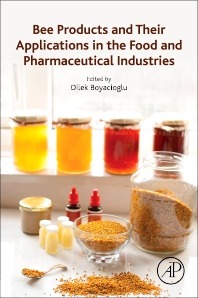
Bee products and their applications in the food and pharmaceutical industries ; 1st ed.
Focuses on the health benefits of selected bee products by looking more closely at their pharmacological potentials and therapeutic applications in coping with various diseases. The book explores some of these products, such as royal jelly, propolis and bee venom, which is highly attractive to the food supplement sector due to the biological actions that are proved by scientific studies. Bee products also attract the cosmetics industry by utilizing those products in various applications such as hair products, toothpaste, sunscreen creams, lip balsams, or facial moisturizing creams. Each chapter focuses on a particular health benefit, providing more compact and detailed information about each activity for a specific interest. The mainframe of the book is based on the medicinal and pharmacological functions of bee products, with the therapeutic applications for each bee product supporting the mechanism of action of their biological functions.
Basic methods and protocols on Sourdough
Details traditional and modern approaches to characterize sourdough and to monitor its features during production, propagation and use, through state-of- the art analytical tools. Chapters guide reader through procedures to prepare and propagate the mature sourdough, to analyse and monitor microbiological, biochemical and rheology features of sourdough, sensory, and nutritional attributes of baked goods. Written in the format of the Methods and Protocols in Food Science series, chapters list necessary materials and methods for readily reproducible protocols.

Baby milk in Syria
Breastfeeding is one of the most effective ways to ensure child health and survival. However, contrary to WHO recommendations, fewer than half of infants under 6 months old are exclusively breastfed. Infant formulas are liquids or reconstituted powders fed to infants and young children to serve as substitutes for human milk. Infant formulas have a special role in the diet because they are the only source of nutrients for some infants...
