



الصفحة 13
الصفحة 13

Modeling of Soft Matter
Soft matter plays a role in a wide variety of important processes and application. For example, gel swelling and dynamics are an essential part of many biological and individual processes, such as motility mechanisms in bacteria and the transport and absorption of drugs. Ferroelectrics, liquid crystals, and elastomers are being used to design ever faster switching devices. Experimental studies, such as scattering, optical and electron microscopy, have provided a great deal of detailed information on structures. But the integration of mathematical modeling and analysis with experimental approaches promises to greatly increase our understanding of structure-property relationships and constitutive equations. The workshop on Modeling of Soft Matter has taken such an integrated approach.

Modeling of metal forming and machining processes : By finite element and soft computing methods
The physics of metal forming and metal removing is normally expressed using non-linear partial differential equations which can be solved using the finite element method (FEM). However, when the process parameters are uncertain and/or the physics of the process is not well understood, soft computing techniques can be used with FEM or alone to model the process.
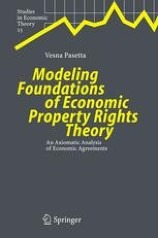
Modeling Foundations of Economic Property Rights Theory : An Axiomatic Analysis of Economic Agreements
The idea is to construct a kind of mathematical application in which any fundamental formal entity and/or operation has an empirical economic interpretation. This approach is seen as a way to cope with an extreme c- plexity of economic phenomena under consideration and requests for precise formulationofmodelswheremeaningfulanswersandsolutionsofproblemsare only those which are obtained rigorously. The proposed extensions in ma- ematical economics and property rights theory are to provide rich enough foundations to follow complexity of economic property rights in the exact way, and to identify where there is an appropriate method providing a- quate solution, and also to ?nd problems where in general there is no such methodology.

Modeling Excitable Tissue : The EMI Framework
This volume presents a novel computational framework for understanding how collections of excitable cells work. The key approach in the text is to model excitable tissue by representing the individual cells constituting the tissue. This is in stark contrast to the common approach where homogenization is used to develop models where the cells are not explicitly present. The approach allows for very detailed analysis of small collections of excitable cells, but computational challenges limit the applicability in the presence of large collections of cells.
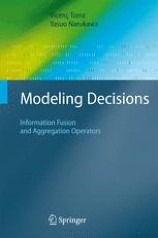
Modeling decisions : Information fusion and aggregation operators
This book covers the underlying science and application issues related to aggregation operators, focusing on tools used in practical applications that involve numerical information. Starting with detailed introductions to information fusion and integration, measurement and probability theory, fuzzy sets, and functional equations.

Modeling biological systems : Principles and applications
This extensively revised second edition of Modeling Biological Systems: Principles and Applications describes the essentials of creating and analyzing mathematical and computer simulation models for advanced undergraduates and graduate students. It offers a comprehensive understanding of the underlying principle, as well as details and equations applicable to a wide variety of biological systems and disciplines. Students will acquire from this text the tools necessary to produce their own models. The text contains two major sections: Principles and Applications. The first section discusses the principles of biological systems with a thorough description of the essential modeling activities of formulation, implementation, validation, and analysis. These activities are illustrated by a set of example models taken from recent and classical literature, chosen for their breadth of coverage and current timeliness. The new edition updates extensively many of these topics, especially quantitative model formulation, validation and model discrimination using information theory measures and Bayesian probability, and stability analysis and non-dimensionalization.

Modeling and Simulation in Scilab
Scilab is a free open-source software package for scientific computation. It includes hundreds of general purpose and specialized functions for numerical computation, organized in libraries called toolboxes, which cover such areas as simulation, optimization, systems and control, and signal processing. One important Scilab toolbox is Scicos. Scicos provides a block diagram graphical editor for the construction and simulation of dynamical systems. The objective of this book is to provide a tutorial for the use of Scilab/Scicos with a special emphasis on modeling and simulation tools. The book is divided into two parts. The first part concerns Scilab and includes a tutorial covering the language features, the data structures and specialized functions for doing graphics, importing, exporting data and interfacing external routines. It also covers in detail Scilab numerical solvers for ordinary differential equations and differential-algebraic equations. Even though the emphasis is placed on modeling and simulation applications, this part provides a global view of Scilab. The second part is dedicated to modeling and simulation of dynamical systems in Scicos. This type of modeling tool is widely used in industry because it provides a means for constructing modular and reusable models. This part contains a detailed description of the editor and its usage, which is illustrated through numerous examples.
Modeling and Management of Fuzzy Semantic RDF Data
Presents the latest research findings in fuzzy RDF data modeling and management. Fuzziness widely exist in many data and knowledge intensive applications. With the increasing amount of metadata available, efficient and scalable management of massive semantic data with uncertainty is of crucial importance. This book goes to great depth concerning the fast-growing topic of technologies and approaches of modeling and managing fuzzy metadata with Resource Description Framework (RDF) format. Its major topics include representation of fuzzy RDF data, fuzzy RDF graph matching, query of fuzzy RDF data, and persistence of fuzzy RDF data in diverse databases. The objective of the book is to provide the state-of-the-art information to researchers, practitioners, and postgraduates students who work on the area of big data intelligence and at the same time serve as the uncertain data and knowledge engineering professional as a valuable real-world reference.
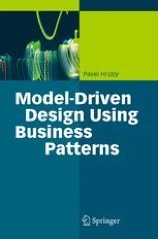
Model-Driven Design Using Business Patterns
This book takes exactly this step: it shows you how to apply the pattern ideas in business applications and presents more than 20 structural and behavioral business patterns that use the REA (resources, events, agents) pattern as a common backbone. If you are a developer working on business frameworks, you can use the patterns presented to derive the right abstractions (e.g., business objects) and to design and ensure that the meta-rules (e.g., process patterns) are followed by the developers of the actual applications. And if you are an application developer, you can use these patterns to design your business application, to ensure that it does not violate the domain rules, and to adapt the application to changing requirements without the need to change the overall architecture. As with patterns in general, this approach allows for both more flexible and more solid software architectures and hence better software quality.

Model-Driven Architecture - Foundations and Applications ; 2nd European Conference, ECMDA-FA 2006, Bilbao, Spain, July 10-13, 2006, Proceedings
The goal of the European Conference on Model-Driven Architecture — Foundations and Applications (ECMDA-FA) is to bring together industry and academia to tackle the problems in model-driven development. This volume includes 18 foundation papers and 12 application papers, which is a fine balance between both worlds. ECMDA-FA 2006 also hosted six workshops on both theoretical and practical aspects of MDA. Furthermore, the keynote speakers, David Frankel and Bran Selic, from some of the world’s largest IT companies proved that industry is very much involved in MDA. This second ECMDA-FA conference is the result of the work of the authors who submitted a total of 78 papers, the Program Committee members who took the effort to review the papers, the people organizing the workshops, and of course the Steering Committee. All in all, several hundreds of people have worked hard to make this conference a success.

Model-Based Reasoning in Science, Technology, and Medicine
The volume is based on the papers that were presented at the international conference Model-Based Reasoning in Science and Medicine (MBR’06 China), held at Sun Yat-sen University, Guangzhou, P.R. China in July 2006. The presentations given at the conference explored how scientific thinking uses models and explanatory reasoning to produce creative changes in theories and concepts. Some addressed the problem of model-based reasoning in technology, and stressed the issue of technological innovation and medical reasoning. The various contributions of the book are written by interdisciplinary researchers who are active in the area of creative reasoning in science and technology: the most recent results and achievements about the topics above are illustrated in detail in the papers.
Model Driven Engineering Languages and Systems ; 11th International Conference, MoDELS 2008, Toulouse, France, September 28 - October 3, 2008. Proceedings
The book also contains three keynote speeches and contributions to workshops, symposia, tutorials and panels at the conference. The papers are organized in topical sections on Model Transformation: Foundations; Requirements Modeling; Domain-Specific Modeling; Model Transformation: Techniques, Composition and Analysis of Behavioral Models; Model Comprehension; Model Management; Behavioral Conformance and Refinement; Metamodeling and Modularity; Constraints; Model Analysis; Service-Oriented Architectures; Adaptive and Autonomic Systems; Empirical Studies; Evolution and Reverse Engineering; Modeling Language Semantics; Dependability Analysis and Testing; Aspect-Oriented Modeling; Structural Modeling;and Embedded Systems.
Model Driven Architecture and Ontology Development
Gaševic and his co-authors try to fill this gap by covering the subject of MDA application for ontology development on the Semantic Web. Part I of their book describes existing technologies, tools, and standards like XML, RDF, OWL, MDA, and UML. Part II presents the first detailed description of OMG’s new ODM (Ontology Definition Metamodel) initiative, a specification which is expected to be in the form of an OMG language like UML. Finally, Part III is dedicated to applications and practical aspects of developing ontologies using MDA-based languages.
Model Driven Architecture - Foundations and Applications ; 4th European Conference, ECMDA-FA 2008, Berlin, Germany, June 9-13, 2008. Proceedings
The 31 revised full papers presented - 21 research papers and 10 industry papers - were carefully reviewed and selected from 87 submissions. The papers address all current issues of model-driven architecture, i.e. model management, executable models, concrete syntaxes, aspects, and concerns, validation and testing, model-based systems engineering, model-driven development and service-oriented architectures, and the application of model-driven development. The papers are organized in topical sections on model management, executable models, concrete syntaxes, aspects and concerns, validation and testing, model-based systems engineering, model-driven development and service-oriented architectures, as well as surveys on applying model-driven development.
Model Checking Software ; Vol. 3925 ; 13th International SPIN Workshop, Vienna, Austria, March 30 - April 1, 2006, Proceedings
he name “SPIN” refers both to a workshopon model checking and to a famous model checking tool. The SPIN workshop is an annual forum for practitioners and researchersinterested in state space-based techniques for the validation and analysis of software and hardware systems, including communication protocols. It focuses on techniques based on explicit representations of state spaces, as implemented in the SPIN model checker or other tools, and techniques based on a combination of explicit representations with other representations. The SPIN model checker has proven to be particularly suited for the analysis of concurrent asynchronous systems. The workshop aims to encourage interaction and exchange of ideas with all related areas in software engineering.

Model and Design of Improved Current Mode Logic Gates : Differential and Single-ended
This book presents MOSFET-based current mode logic (CML) topologies, which increase the speed, and lower the transistor count, supply voltage and power consumption. The improved topologies modify the conventional PDN, load, and the current source sections of the basic CML gates.

Model and Design of Bipolar and MOS Current-Mode Logic : CML, ECL and SCL Digital Circuits
many works and results have been published which reinforce the importance of Current-Mode digital circuits. In the topic of Current-Mode digital circuits, the authors properly exploited classical paradigms developed and used in the analog circuit domain (a topic in which one of the authors maturated a great experience).

Model Abstraction in Dynamical Systems : Application to Mobile Robot Control
The subject of this book is model abstraction of dynamical systems. The p- mary goal of the work embodied in this book is to design a controller for the mobile robotic car using abstraction. Abstraction provides a means to rep- sent the dynamics of a system using a simpler model while retaining important characteristics of the original system. A second goal of this work is to study the propagation of uncertain initial conditions in the framework of abstraction. The summation of this work is presented in this book.

Modafinil as a drug to raise mental and cognitive abilities
Investigates the scientific foundation of Modafinil’s cognitive effects, examining its pharmacodynamics, pharmacokinetics, and clinical applications. Furthermore, it explores the drug’s comparative advantages over natural cognitive enhancers, its side effect profile, patterns of use, and broader societal impact. By offering a comprehensive overview, this study aims to contribute to a better understanding of Modafinil as a modern cognitive enhancer in both medical and non-medical contexts.

Mobilities of the Highly Skilled towards Switzerland : The Role of Intermediaries in Defining “Wanted Immigrants”
This book analyses the strategies of migration intermediaries from the public and private sectors in Switzerland to select, attract, and retain highly skilled migrants who represent value to them. It reveals how state and economic actors define “wanted immigrants” and provide them with privileged access to the Swiss territory and labour market. This book thus shifts the focus from an approach that takes the category of highly skilled migrant for granted to one that regards context as crucial for structuring migrants’ characteristics, trajectories, and experiences. Beyond consideration of professional qualifications, the ways decision-makers perceive candidates and shape their resource environments are crucial for constructing them as skilled or unskilled, wanted or unwanted, welcome or unwelcome.
