



الصفحة 13
الصفحة 13

Information Hiding ; 10th International Workshop, IH 2008, Santa Barbara, CA, USA, May 19-21, 2008, Revised Selected Papers
This book constitutes the thoroughly refereed post-workshop proceedings of the 10th International Workshop on Information Hiding, IH 2008, held in Santa Barbara, CA, USA, in May 2008.The 25 revised full papers presented were carefully reviewed and selected from 64 submissions. The papers are organized in topical sections on anonymity and privacy, steganography, forensics, novel technologies and applications, watermarking, steganalysis, other hiding domains, network security, and fingerprinting.

Information Governance : Concepts, Strategies and Best Practices
Information Governance is a highly practical and deeply informative handbook for the implementation of effective Information Governance (IG) procedures and strategies. A critical facet of any mid- to large-sized company, this “super-discipline” has expanded to cover the management and output of information across the entire organization; from email, social media, and cloud computing to electronic records and documents, the IG umbrella now covers nearly every aspect of your business. As more and more everyday business is conducted electronically, the need for robust internal management and compliance grows accordingly.

Information Fusion and Geographic Information Systems ; Proceedings of the Third International Workshop
This volume contains the papers presented at the International Workshop “Inf- mation Fusion and Geographical Information Systems” (IF&GIS’07) held in St. Petersburg, Russia, 2007. Research in the Geosciences field interprets the concept of Information Fusion as a synonym of an approach that permits research into all the problems and issues which program-makers and scientific researchers are faced with. Thus, topics that are to be covered during the workshop relate to issues such as harmonization, - tegration and information fusion. At the same time the spectrum of problems - der discussion exceeds the current bounds of developing GIS applications. This is a significant modern trend since GIS technology is more often used as an interface in support and decision making systems. As a result, it is difficult to consider Geoinformation Science without considering related scientific directions such as Ontology, Artificial Intelligent Systems and Situation Management.

Information and Communication Technology for Intelligent Systems ; Proceedings of ICTIS 2020, Vol.2
This book gathers papers addressing state-of-the-art research in all areas of information and communication technologies and their applications in intelligent computing, cloud storage, data mining and software analysis. It presents the outcomes of the Fourth International Conference on Information and Communication Technology for Intelligent Systems, which was held in Ahmedabad, India. Divided into two volumes, the book discusses the fundamentals of various data analysis techniques and algorithms, making it a valuable resource for researchers and practitioners alike.

Information and Communication Technology for Intelligent Systems ; Proceedings of ICTIS 2020, Vol.1
This book gathers papers addressing state-of-the-art research in all areas of information and communication technologies and their applications in intelligent computing, cloud storage, data mining and software analysis. It presents the outcomes of the Fourth International Conference on Information and Communication Technology for Intelligent Systems, which was held in Ahmedabad, India. Divided into two volumes, the book discusses the fundamentals of various data analysis techniques and algorithms, making it a valuable resource for researchers and practitioners alike.

Information and communication technologies and real-life learning : New education for the knowledge society
The IFIP series publishes state-of-the-art results in the sciences and technologies of information and communication. The scope of the series includes: foundations of computer science; software theory and practice; education; computer applications in technology; communication systems; systems modeling and optimization; information systems; computers and society; computer systems technology; security and protection in information processing systems; artificial intelligence; and human-computer interaction. Proceedings and post-proceedings of referred international conferences in computer science and interdisciplinary fields are featured. These results often precede journal publication and represent the most current research. The principal aim of the IFIP series is to encourage education and the dissemination and exchange of information about all aspects of computing.

Informatics in the Future ; Proceedings of the 11th European Computer Science Summit (ECSS 2015), Vienna, October 2015
This volume discusses the prospects and evolution of informatics (or computer science), which has become the operating system of our world, and is today seen as the science of the information society. Its artifacts change the world and its methods have an impact on how we think about and perceive the world. Classical computer science is built on the notion of an “abstract” machine, which can be instantiated by software to any concrete problem-solving machine, changing its behavior in response to external and internal states, allowing for self-reflective and “intelligent” behavior. However, current phenomena such as the Web, cyber physical systems or the Internet of Things show us that we might already have gone beyond this idea, exemplifying a metamorphosis from a stand-alone calculator to the global operating system of our society.

Informatics education - supporting computational thinking ; 3rd International Conference on informatics in secondary schools : Evolution and perspectives, ISSEP 2008 Torun Poland, July 1-4, 2008 Proceedings
Informatics Education – Supporting Computational Thinking contains papers presented at the Third International Conference on Informatics in Secondary Schools – Evolution and Perspective, ISSEP 2008, held in July 2008 in Torun, Poland. As with the proceedings of the two previous ISSEP conferences (2005 in Klag- furt, Austria, and 2006 in Vilnius, Lithuania), the papers presented in this volume address issues of informatics education transcending national boundaries and, the- fore, transcending differences in the various national legislation and organization of the educational system. Observing these issues, one might notice a trend. The p- ceedings of the First ISSEP were termed From Computer Literacy to Informatics F- damentals [1]. There, broad room was given to general education in ICT.

Industrial applications of semantic web ; Proceedings of the 1st International IFIP/WG12.5 Working Conference on Industrial Applications of Semantic Web, August 25-27, 2005 Jyvaskyla, Finland
The IFIP series publishes state-of-the-art results in the sciences and technologies of information and communication. The scope of the series includes: foundations of computer science; software theory and practice; education; computer applications in technology; communication systems; systems modeling and optimization; information systems; computers and society; computer systems technology; security and protection in information processing systems; artificial intelligence; and human-computer interaction. Proceedings and post-proceedings of referred international conferences in computer science and interdisciplinary fields are featured. These results often precede journal publication and represent the most current research. The principal aim of the IFIP series is to encourage education and the dissemination and exchange of information about all aspects of computing.

Inconsistency tolerance
Inconsistency arises in many areas in advanced computing. Often inconsistency is unwanted, for example in the specification for a plan or in sensor fusion in robotics; however, sometimes inconsistency is useful. Whether inconsistency is unwanted or useful, there is a need to develop tolerance to inconsistency in application technologies such as databases, knowledge bases, and software systems. To address this situation, inconsistency tolerance is being built on foundational technologies for identifying and analyzing inconsistency in information, for representing and reasoning with inconsistent information, for resolving inconsistent information, and for merging inconsistent information. The idea for this book arose out of a Dagstuhl Seminar on the topic held in summer 2003. The nine chapters in this first book devoted to the subject of inconsistency tolerance were carefully invited and anonymously reviewed. The book provides an exciting introduction to this new field.

In Search of an Integrative Vision for Technology : Interdisciplinary Studies in Information Systems
This book provides a fascinating reading experience for anyone interested in an inquiring relationship between technical progress and the quality of the human condition. It manages to keep a healthier balance between these two complex topics than is found in most publications of the genre, too often they consist either of much technology and little philosophy or the converse.... The book also manages to build accessible bridges over the gulf that tends to separate the philosophical language from the 'real' concerns of technologists."

Implementing semantic web services : The SESA framework
Service-oriented computing has become one of the predominant factors in IT research and development efforts over the last few years. In spite of several standardization efforts that advanced from research labs into industrial-strength technologies and tools, there is still much human effort required in the process of finding and executing Web services.

Implementation and Applications of Automata ; 13th International Conference, CIAA 2008, San Francisco, California, USA, July 21-24, 2008. Proceedings
This book constitutes the thoroughly refereed post-proceedings of the 13th International Conference on Implementation and Application of Automata, CIAA 2008, held in San Francisco, USA, in July 2008.The 26 revised full papers togehter with 4 invited papers were carefully reviewed and selected from 40 submissions and have gone through two rounds of reviewing and improvement. The papers cover various topics in the theory, implementation, and applications of automata and related structures.

Image recognition : progress, trends and challenges
Focuses on research trends in image processing and recognition and corresponding developments. Among them, the book focuses on recent research, especially in the field of advanced human-computer interaction and intelligent computing. Given the existing interaction and recognition of the station, some novel topics are proposed, including how to establish a cognitive model in human-computer interaction and how to express and transfer human knowledge into human-machine image recognition. In an interactive implementation, how to implement user experience through image recognition during machine interaction

Illustrated C# 2008
The unique, visual format of Illustrated C# 2008 has been specially created by author and teacher of development methods, Daniel Solis. The concise text, use of tables to clarify language features, frequent figures and diagrams, as well as focused code samples all combine to create a unique approach that will help you understand and get to work with C# fast. It was while teaching numerous seminars on various programming languages that the author realized the immense power that diagrams have in explaining programming language concepts. Most people learn quicker and retain information better when the material is presented in a clean, simple, visual format. To achieve this result in his book, Solis uses concise text and bulleted lists, tables to clarify and summarize language features, as well as his renowned and ubiquitous figures and diagrams.
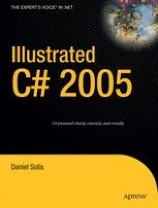
Illustrated C# 2005
Illustrated C# 2005 presents the C# programming language in a unique visual manner. The book uses three techniques to achieve this: concise text, tables that clarify and summarize language features, and frequent figures and diagrams. Each feature is also illustrated with concise, focused code samples.

IFAE 2006 : Incontri di Fisica delle Alte Energie = Italian Meeting on High Energy Physics
This book collects the Proceedings of the Workshop ``Incontri di Fisica delle Alte Energie (IFAE) 2006, Pavia, 19-21 April 2006". Presentations, both theoretical and experimental, addressed the status of Standard Model and Flavour phyiscs, Neutrino and Cosmological topics, new insights beyond the present understanding of particle physics and cross-fertilization in areas such as medicine, biology, technological spin-offs and computing.

Hypercomputation : Computing Beyond the Church-Turing Barrier
Hypercomputation is a relatively new theory of computation which treats computing methods and devices that transcend the Church-Turing thesis. This book will provide a thorough description of the field of hypercomputation, covering all attempts at devising conceptual hypermachines and all new promising computational paradigms that may eventually lead to the construction of a hypermachine.Readers will reach a deeper understanding of what computability is and why the Church-Turing thesis poses an arbitrary limit to what actually can be computed. Hypercomputing is quite a novel idea, and therefore the book is interesting to the reader in its own right.

Hybrid Intelligent Systems for Pattern Recognition Using Soft Computing : An Evolutionary Approach for Neural Networks and Fuzzy Systems
This monograph describes new methods for intelligent pattern recognition using soft computing techniques including neural networks, fuzzy logic, and genetic algorithms. Hybrid intelligent systems that combine several soft computing techniques are needed due to the complexity of pattern recognition problems.

Hybrid Intelligent Systems : Analysis and Design
The objective of this edited volume is to offer a general view at the recent conceptual developments of Soft Computing (SC) regarded as a general methodology supporting the design of hybrid systems along with their diversified applications to modeling, simulation and control of non-linear dynamical systems. As of now, SC methodologies embrace neural networks, fuzzy logic, genetic algorithms and chaos theory. Each of these methodologies exhibits well delineated advantages and disadvantages. Interestingly, they have been found useful in solving a broad range of problems. However, many real-world complex problems require a prudent, carefully orchestrated integration of several of these methodologies to fully achieve the required efficiency, accuracy, and interpretability of the solutions. In this edited volume, an overview of SC methodologies, and their applications to modeling, simulation and control, will be given in an introductory paper by the Editors. Then, detailed methods for integrating the different SC methodologies in solving real-world problems will be given in the papers by the other authors in the book. The edited volume will cover a wide spectrum of applications including areas such as: robotic dynamic systems, non-linear plants, manufacturing systems, and time series prediction.
